Beach Hop 2014: Castrol Edge Thunder Cruise to Onemana

16 June, 2014


With the much-needed rest from the previous day not as long as it could have been, we were woken up for day three by what sounded like a series of long burnouts.

Thankfully it wasn’t, it was actually the Woodstock Thunder Club hunting out the noisiest cars, and the drivers in the line up for the Castrol Edge Thunder Cruise to Onemana were doing their best to give them what they were after.

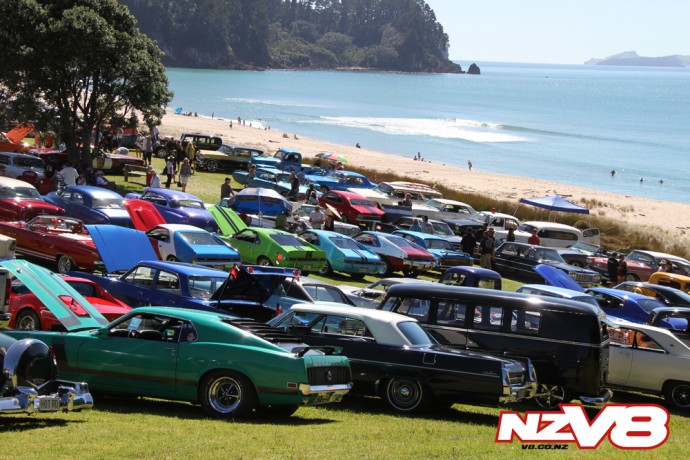
Entrants were already lining up from 5.05am due to the cruise being so popular and parking spots at the Onemana Beach Reserve so sought after. Considering the cruise didn’t leave until 11am, that was pretty dedicated.

The trip to Onemana from Williamson Park is only 10km, but the parade loops weaves its way around town first to make sure all bystanders get more space to check it out. The extended loop was much appreciated by drivers at the team from Tip Top were giving out Strawberry Toppas at ‘Toppa Corner’ along the way. With the sun doing its best to melt the tarmac, the ice cream went down a treat.

The beachfront reserve went from peaceful and calm one minute and action-packed the next as the cars flowed in. It was great to see the local food vendors making the most of the huge crowds but it would have been nicer to see a few more mobile vendors present to ease the load and shorten the queues. But there was plenty to look at during the wait, and plenty of people to talk to, trade stands to check out, and bands to sit down and relax in front of.

Look out for coverage in our next issue, on sale Monday April 7, and our full 122-page coverage in our 2014 Beach Hop Annual, on sale late April.

 

Coaching from the bench: Casting plastic knobs and rubber parts

Casting rubber items is simple if you have a good original to work with. The item doesn’t have to be perfect. You can use plasticine to smooth out cracks, and you can even make whole prototypes out of low-fire modelling clay available from craft stores if you need to. Prototypes can also be made of wood or metal.
You will need mould dams to contain the liquid urethane moulding solution until it cures. You can build boxes out of strips of wood, but I have found that small plastic boxes and bowls such as those you would use for leftovers in your fridge work well if you spray them with a mould release agent.
Temperature is important to the chemical processes involved, so work in an area that can be maintained at around 20 degrees. You will also need adequate ventilation because the fumes can be dangerous to breathe. And you will want to wear latex gloves to protect your hands.

Fraser Cars – low flying into the fourth decade

With almost three and a half decades under its belt, Fraser Cars is one of New Zealand’s longest-surviving car manufacturers. The company first opened its doors for business in 1988, during the boom time for kit manufacturers. During the ’80s, around 40 different companies were building kits and turnkey cars for this niche market. Of those, only Fraser and Almac Cars (established 1981) are still in business today.
Most of the new kit car companies were killed off in the cradle by the threat of new legislation that never eventuated and definitively by the sudden availability of high-performance Japanese cars when the floodgates to second-hand imports were opened. The now long-retired founder of the company, Neil Fraser, first came across Lotus Seven replicas while racing Lotus Cortinas in the early ’80s. He regularly found himself racing against a little Caterham, a Lotus Seven–styled car built in England. He was very impressed by its simplicity and handling. In 1986 Fraser built his own Lotus Seven–type car, using the knowledge he had gained from several close looks at the Caterham.