Day in the dirt

16 June, 2014


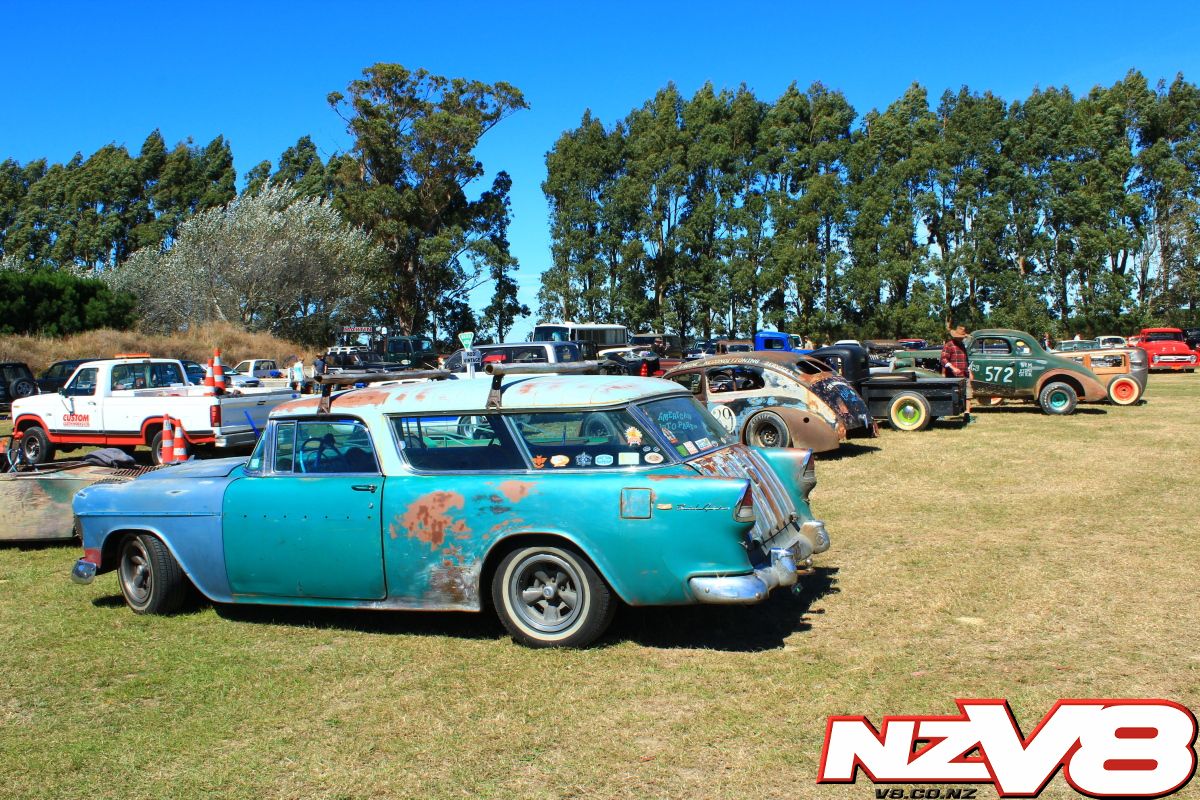
Sunday, March 2 saw the running of the City Hire South 4th Annual Vintage Speedway and Hot Rod ‘Day-in-the-Dirt’ out at the Ellesmere Raceway in Leeston, Canterbury.

It was billed as a family fun day and was hosted by the Canterbury Vintage Speedway Enthusiasts Club. It gave a chance for all classes of motor vehicles to enjoy running on a speedway circuit. Open to rat-rods, vintage race cars, vintage speedway classes, and motorbikes, a good number of races took up the challenge.

Scrutineering started around 9am and the dirt started flying at 11am. A good-sized crowd turned out to enjoy the racing, and with the sun out, many took the opportunity to picnic trackside. An area was set aside for dedicated parking of hot rods, classics, and vintage cars. Kids were taken care of with a bouncy castle and Mr Whippy.   Check out the gallery below to see exactly what happened throughout the day.
Racing Mazdas

Both Rod Millen and Ron Kendall were rotary racing kings, emanating from the North Shore of Auckland, where I grew up. And the ultimate rotary techno guru was Bill Shiells, who developed the engine into a rocket ship while working out of Gulf Mazda in Takapuna from 1969, and later in his own business, Rotorsport. He began to extract some phenomenal horsepower from the enigmatic rotary engine. Bill was one of the first to race the Mazda RX-2 Coupe in 1971 and achieved immediate success, causing others to sit up and take notice, particularly the North Shore’s racing elite. They included Robbie Francevic, Rod Millen, Ron Kendall, John Woolf, John Le Feuvre, and Rex Findlay.

Range Rover CSK — the original SUV

The Range Rover, thanks to Charles Spencer King, went into production in 1970 boasting an iconic shape that would last until 1996. The vehicle that would create the SUV moniker came about because Rover decided it was time to add a bigger four-wheel-drive vehicle, one with a 100-inch wheelbase, to the model range. Land Rover made a 109-inch wheelbase model but the standard vehicle had a 88-inch wheelbase.
The new model would be more suitable for road use than the existing Land Rover, which was considered to be predominantly for rural use. To make sure it could cope on any road it came standard with the Rover 3.5-litre V8 engine. The body design was originally sketched by King and went into production with only a few minor touch-ups by the Rover styling team.
According to King, “The idea was to combine the comfort and on-road ability of a Rover saloon with the off-road ability of a Land Rover. Nobody was doing it.”