
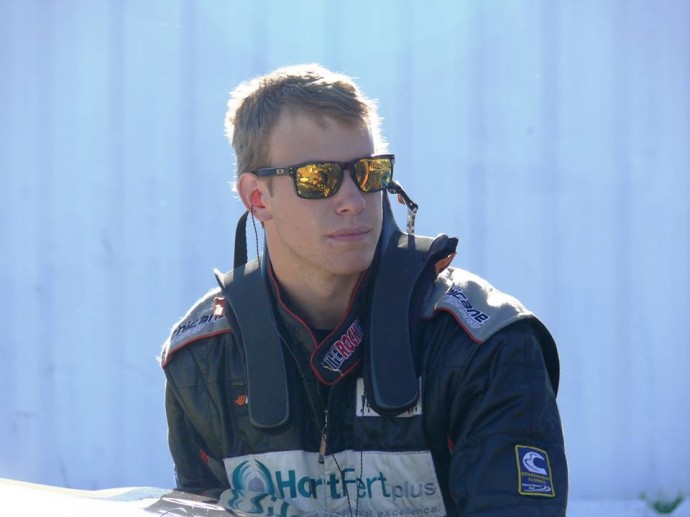
Hayden Pedersen is getting closer and closer to his dream of becoming a professional Nascar driver. The 19-year-old from Rotorua has made the shift to the United States and raced his first Nascar season last year in California.
NZV8 featured an interview with Pedersen in Issue No. 107 where he talked about his passion for motor sport and his goals in the United States. And he’s only headed onwards and upwards since then.
During last year’s Nascar season he raced in the lower sanctioned series and hopes to move up the ranks this year. This looks likely as he has recently earned a place in the final of the 2014 Peak Stock Car Dream Challenge which could see him moving up the ranks even faster than expected.
The Peak Stock Car Dream Challenge is aimed specifically at up-and-coming drivers who want to make a name for themselves within Nascar. It’s a televised three-day challenge which sees contenders being coached by the likes of Clint Bowyer, Danica Patrick, and Michael Waltrip.
“Thousands of people entered to try and be one of the 18 that get to compete at the Charlotte Motorsport Speedway, and I was chosen as one of the 18,” says Pedersen.
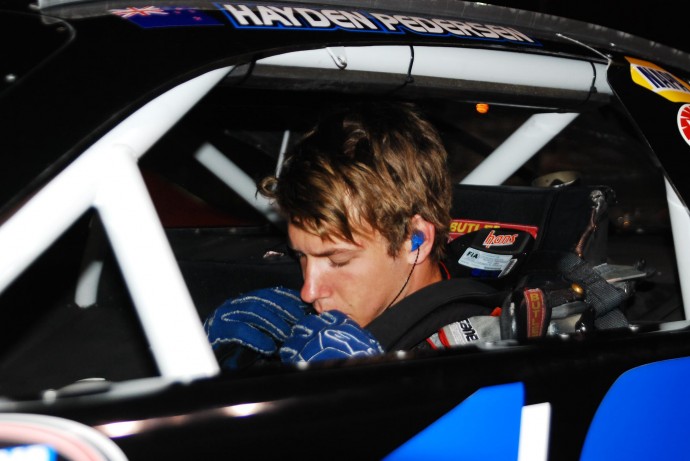
“I have been dreaming about making it to the top and have done many things to try to get there, so it’s amazing for Peak to give me a chance to prove my skills.”
“[The challenge is] in the public eye like crazy so it will get my name out there as well,” Pedersen says.
With the winner receiving a Peak Racing sponsorship in a 2014 Nascar K&N Pro Series race, it provides a huge opportunity for the winner to achieve their Nascar goals.
“That is a good step up,” Pedersen says. “It is getting me closer to that goal of racing in the Sprint Cup.” The Sprint Cup is the top tier of racing in Nascar, which is Pedersen’s big goal.
“We will aim for that series and keep moving along. Hopefully it is only five years away but if it takes 10 years, it takes 10 years. But I have to keep pursuing that dream.”
The 2014 Peak Stock Car Dream Challenge will be held from June 11–13 and the young driver could do with his home country’s backing. To support him, visit his Givealittle page, and like or message his Facebook page.
Check out the video Pederson entered to make sure he was selected as one of the 18 contenders in the challenge: