Three-day North Island Targa: Day one

16 June, 2014


Photo : Fast Company / Ben Hughes

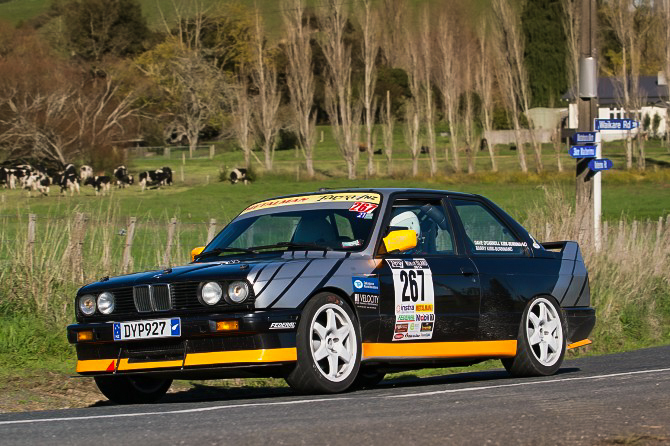
Subaru-driver Leigh Hopper and co-driver Simon Kirkpatrick headed the field after the first day of competition in this year’s three-day Targa North Island event.

The Orewa pair won three of the day’s six completed stages and take a 28 second lead in both categories over Auckland Mitsubishi Evo pair Jason Gill and Mark Robinson, with Patumahoe’s Glenn Inkster and his co-driver Spencer Winn a further 43 seconds back in their Mitsubishi Evo.

Last year’s Targa New Zealand event winners Martin Dippie and Jona Grant from Dunedin dominated the Modern 2WD category, topping the time sheets in all six stages to take a minute-and-a-half advantage over fellow Porsche pair Richard Krogh and Glenn Sharratt into the second day of competition on the Coromandel Peninsula and into the Waikato tomorrow.

Husband and wife Ross and Carmel Graham (Holden Torana A9X V8) caused an upset, meanwhile, in the Metalman Classic 2WD class by turning the tables on long-time class pace-setters, Barry Kirk-Burnnand and Dave O’Carroll (BMW M3), and Barry’s son Carl and his co-driver Sam Gordon (BMW 325i)

The Grahams claimed their first class scalp in the day’s first stage – Koheroa east of Pukekohe – and went on to top the class time sheets in three of the other stages and equal the time set by the winners of a fourth, another husband and wife pairing, Tony and Jo Butler in their Holden-based Cheetah V8.

Targa newcomers Ian Power and Shamus Kay had a good start to their day, setting the third quickest Metalman Classic 2WD time through the first stage in their BMW 320i only to overshoot a corner at the end of the second stage and end up in a ditch, where they were joined a few minutes later by the Nissan Skyline of Greg and Jackson Fowles.
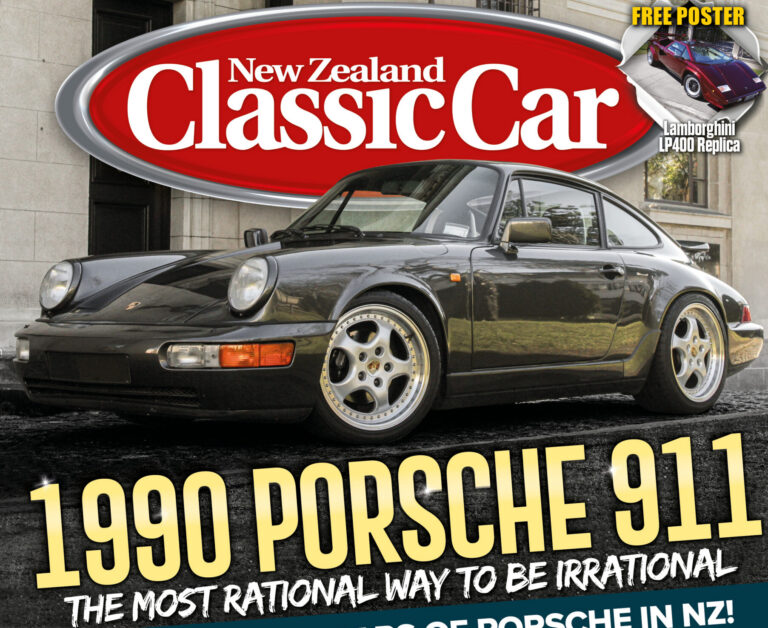
NZ Classic Car magazine, July/August 2026 issue 406, on sale now

Rebirth of a brilliant Grand Tourer –1973 Datsun 240Z
How often do we long for that ultimate dream sports car, and that dream comes true? This is about one of the most influential Japanese cars of all time, a car that changed the sports car market.
This is about much more than the restoration of an iconic classic sports car, the 240Z. It’s about the culmination of a dream over many years and the friendships made. It’s about the people who helped and the professionals whose approach ensured that the dream became a reality, an attitude typical of the industry we call ‘classic restoration experts’.
It is no surprise that the outcome after a lengthy search by Conrad Van der Geest for the right Datsun 240Z culminated in a trophy for the best Japanese car at this year’s Caroline Bay Beach, Rock N’ Hop at Timaru.
Originally a roadworthy car in running order, it was left-hand-drive and had been driven for several years by its Timaru owner, as Conrad explains.
“A neighbour, Dave Barron, knew I was looking for one and introduced me to the owner. I had seen the car being driven around Timaru. It was unusual for one of these coming originally from California, so it was a really clean car instead of rusty, as they are prone to rust. The story goes that the grandfather passed it onto his grandson, who decided to sell it, and that’s when it came over here.”
Every issue comes with our FREE huge wall poster; this issue, it’s our cover car for this edition, a 1973 Datsun 240Z

The butterfly effect

The man on the mountain bike pedalled over, taking it all in. Gazing in wonderment at this small Japanese coupe with butterfly doors, he said, “Wow, I have never seen one of these before. What is it?” When I told him it was a Toyota, he nearly fell off his bike.
The Toyota Sera is unique amongst ’90s Japanese coupes. The Sera, which is Italian for ‘evening’, can trace its roots back to Toyota’s AXV-II concept car. Launched as part of a trio of Toyota concept cars at the 1987 Tokyo Motor Show, it shared its underpinnings with the P70 Toyota Starlet. The similarities ended there, thanks to the AXV-II’s low-slung and rounded coupe styling with butterfly doors. These doors were held upright by gas struts when fully open. Glass covered the upper section of the doors and the rear hatchback.
These features, much to everyone’s surprise, were carried over to the production Sera in 1990. Toyota marketed the Sera, which means ‘will be’ in Spanish and ‘princess’ in Hebrew, as a funky alternative to the much-loved MR2.