Orewa pair Leigh Hopper and Simon Kirkpatrick completed a winning trifecta in this year’s Targa North Island tarmac motor rally which ended in Rotorua on Sunday – despite a quick detour through a farmer’s paddock early in the first stage on the final day. As well as claiming overall victory Hopper and Kirkpatrick also won the Instra.com Allcomers 4WD class from Gill and Robinson, and fellow Aucklanders David Rogers and Aidan Kelly (Mitsubishi Evo).
Like Hopper and Kirkpatrick, last year’s six-day Targa New Zealand event winners, Martin Dippie and Jona Grant, were never headed in their class, Instra.com Modern 2WD, the pair topping the time sheets in 11 of the 17 stages to finish the event just under two minutes ahead of fellow Porsche pair Richard Krogh and Glenn Sharratt from New Plymouth with Perth-based Kiwi Robert Darrington and co-driver Dave Abetz enjoying their best run in recent events to finish third in class in their BMW M3.
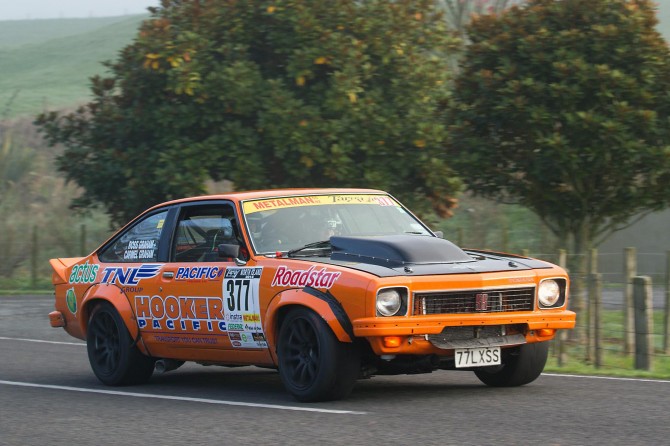
New Plymouth husband-and-wife Ross and Carmel Graham also enjoyed a near perfect run on their way to a popular victory in the Metalman Classic 2WD class. Despite their being at least six other combinations capable of matching their pace – as evidenced by the fact that there were five different stage winners – the Grahams started strongly and were as consistent as they were quick.
“We came here thinking that we would do OK but winning is still pretty special,” said Ross.
Also enjoying his best finish in a Targa event so far was BMW 325i driver Rex McDonald who with co-driver Daniel Prince finished second in the Metalman Classic 2WD standings. The pair topped the class time sheets in two stages and ended up just over two-and-half-minutes behind the Grahams and just over a minute up on category young gun Carl Kirk-Burnnand and his co-driver Sam Gordon in a similar BMW with husband-and-wife Tony and Jo Butler fourth in their V8-engined Cheetah convertible and long-time class pace-setters Barry Kirk-Burnnand (Carl’s father) and co-driver Dave O’Carroll fifth in their BMW M3.
Former rally and circuit rachwer Greg Goudie and son Michael from north Auckland were one of the other stage winning duos in the Metalman Classic 2WD class in their newly-built Mk 1 Ford Escort BDA, but were never in overall class contention after an electrical issue forced them to sit out several stages on the first day.
There were some high-profile casualties though, including Clark Proctor and Sue O’Neill (Nissan GT-R35) out with a broken gearbox, former Targa Rotorua winners Glenn Inkster and Spencer Winn, out with engine problems, while three stages on Saturday had to be canceled after the Paul Lampp/Graham Pedler Ford Escort hit and brought down a power pole early in the Hobbiton stage west of Matamata.
And after their usual giant-killing performances on the first and second days, Fiat Abarth 1000 pair Mike Lowe and Phil Sutton tumbled down the time sheets in the Metalman 2WD class on Sunday when they were forced to change engines half way through the final day.
For a full report on the event, look out for the June edition of New Zealand Classic Car magazine — on sale May 26, 2014.