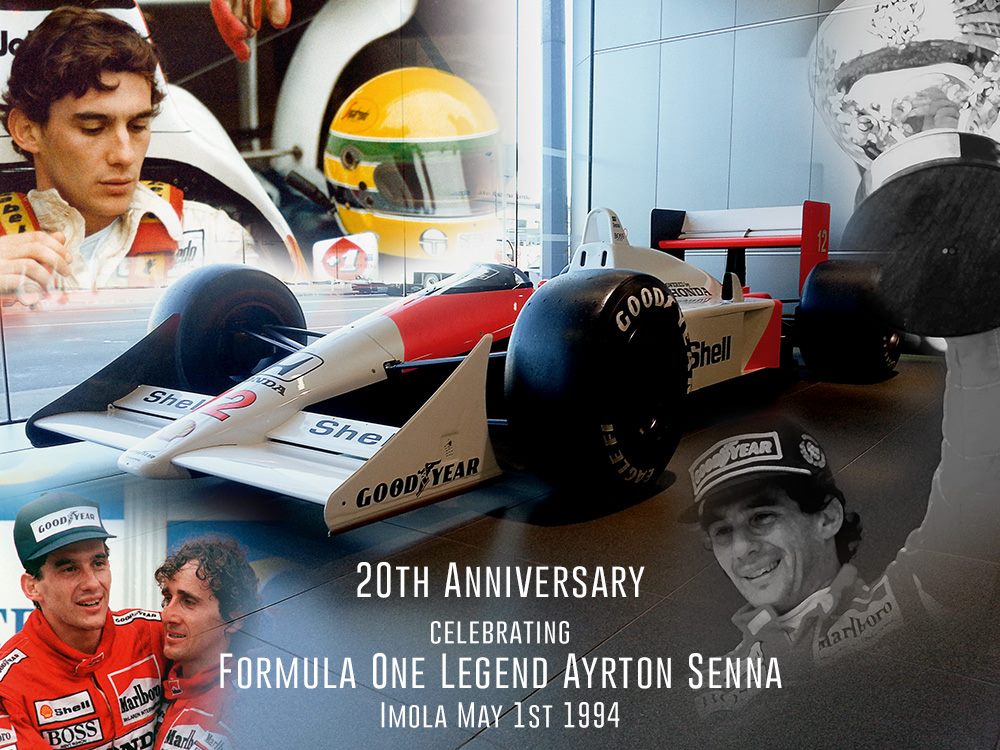
RIP Ayrton Senna — 20 years ago today
data-animation-override>
“On the 20th anniversary of the death of Ayrton Senna at Imola in the early laps of the 1994 San Marino Grand Prix, Michael Clark talks to some mates who knew the Brazilian personally”
Bob McMurray was at McLaren when Ayrton Senna arrived for the start of the 1988 season, and was present for the 80 Grands Prix he ran for the team until leaving for Williams at the end of 1993. During that time, he added a further 35 wins to the six he had already won while at Lotus — and he also won all three of his world championships in Honda-powered McLarens.
The stats were impressive — the Brazilian’s time at McLaren reaping wins in 44 per cent of starts, plus a gobsmacking 24 consecutive front-row starts. Bob recalls Senna as a friend, but the Brazilian’s really close friendships — including with his engineer, Gerhard Berger, Ron Dennis, and even Alain Prost initially — were intense. “There were no shades of grey as far as friendships were concerned — he was dedicated to you if you were dedicated to him. He wasn’t arrogant in the least, in fact he was quite kind in many ways, especially to his mechanics who would have bled for him. He was very, very personable, with a great sense of humour. He could actually be quite funny!” Bob remembers.
I ask about the public-versus-private Senna. “He was quite introverted if there were cameras about — but there were times when he could be wildly extrovert out of the public eye, but he wasn’t straightforward! He was complex — because he was a thinker with an incredible brain with a one-track mind when he was focused, which was most of the time. He was able to assimilate great detail, and the stories about him being able to recall gear ratios from last year, or even the year before, are all true. He could be dark — sometimes very dark. He had a veneer of superiority, but he was superior. He was singularly determined at succeeding at the task at hand. He did manage to bear grudges, however …”
This of course leads to the most famous grudge of all: “He was so much less political than Prost — who was massively political. And Ayrton knew that Prost knew how to play the political game better than him,” Bob explains.
Then, in a heartbeat, Bob mentions the two extremes of Senna’s personality. “He’d sign autographs while walking into the paddock — but if he saw a child, he’d invariably stop to talk to them. Yet, on the other hand, he practically invented the trend of intimidation when coming up to lap traffic.”
We talk briefly about Bob’s impressions of Senna after he left McLaren. “He was less than enchanted with the Williams, and I think [he] was a rather troubled chap prior to Imola — he had things going on his private life, although he was so single-minded he never had any problems in shutting the girls out of his mind at a race meeting.”
Bob then tells me something few of us would know: “He wanted to build a house in New Zealand — he loved it here! That was a time when we saw the other side of Ayrton — charging around in a helicopter after an Adelaide Grand Prix as he looked for land to build a house.”
So Ayrton Senna intended to have a holiday home in New Zealand? “Absolutely!”
Read more about Formula One legend Ayrton Senna’s racing life in Issue No. 281 of New Zealand Classic Car magazine.