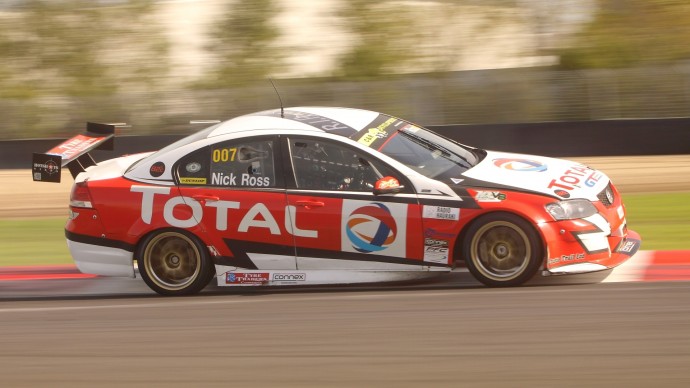
After much drama in and outside of Sunday’s races, Nick Ross won the NZV8 Touring Cars TLX Championship, a title he has hunted with vigour since entering the series in 2002.
Ross, driving a Holden Commodore came to Pukekohe Park Raceway trailing Toyota Camry driver Jason Bargwanna by 61 points. The Australian suffered engine problems in race one on Saturday morning and then again that afternoon allowing Ross to have one hand on the trophy.
On Sunday morning in race three, Ross and Bargwanna looked as though they were in for another one of their epic battles until a safety car period, followed by another incident at the restart, resulted in the field crossing the finish line behind the safety car with much anticlimax.
Ross was leading at the flag, and was thought to have taken the title, until he was deemed to have been travelling too slow at the restart and was relegated to fourth place leaving the championship battle still open.
“We are supposed to be between 70 and 80 (kph) but I just had a brain fade and kept it at 60,” said Ross.
Dramas continued in the afternoon when, in the final race, Ross took the lead only to have Bargwanna pass him and pull a small gap.
All Ross needed was to finish the race and he would take the title which he had chased for 12 years.
The crowd started to become excited as they saw puffs of smoke coming from Ross’ Holden, after seeing two engine blowouts already on the Saturday.
Bargwanna increased the gap and Hamilton’s Lance Hughes was beginning to catch the Cambridge driver as the smoke became worse, but Ross eventually took the flag in second place to win the round and the NZV8 Touring Cars TLX Championship.
“I’m really happy to get the title after all this time. It’s been 12 years,” said Ross.
After 12 years chasing the title in a series of Holden Commodores, Nick Ross will be entering next season in a brand new Nissan Altima TLX car, upon which he will proudly place the number one.
Hamilton’s Lance Hughes finished in third place over Auckland’s Shaun Varney and Turua’s AJ Lauder.
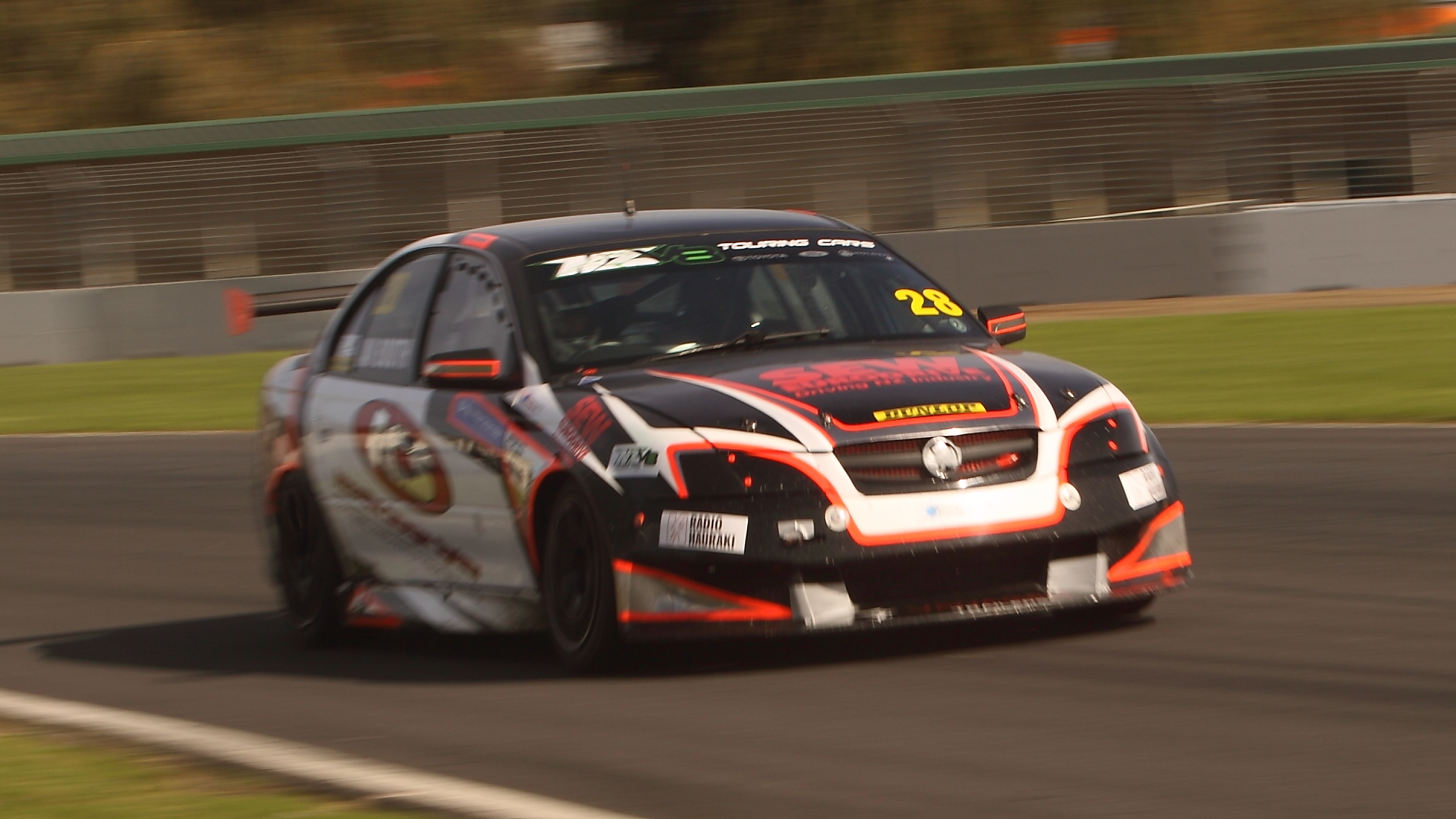
Sunday also saw Ian Booth win the NZV8 Touring Cars TL Championship. He won the title over Lower Hutt’s James McLaughlin after a very consistent season.
Scoring only his second race win on Sunday, ironically his first win was also at Pukekohe in the opening round in November, he won the championship with one race up his sleeve.
Coming into the weekend there was a slim gap between the pair of just 11 points, but McLaughlin had one of those weekend’s that he would rather forget.
“Going into the weekend I was quite settled for second place actually knowing what James is like so I was quite relaxed when I thought I wouldn’t win but then that all changed when he had problems in qualifying,” said Booth.
“We had a 100 per cent record this season. My chief mechanic, Mark Dalton, has just been fantastic and he would be down there working on the car when I don’t even know he is there,” he said.
Turua’s Brad Lauder — the only other driver with a chance of moving up ahead of the two leaders — had a rough weekend with incidents in both race two and three which kept him out of touch with Booth.
With the title under his belt, Ian Booth has stated he will not be racing next season to concentrate on his job as chairman of the series.
“I’m going to call it quits at this stage. I need to stop racing and drive this series to the next level,” said Booth
“There is a lot of interest in the TLXs. We are definitely having more of them for next season and to continue this momentum forward I need to stop racing and focus on making this class what it really should be — and that’s the best premiere class in New Zealand.
“I honestly believe that in three to four years the numbers and quality of the field will be as good as it ever was and I have no problems or qualms with that at all,” he said.
The NZV8 Touring Cars are a two-class series with the TLX category supporting Toyota Camry, Holden Commodore, Nissan Altima, and Ford Falcon with interest coming from other brands.
The TL category offers very competitive racing with the original specification NZV8 Touring Cars hosting the traditional and popular Ford versus Holden battle.
The new season is due to restart this coming November.