data-animation-override>
“Every week we’ll bring you The Motorhood’s Weekly Motor Fix. This week, the New Zealand Classic Car team bring you a double feature with two cars they’ve discovered during the week that they think are something special”
We recently discovered these two beautifully restored classics that have just arrived in the country. The owner, a long-term kiwi expat (31 years away in the UK and Middle East), has just returned home to New Zealand from Dubai in the UAE. He cleared his 1961 Daimler Dart and 1961 E-Type Jaguar through Customs just in time for Christmas Eve; the same day he arrived back in Auckland for Christmas.
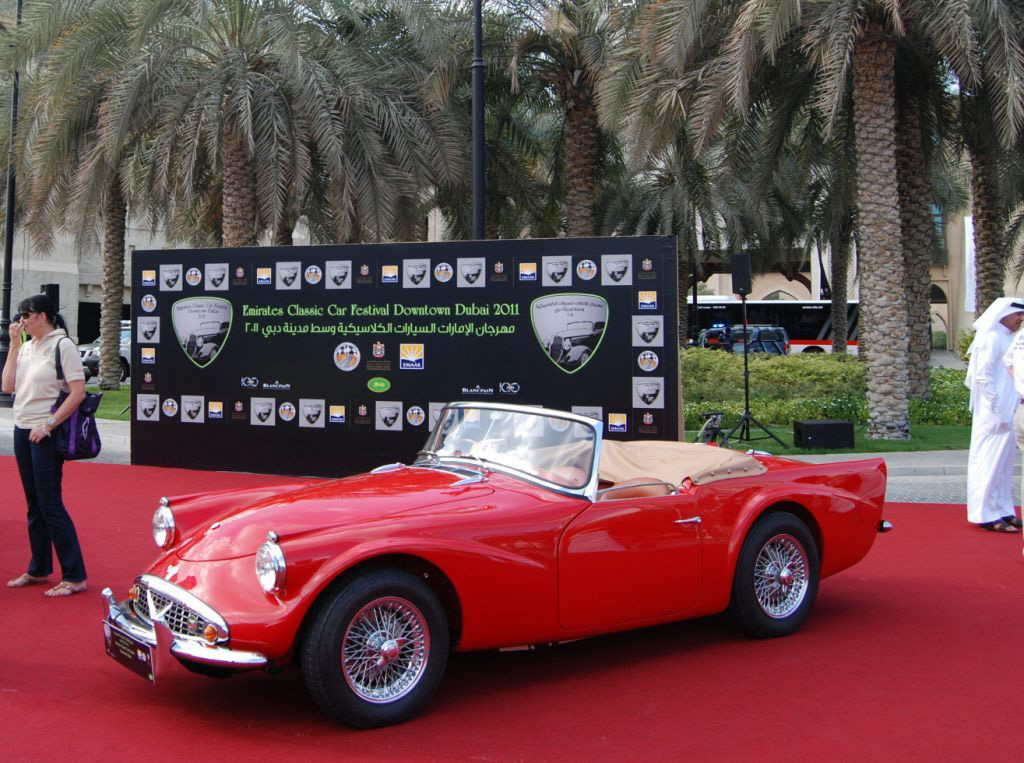
The Dart is a New Zealand new car built by Jaguar Cars Radcliffe factory on May 2, 1961 and supplied by Oxton Motors in Grafton. The current owner bought the car in February 1976 at the tender age of 19 because he could not afford an E-Type Jaguar. He fully rebuilt the car on a student budget with the help of a few friends whilst studying architecture at Auckland University. He sold the Dart in December 1979 to buy his first family home in 1979, thinking his ‘darting’ days were over.
However 20 years later — almost to the day — in December 1999, he purchased the very same Dart back from a friend who had owned it for 18 years. After five years of ownership, it was leaking much more oil than it burned and to prevent further deterioration he had it shipped to Dubai in 2004 where he had been working since 1993. After four years the Dart was ready and was entered in Dubai’s annual Classic Car Festival for five years running, with great enjoyment at the rarity value the car attracts in a place like Dubai.

In 2008, having got the Dart under his belt as it were, his thirst for an early E-Type returned with a vengeance, and after reaching the conclusion that life is not a rehearsal, he decided to really scour the planet for a suitable car, travelling to the USA, Belgium, and finally Scotland where he found a suitable car. The 1961 E-Type was amazingly original but very tired, and as it turned out was built just five days before his Daimler Dart saw the light of day. The car was still in its correct factory cream paint colour but had the wrong black interior. After another four years of restoration work in Dubai, that included soda blasting the amazingly rust-free shell back to the bare metal, and a trip for the car back to the UK to have the correct Jaguar red interior and double-duck soft-top installed, the car is ready for its first competitive outing.
Keep an eye out for a full magazine feature in New Zealand Classic Car soon, and you’ll be able to see them at Ellerslie Intermarque Concours d’Elegance on February 8 at Ellerslie Racecourse.