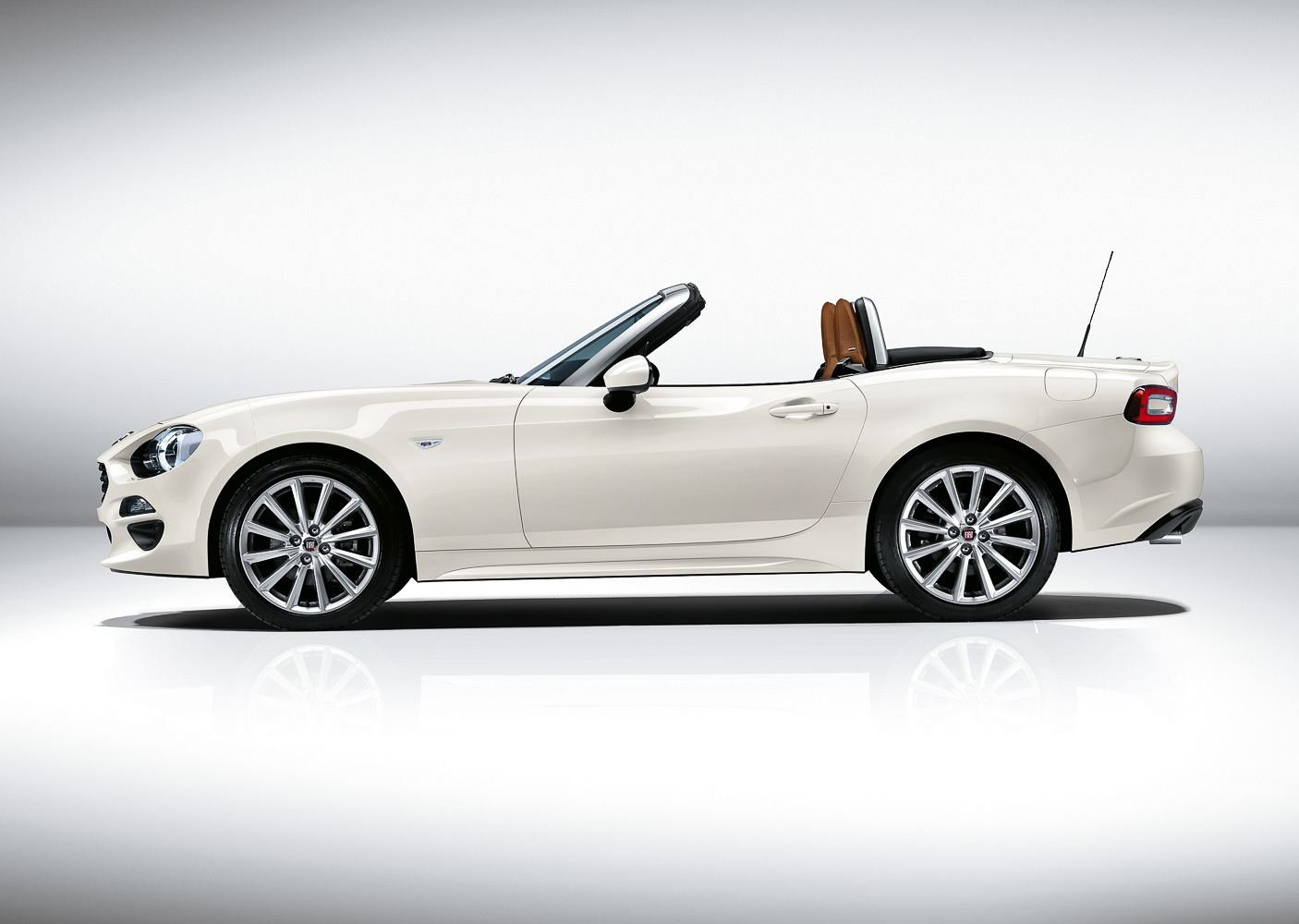
Almost 50 years since the original was introduced, an Italian-classic favourite makes a welcome return — albeit in thoroughly modern form. Yes, the Fiat 124 Spider is back!
Designed at Centro Stile in Turin, Italy, the new 124 Spider takes its inspiration from the 1966 original — including the distinctive twin bonnet ‘power-domes’ from the second-generation Spider – but, under the skin, you’ll find Fiat’s 1.4-litre MultiAir turbo engine. With 104kW being fed to the rear wheels via a quick-shifting six-speed manual transmission, the new car should be able to match the sheer on-road brio of the classic 124 Spider.
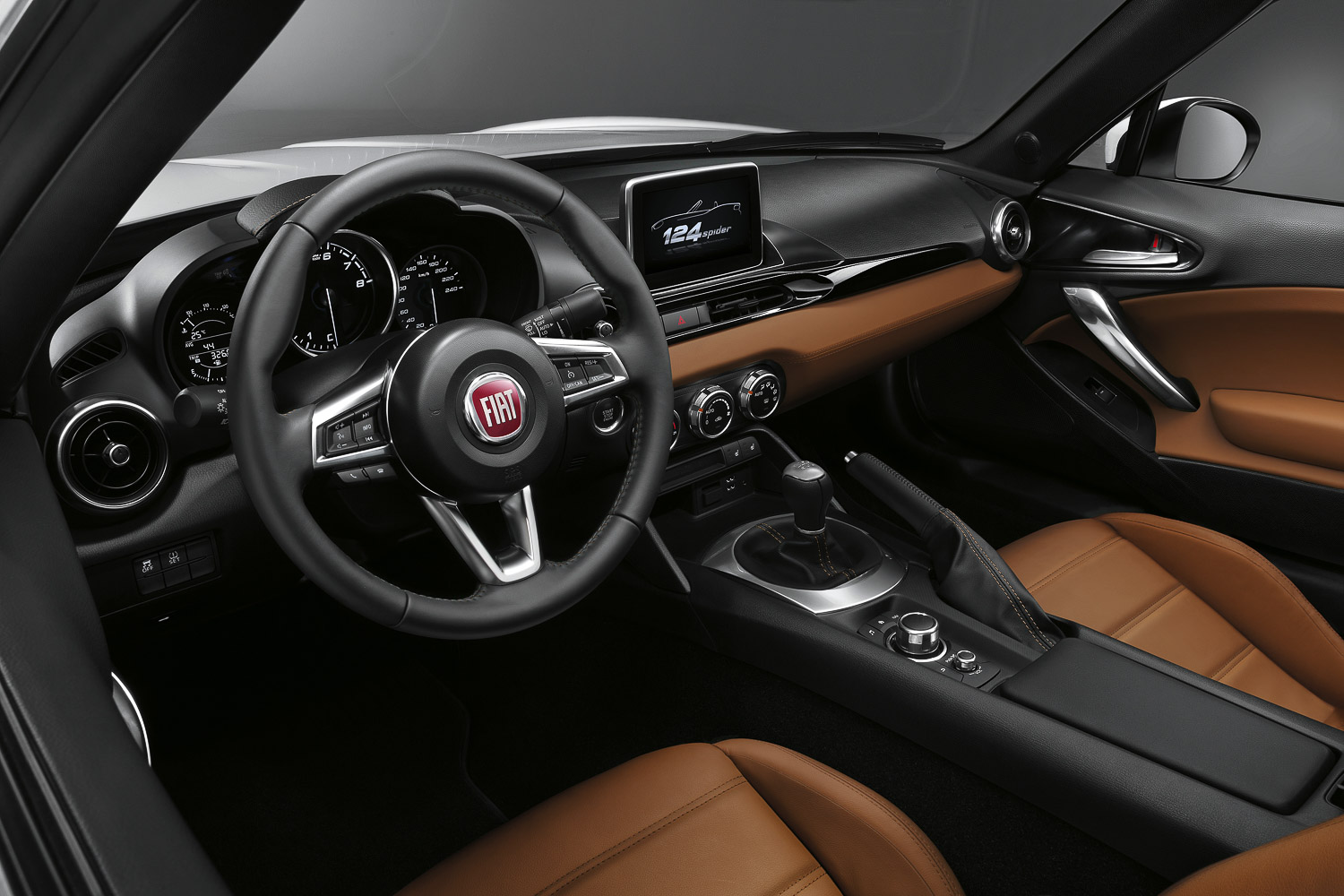
Inside, the new 124 Spider’s cockpit is a pleasing mix of classic ingredients and modern materials and ergonomics — not to mention the fact that it’s packed with bags of Italian style!
It has a lightweight body structure, which is achieved through the use of aluminium and high-tensile steel, and a strong backbone frame comprised of robust, straight beams, underpins the overall structure, while a front subframe and rear cross members connect the backbone to the front and rear sections to provide a structure that is light, safe, and extremely rigid. Allied to that, the new Spider’s suspension — a double-wishbone front and multi-link rear arrangement — has us expecting that the new Fiat will provide excellent handling.
Fiat New Zealand are hoping that the all-new Fiat 124 Spider will make its local debut in late 2016 — and we can’t wait to get our hands on one for a test drive.