Enthusiast Essentials: British sporting cars in miniature

26 November, 2015

Here’s some good news for all model-car enthusiasts: well-known collector David Wright — acclaimed author of A History of White Metal Transport Modelling and The History of Resin Transport Modelling — has just announced the availability of a companion book featuring a comprehensive A–Z catalogue of British sporting car models and their makers.

From the early pioneers of the pre-war era, through to the golden years of the 1950s and 1960s, the author traces the development of sporting cars in Britain through summaries of the achievements in the production of the real cars to the creation of miniatures as both toys and collectors’ models. 
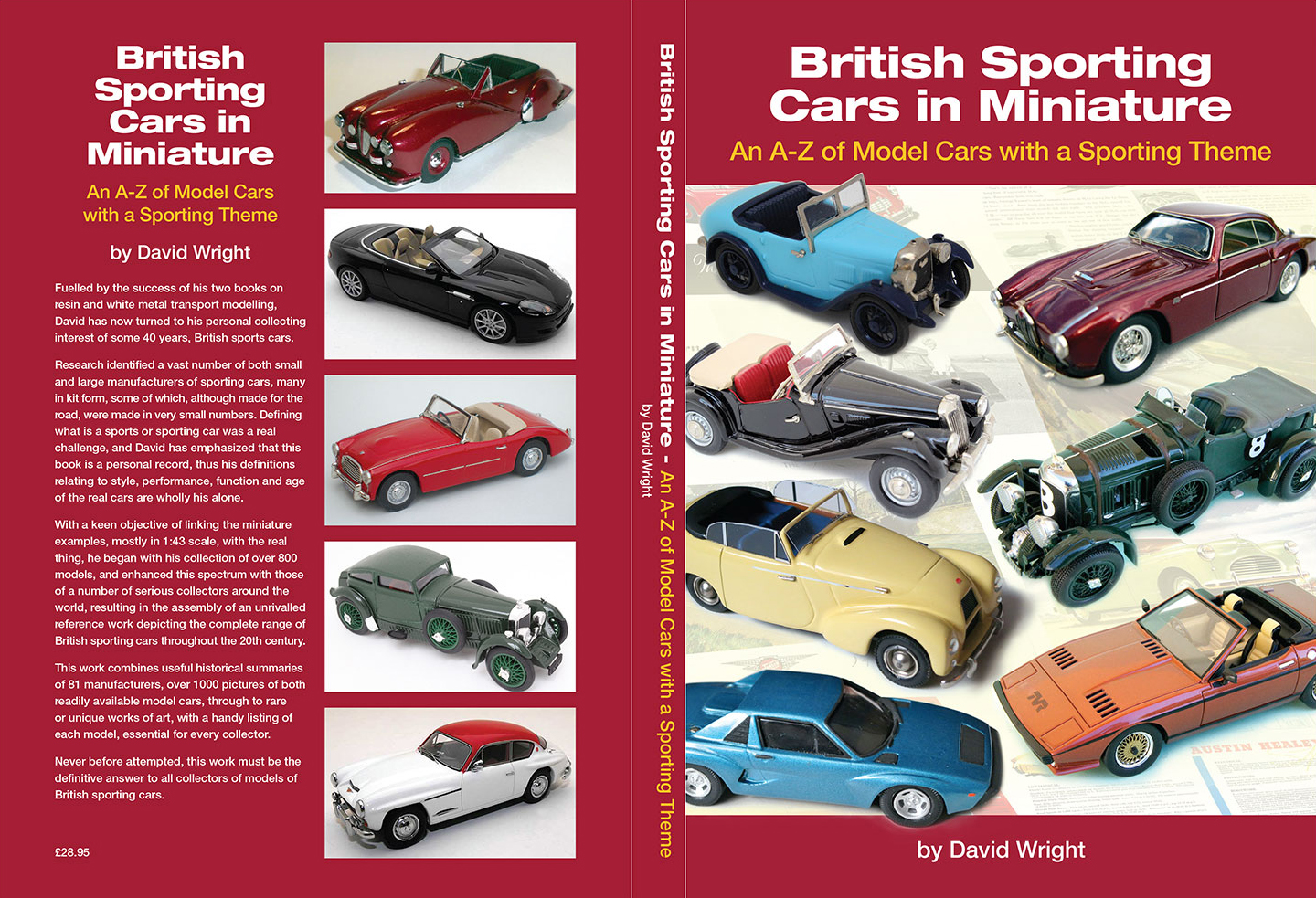
He also tackles the thorny subject of defining what a sports car actually is and also shares his personal story of commitment to the British sports cars, covering his driving experiences of the genuine full-size cars and his ever-growing collection of mostly 1 :43-scale models.
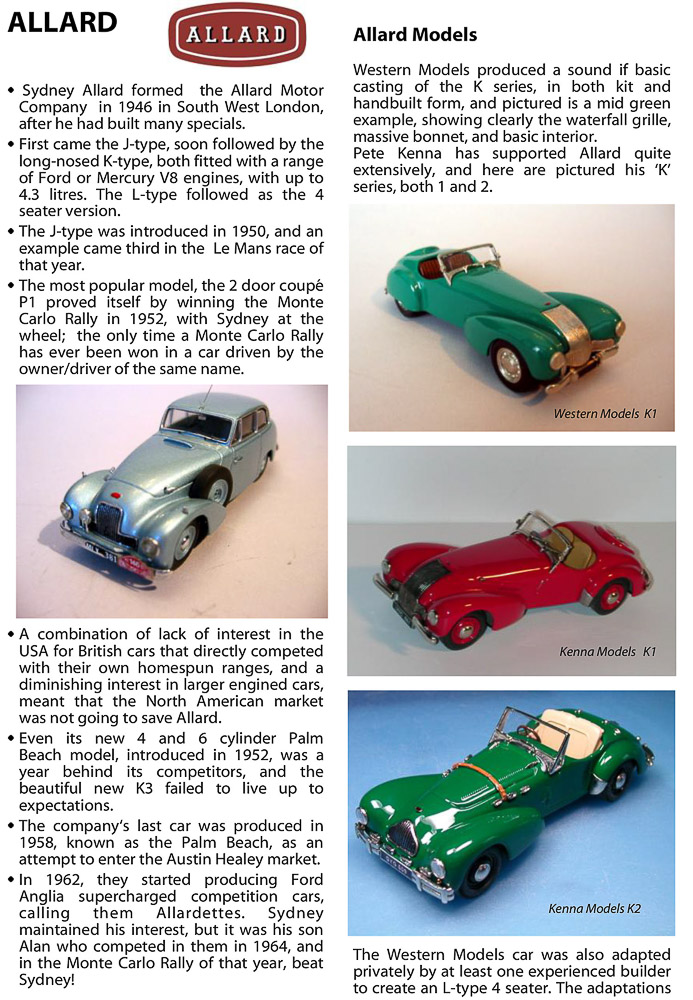
Illustrated with more than 1000 colour pictures — many never seen before — from both his own collection, and those of a number of serious collectors around the world, the author brings more than
40 years of collecting experience to the task.
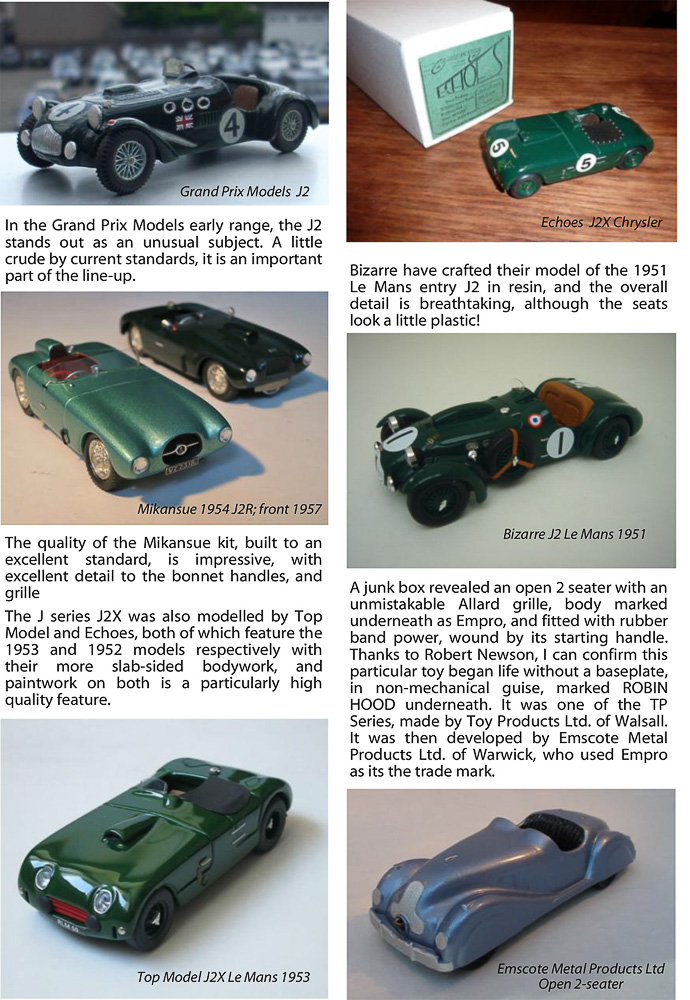
British Sporting Cars in Miniature  — a fully illustrated 300-page book — provides a truly absorbing read for anyone interested in collecting model cars, as well as those interested in information on the manufacturers who made the models and the cars those models were based upon.

David Wright’s new book, British Sporting Cars in Miniature: And A-Z of Model Cars with a Sporting Theme, is now available to purchase.

For more details, visit: transportmodellingbooks.co.uk.
The butterfly effect

The man on the mountain bike pedalled over, taking it all in. Gazing in wonderment at this small Japanese coupe with butterfly doors, he said, “Wow, I have never seen one of these before. What is it?” When I told him it was a Toyota, he nearly fell off his bike.
The Toyota Sera is unique amongst ’90s Japanese coupes. The Sera, which is Italian for ‘evening’, can trace its roots back to Toyota’s AXV-II concept car. Launched as part of a trio of Toyota concept cars at the 1987 Tokyo Motor Show, it shared its underpinnings with the P70 Toyota Starlet. The similarities ended there, thanks to the AXV-II’s low-slung and rounded coupe styling with butterfly doors. These doors were held upright by gas struts when fully open. Glass covered the upper section of the doors and the rear hatchback.
These features, much to everyone’s surprise, were carried over to the production Sera in 1990. Toyota marketed the Sera, which means ‘will be’ in Spanish and ‘princess’ in Hebrew, as a funky alternative to the much-loved MR2.

Racing Mazdas

Both Rod Millen and Ron Kendall were rotary racing kings, emanating from the North Shore of Auckland, where I grew up. And the ultimate rotary techno guru was Bill Shiells, who developed the engine into a rocket ship while working out of Gulf Mazda in Takapuna from 1969, and later in his own business, Rotorsport. He began to extract some phenomenal horsepower from the enigmatic rotary engine. Bill was one of the first to race the Mazda RX-2 Coupe in 1971 and achieved immediate success, causing others to sit up and take notice, particularly the North Shore’s racing elite. They included Robbie Francevic, Rod Millen, Ron Kendall, John Woolf, John Le Feuvre, and Rex Findlay.