If you’re anything like us you spend every spare second in the garage — so why not make it a place of comfort and fit it out with some of these awesome additions. Have a read of the New Zealand Classic Car Ultimate Garage Fit-out and tell us in the comments below which elements you already have, or you wish you had!
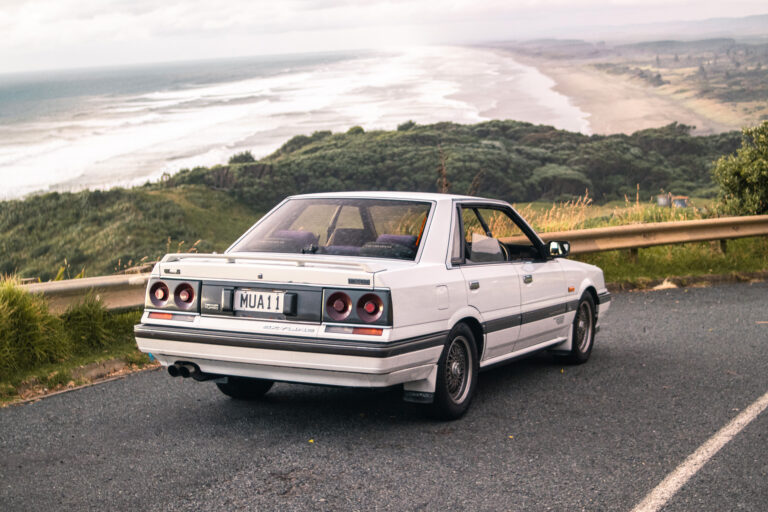
Deven, a digital content producer in his 20s, says it was the rear-drive Nissan and Toyota drift cars that fired his imagination in his not-so-distant youth and soon had him wanting one of his own. However, like most of us, he had to start in something less glamorous – in his case, a 1997 Mitsubishi Galant. After that, he bought a four-litre V8 1991 Toyota Soarer, a big change from the Mitsubishi.
“It was my daily driver, and it wasn’t that bad to run back when petrol was affordable,” he says.
When he got fed up with filling it up, Deven bought a 1989 Ford Laser sedan, a 1.3-litre five-speed manual, to be his daily driver. It’s in very good condition, bought from a careful older driver, and he still runs it – although he will occasionally also drive the latest in a series of Nissan Laurel sedans. His current one, from 1993, has done the lowest number of kilometres yet, at 183,000. It has the single-cam version of the engine in his Skyline.
“I’ve had four different versions of that car. It was just a car I always liked. It’s really comfortable, quite luxurious. I bought it from a 90-year-old in Hamilton. It’s in mint condition, and everything is standard.”