The Highlands Festival of Speed, which ran for three days over January 30–February 1, was every bit as good as it was hyped up to be. The event attracted close to 150 competitors in a diverse field of racing vehicles, and thousands of spectators flocked through the gates to check it all out.
The trans-Tasman trophy is safe in Kiwi hands, thanks to Dean Perkins winning three of the five combined TCM/CMC races, including the trophy race. On Friday, January 30, Perkins set the quickest qualifying time in his Ford Falcon, with fellow CMC competitors Paul Kelly (whose Firebird we’ve got a feature on in NZV8 Issue No. 118) and Tony Galbraith completing the top three. New South Wales’s Tony Karanfilovski was the fastest Aussie, placing fourth in his 1969 Ford Mustang Fastback. Mike Sentch, Highlands’ general manager, said two-time Australian Touring Car Champion Glenn Seton, who raced a ’64 Mustang over the weekend, told him that the Highlands Festival of Speed was one of the best race meetings he’d ever been to.
A feature well enjoyed by the crowds was the Highlands Classic Motor Show, which displayed over 100 vehicles, including a huge array of classic, retro, and vintage motor vehicles. The People’s Choice award went to Trevor and Davina Mitchell, whose stunning Excalibur Phaeton roadster stole the show.
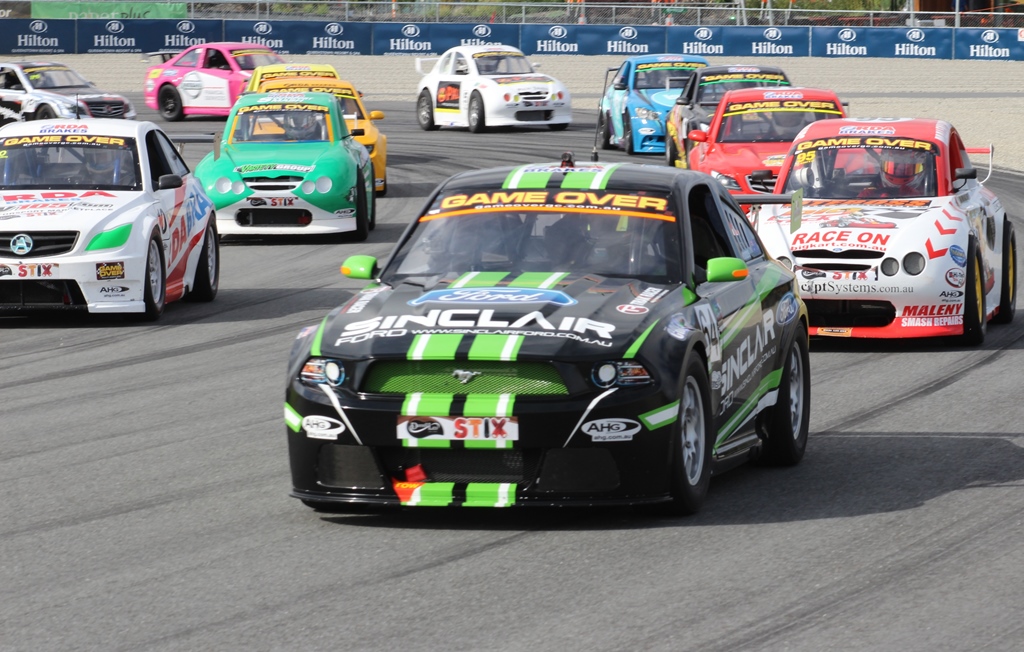
Aussie Racing Cars round winner Craig Woods. Photo: Graeme Oliver
In another trans-Tasman racing endeavour, the Aussie Racing Cars started their seven-round 2015 season at Highlands — the first time an Australian motorsport category has done so.
The Quinn family tussle, with multiple Quinn family members racing over the weekend, was taken out by Tony Quinn, who finished eighth for the weekend ahead of son Kent, and son-in-law Kynan Yu. In the Formula Libre single-seater category, Cameran Freeman from Dunedin proved to be the dominant player, winning all three races.
The vintage and historic open wheelers attracted 22 entrants, with UK-based visitor Robin Longdon in a Lotus 20/22 taking the largest points haul for the weekend. Dunedin’s Paul Coghill also snagged a win in his 1952 Jaguar Special, as did Invercargill’s David Robertson, in his 1959 Ace Buckler, and Western Australia’s Neil McCrudden in another Lotus 20/22.
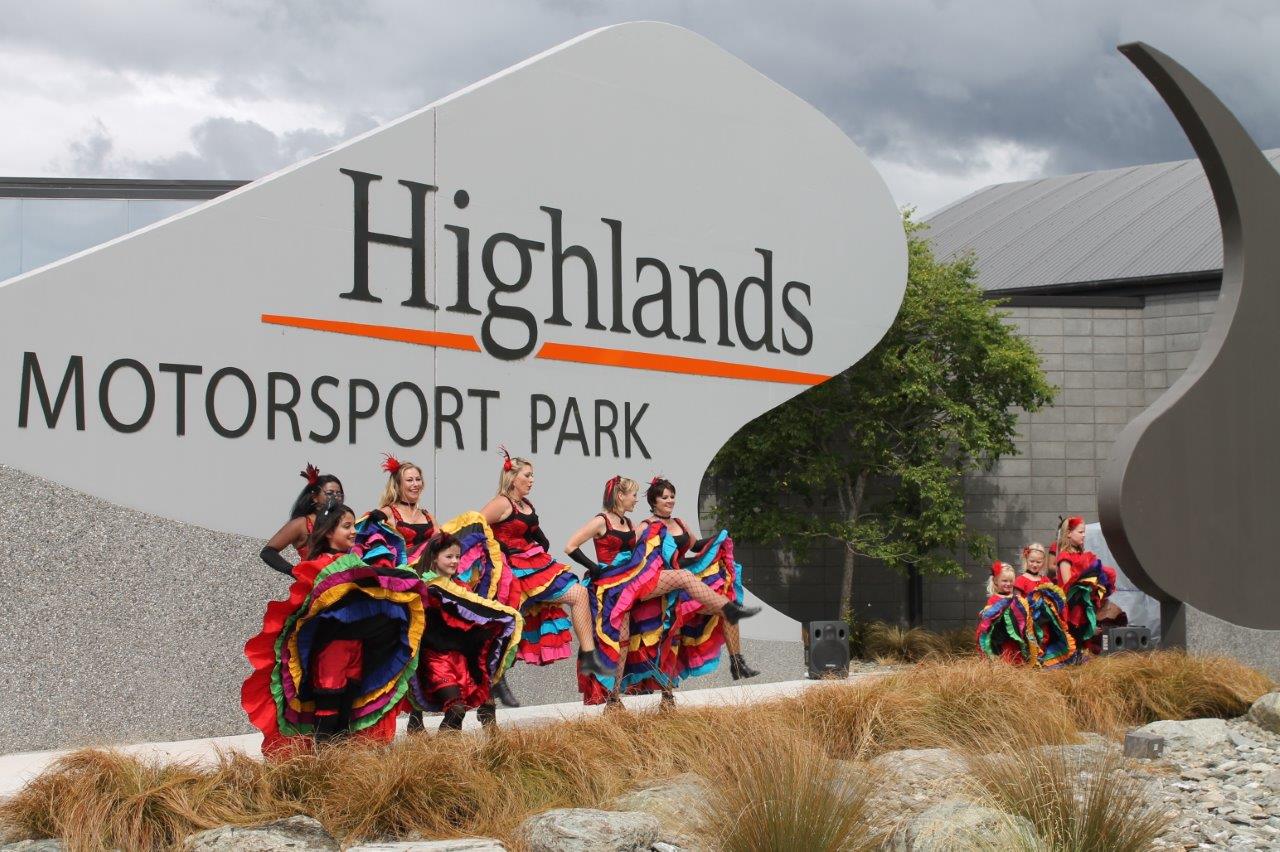
Arrowtown’s Buckingham Belles. Photo: Hannah Cameron
Of course, cars weren’t the only attractions at the Highlands Festival of Speed. Highlands’ events manager, Melanie Kees, says seeing so many people really getting into the spirit of the classic festival, dressing up in clothes from many eras was another highlight — the Fashion in the Field competition attracted many entrants, and the many family-friendly entertainment options were guaranteed to keep all happy.
“We’re absolutely thrilled with the turnout, especially with so many events going on in the district this weekend. While the weather has been a mixed bag, people braved the odd shower to enjoy some amazing racing.” said Ms Kees.
Following the great feedback and excellent racing action the Highlands Festival of Speed delivered this year, you can be assured that next year will be as good as ever.