
Warbirds and Wheels to display winged wonder — Chitty Chitty Bang Bang

7 February, 2015

Even though we’re in the futuristic year of 2015, any mention of flying cars is still more likely to bring to mind memories of a certain childhood movie, rather than any winged automobile available off a showroom floor.

That car, Chitty Chitty Bang Bang, will be on display at Wanaka’s Warbirds and Wheels museum for the month of April, on loan from its owner, Sir Peter Jackson. During the month, Warbirds & Wheels will raise funds for the Upper Clutha Children’s Medical Trust, a local charity assisting sick children and their families.
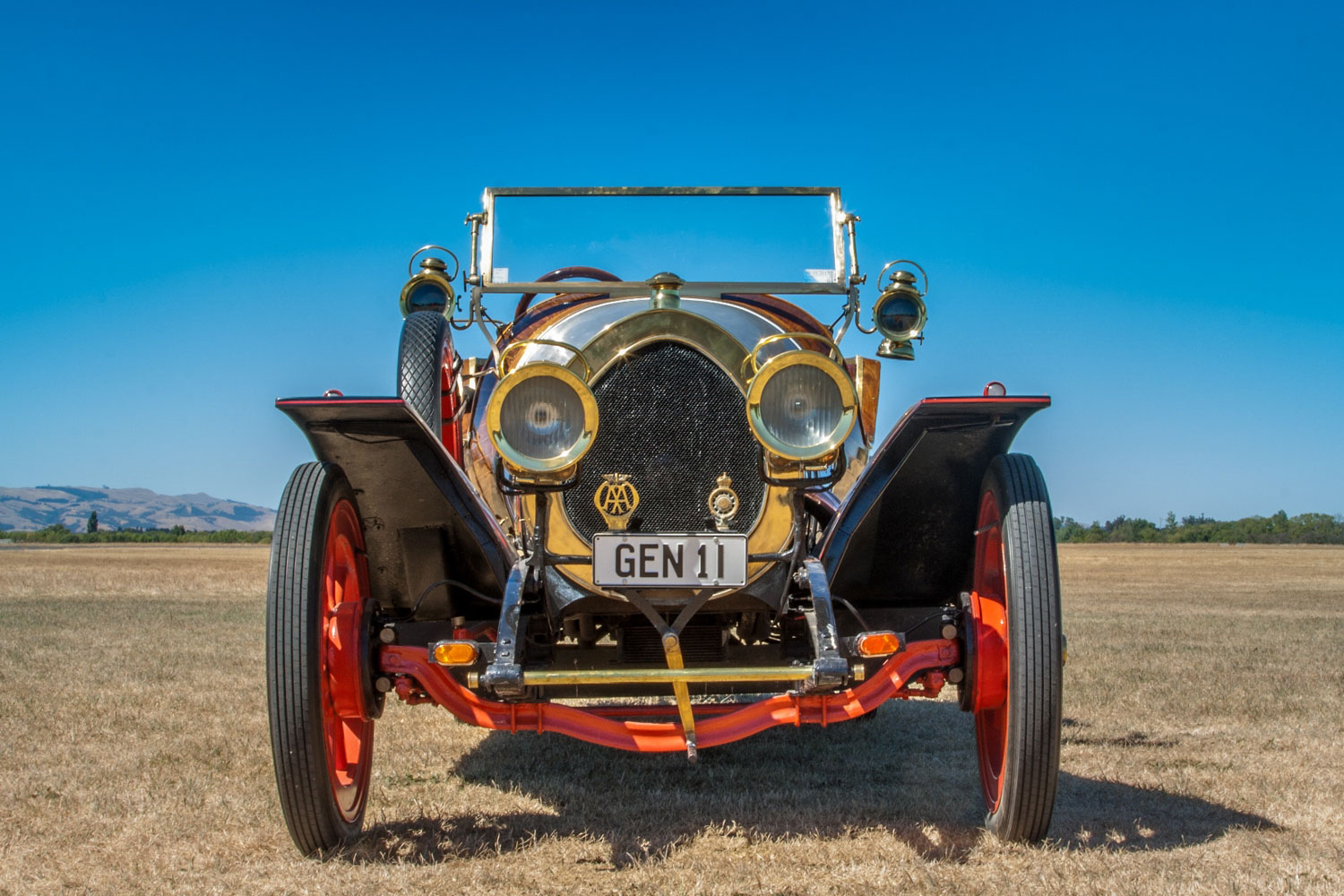
The Warbirds and Wheel exhibit will be the first time the car has been on display for such a time period. Originally owned by Pierre Picton of the UK, the car was bought by Sir Peter Jackson in 2011, before he shipped it to New Zealand.

Though there were several Chitty Chitty Bang Bang cars made for the 1968 movie, only one of them actually worked — this is that car, known as GEN11.

GEN11 was designed by Ken Adam and built by the Ford Racing Team. It is powered by a Ford three-litre V6 engine and has a dashboard plate from a British World War I fighter plane.
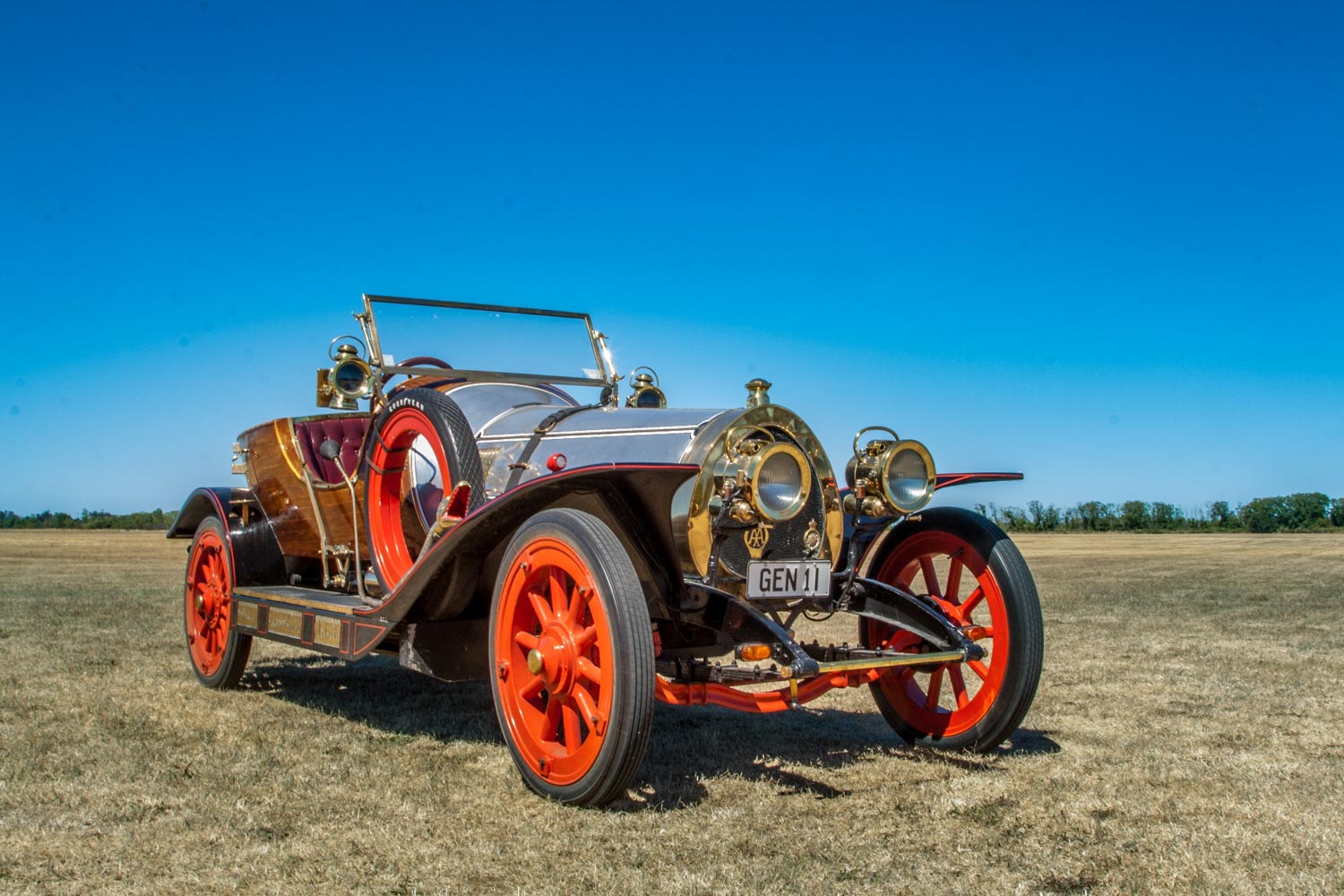
Chitty Chitty Bang Bang was completed in 1967 and registered with the number plate GEN11, given to her by Ian Fleming, who wrote the novel the film was based on. The registration spells the Latin word ‘genii’, meaning magical person or being.

The exhibit coincides with the Easter school holidays, making it a perfect event for the family. There will be many exciting and interactive ways for locals and visitors to get up close with Chitty during the month, including an artist-in-residence week, movie showings, dress-up ‘cars over coffee’ day, kids colouring competition, as well as movie memorabilia for sale. Chitty Chitty Bang Bang will be on display from April 1–30, and the museum is open seven days a week, from 9am to 5pm.
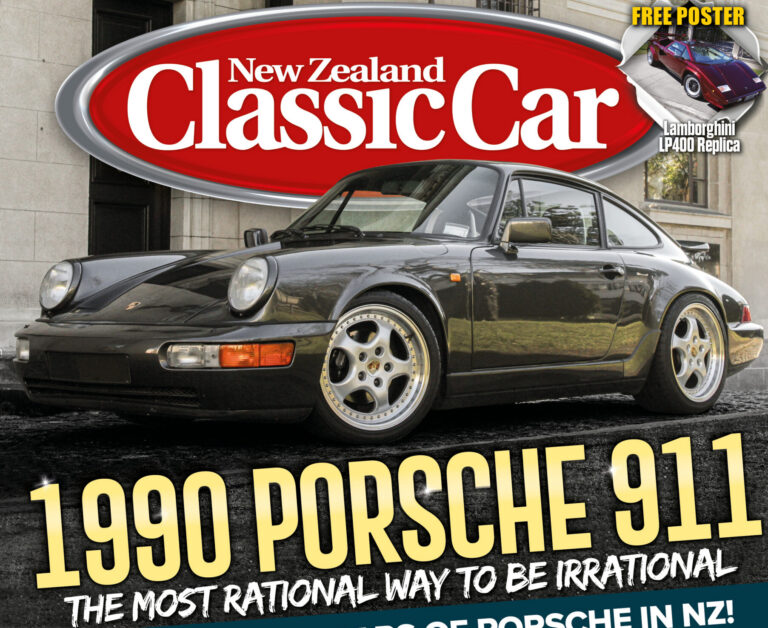
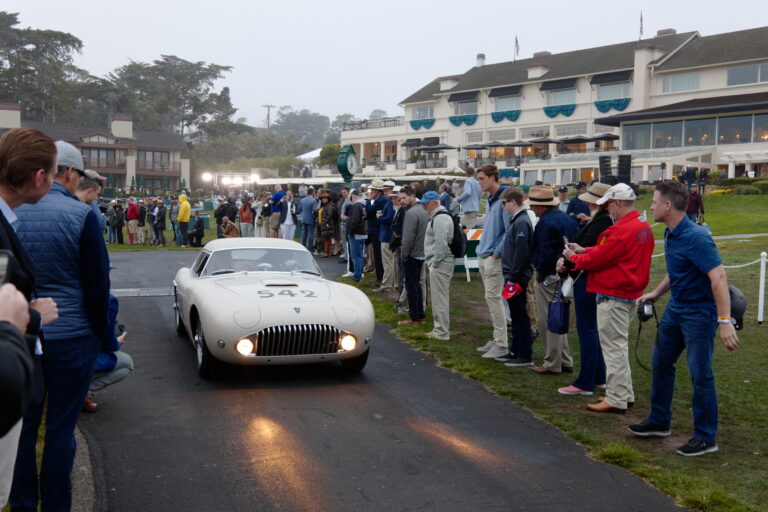
NZ Classic Car magazine, July/August 2026 issue 406, on sale now

Rebirth of a brilliant Grand Tourer –1973 Datsun 240Z
How often do we long for that ultimate dream sports car, and that dream comes true? This is about one of the most influential Japanese cars of all time, a car that changed the sports car market.
This is about much more than the restoration of an iconic classic sports car, the 240Z. It’s about the culmination of a dream over many years and the friendships made. It’s about the people who helped and the professionals whose approach ensured that the dream became a reality, an attitude typical of the industry we call ‘classic restoration experts’.
It is no surprise that the outcome after a lengthy search by Conrad Van der Geest for the right Datsun 240Z culminated in a trophy for the best Japanese car at this year’s Caroline Bay Beach, Rock N’ Hop at Timaru.
Originally a roadworthy car in running order, it was left-hand-drive and had been driven for several years by its Timaru owner, as Conrad explains.
“A neighbour, Dave Barron, knew I was looking for one and introduced me to the owner. I had seen the car being driven around Timaru. It was unusual for one of these coming originally from California, so it was a really clean car instead of rusty, as they are prone to rust. The story goes that the grandfather passed it onto his grandson, who decided to sell it, and that’s when it came over here.”
Every issue comes with our FREE huge wall poster; this issue, it’s our cover car for this edition, a 1973 Datsun 240Z

The butterfly effect

The man on the mountain bike pedalled over, taking it all in. Gazing in wonderment at this small Japanese coupe with butterfly doors, he said, “Wow, I have never seen one of these before. What is it?” When I told him it was a Toyota, he nearly fell off his bike.
The Toyota Sera is unique amongst ’90s Japanese coupes. The Sera, which is Italian for ‘evening’, can trace its roots back to Toyota’s AXV-II concept car. Launched as part of a trio of Toyota concept cars at the 1987 Tokyo Motor Show, it shared its underpinnings with the P70 Toyota Starlet. The similarities ended there, thanks to the AXV-II’s low-slung and rounded coupe styling with butterfly doors. These doors were held upright by gas struts when fully open. Glass covered the upper section of the doors and the rear hatchback.
These features, much to everyone’s surprise, were carried over to the production Sera in 1990. Toyota marketed the Sera, which means ‘will be’ in Spanish and ‘princess’ in Hebrew, as a funky alternative to the much-loved MR2.