
The Gullwing that topped Concours: 1956 Mercedes Benz 300SL Coupe

9 March, 2015

Knowing that there are only two early Mercedes Benz 300SL Gullwings in the country, the likelihood of stumbling across one in your local supermarket car park is extremely remote indeed. 

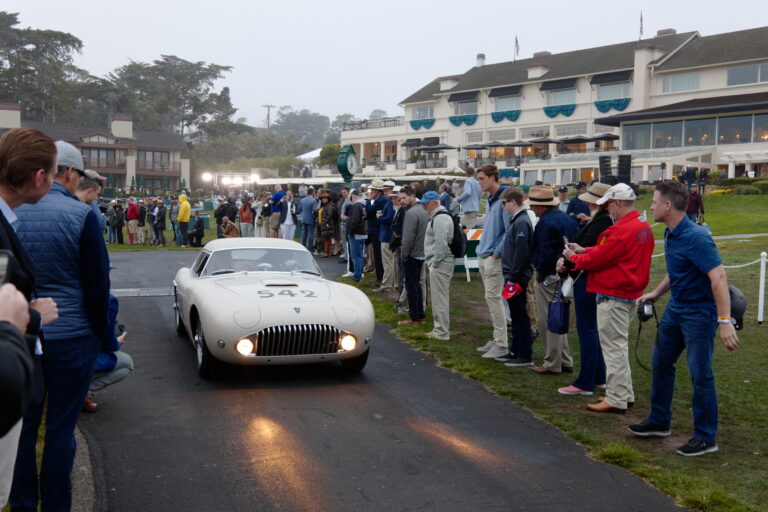
What makes this particular Gullwing so rare is that it’s number 27 of the 29 aluminium-body Gullwings ever built. This is the only one of the aluminium-body 300 SLs painted in this combination of MB 608 elfenbein (elephant ivory) with red, gabardine, tartan-plaid seats and cream leather — specification L2.

It is a matching number car with all components matching the build sheet, with the exception that it is trimmed in nappa leather rather than vinyl texleder.    

The car was delivered with, and still retains, the factory NSL-specification engine that includes high-performance camshaft, as well as a special suspension package. The restoration of this car has taken four years.

At the recent Ellerslie Intermarque Concours d’Elegance, this stunning example won the coveted Master Class competition against four other world-class restorations, scoring 564 points out of a possible 590 points. This is the third-highest score achieved at this event in its 42-year history. 

Read all about this 1956 Mercedes Benz 300SL Coupe in the upcoming New Zealand Classic Car Issue No. 292.
The motor car as an art form

We have certainly come a long way since the exhibition entitled 8 Automobiles, shown at the Museum of Modern Art in New York in the autumn of 1951, the first exhibition concerned with the aesthetics of motor car design.
It was here that the often-used term ‘rolling sculpture’ was coined by curator Philip C Johnson, director of the department of architecture and design, when he said, “An automobile is a familiar 20th century artefact, and is no less worthy of being judged for its visual appeal than a building or a chair. Automobiles are hollow, rolling sculptures, and their design refinements are fascinating. We have selected cars whose details and basic design suggest that automobiles, besides being America’s most useful objects, could be a source of visual experience more enjoyable than they now are.”

More to the point

This Daimler SP252 is so rare, few people know it exists. It’s one of a kind. It’s the only surviving, in fact the only SP252 ever completed; the would-be successor to the SP250 Daimler Dart. It is also the last sports car to have been designed by Jaguar’s legendary founder, Sir William Lyons.
Perhaps one of the original Dart’s biggest problems was it’s somewhat-divisive looks. It certainly went well enough to win fans, although Sir William wasn’t among them. It crushed the opposition in the Bathurst six-hour race, finishing five laps ahead of anyone else, and it was snapped up by police forces in Britain, Australia, and New Zealand, as it was the fastest thing on the road.
So you’d think a stunning new body with the magic Lyons touch would have been a surefire success. Why this car never made it into production is still something of a mystery, as the official explanations barely stack up.