The Metalman Targa NZ Rally Sprint, held at Ardmore Airport on Sunday, March 8, officially kicked off the Targa NZ 2015 calendar. The two short stages (6.7km and 8.33km) wound through closed-off roads of the rural Franklin and South Auckland areas, and with each stage raced three times, the day would net competitors just over 60km of flat-out racing. The one-day event provided a great warm-up to the season, as well as providing potential competitors the chance to get a feel for the Targa experience.
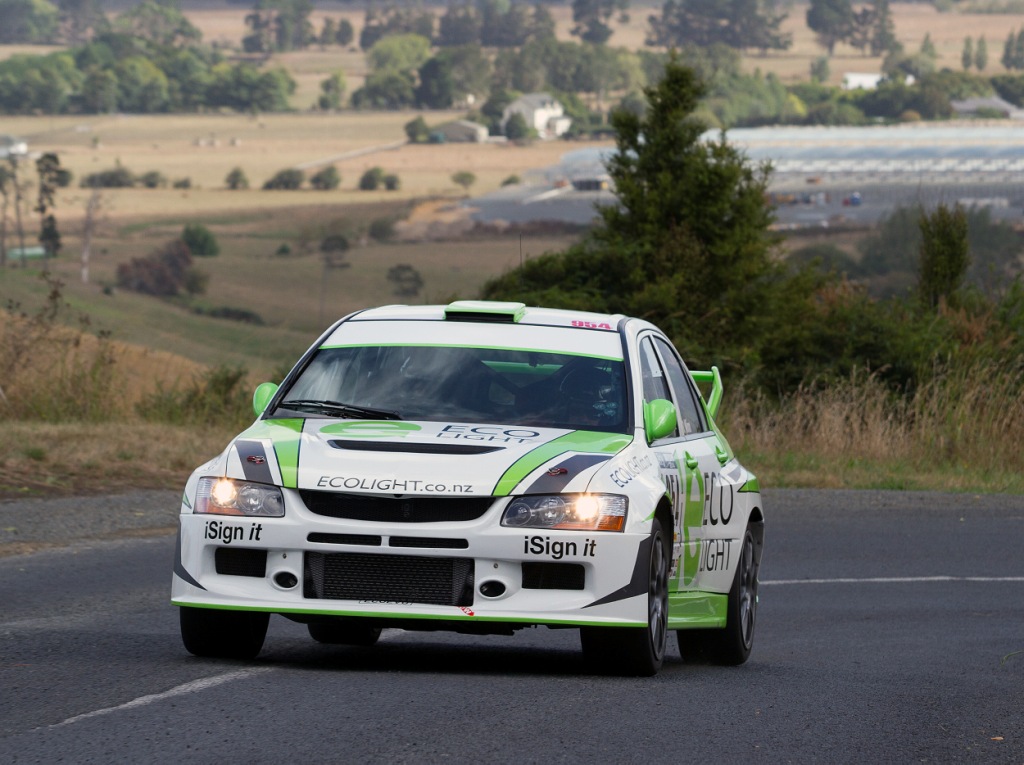
Glenn Inkster and Spencer Winn, currently defending Targa New Zealand winners, started with a bang, claiming the overall victory and class (Allcomers 4WD) victory. The duo, racing in a Mitsubishi Evo VIII, took the overall win by 26 seconds over Leigh Hopper and co-driver Simon Fitzpatrick, who also competed in the Allcomers 4WD class, behind the wheel of a Subaru Impreza WRX.
It wasn’t plain sailing for Inkster and Winn, though — in two of the stages, the margin was a scant second between them, with Hopper and Fitzpatrick winning the second stage by three seconds.
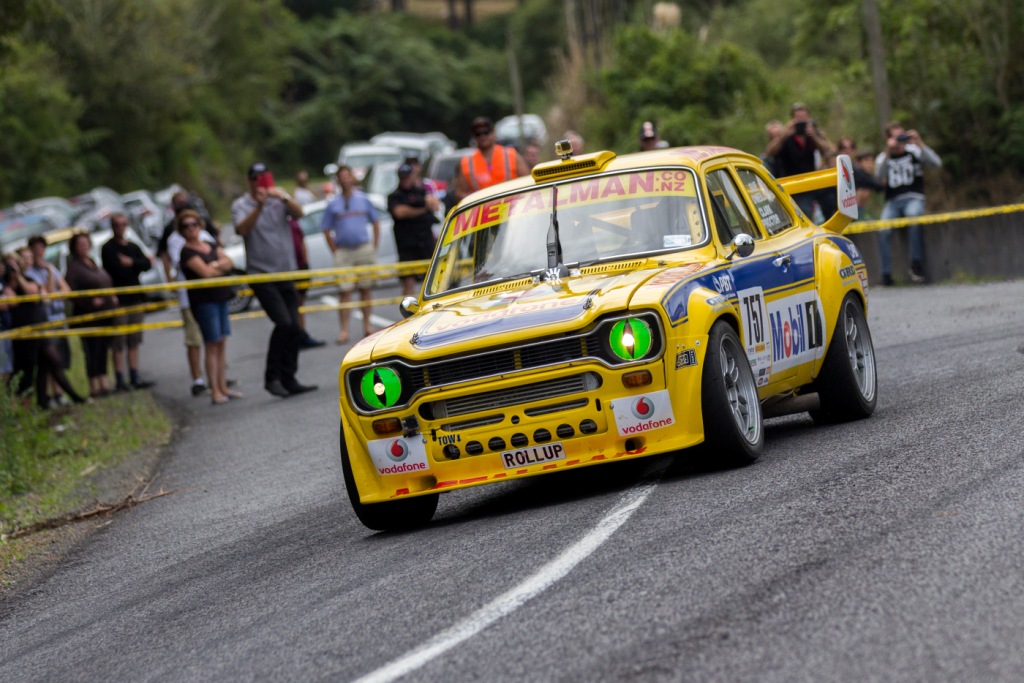
Placing third overall, and claiming the Modern 2WD class honours, was Clark Proctor (the event sponsor) and co-driver Sue O’Neill. The rapid Metalman Ford Escort Mk I, powered by a turbocharged Nissan V6, made its return, following a crash and gearbox problems encountered in last year’s Targa South Island.
Though unquestionably quick, Proctor and O’Neill didn’t get the win without a fight — in this class, it was Ross Graham and his V8-powered Holden Torana giving them a headache. Graham took class wins in three of the stages, until Proctor’s pace built up, whilst Graham began feeling the heat from the late-model V8 BMW M3s driven by Simon Clark and co-driver Donald Howard, and Aaron Robinson and George Randle. The net result of this effort saw Graham place second in class, and sixth overall.
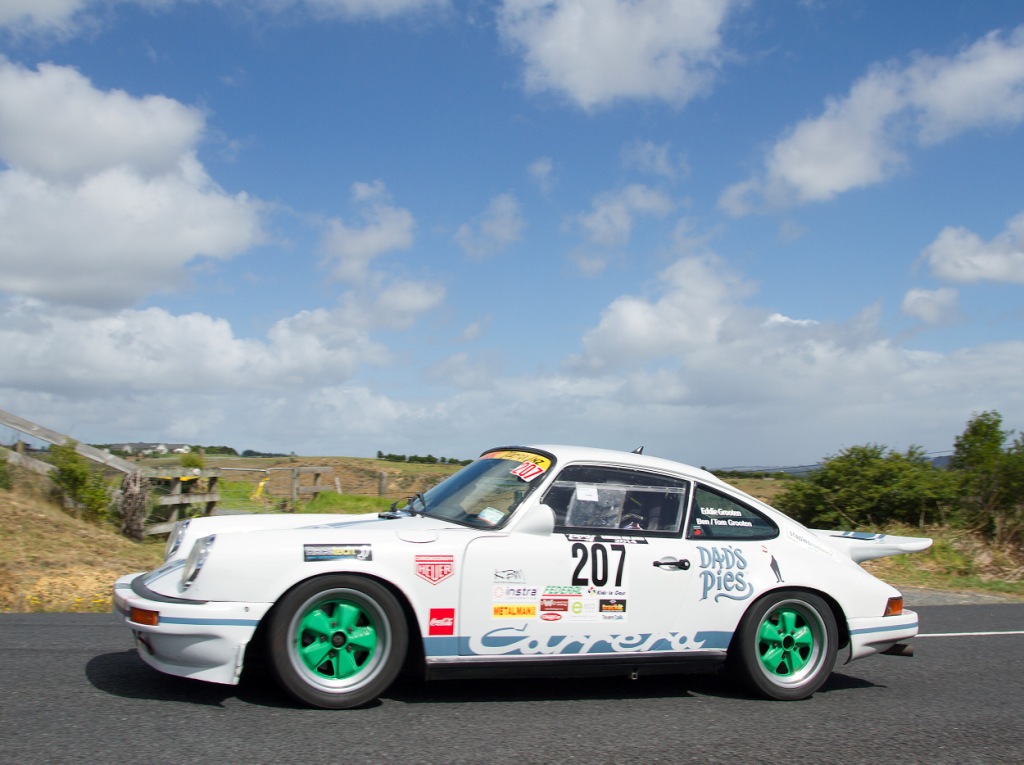
The always-entertaining Classic 2WD class also held some engaging dogfights between competitors, with Andy Mygind and Anthony Baker setting the pace early on, before being slowed by a misfire, and then fuel-starvation issues — allowing father-and-son team Eddie and Tom Grooten to snatch the class win in their beautiful 1978 Porsche 911.
With a good day’s racing all wrapped up, the Metalman Targa Sprint was a well-enjoyed event, and truly set the tone for the 2015 season. The next event, the three-day Targa Bambina from Auckland to Whitianga, and on to Rotorua, will run between May 16–18, and the annual six-day Targa New Zealand event will run from October 26–31.
2015 Metalman Targa Rally Sprint
Overall
- Glenn Inkster/Spencer Winn
- Leigh Hopper/Simon Kirkpatrick
- Clark Proctor/Sue O’Neill
- Nic de Waal/Danny de Waal
- Brian Green/Fleur Pedersen
- Ross Graham/Carmel Graham
- David Rogers/Aiden Kelly
- Simon Clark/Donald Howard
- Aaron Robinson/ George Randle
- Cameron Ross/Matthew Buer
Allcomers 4WD
- Glenn Inkster/ Spencer Winn
- Leigh Hopper/Simon Kirkpatrick
- Nic de Waal/Danny de Waal
- Brian Green/Fleur Pedersen
- David Rogers/Aiden Kelly
- Chris Lane/Karl Celeste
- 7. Kevin Williams
Classic 2WD
- Eddie Grooten/Tom Grooten
- Ken Northin
- Patrick O’Donnell
- Linden Bawden/Rhys Bawden
- Gary Ashton/Chris McMurray
Modern 2WD
- Clark Proctor/Sue O’Neill
- Ross Graham/Carmel Graham
- Simon Clark/Donald Howard
- Aaron Robinson/George Randle
- Cameron Ross/Matthew Buer