Every month, we ask the cover-car owner for the concept they’d most like to build or see built. Here’s the concept from Johnny Burkhart, owner of the amazing Plymouth Road Runner that graced the cover of NZV8 Issue No. 120.
Take another look at the amazing Road Runner on the cover of Issue No. 120 — the bloke behind the build clearly ‘gets’ cars, right? He’s absolutely nailed it with this one. So, what would happen if Johnny Burkhart were to go all out and build the car he’s always wanted to?
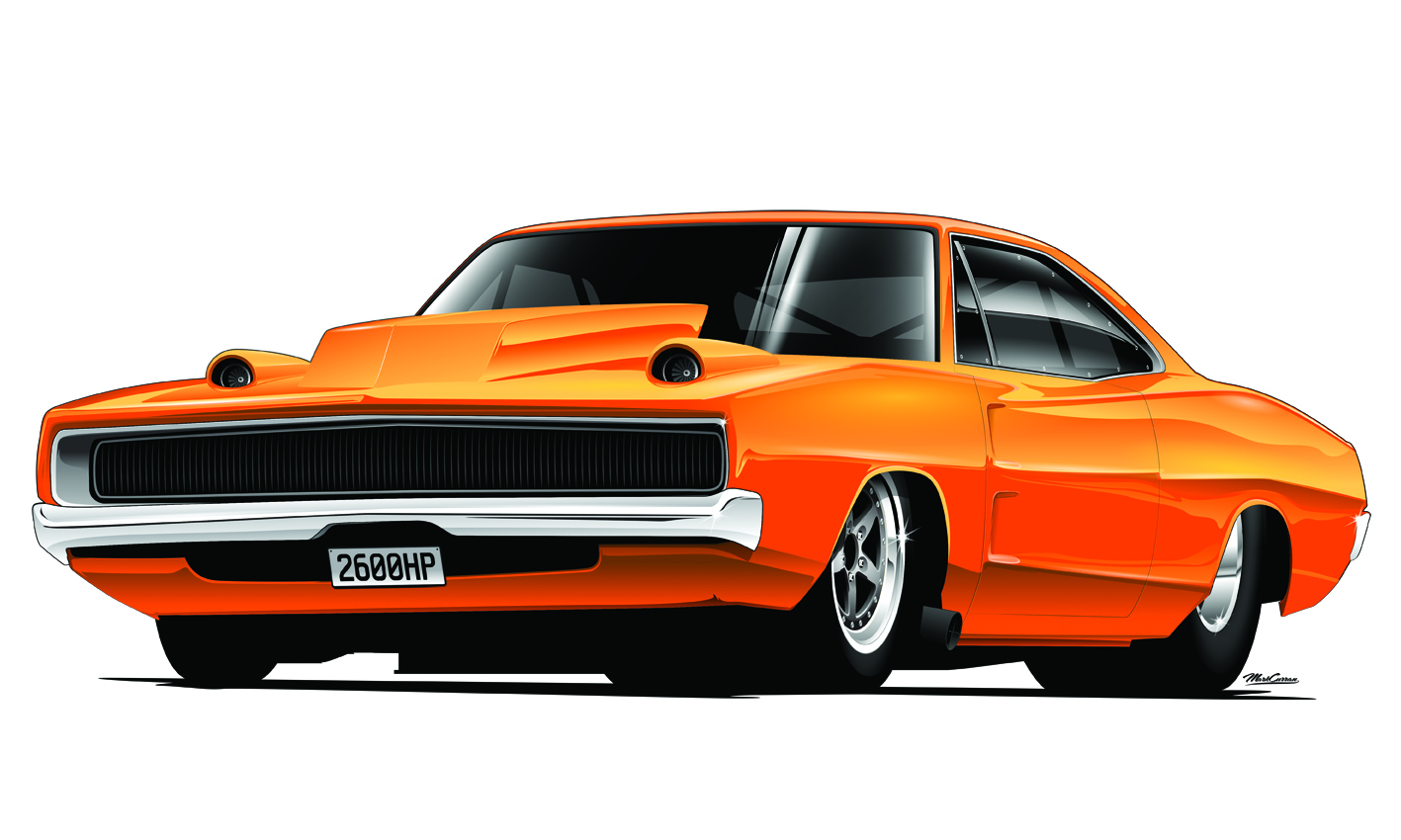
“An idea I’ve had — well, one of them, anyway — is to build a seven to eight second–capable, street-driven 1968 Charger,” Johnny says.
“It would start with a full, custom tube–frame chassis, with a street-friendly interior, including a semi-race version of an original dash. Outside would get a three-layer pearl Lamborghini Arancia paint — orange is cool!
“Wheels would need to be huge double beadlock Weld Racing 15×15 billet rears with 33×16 Goodyear rubber, and a front runner set-up like on my Road Runner.
“Engine wise, I’d do a fuel-injected and twin F2 procharged set-up, with the prochargers mirrored and facing forwards, so the belt drive faced the rear. Set up like that, the compressor housings would sit just out of the bonnet, and each would have its own integrated bonnet intake. I’d run a Nelson Racing Engines Elephant twin fuel intake, so I could run 98 octane on the street tune, and switch to run C16 and over 2300hp on a race tune.
“The base engine would be none other than a Hemi, displacing 572ci and detailed in black with silver fittings. It’d push out around 2000hp on a street tune, so would require a four-linked Strange Dana 60 rear, with a Rossler TH400 three-speed transmission.”
While the Charger would certainly be a bit of a handful to build, and would likely cost far too much, we really want to see it done. Come on, Johnny, get building!
What are your thoughts? Would you do anything different? Post your ideas in the comments below.
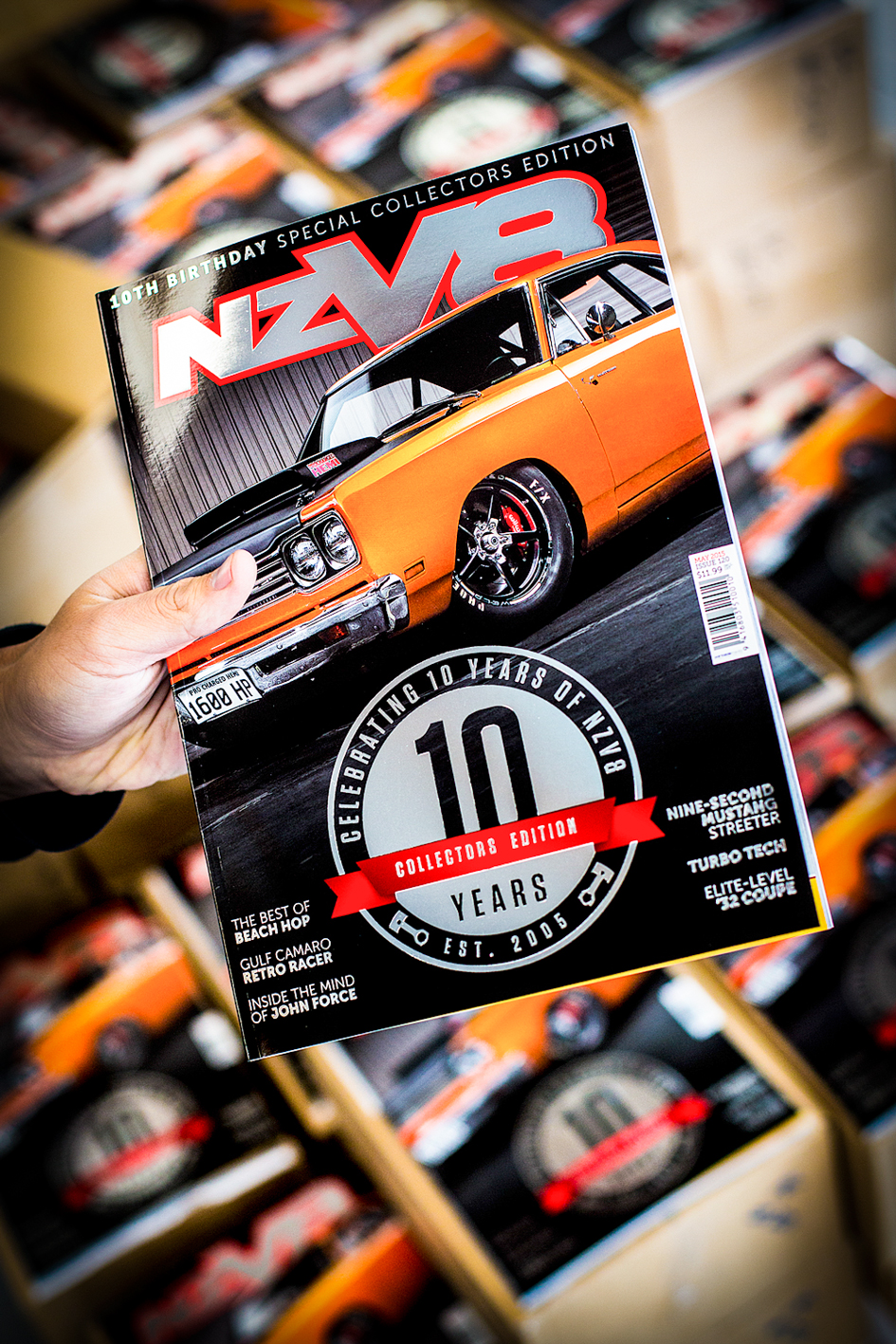
You can read about Johnny’s amazing Procharged Hemi–powered 1969 Plymouth Road Runner in NZV8 Issue No. 120, on sale now, or it can be purchased online here.