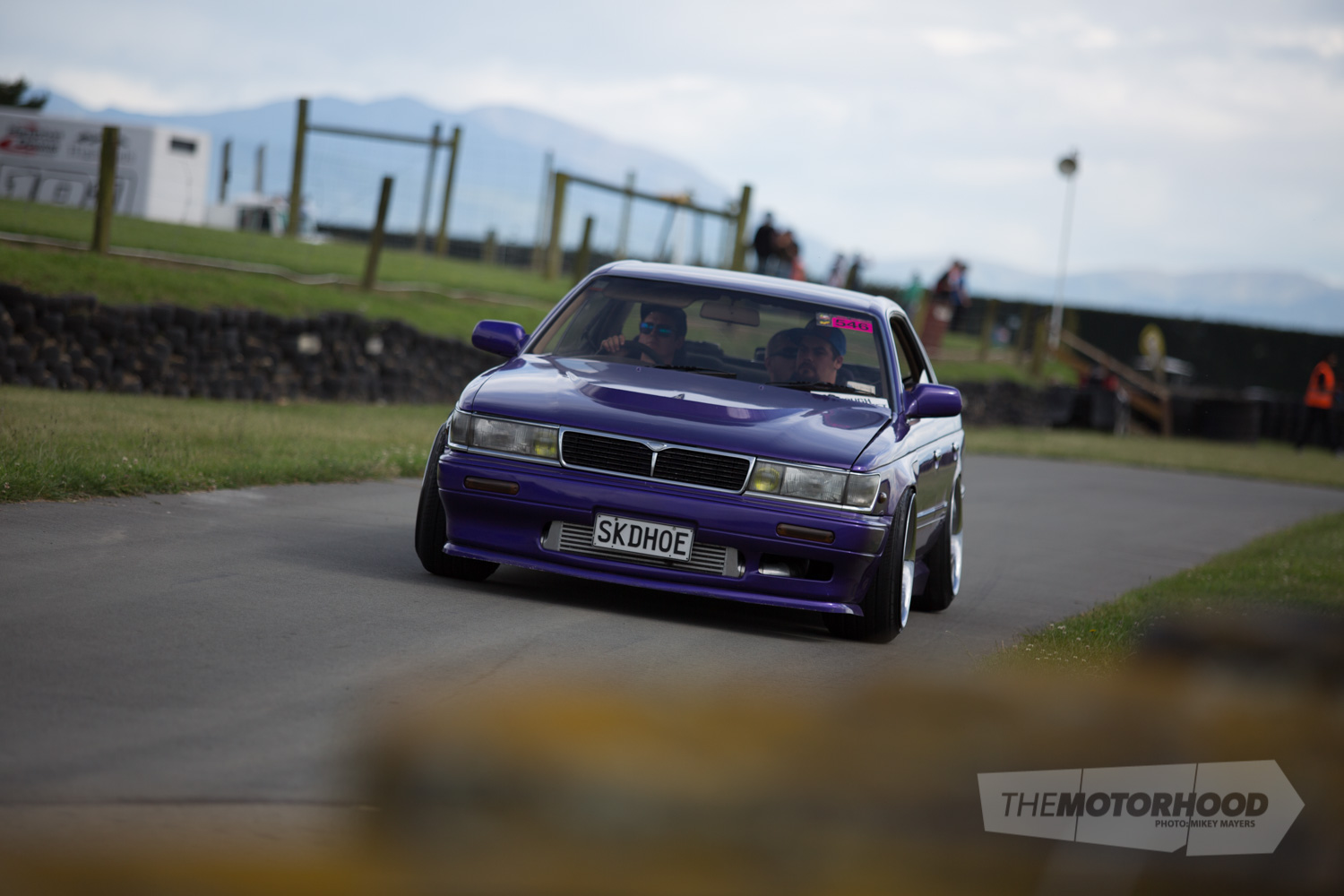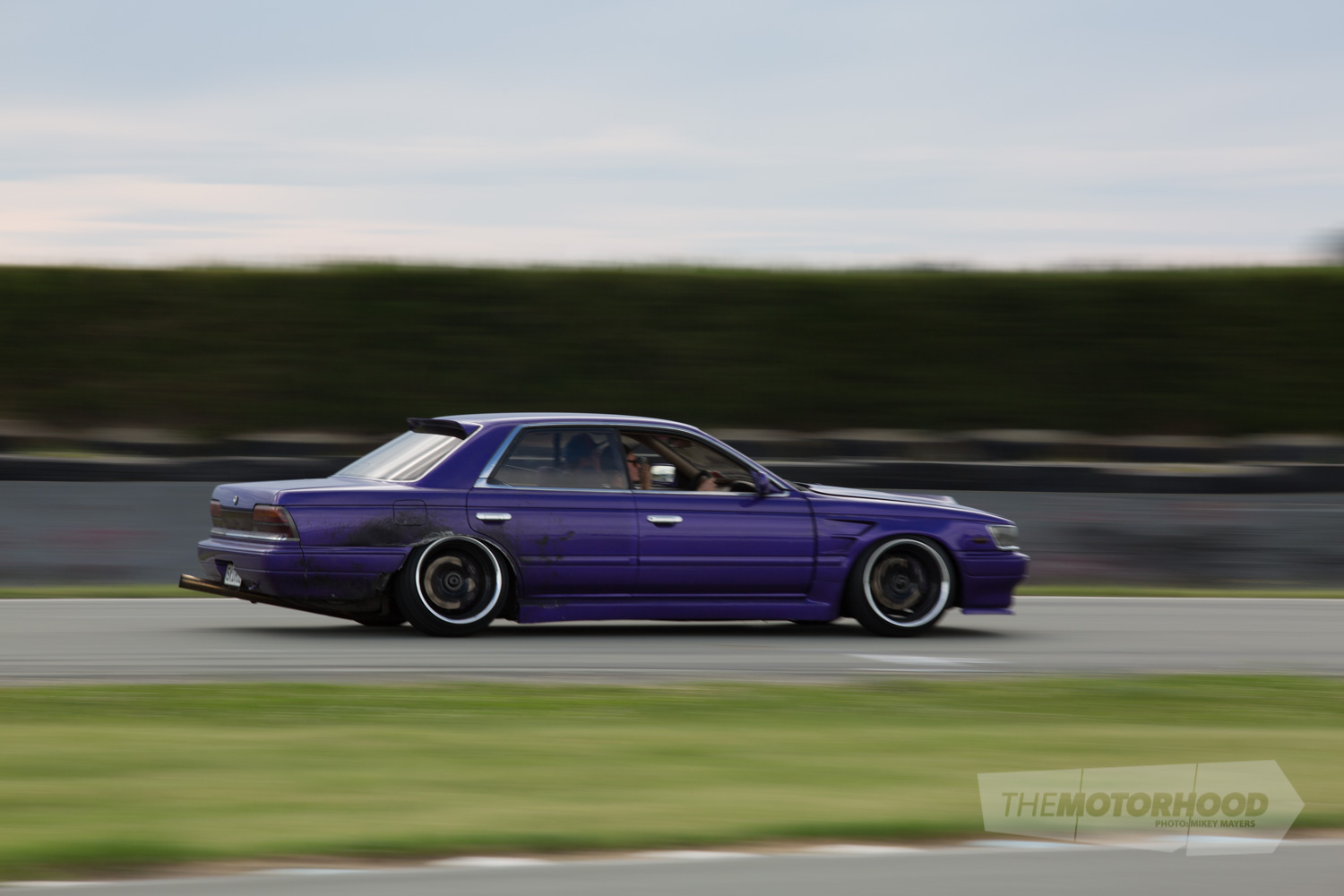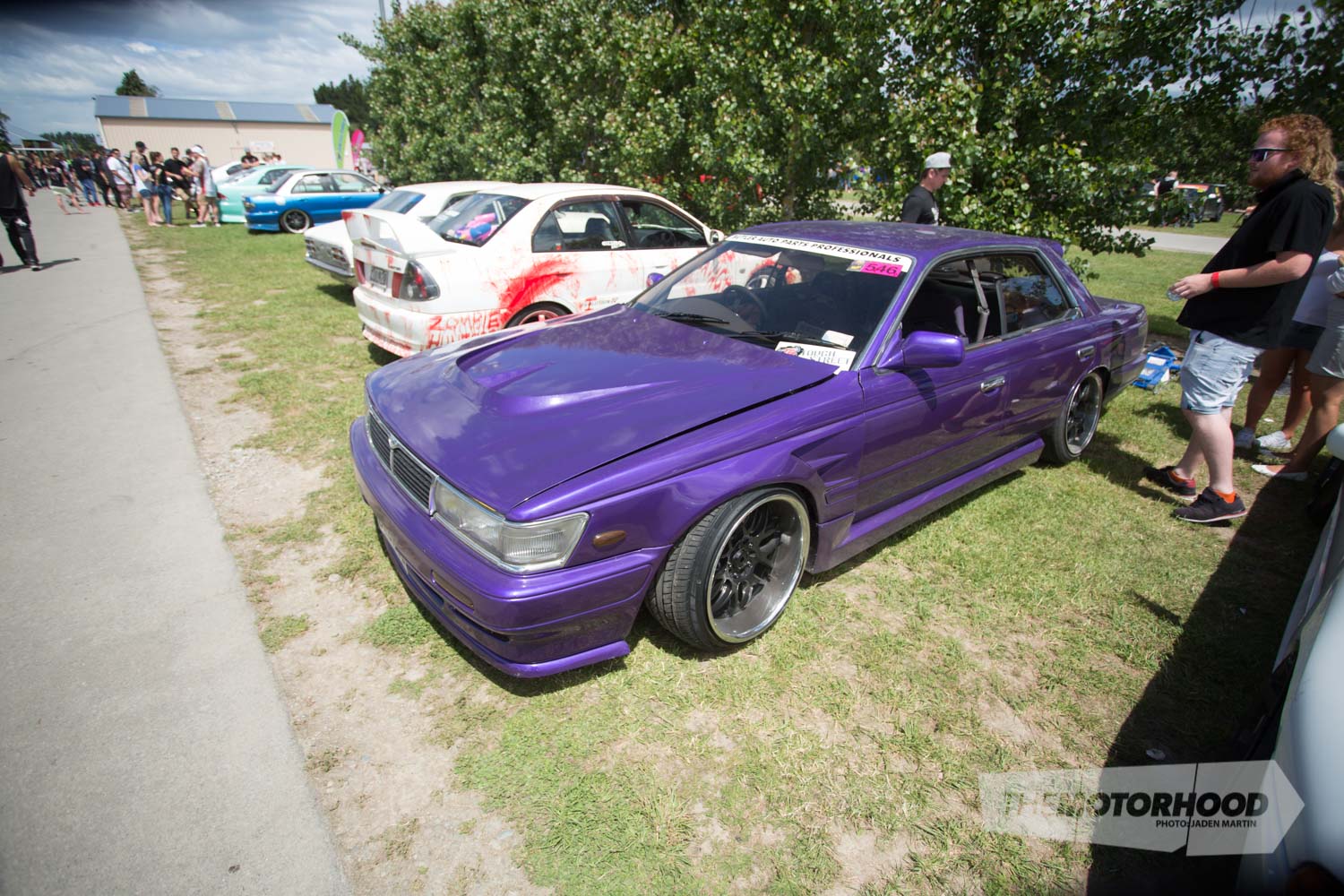
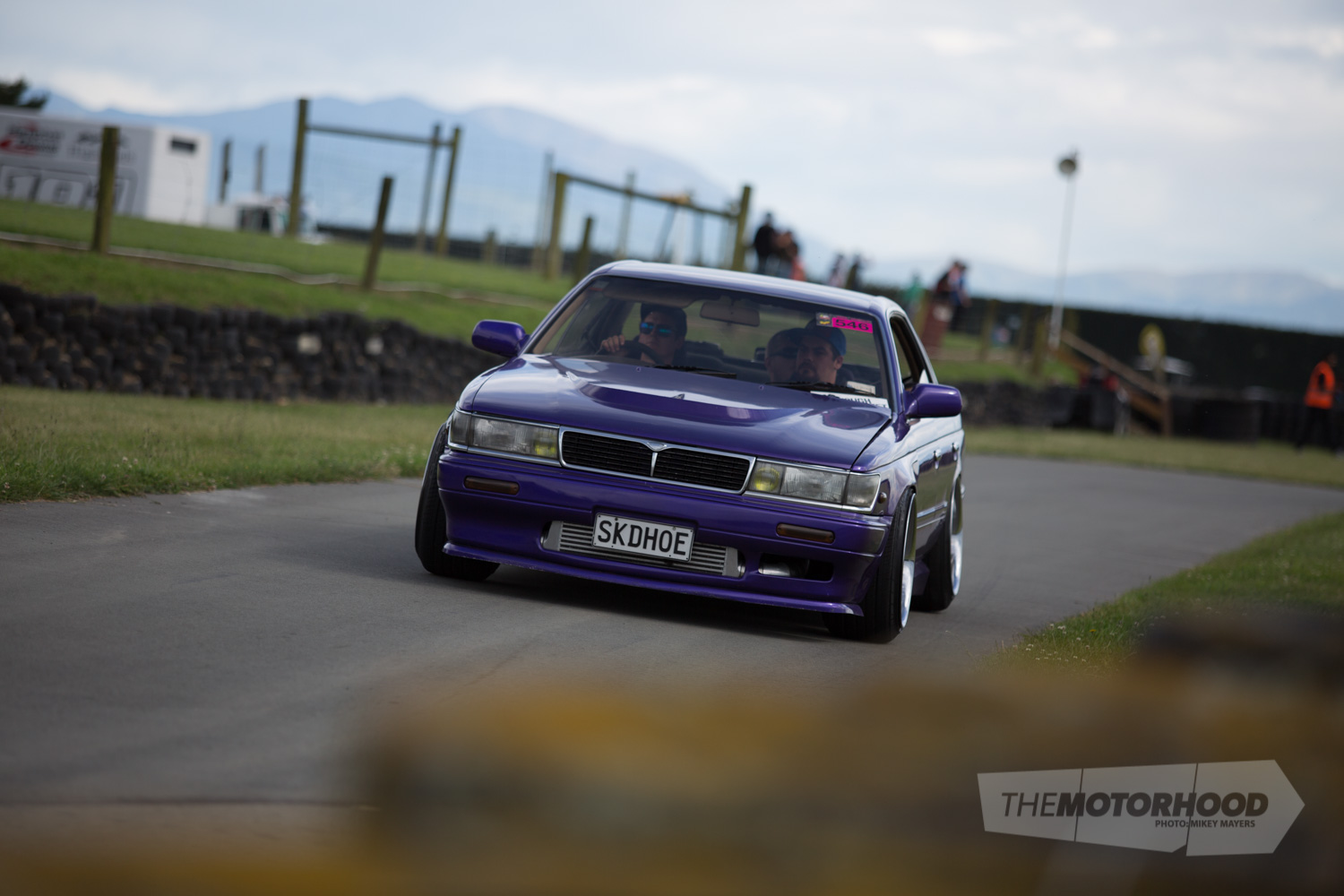
The drifting sessions were a popular part of the track day and what would drifting be without the presence of a Nissan Laurel (C33). This purple-licked example was a standout for us, and it has, erm, a few ways to catch your interest.
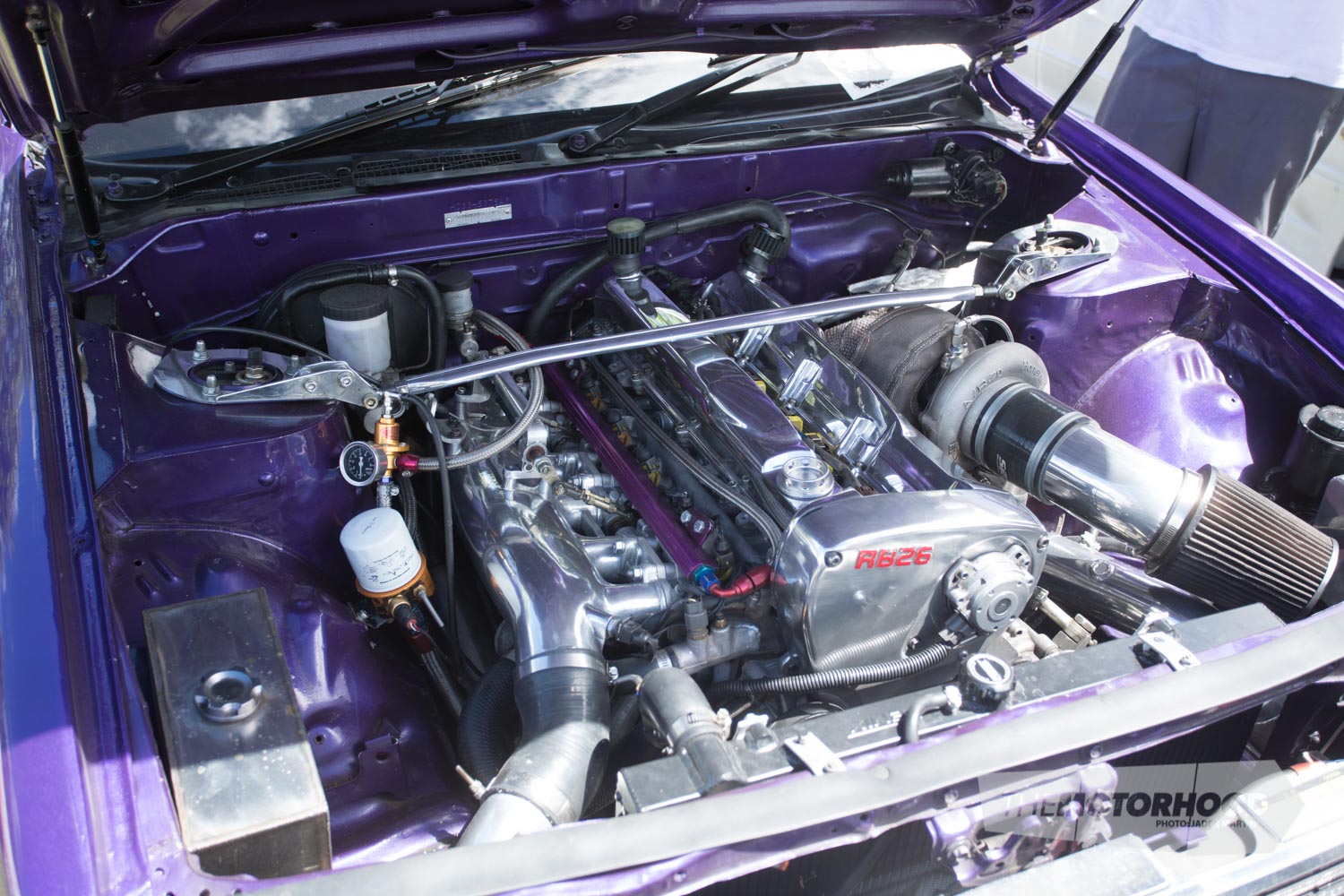
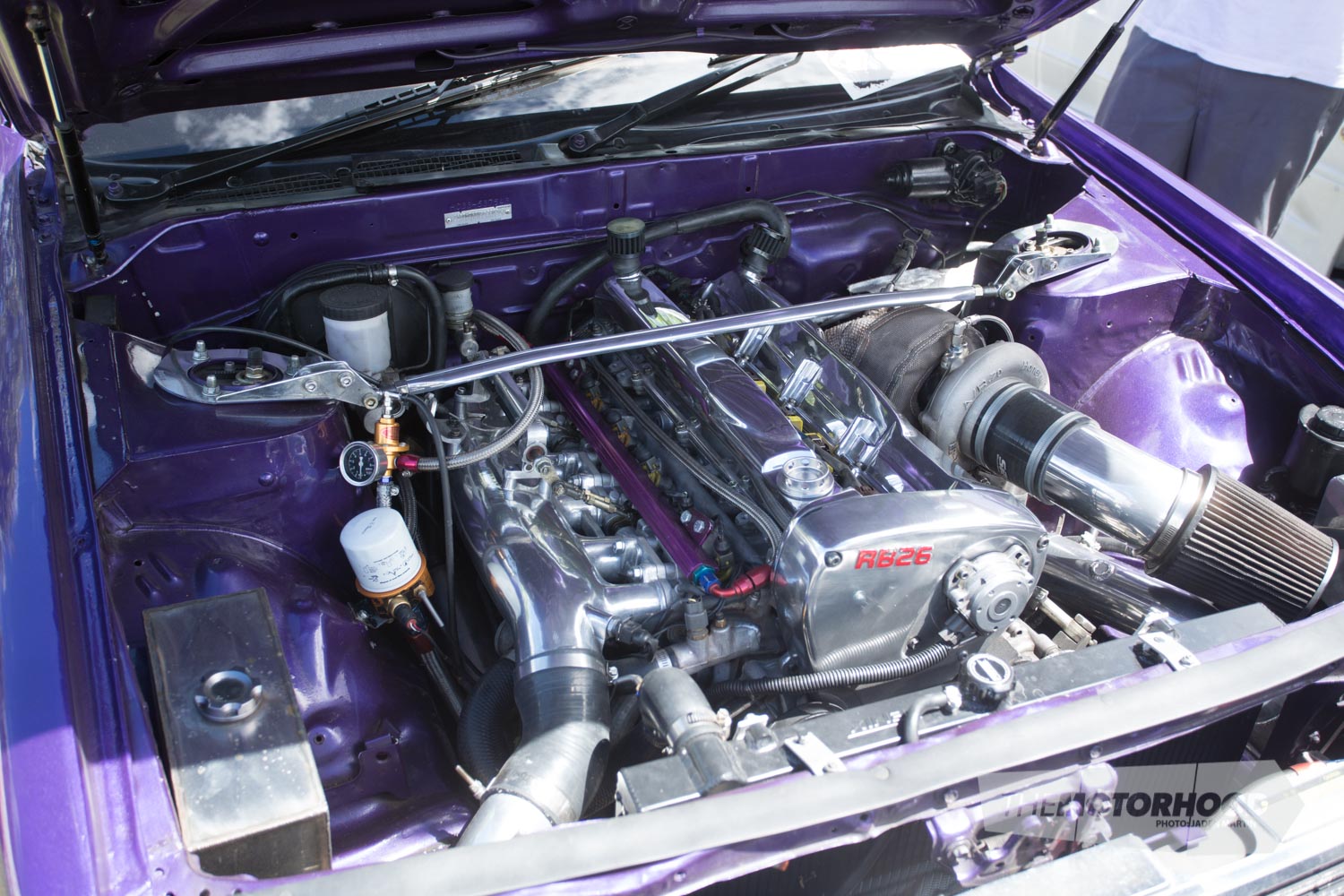
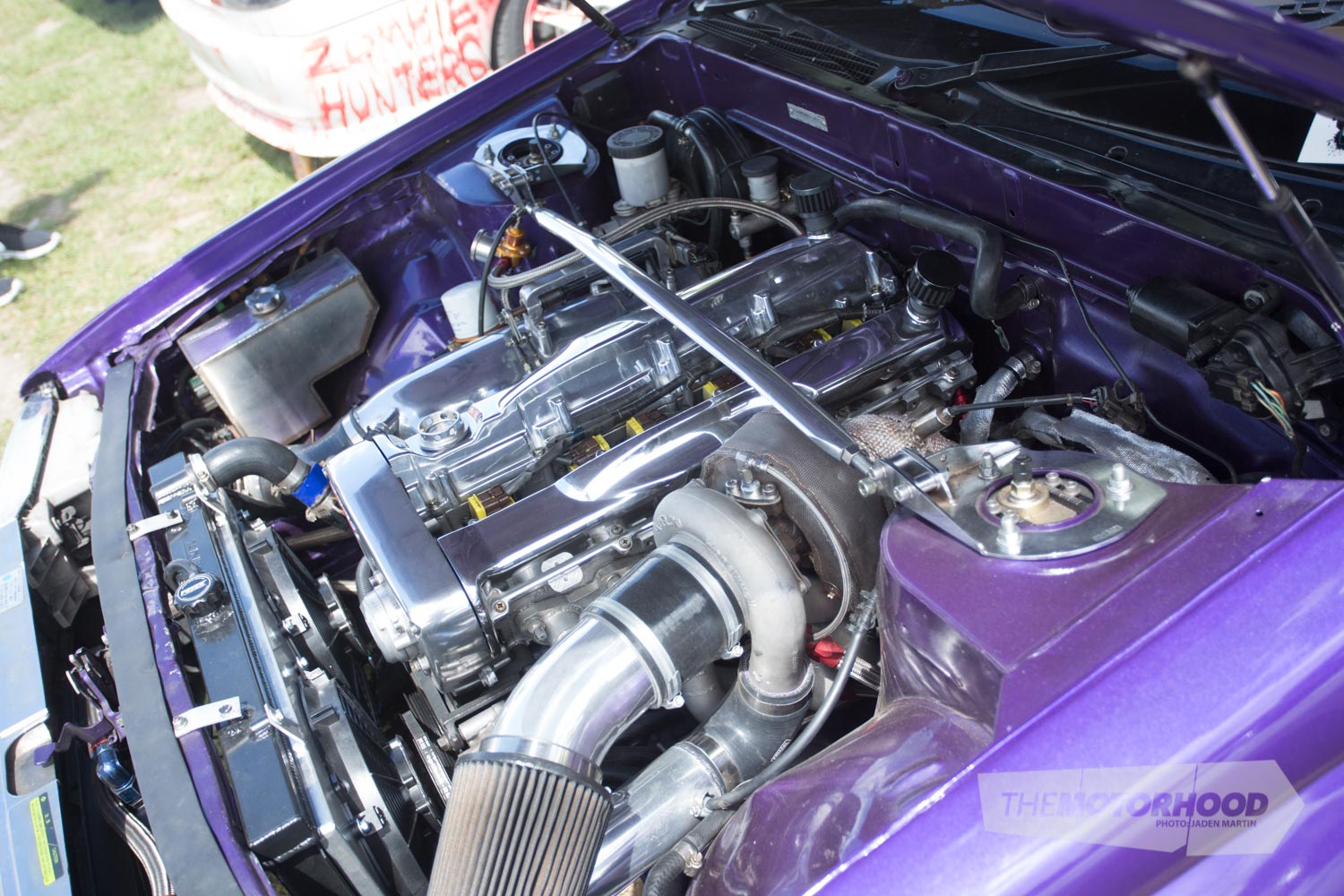
The first of which, is when the owner, Connor, popped the bonnet and the blaring sun reflected heavily of the full polished covers and engine accessories. Although it may appear to be an RB26 at first glance, due to the fact that it wears the covers of one, it is really a RB20DET underneath. This normally wouldn’t excite us too much, however, having seen and heard the little two-litre causing an absolute ruckus on track earlier, it was something we didn’t mind one bit.
Connor summed it up pretty well, too: “Not many people give the RB20s the credit they deserve and all want the RB26 because it’s ‘that’ engine. I chucked the covers on, mainly because they look better, but to unwork what people think of them and prove they are up to the job. Most people don’t believe it’s actually a RB20 at all.”

Up for the job it was, after peeling out many-a-lap out on track and entering the burnout competition for one of the best skids of the day. Backing the heart is a five-speed RB25DET ‘big box’ and Connor has opted to run twin-calipers down the back for the hydraulic handbrake.
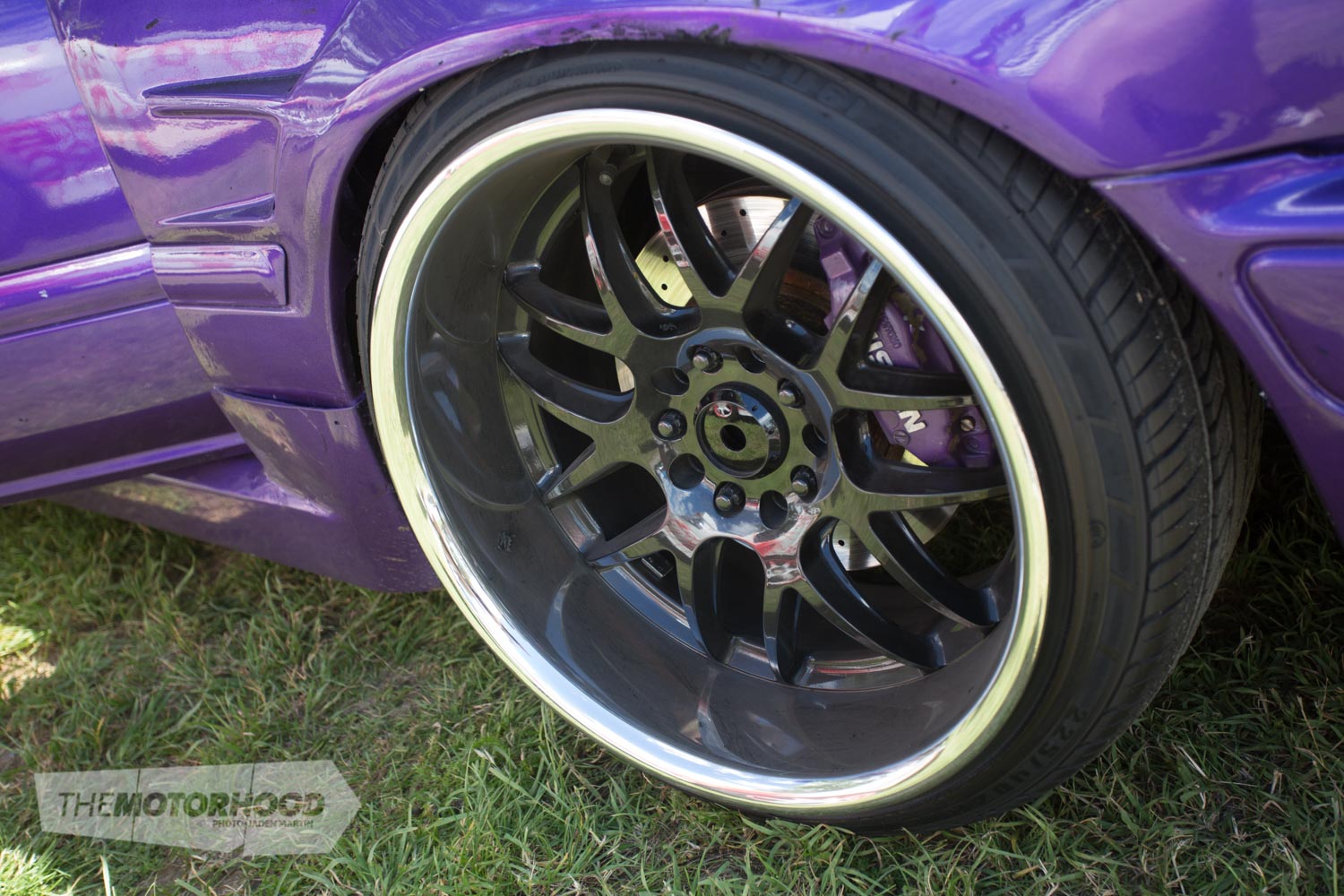
Suspension is taken care of by a set of Oz Racing coilovers and includes Hardrace front and rear sway bars, and the full arms catalogue for good measure. WorkshopX side skirts and front guards help to a set of 18×10.5-inch 18p XXRs for a low and tough, yet functional, stance.
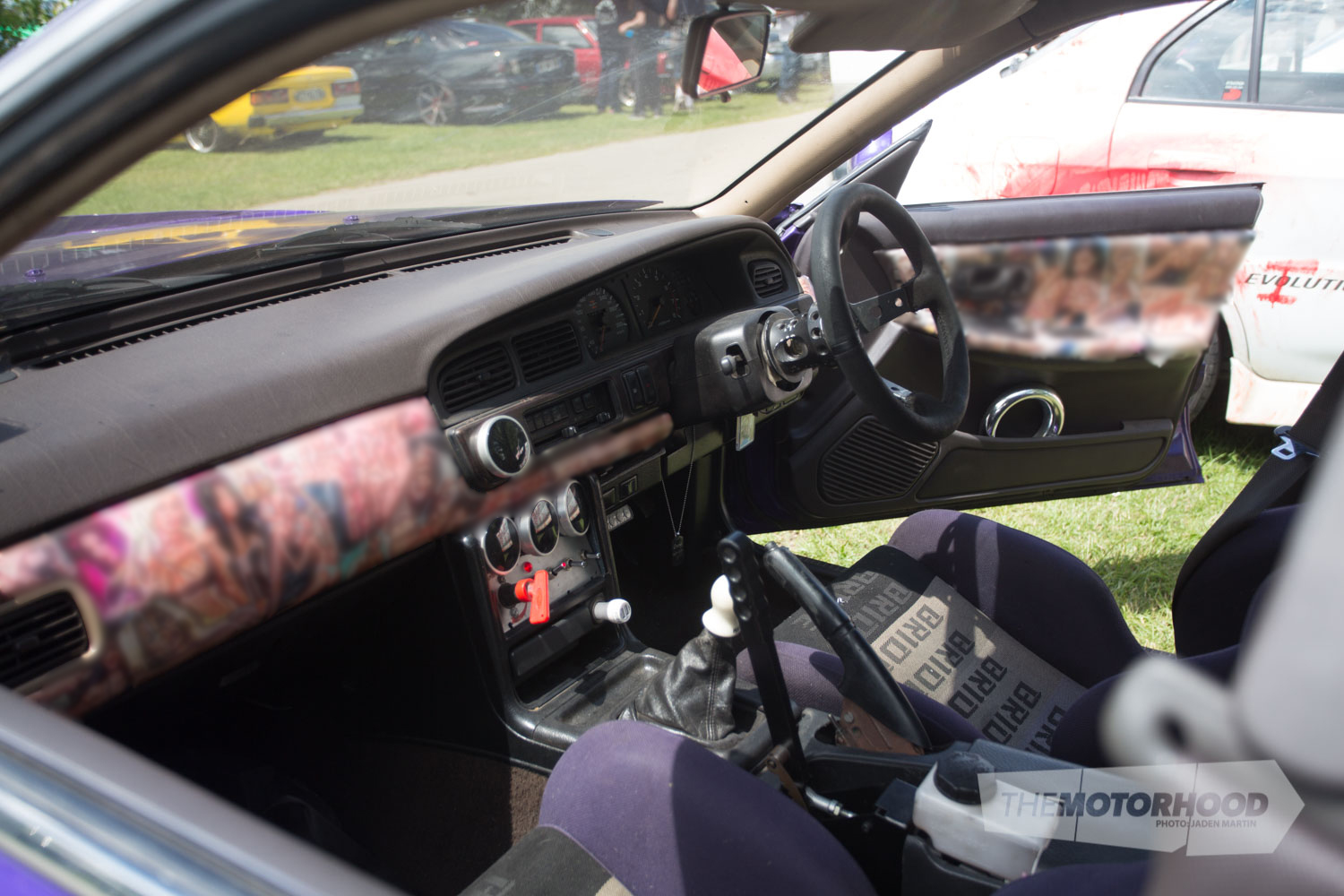
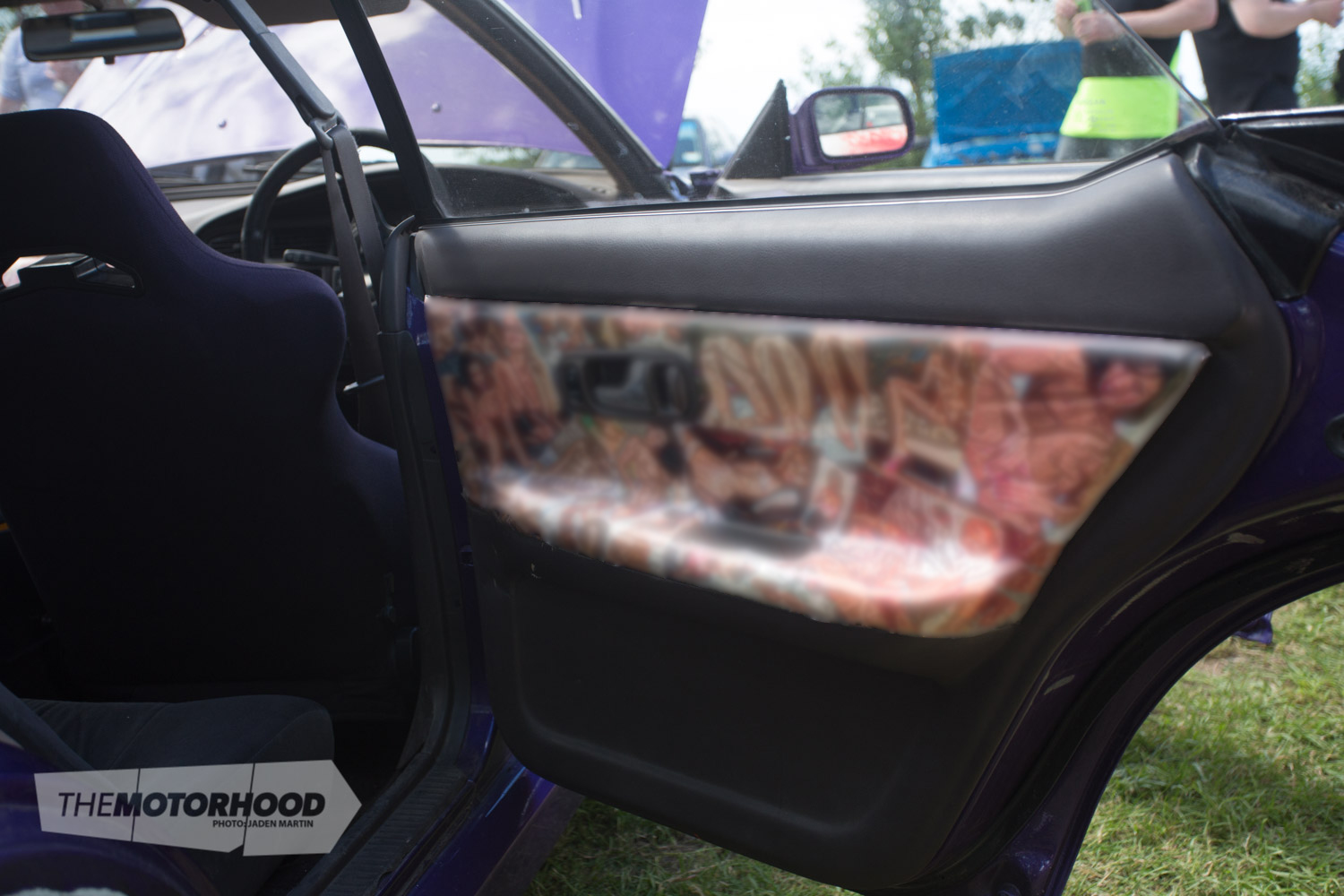
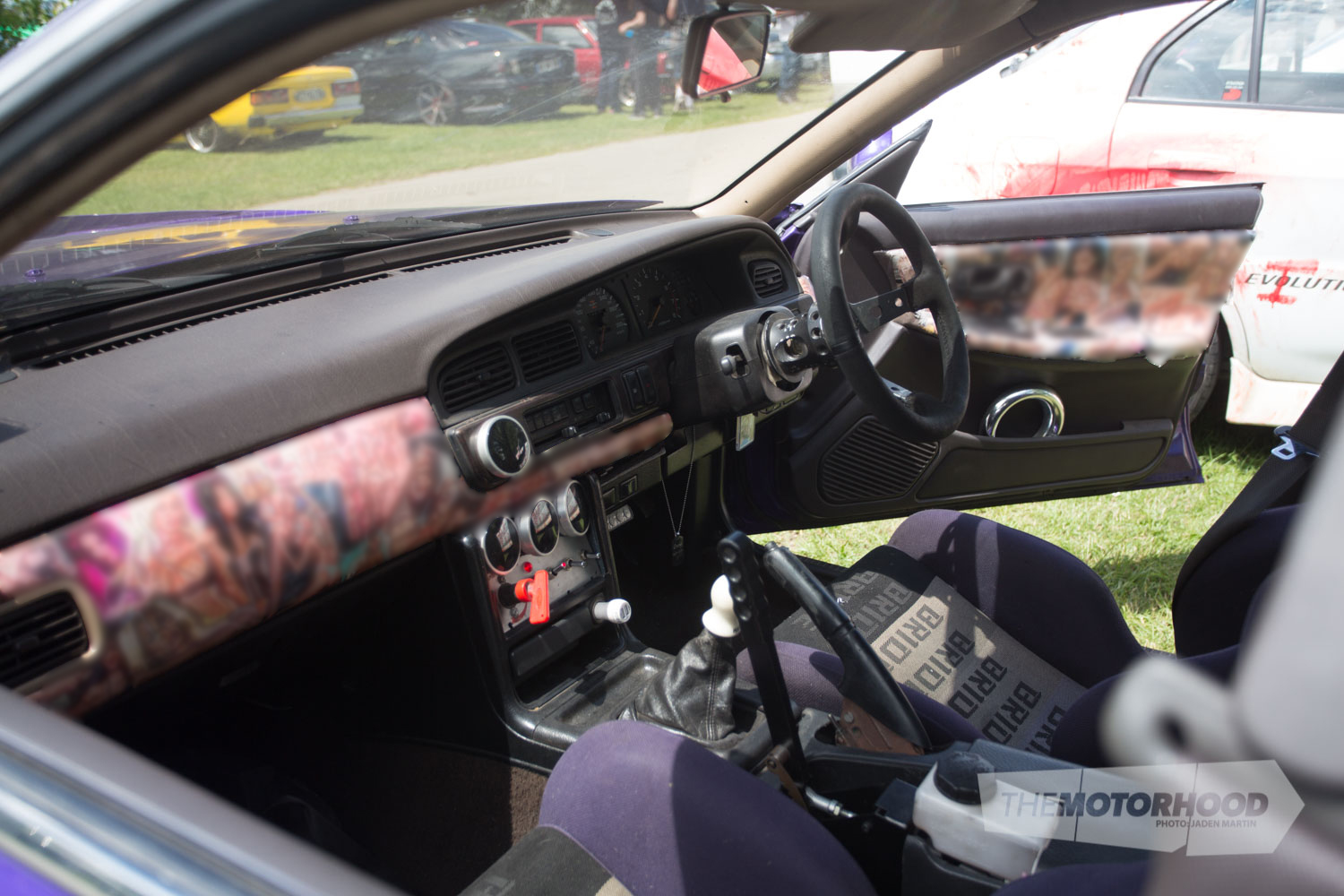
Now, with all that out of the way, the second attention grabber, and one that easily drew the biggest crowd when the doors were opened, is the ‘adult content’ plastered interior. Unsure of why he exactly decided to dropped $40 on the 18+ magazines, only to tear them up and stick them on all four door cards and the dash, Connor was rather pleased with his modification. His friends were also more than happy to point out their favourites and had even gone as far to name them. We can’t show you the pictures in their full glory, but you get the idea from the blurred versions…

This is the quintessential home-built drift car in New Zealand; low, loud (in both sound and aesthetics), and more than functional.