NZPC: Hi, Justin. That’s a pretty rad Civic you’ve built — what made you choose a Honda chassis?
Justin: It was originally my daily-driver, and I got a new job that required me to buy something newer, but I’ve always owned Hondas. So, I bought a 2008 Civic for the new daily and started what was supposed to be a weekend swap on the EG. Once I decided there was no time limit for swapping it, I began to look at rebuilding the motor instead.
It’s an exceptionally clean example —were you going for a ‘sleeper’ vibe with the build?
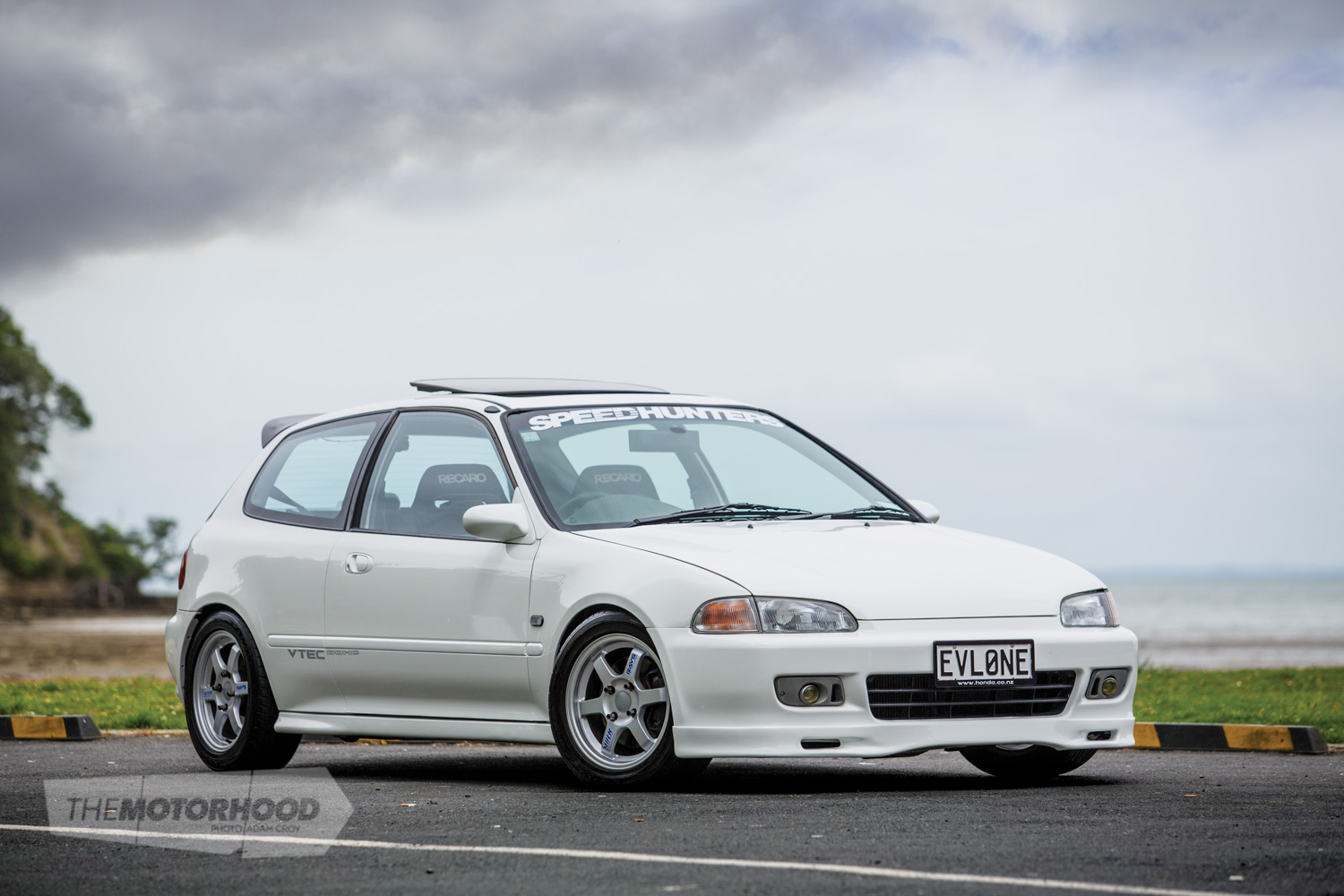
I’ve always been a fan of Honda OEM styling. It was not exactly a sleeper to start with, but I did want the car to look like a tidy Civic to the regular eye, and only someone who knew their stuff about Hondas would be aware there is a bit more to it.
Do you like to carry out most of the work yourself or get the experts in to sort it out?
The things that I’m confident about, like suspension and interior pieces, I’ll do myself, but, for the engine and drivetrain bits, there were a few Honda builders I had always wanted to work with on a car of mine, the likes of Lynn Rogers and close friend Duane Rawlinson, so they helped put my set-up together.
Yeah, sometimes it’s best to leave it to the guys who know what they’re doing. Have you had the chance since to test it at any track days?
I’ve taken it to a round of Nightspeed Drag Wars and ran a 14.1-second pass without launching it. I also took it to the NZHondas North Island Mega Meet, which was hosted at Hampton Downs raceway; that was a good chance to test it out and see what the complete package could do. I was pretty impressed with how it went.
Awesome. The power-to-weight must be crazy. After testing it, would you have done anything differently?
[Laughs] It would have been nice to have finished it quicker so I could have enjoyed it more with fewer time constraints, but it has been a pretty enjoyable build over the years.
Cheers for chatting with us, Justin.
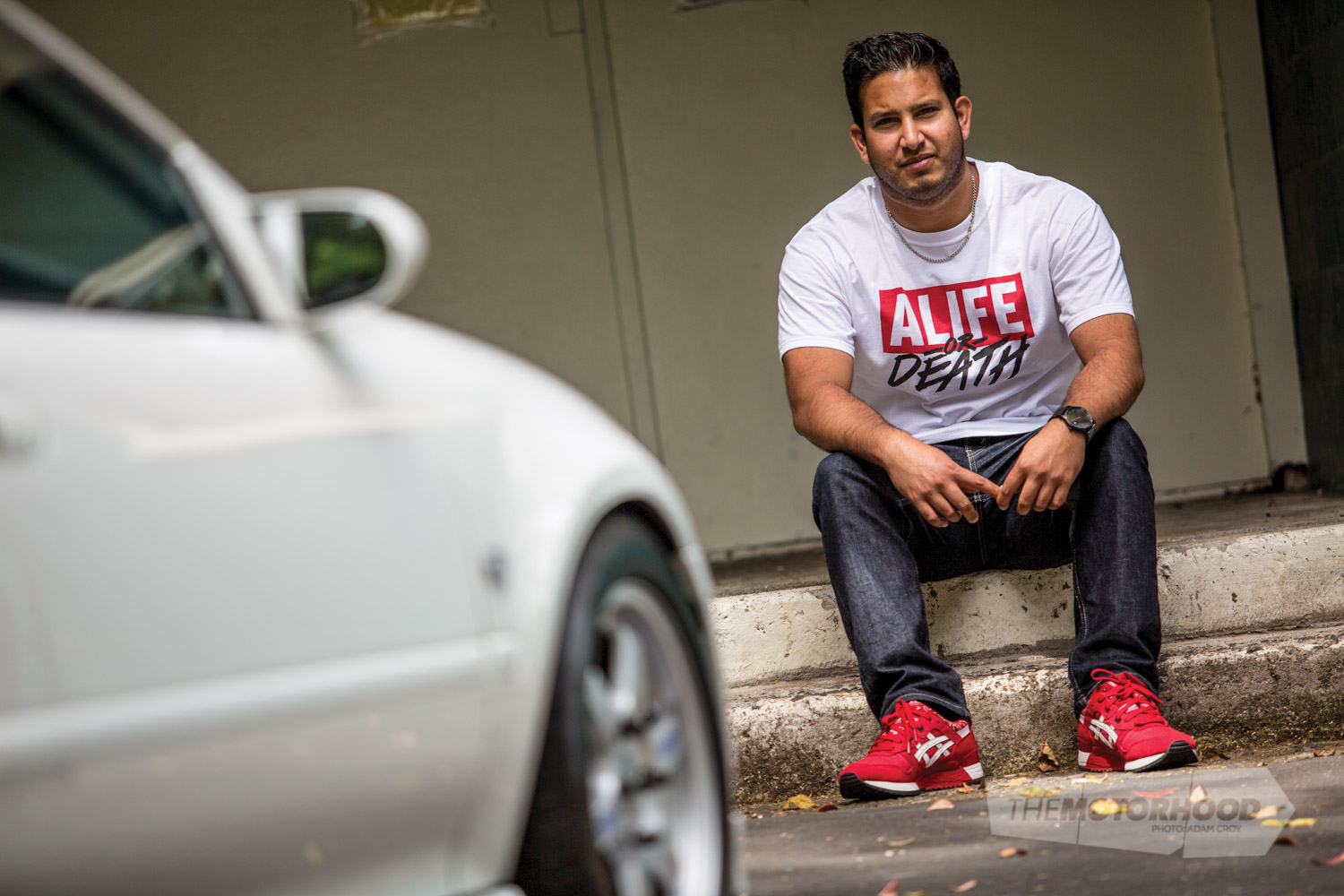
Name: Justin Pillay
Location: Auckland
Occupation: Account manager
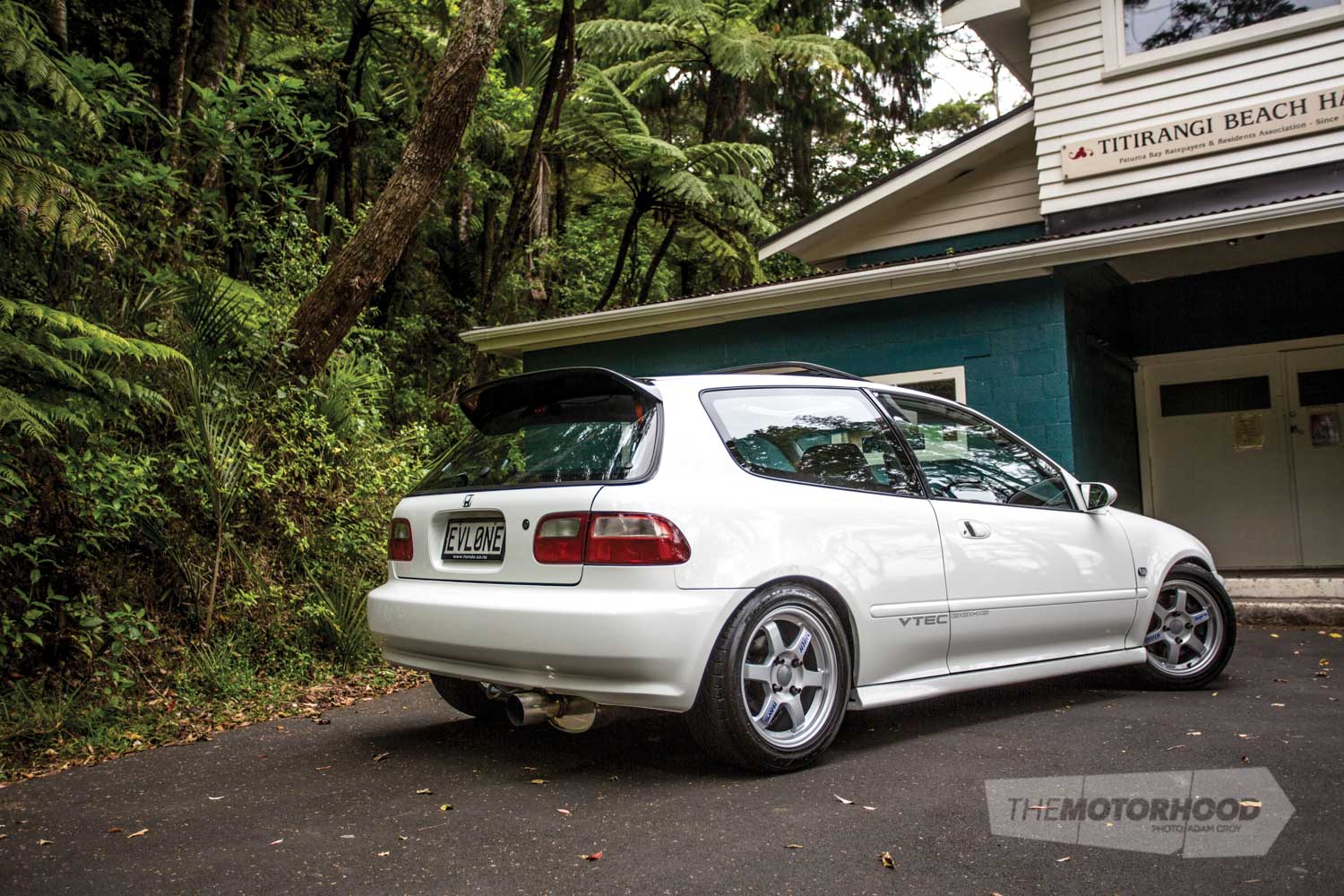
Make/Model: 1993 Honda Civic GTi
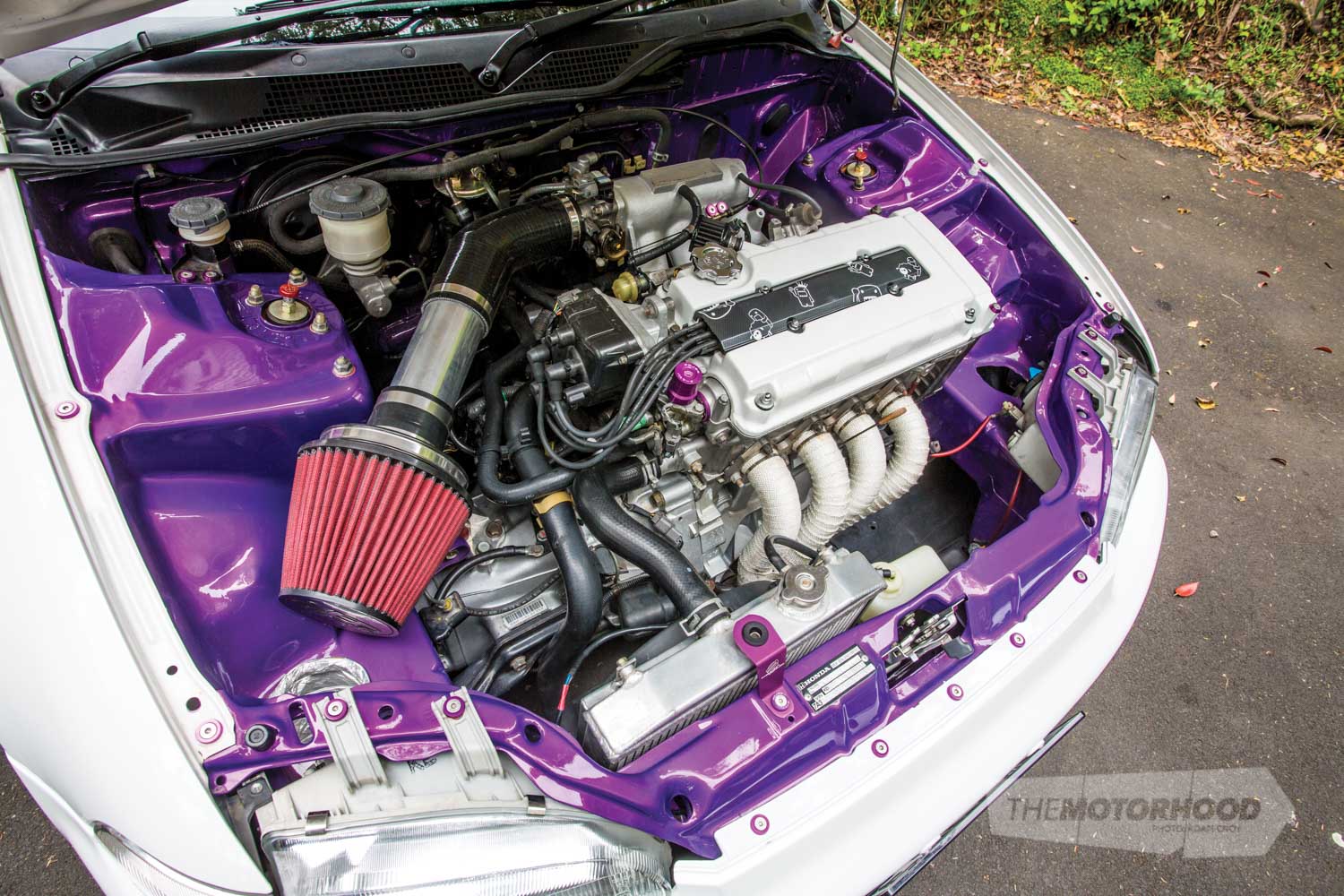
Engine: Honda B18C 1797cc four-cylinder, B18C2 crank, Type-R rods, Type-R pistons, ARP main studs, baffled sump, ported and polished head, Type-R valves, springs, and retainers, Type-R camshafts, Pro Wholesale adjustable cam gears, ARP head studs, Skunk2 intake manifold, three-inch alloy intake pipe, Blox Velocity air-intake kit, Mugen four-into-one headers, Fujitsubo Legalis R 2.5-inch exhaust system, Type-R injectors, Walbro 500hp fuel pump, iridium platinum plugs, 8mm Eagle ignition leads, three-core alloy radiator
Drivetrain: Factory five-speed, Buddy Club short shifter, Exedy HK04HA Single Sports Series clutch, Type-R flywheel, Type-R LSD
Interior: Recaro black SR3 front seats, Civic Type-R rear seat, ’96 Type-R steering wheel,
EG6 manual cluster
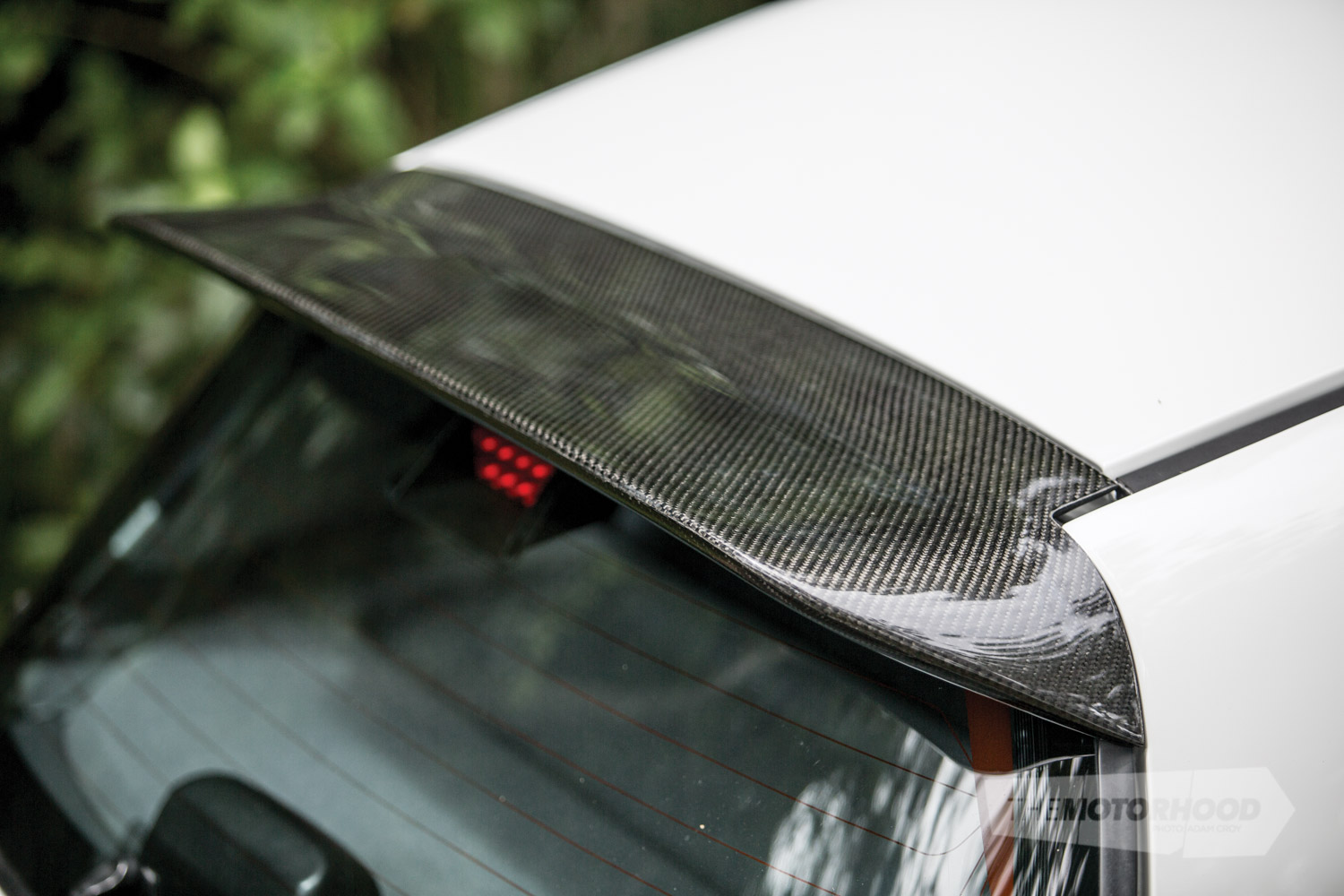
Exterior: Full respray in Taffeta White, Spoon Style front lip, Spoon Style carbon-fibre spoiler, Spoon Style wing mirrors, Slipstream fibreglass bonnet, EK Civic side skirts, NZ Glass headlights, OEM fog lights, USDM red/clear tail lights
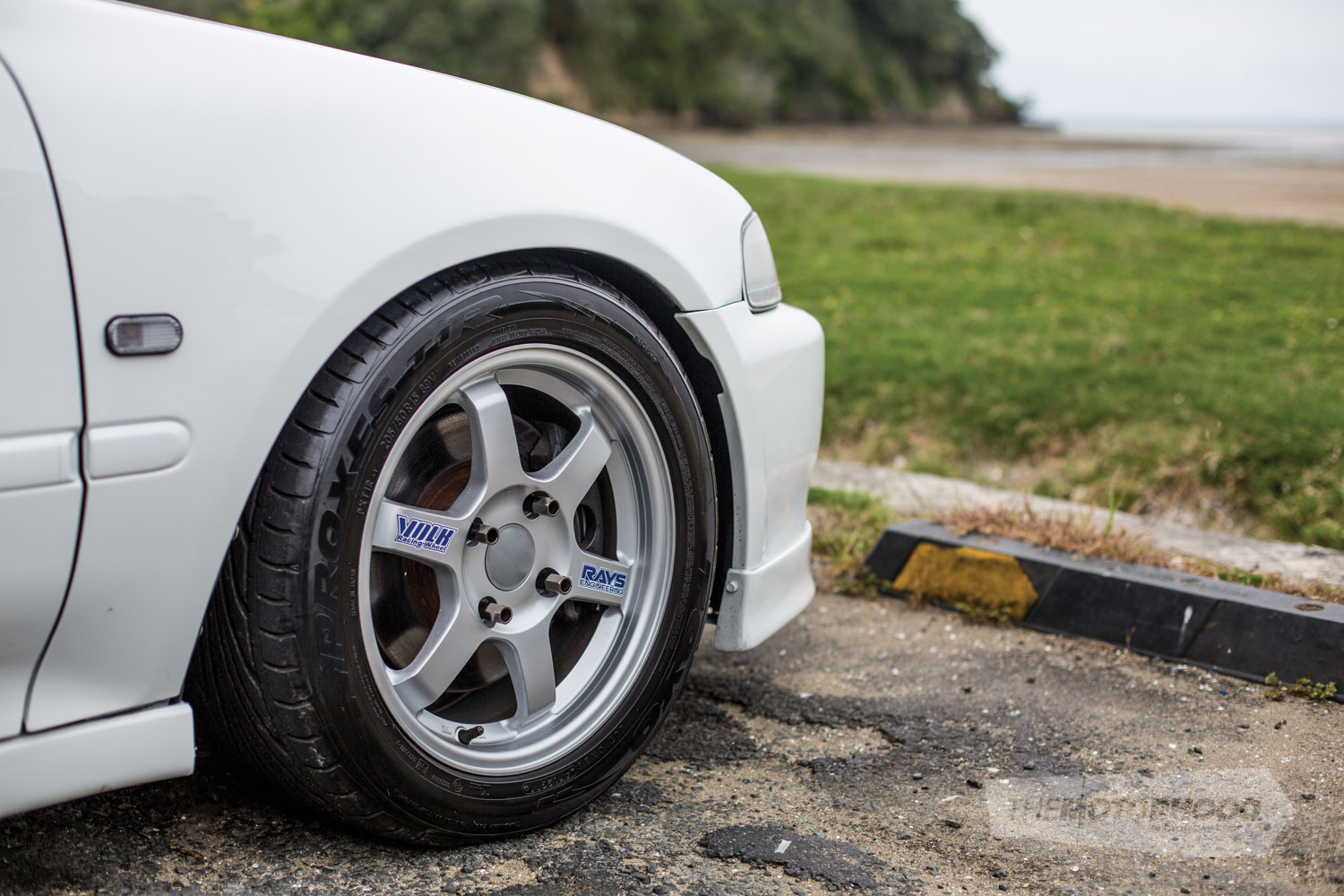
Wheels/tyres: 15×7-inch (+35) RAYS TE37, Toyo T1R 205/50R15
Suspension: Daiyama coilovers