
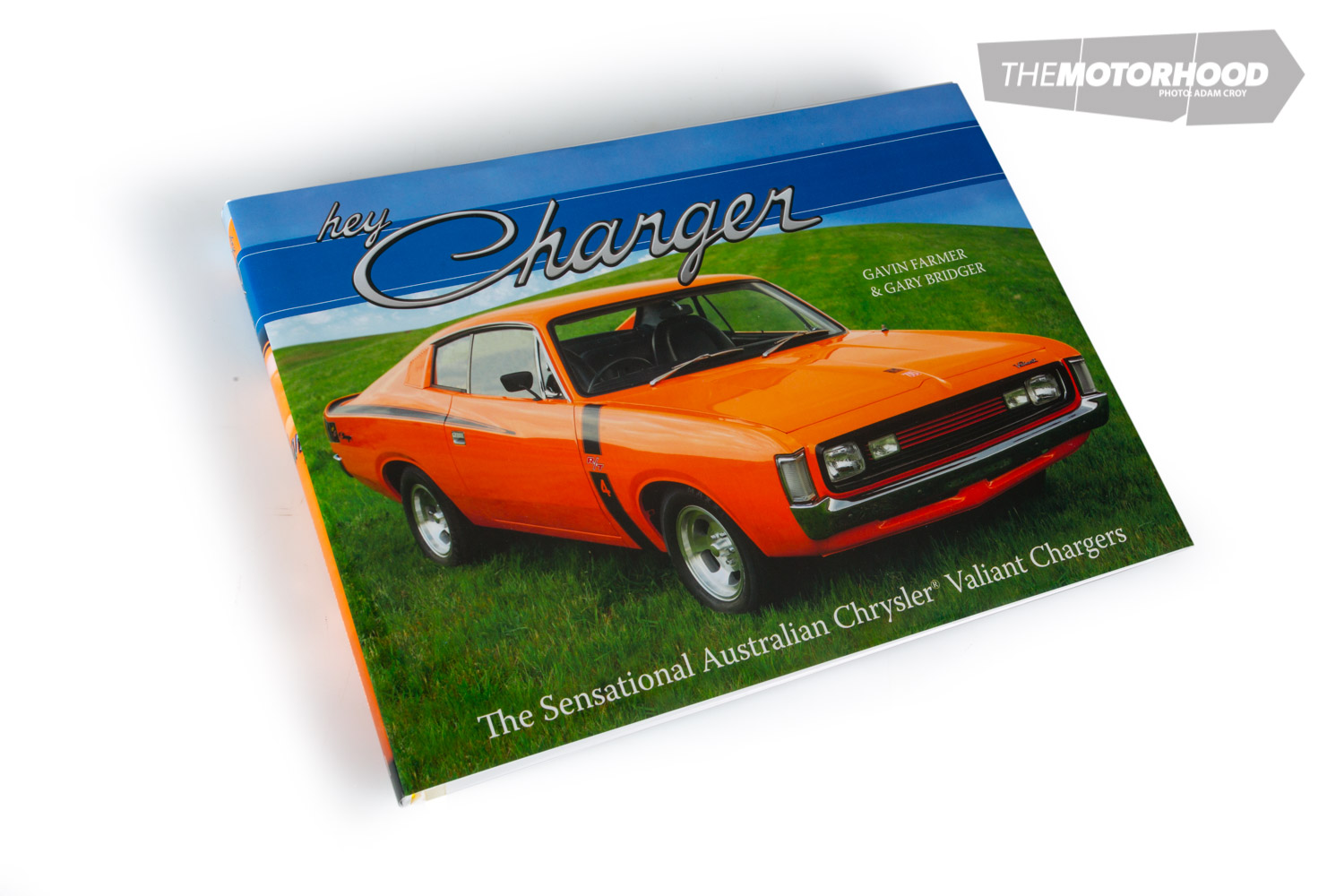
Book review: Hey Charger

29 December, 2016


By Gavin Farmer and Gary Bridger
ISBN 978-0-9805229-3-8
Available direct from co-author Gary Bridger
Price $90 plus post and packing.
Contact Gary — email [email protected] or phone 021 718 841

When the first edition of Hey Charger was released, in 2004, it received universal acclaim from those involved in developing the car, as well as devoted enthusiasts and the media. Hey Charger featured in the editorial of the April 2004 issue of New Zealand Classic Car, and was also awarded book of the month. Mark Webster wrote, “With its meticulous research, cogent interviews, detailed appendices and references, rare models, many colour plates and a wealth of detail, no Chrysler Charger or NZ racing fan should miss this one — it’s the last word”. Australian Classic Car magazine wrote, “A landmark publication about an important Australian vehicle, and definitely our book of the month”. Today, many Chrysler enthusiasts simply refer to Hey Charger as ‘the bible’, because of its historical and technical accuracy. 

Now Gary and Gavin Farmer have again joined forces to produce a completely revised and updated second edition of Hey Charger, in a hardcover full-colour format. This time, Hey Charger has been published in Australia by Gavin Farmer’s publishing company, Ilinga Books. The text has been thoroughly updated, and many new colour and black-and-white photos have been added. All the technical specs have been rigorously proofed by Charger gurus in Australia and New Zealand, and amended accordingly. The error count in the original edition was found to be very low, and only minor corrections were needed. 

Significant changes to the first edition include the complete rewrite of the chapter on the 340 V8 Chargers, as a result of newly discovered evidence on this often-controversial subject. There are also family-approved tributes to Australian motor-racing legend Leo Geoghegan and New Zealand’s Sir John Todd, who both passed away in 2015.
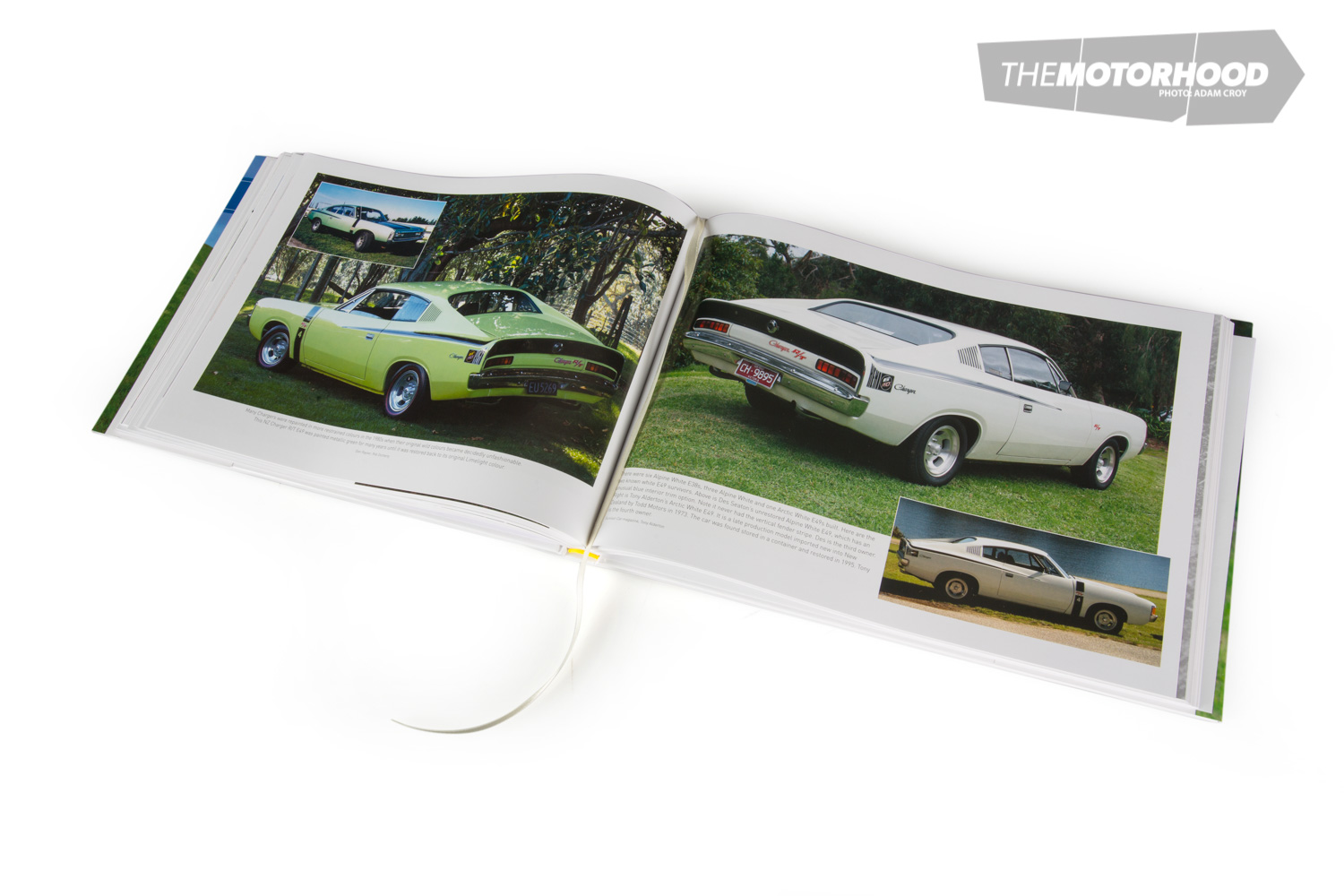
To quote the US’s Mopar Collectors Guide magazine, November 2004, “If you like Australian Chargers, get this book. If you don’t, your life will be filled with misery and woe until you do!”
Coaching from the bench: Casting plastic knobs and rubber parts

Casting rubber items is simple if you have a good original to work with. The item doesn’t have to be perfect. You can use plasticine to smooth out cracks, and you can even make whole prototypes out of low-fire modelling clay available from craft stores if you need to. Prototypes can also be made of wood or metal.
You will need mould dams to contain the liquid urethane moulding solution until it cures. You can build boxes out of strips of wood, but I have found that small plastic boxes and bowls such as those you would use for leftovers in your fridge work well if you spray them with a mould release agent.
Temperature is important to the chemical processes involved, so work in an area that can be maintained at around 20 degrees. You will also need adequate ventilation because the fumes can be dangerous to breathe. And you will want to wear latex gloves to protect your hands.

Fraser Cars – low flying into the fourth decade

With almost three and a half decades under its belt, Fraser Cars is one of New Zealand’s longest-surviving car manufacturers. The company first opened its doors for business in 1988, during the boom time for kit manufacturers. During the ’80s, around 40 different companies were building kits and turnkey cars for this niche market. Of those, only Fraser and Almac Cars (established 1981) are still in business today.
Most of the new kit car companies were killed off in the cradle by the threat of new legislation that never eventuated and definitively by the sudden availability of high-performance Japanese cars when the floodgates to second-hand imports were opened. The now long-retired founder of the company, Neil Fraser, first came across Lotus Seven replicas while racing Lotus Cortinas in the early ’80s. He regularly found himself racing against a little Caterham, a Lotus Seven–styled car built in England. He was very impressed by its simplicity and handling. In 1986 Fraser built his own Lotus Seven–type car, using the knowledge he had gained from several close looks at the Caterham.