This 1937 Ford 10hp 7W utility was purchased new by Percy Dellow Tonkin on December 21, 1937 from the Ford agent in Christchurch, Hutchinson Motors. This firm now trades as Team Hutchinson Ford, and is still located at 186 Tuam Street in the central city, as it has been since 1929.

Tonkin used the vehicle for his business as a painter and paperhanger from January 1938 until his retirement, and the Ford was boldly signwritten, advertising his business. The colours chosen were certainly bright for the time — the ute being finished in a light mid-green metallic colour, while the signage was in cream with orange shadowing. Special brackets were made and fitted to the passenger side to hold a long wooden ladder. Around 1966–’67, Tonkin purchased a new Jaguar MkX from Archibald’s Garage, the Jaguar agent in Christchurch. When he retired, Percy often left the Ford ute at Archibald’s customer car park while he shopped in the city. New Zealand Classic Car writer Trevor Stanley-Joblin left a note under the wiper blade one day, in about 1968, to ask if he could be given first option to buy the vehicle when the time came to sell.
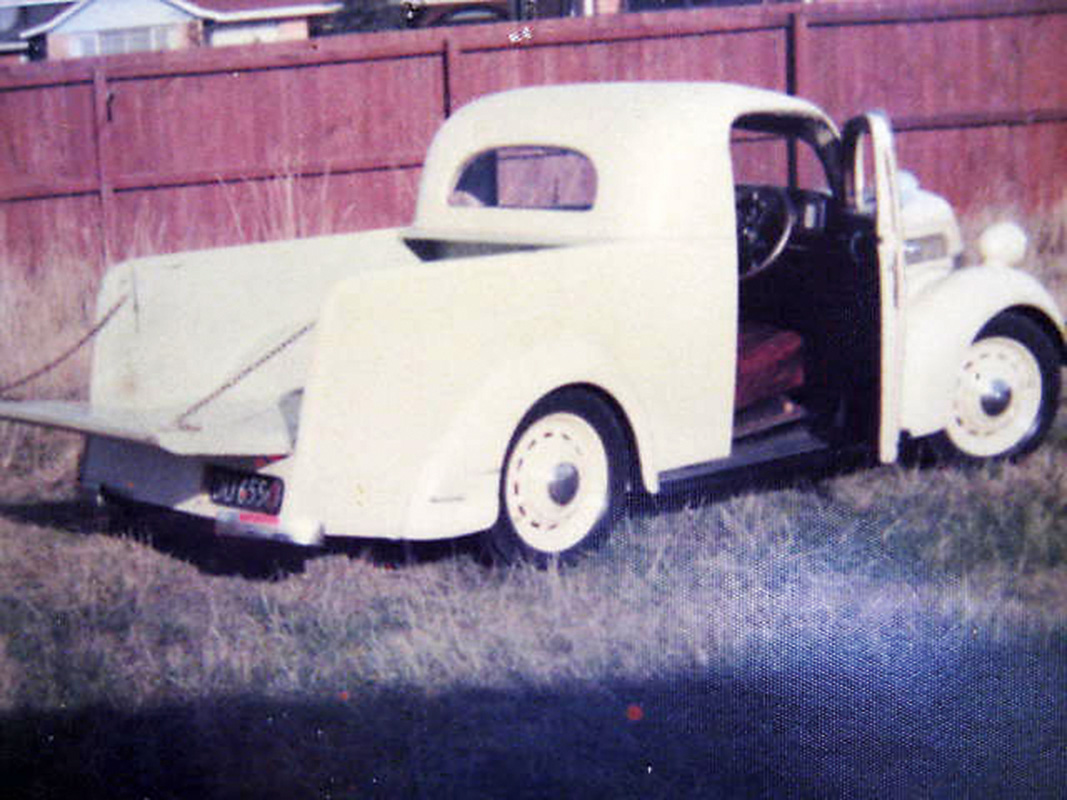
Percy Tonkin passed away in 1972 and the Ford was bequeathed to his daughter. Her husband, Frank Ian Cresswell, was also a painter and consequently used the ute for his business for the following five years. Unfortunately, he chose to repaint the entire vehicle in the cream colour you see in these photos. Trevor’s 1968 note was obviously passed on to Percy Tonkin’s family, or found in the glovebox, as sure enough, he received a phone call from Percy’s daughter in mid 1977.
On Trevor’s advice his son, Paul Stanley-Joblin, purchased the Ford in June 1977 from the Cresswell family. At the time, he was just 15 years and nine months of age and had not yet learned to drive. In fact, he has never driven this Ford on the road to this day!
The total mileage of the ute is only 47,874 miles (just over 77,000km) — and Paul recalls that his father drove it for a total of 132 miles before restoration work.
A 37-year project
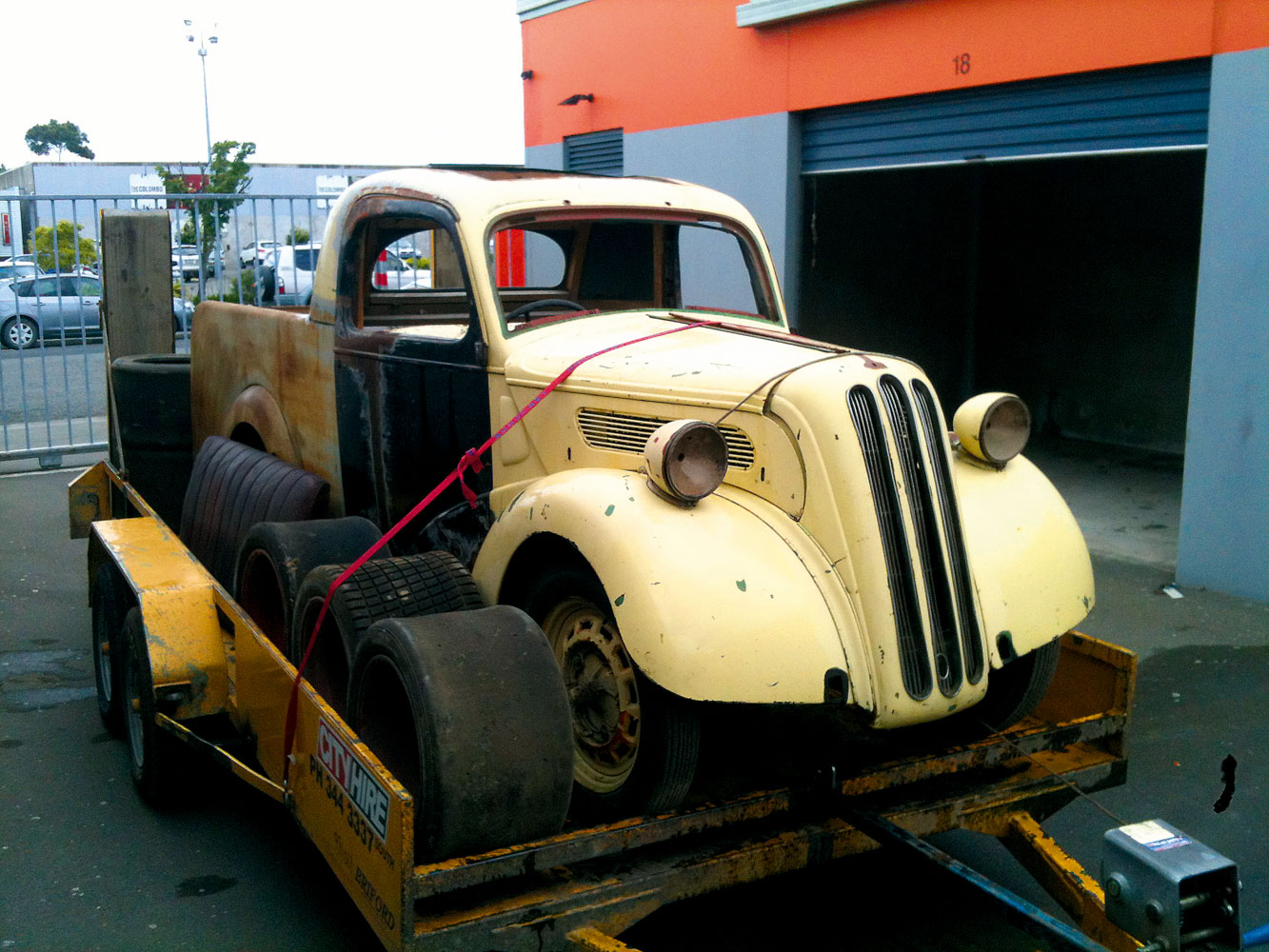
The Ford’s timberwork needed replacing, and some panel work was done at the rear. A few ‘shiny bits’ were rechromed and wrapped up, but soon — well before the ute could be finished — life’s other priorities took hold, and she went into storage for completion of the restoration ‘some day’ principle. Thirty-seven years later and ‘some day’ finally arrived — although, having been partly dismantled and in various qualities of storage environments, the Ford is now in a poorer state than when Paul first began work on it, almost four decades ago.
However, sentimental reasons are strong, so Paul is now working on a complete rebuild. Before personalized plates came into being, he was lucky enough to obtain LX 1937 in the old black and aluminium issue, through his father’s contacts within the Post Office, and the Ford’s registration has been kept ‘on hold’ over all those 37 years.
His father’s wish is to see the “ute’s restoration completed and available for display at the All Ford Day, and driven in the annual Henry Ford Memorial Rally before I leave this earth,” and Paul sincerely hopes to achieve that.
This article was originally published in New Zealand Classic Car Issue No. 287. You can pick up a print copy or a digital copy of the magazine below: