When work sends a joker nearly 1000 miles away from home for eight days, it’s a mix of the good and the not-so-flash. The good includes travel, meeting different people, coming across new ideas, and getting a look at seldom-seen parts of the country. The not-so-good includes hours behind the wheel of a noisy, little Jap box, and disruption to significant routines. And when the second-to-last work commitment on a Friday leaves a wait until Sunday evening for the last one, what’s a fella to do over the weekend?
Fortunately the Friday of the weekend of March 4–6 involved an afternoon return run from Dunedin to Gore, which coincided with the sight of a Chevelle, and a bit later a Barracuda, heading lustily north. And in Gore a Plymouth Suburban station wagon, ‘The Rat Catcher’, was spotted tooling around. Enquiries confirmed that USA Day, run by Dunedin’s Stateside Streeters club, was being held the following day at Tahuna Park in Dunedin. Excellent — that’s Saturday sorted!
USA Day is really a day and a half, as it includes a cruise on the Friday evening. That cruise ended up at the Forbury Park Raceway Sports Bar car park, where people could cool down and recover from the gloriously sunny and warm day.

This year marked the Dunedin car club’s 28th running of the event, and Stateside Streeters’ President Lex McNoe told us that the club likes to give some money from the day to a local charity, such as Hospice or Kids Cancer. However, in the past few years the event has been dogged by poor weather, which has kept takings down. “It depends how we go on the day,” said Lex. “But some charity will benefit [from] today, alright.”
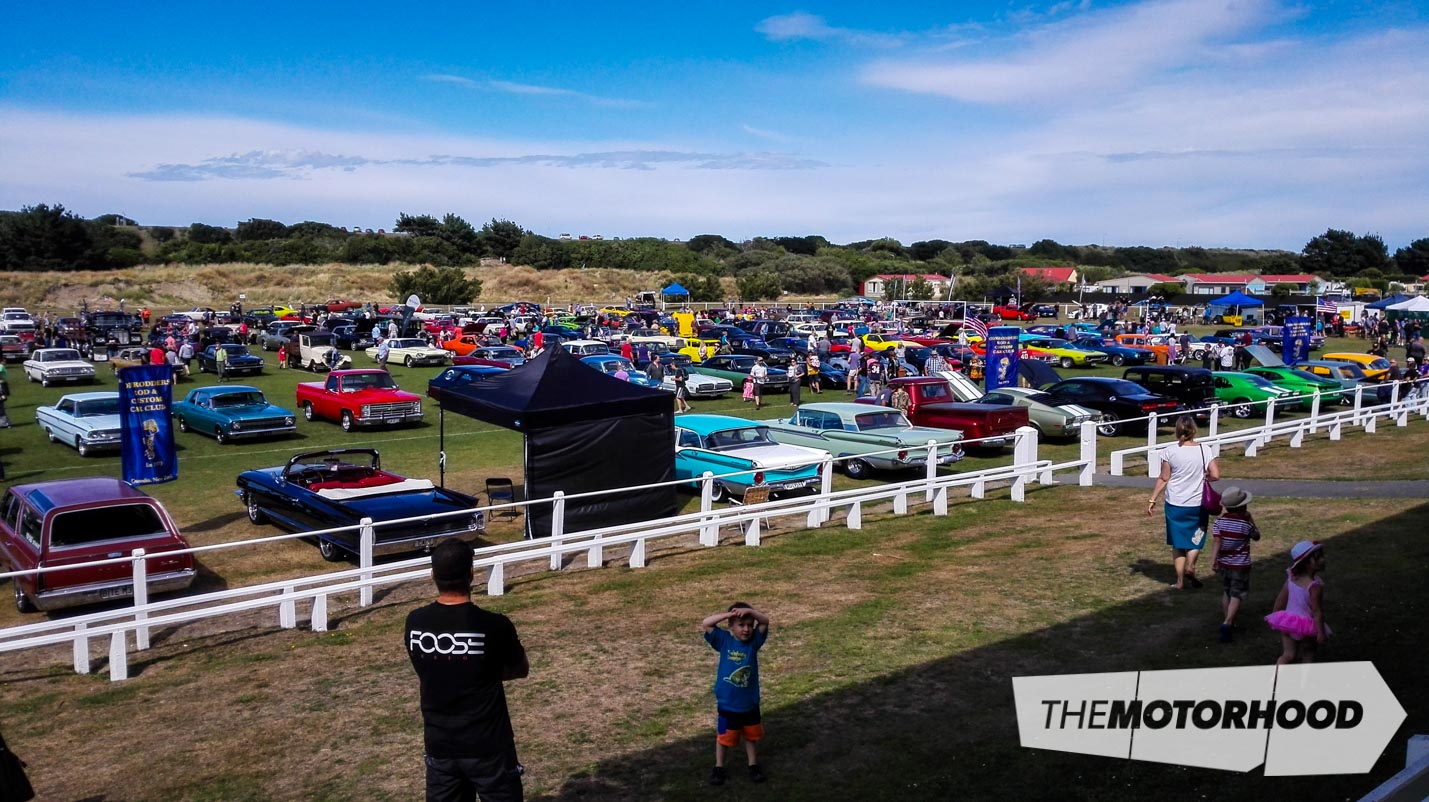
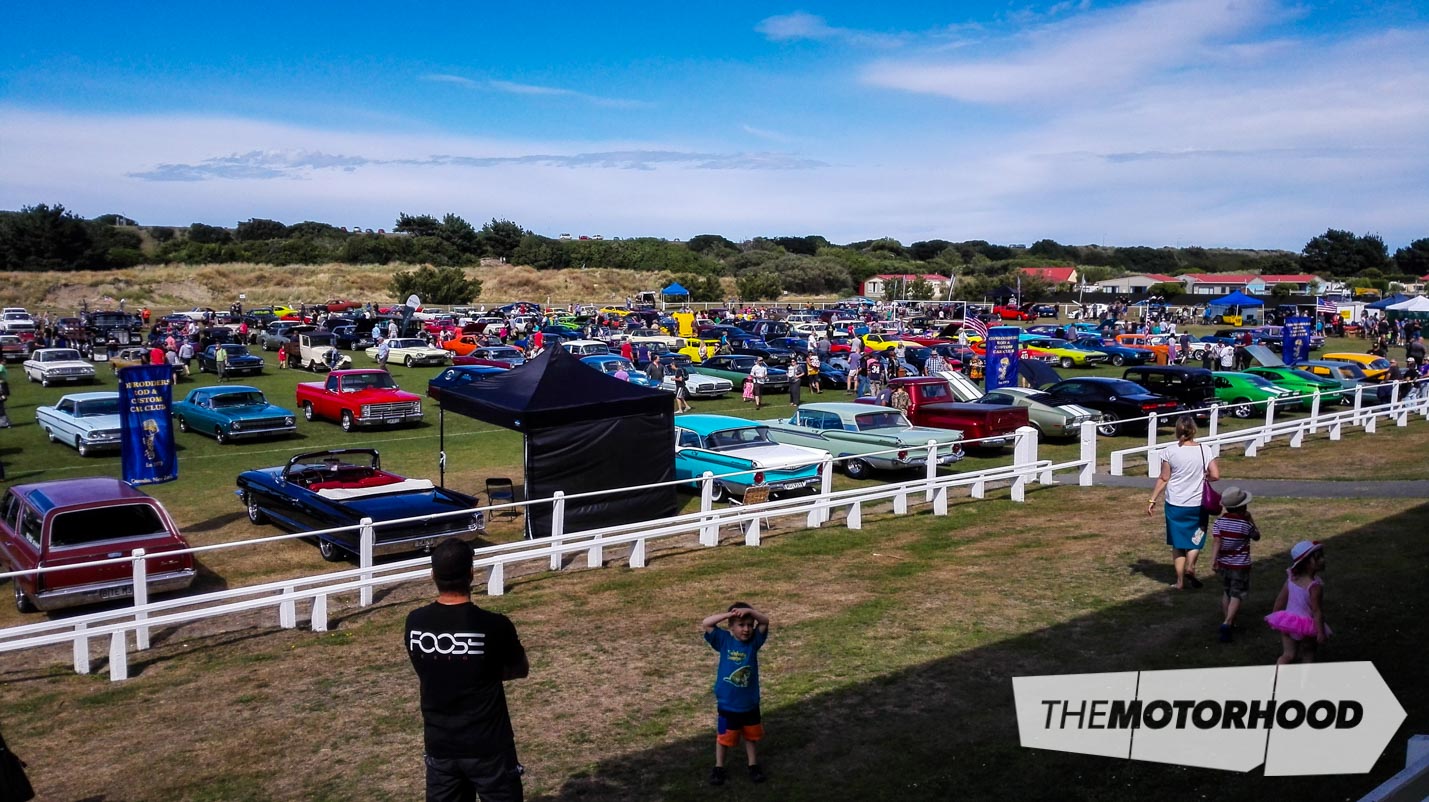
On Saturday, the show cars and the punters rolled in to share and enjoy the sight of more than 200 American cars, pickups, and rods on display, while a couple of young guys kept the rock and classic music pumping from the grandstand.

There were many gloriously done-up cars to admire, but it was encouraging to also see a few that showed wear and tear; whether from frequent use, having been recently imported, or in the early stages of improvement. They were a reminder that it’s perfectly okay to spend
on our vehicles bit by bit as cash flow allows.
Lex pointed out that although there are bigger car shows here and there throughout the year, this is one of the bigger ones of only American cars.
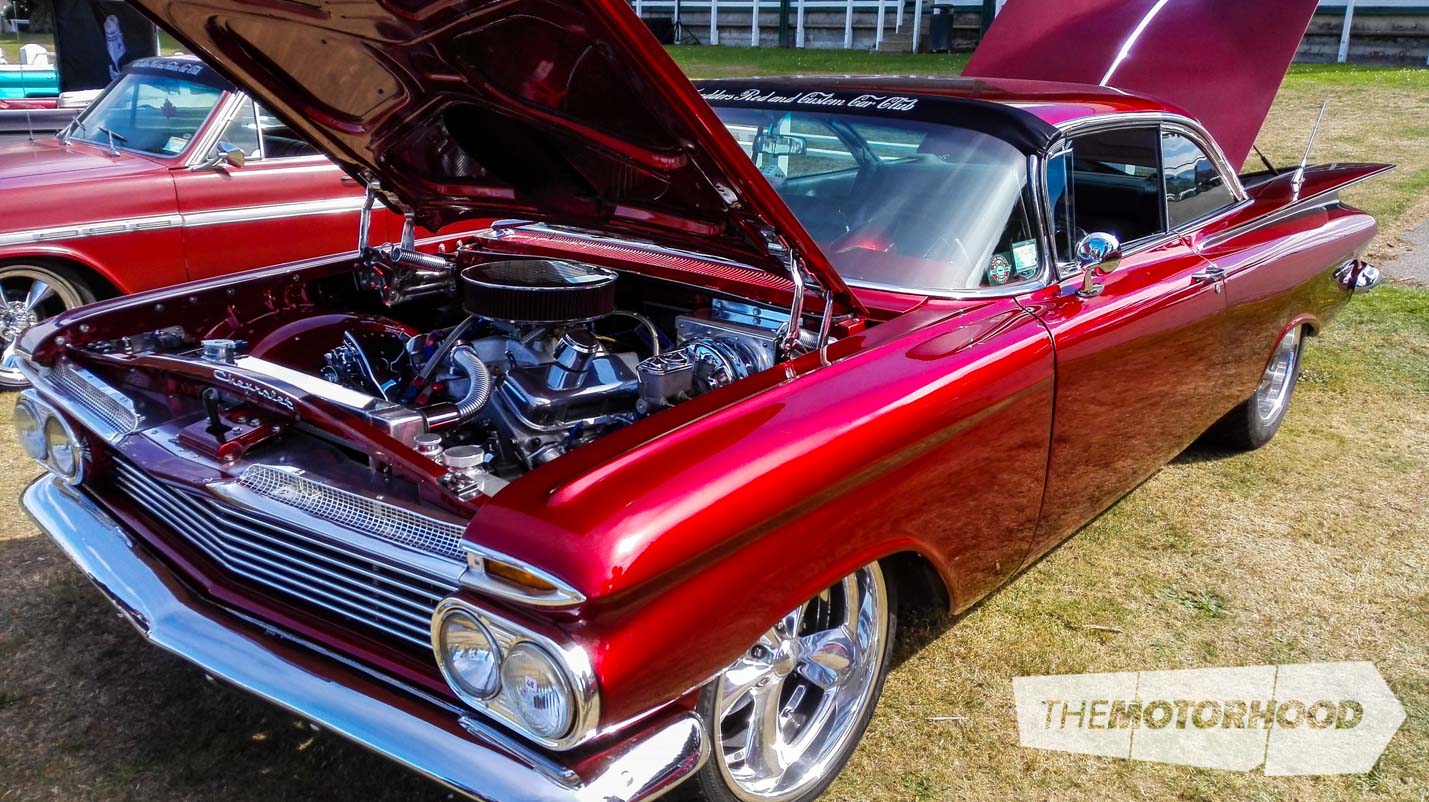
The main sponsor was Barry Dell Plumbing and, according to Lex, the Dell family had five cars in the show, including Barry’s ’59 Impala coupe. “And the black ’61 Cadi convertible is his wife’s car,” Lex said. In addition, their two boys also had cars present — that’s quite a collection!

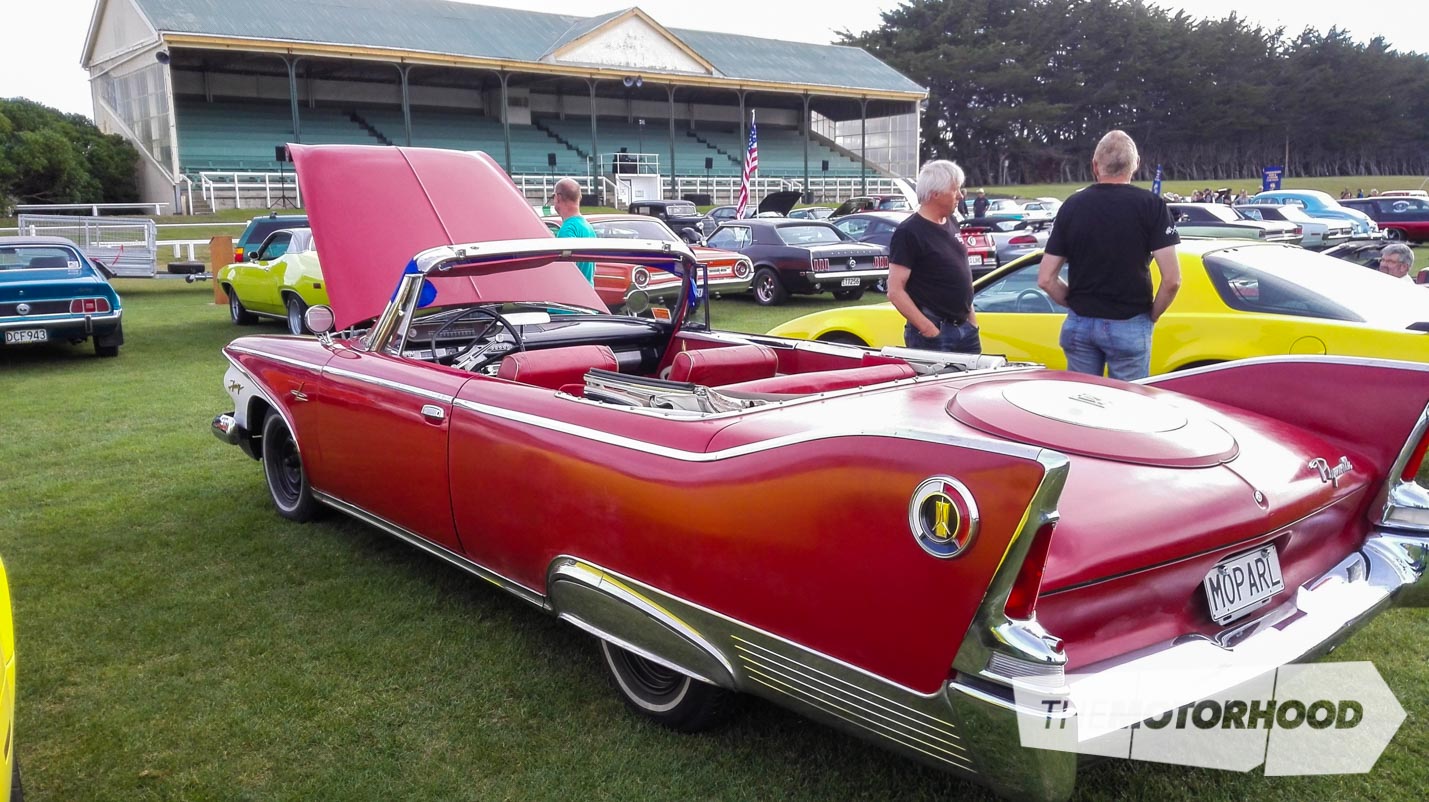
Also in attendance was Alan Smith, owner of this neat 1960 Plymouth Fury convertible. He’s been a member of Stateside Streeters for around 20 years now, and has owned the Plymouth for a similar period of time. With a 361ci ‘SonoRamic Commando’ V8 and cross-ram intake, along with a push-button auto and swivel seats inside, it’s not a common vehicle — one Alan believes to be the only one in New Zealand.
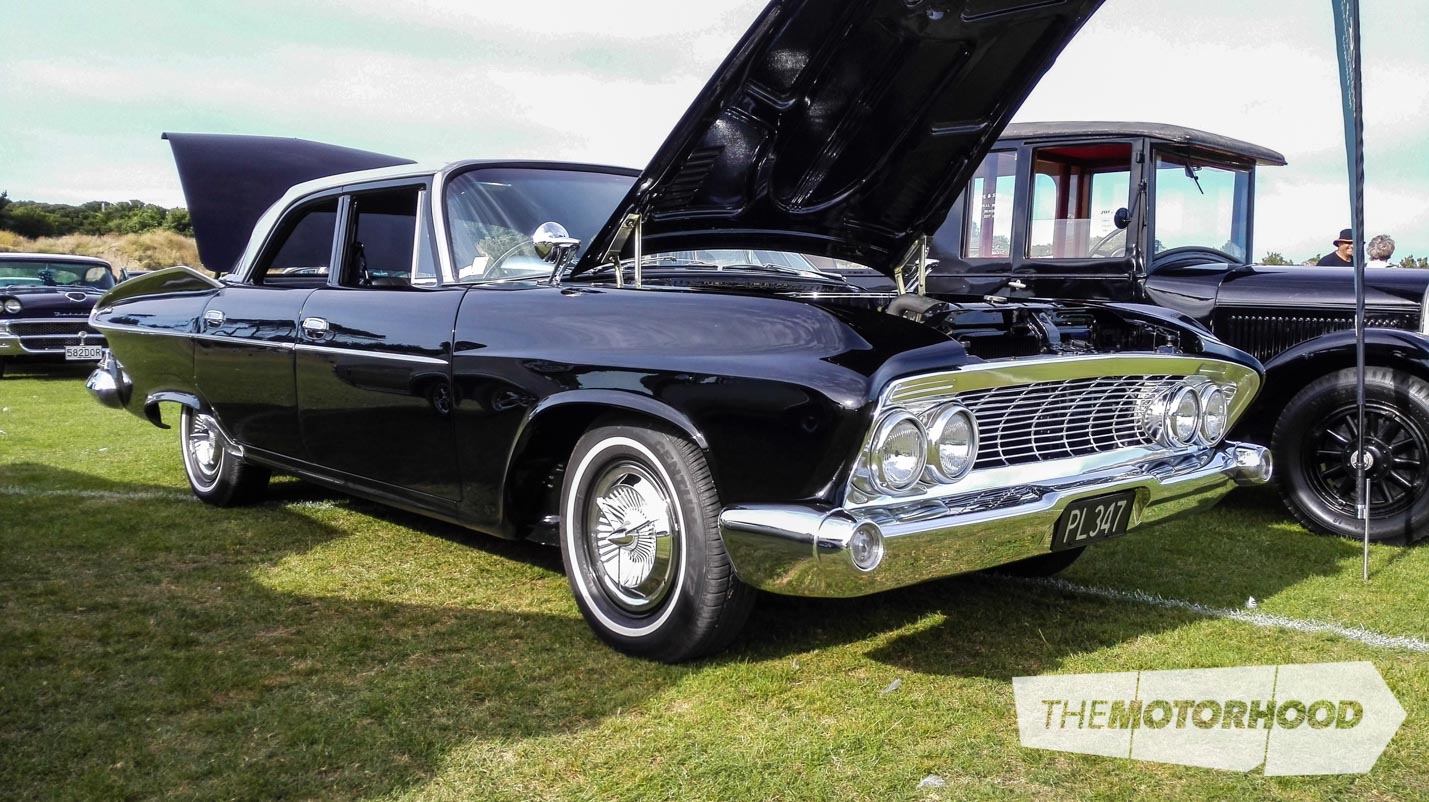
John Finlayson showed up in another uncommon vehicle — a ’61 Dodge Pioneer. It’s actually a work vehicle for his firm, Hope and Sons, funeral directors. Michael Hope found the Pioneer in Alexandra around three years ago and, while the bodywork and paint required touching up, it was otherwise in good condition. The Pioneer has had a full body-off restoration, reconditioned engine, and push-button automatic transmission, and shares hearse duties with a Dodge Seneca.
A ’68 Oldsmobile Delta 88 was brought down by Jennine and Stan Haurakitumu, who brought the car into New Zealand around two years ago. In the three car shows that they’ve attended in it so far, they have not yet seen another one, and their example is very original, too — other than reconditioning the engine and brakes, and fit new wheels, it’s all original. “It only had 43,000 miles on it, and even all the bushes, and so on, were good. We drive the heck out of it now; we’ve done 16–17,000km in two years, and it’s never missed a beat. It’s a real daily driver,” we’re told.
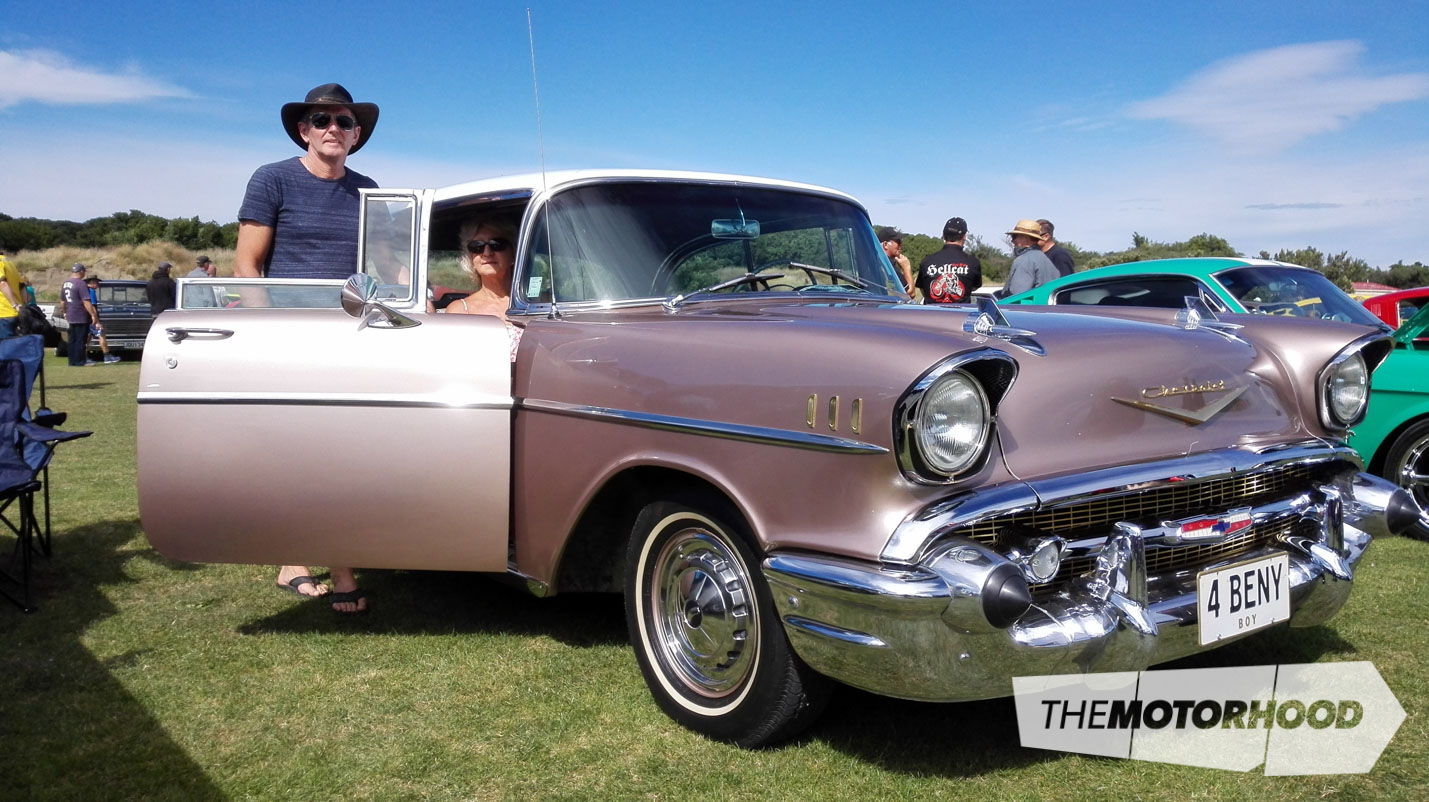
And what’s a car show without a decent Tri-5 Chev? Ken and Robin Bennie cruised down in their ’57 Bel Air, an ex-California car that still contains its original ownership papers. The car was imported and due to arrive in January of 2015, but when it arrived, a fire during transit burnt the ’57’s front end. The car ended up delayed almost half a year, and while insurance did come through, Ken and Robin did mention their dissatisfaction with the job done. At this stage, it’s been well reworked, and while there are still little things left to do before they’re totally happy with it, you can’t deny that it’s a remarkably clean and original-looking cruiser.
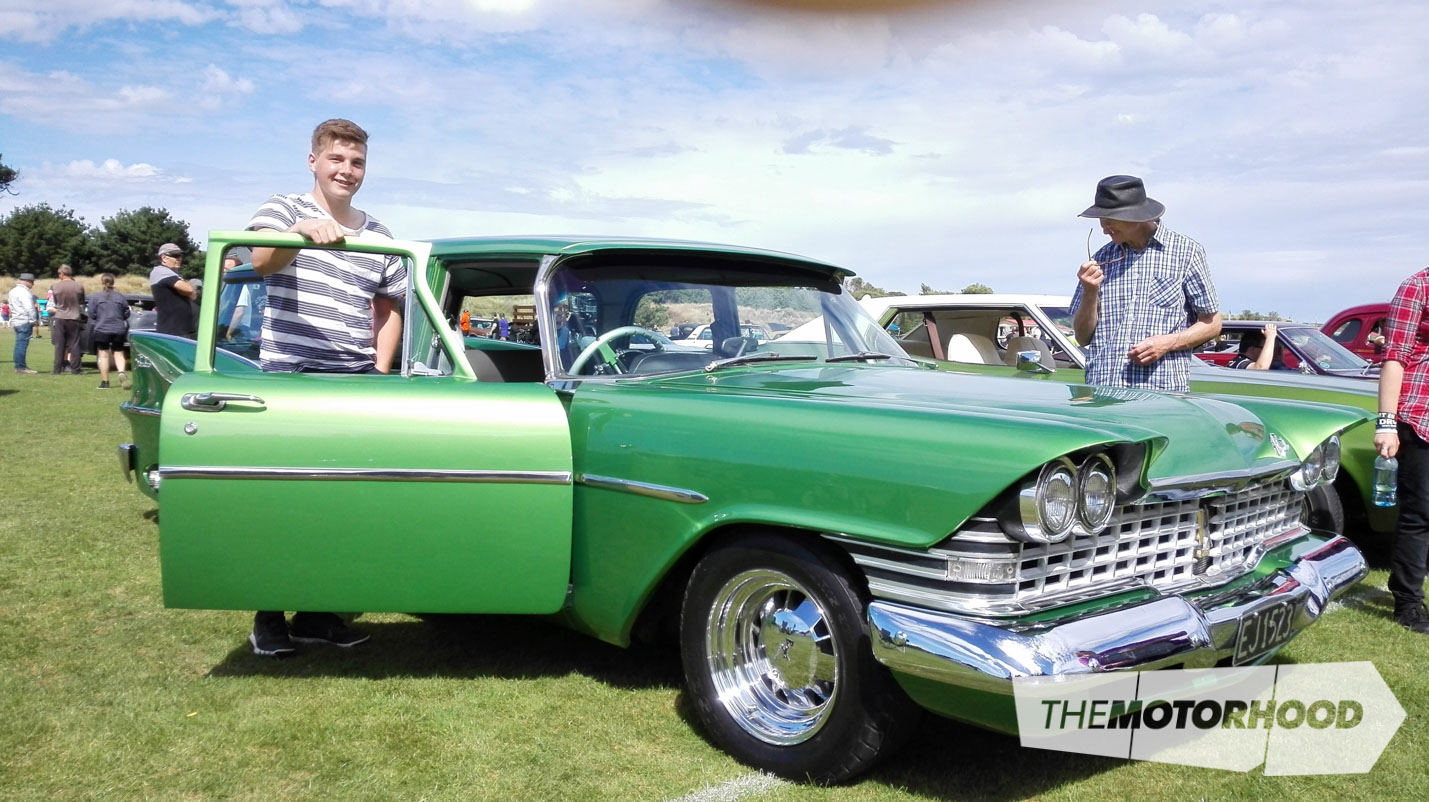
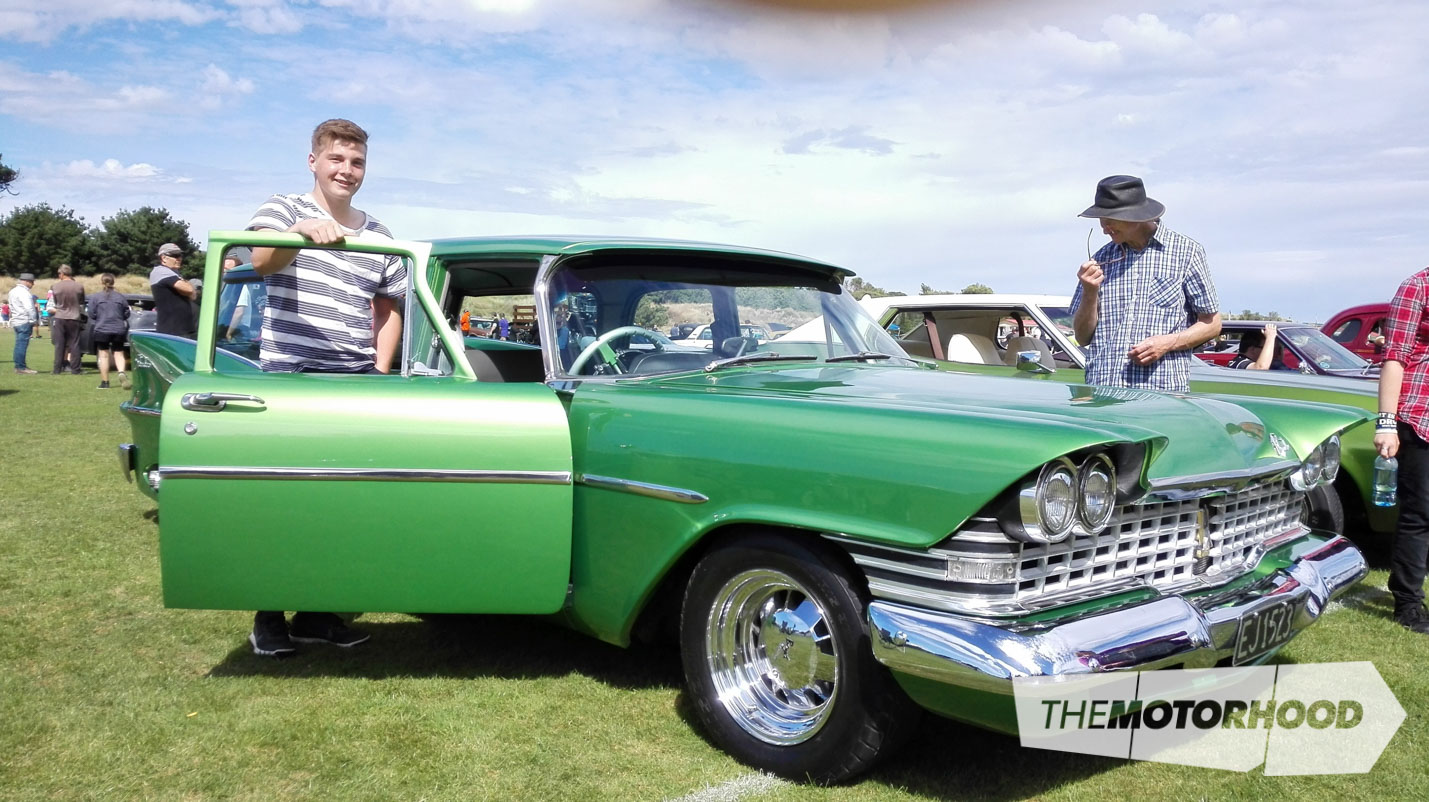
This Plymouth Suburban wagon is owned by Graham Baird of Gore, who attended the show with his son, Campbell. The fact it looks as clean as it does is no fluke — it’s been “about 15 years in the making,” according to Graham. The New Zealand–new Plymouth runs the original 318ci ‘Poly’ engine, though a prior recondition saw it bored out, and a four-barrel carb placed up top. Clever tricks include substituting the exhaust tips for tail-light ends off a ’59 Cadillac.
Of course, at a show such as this, there were far more vehicles present than those we’ve covered. We’ve got a photo gallery below, so take a look at some of the finest American offerings from Dunedin and the wider Otago area. While this coverage was almost a chance happening, we’d recommend any locals lock it in and make a day of it — you won’t regret it.
Words and photos: Peter Grace