
When looking back over the last few decades, it’s fair to say that Pontiac’s Trans Am has been an extremely successful and popular model series — one that has attracted a wide array of buyers, admirers, and enthusiasts around the world.
From baby boomers to their children, many have been drawn to this Pontiac’s exciting appeal. After all, who could ever forget those Trans Ams of the early ’70s with their signature macho front-end design — all gaping grilles, menacing bonnet scoops and ‘screaming chicken’ decals, a popular look at the time.
I was also drawn into the spell of the ‘bird’ after the very first time I watched the movie, Smokey and the Bandit, starring a then very young Burt Reynolds and Sally Field back in 1977. Although for me, the star of the show was undoubtedly the black ’77 Pontiac Trans Am, and from that point I knew I just had to have one. I can remember driving from Los Angeles to San Francisco in 1979 with my then new wife, and spotting a Pontiac dealership in a place called Oxnard. Its yard was loaded with dozens of new Trans Ams, in all colours and lined up like soldiers.
After a quick U-turn I was wandering around those cars in a flash. I couldn’t believe my eyes. Within what seemed mere seconds, I was approached by a salesman eager to do business, but after a quick explanation to the effect that I was from a small place called New Zealand (which he’d never heard of), he offered to take me out for a quick spin up the freeway. Driving in a brand spanking new Trans Am was definitely one of the highlights of that trip, and after snapping several shots on my trusty old Polaroid, we were back on our way north to San Francisco with memories that will live with me forever.
I actually did end up buying a Trans Am in the mid’ 90s, a car which I spotted in the cars for sale section of this magazine. It was a white, limited edition Trans Am, a 5.0-litre factory Turbo model – not quite the 6.6-litre thumper I had driven in the US, but it still look every bit the part. The Pontiac eventually made way, a few years later, for another of my dream cars – a Corvette.
Good, bad, and ugly
Fast-forward to September 2001, and General Motors’ announcement that the Firebird/ Trans Am and Camaro models would cease after 35 years in continuous production. According to GM’s hierarchy, people just weren’t buying these cars any more; in other words, they had outlived their worth within GM’s corporate structure. That’s hardly surprising, given the fact that GM had left these cars fairly much untouched since the present model’s 1993 debut. It was as if GM refused to remember its previous mistakes and was intent upon repeating them again.
Remember that by the time our featured ’81 Trans Am appeared, 12 models had already been spawned from the original Trans Am shape that was originally initiated in the mid-to-late ’60s. During the intervening decades, the Trans Am had survived several facelifts and drivetrain changes, and had always been severely criticised for its cramped rear passenger space; its immense thirst in times of fuel shortages; and the fact this was one hell of a big car from the outside for the minimal space it provided inside.
During the good times, when Trans Ams were marching out of dealership showrooms in record numbers and turning huge profits for GM, the model was without doubt the darling of the industry. But when Joe Public started spending car buying dollars elsewhere — probably due to the fact GM had milked the Trans Am’s current design well past its use-by date — it inevitably led to increasingly poor sales. Additionally, Trans Am models during and after the ’80s simply didn’t seem to inspire the same level of enthusiasm achieved by the earlier cars.

Unlucky 13
As for 1981, the Pontiac Firebird Trans Am entered its 13th year of production, the previous 12 in the F-body that made its appearance as a ’70 1/2 model. This was a year of few changes for the Second Generation’s final year, most of which were improvements to quality and the upgrading of standard equipment levels.
As had been the case with the 1980 Trans Am, small displacement engines were the order of the day. The choices included the 4.9-litre T/A Pontiac V8, the Chevrolet 5.0-litre V8, and the highly desirable 4.9-litre turbocharged Pontiac V8. Unfortunately, the truly big V8s were gone, never to return. However, all was not lost, and one performance icon was resurrected from the dead – the four-speed. Sadly for those searching for performance, GM chose to marry the four-speed up with only one engine – the Chevrolet 5.0-litre. This combination went from bad to worse when it was teamed with a 3.08:1 rear axle ratio, delivering somewhat mediocre performance for the day.
Overall, Trans Am performance was now just a shell of its former glory days and, once again, Pontiac found itself in the same doldrums it had endured when the catalytic converter was introduced back in 1975. Yes, it’s true that performance slowly recovered in subsequent years, only to be lost yet again by ever tightening Federally mandated fuel economy regulations. But, with all due respect to Pontiac, it was still trying. After all, it still had the world’s only turbocharged V8 engine and it had reintroduced a manual transmission. In addition, the Trans Am still retained the handling characteristics and styling flair on which part of the marque’s reputation was based. The signature ‘bird’ logo emblazoned across the bonnet had become one of the most recognized car emblems in the world, whilst the car’s handling capabilities took a back seat to no one.
In 1981 Trans Ams were fitted with P225/70R-15 steel belted radial tires regardless of which suspension package was fitted. The base cars were equipped with either seven inch wide steel Rally IIs or cast aluminium ‘snowflake’ wheels. Those with the optional WS6 or WS7 (without rear disc brakes) suspension packages received the eight inch wide ‘snowflakes’ or turbo cast aluminium wheels. Strangely, Pontiac chose to break tradition and delete the limited-slip rear differential as standard equipment.
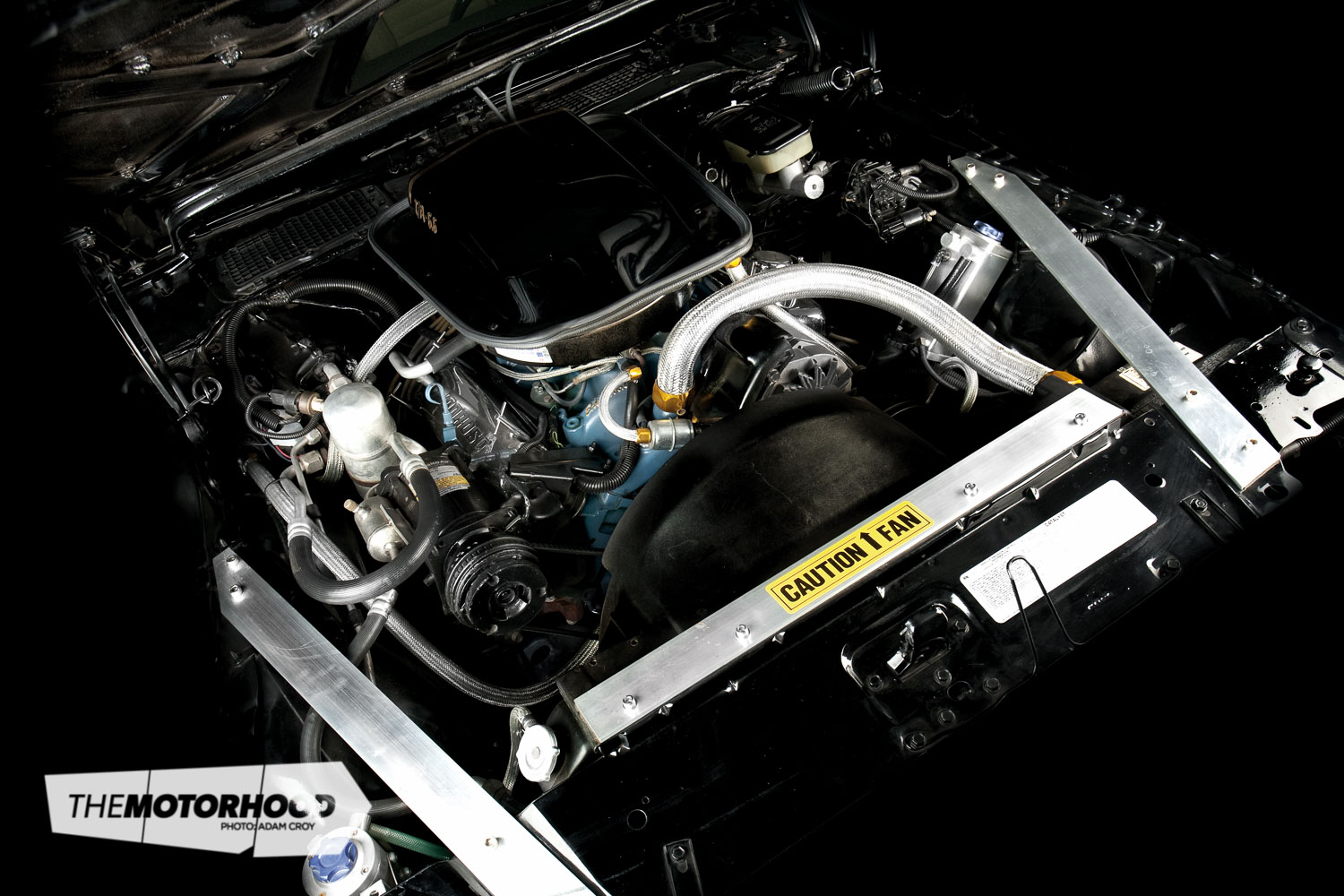
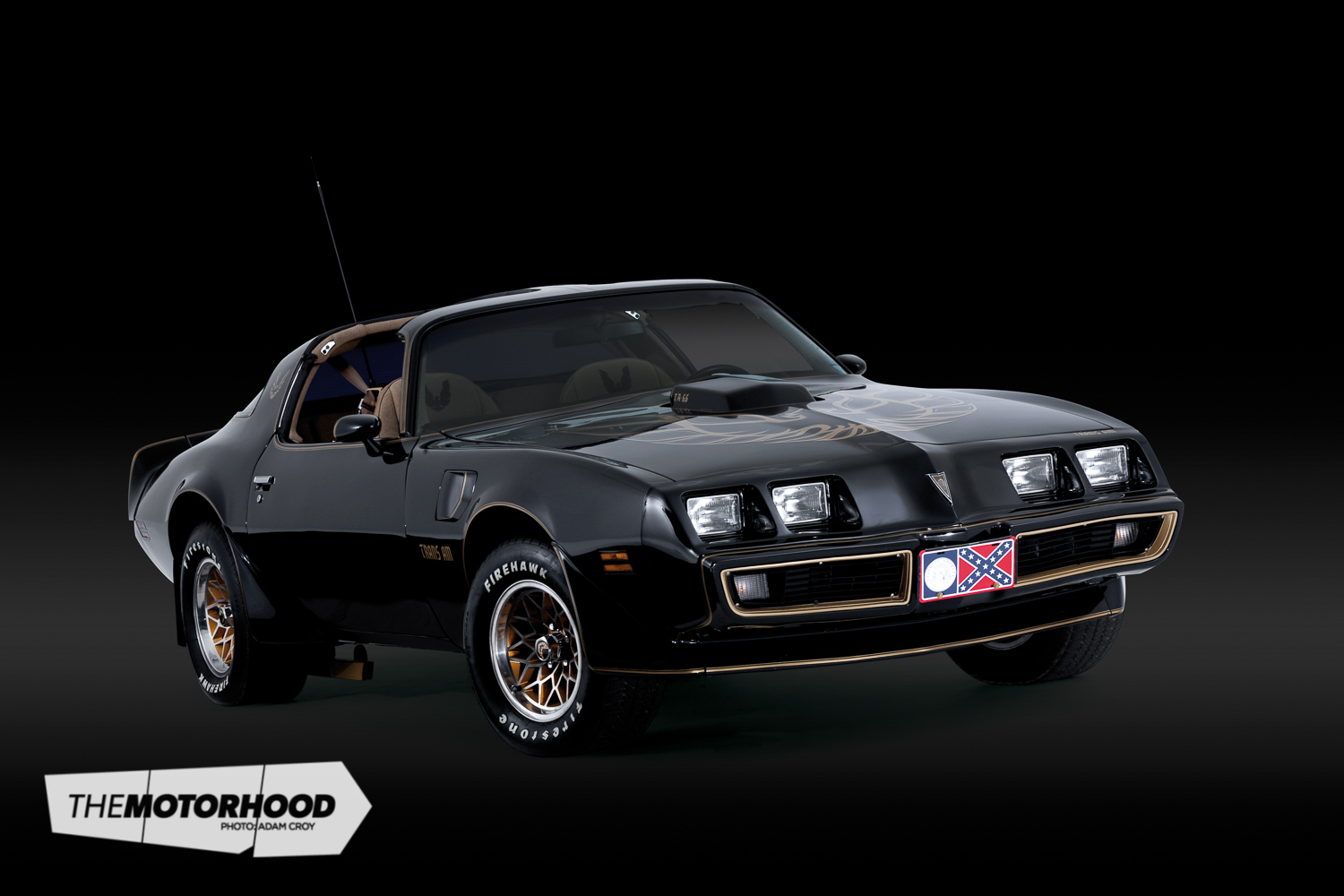
The 1981 Trans Am also received GM’s new ‘Computer Command Control,’ an early version of today’s high tech computer controlled engine. Thirteen bold colours were available to select from, not to mention the bonnet ‘bird’ decal, which was still as bold as ever. Additionally, there were several Special Edition Trans Ams; dressed in smart black ‘tuxedos’ complemented with gold pin striping and accents, as on our featured car.
The looks and the power
Looking back, the second-generation Trans Am certainly made its mark as an automotive icon in the ’70s and ’80s. It not only survived the demise of the big-block V8 and embraced the birth of new technology but also, the Trans Am resisted numerous attempts by corporate decision makers to bring it to its knees while the faithful cleaned the old bird up and let her soar.
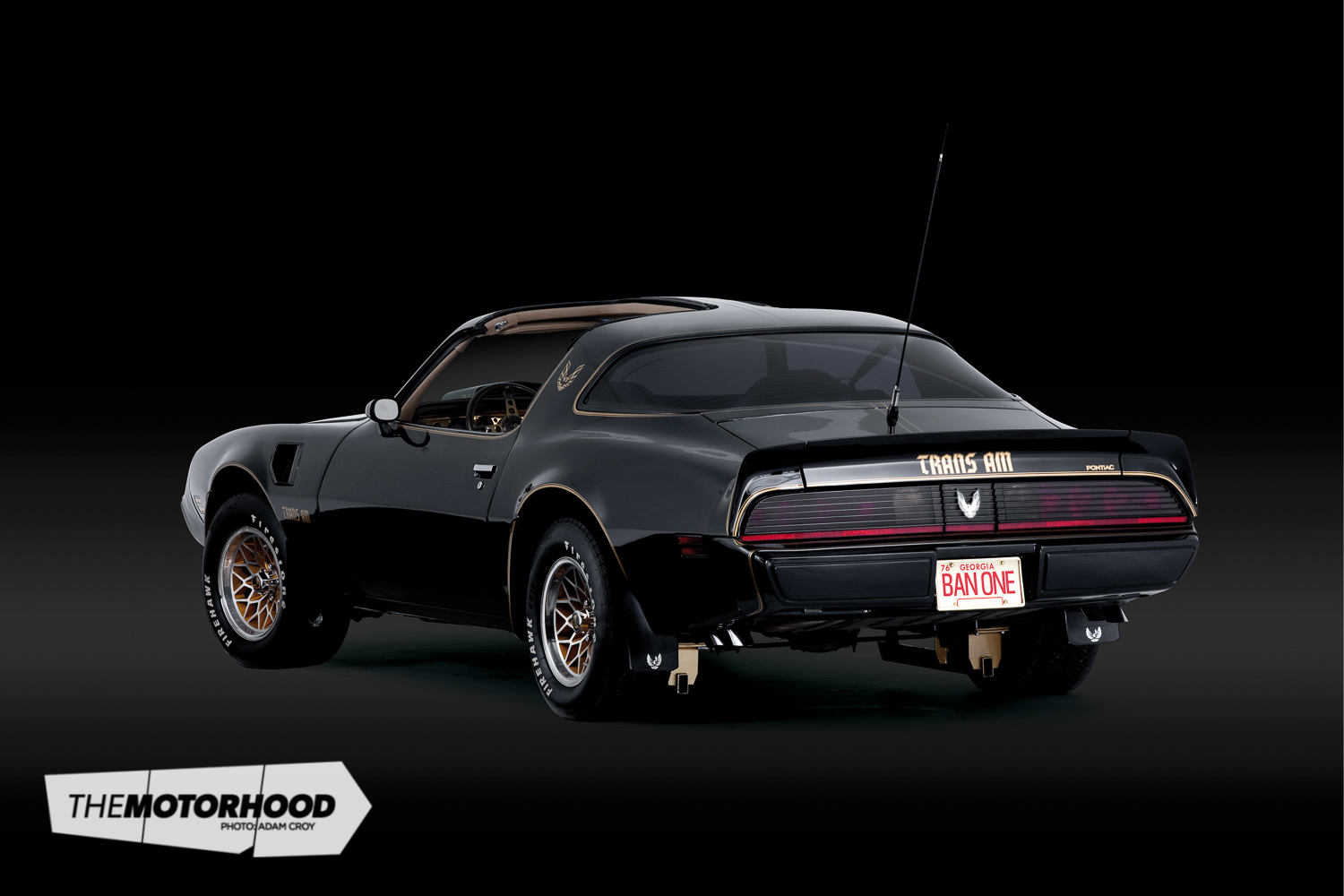
One old bird that definitely spreads its wings and soars on regular occasions is this 1981 Pontiac Trans Am, owned by Brian Service. Brian is the second owner of this superbly restored example, which has now been in New Zealand since 2007.
Stateside, it was delivered new in Indianapolis, where it appears to have spent most of its life before being totally restored and modified in 2005.
The car is a genuine SE (Special Edition) model that is identifiable by its ‘Y’ code designation, something not always indicated on the cowl tag, and often requiring the original build sheet or other relevant documentation to validate a car’s authenticity. Naturally, this Trans Am has every piece of necessary paperwork to prove it’s the genuine article, as only the SE Model is considered a true ‘Bandit’ which, believe it or not, didn’t just come in the black and gold colour scheme. In fact, the other option was exactly the reverse – gold with black graphics – a stark contrast to the original Bandit. Actually, there was never an official Bandit model build by Pontiac, but the 1977 box office hit movie sure made it seem that way.
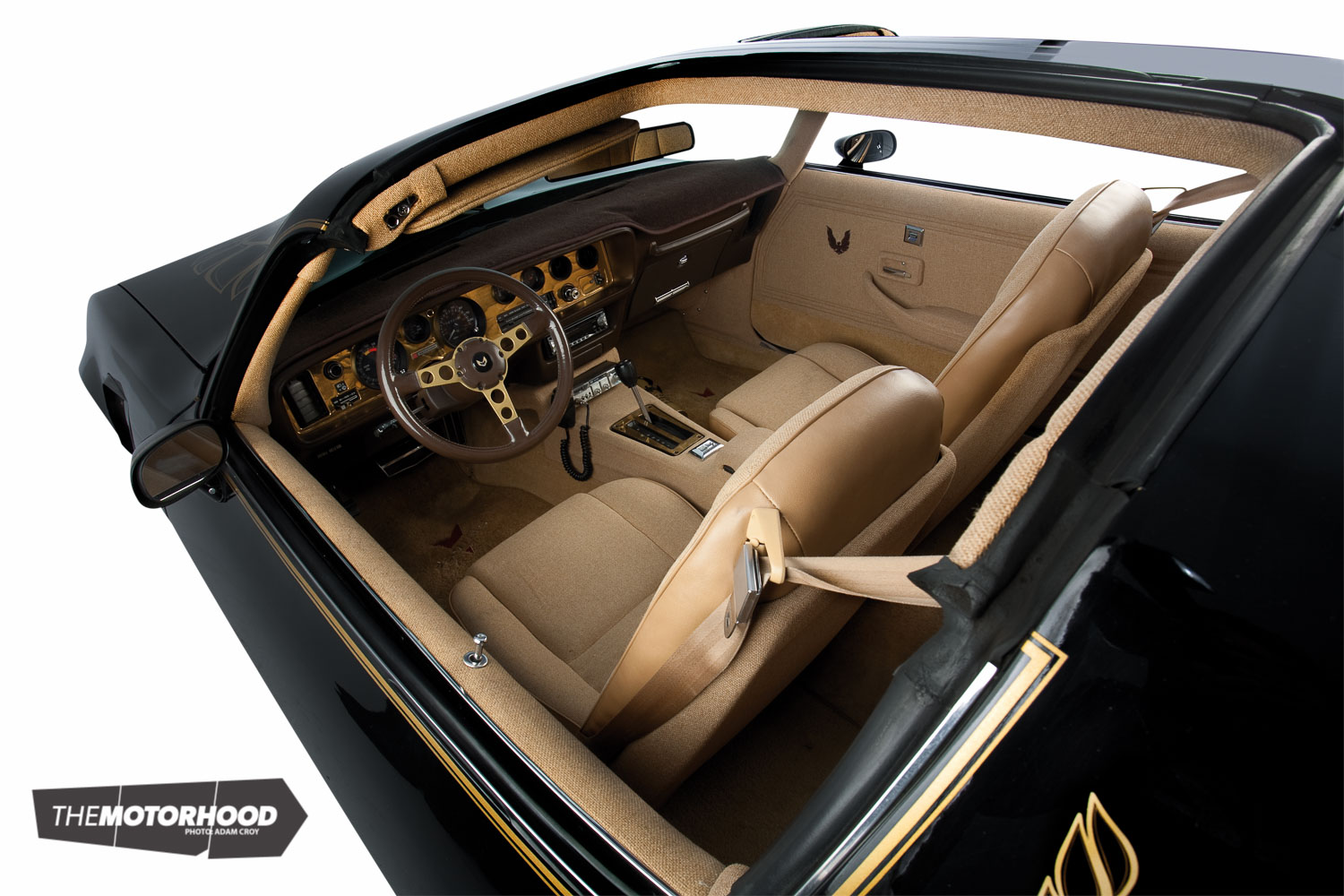
The restoration of our featured Trans Am started as a complete strip down of a totally rust-free car. The rich, original Pontiac Starlight Black paint was re-applied along with the original-style gold graphics. Custom tweed replaced the original doeskin cloth and vinyl interior, with the dash panel and shift plate lavishly finished off in 23-carat gold plating.
As often seems to be the case, Brian and his wife, Enid, don’t get to spend as much time behind the wheel of this awesome Trans Am as they’d like. Brian’s time is spread quite thinly, and he can often be found at a race track somewhere racing his historic 1970 Mallock U2 in the Historic Sports Car Series; driving their monstrous 1971 Cadillac Eldorado convertible; or touring around the countryside in their impressive 11-metre American Motor home.
Brian and Enid are keen active members of the HRSCC, Cadillac Club and American Classic Car Club. Enid has also been the organiser of ‘Yank Tank Thursday’ for the past six years, which is essentially a bi-monthly get-together for all American car owners at Botany Town Centre. Naturally, the Trans Am is one of the event’s star attractions, and if this is living your passion, then we can all learn a valuable lesson from Brian and Enid.
data-animation-override>
“During the good times, when Trans Ams were marching out of dealership showrooms in record numbers and turning huge profits for GM, the model was without doubt the darling of the industry”
1981 Pontiac Trans Am SE
- Engine: 1970 Pontiac V8
- Capacity: 6555cc (400ci)
- Valves: Two valves per cylinder/ ohv
- C/R: 10.5:1
- Max power: 276kW (370bhp)
- Max torque: 657Nm (485lb/ft)
- Fuel system: Four barrel 750cfm Q-Jet
- Transmission: TurboHydro 350
- Suspension F/R: Independent, wishbone, coil springs/ live axle with leaf springs, anti-roll bar front and rear
- Steering: Recirculating ball VPAS, power assisted
- Brakes: Power-assisted disc front/rear
- Dimensions:
- Overall length: 5032mm
- Width: 1854mm
- Height: 1252mm
- Wheelbase: 2748mm
- Kerb weight: 1616kg
- Performance: Data not available
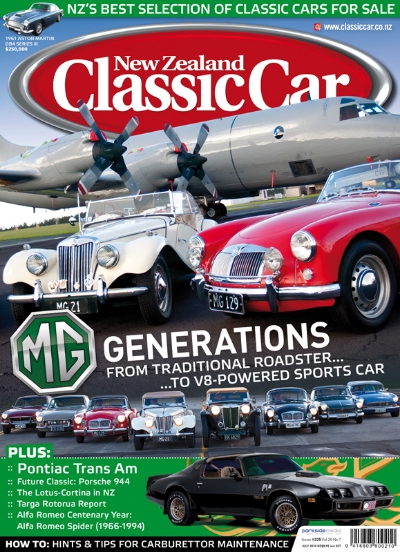
This article was originally published in New Zealand Classic Car Issue No. 235. You can pick up a print copy or a digital copy of the magazine below: