First of all, if you just wanted to see the video of the Ford Focus RS in action click here. If you’d like to have a read of what Lachie Jones thought of the vehicle, read on!
The game has changed significantly in the hot-hatch sector over the last few years. Gone are the days when a MkI Golf and a Peugeot 205 GTI were the pinnacle, we have now entered an era of small machines capable of 1–100kph times better than those offered by supercars not all that long ago, combined with the ability to swallow entire families and their gear.
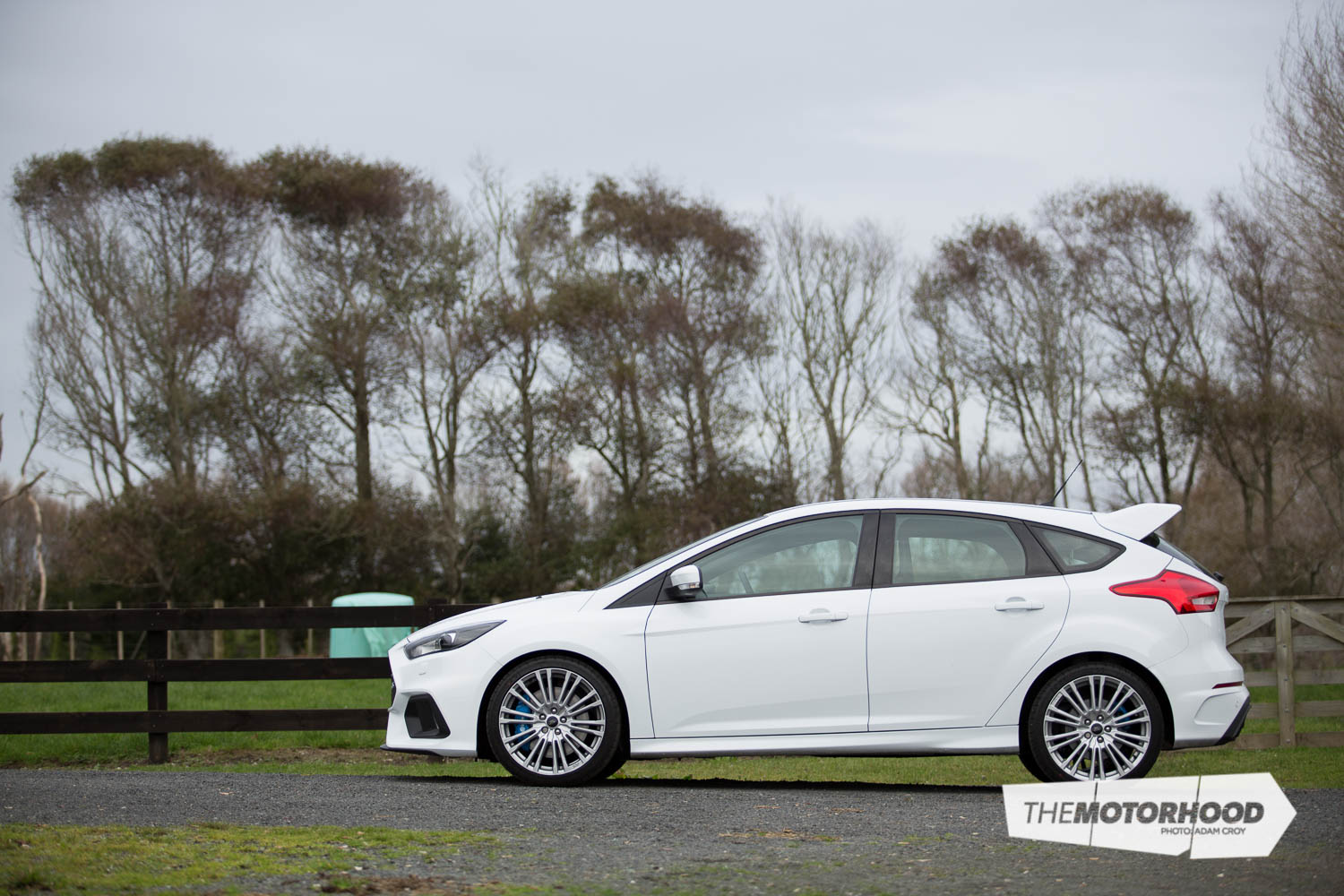
This is the first Ford Focus RS with four-wheel drive (the first four-wheel drive since the Escort Cosworth), and it needed it. For the previous-generation Focus RS, Ford had proudly introduced its all-singing, all-dancing torque-vectoring system to reduce understeer. Unfortunately it didn’t work very well, and the RS was doomed to be fired into many trees and embankments around the world in the hands of over-enthusiastic Sundayists.
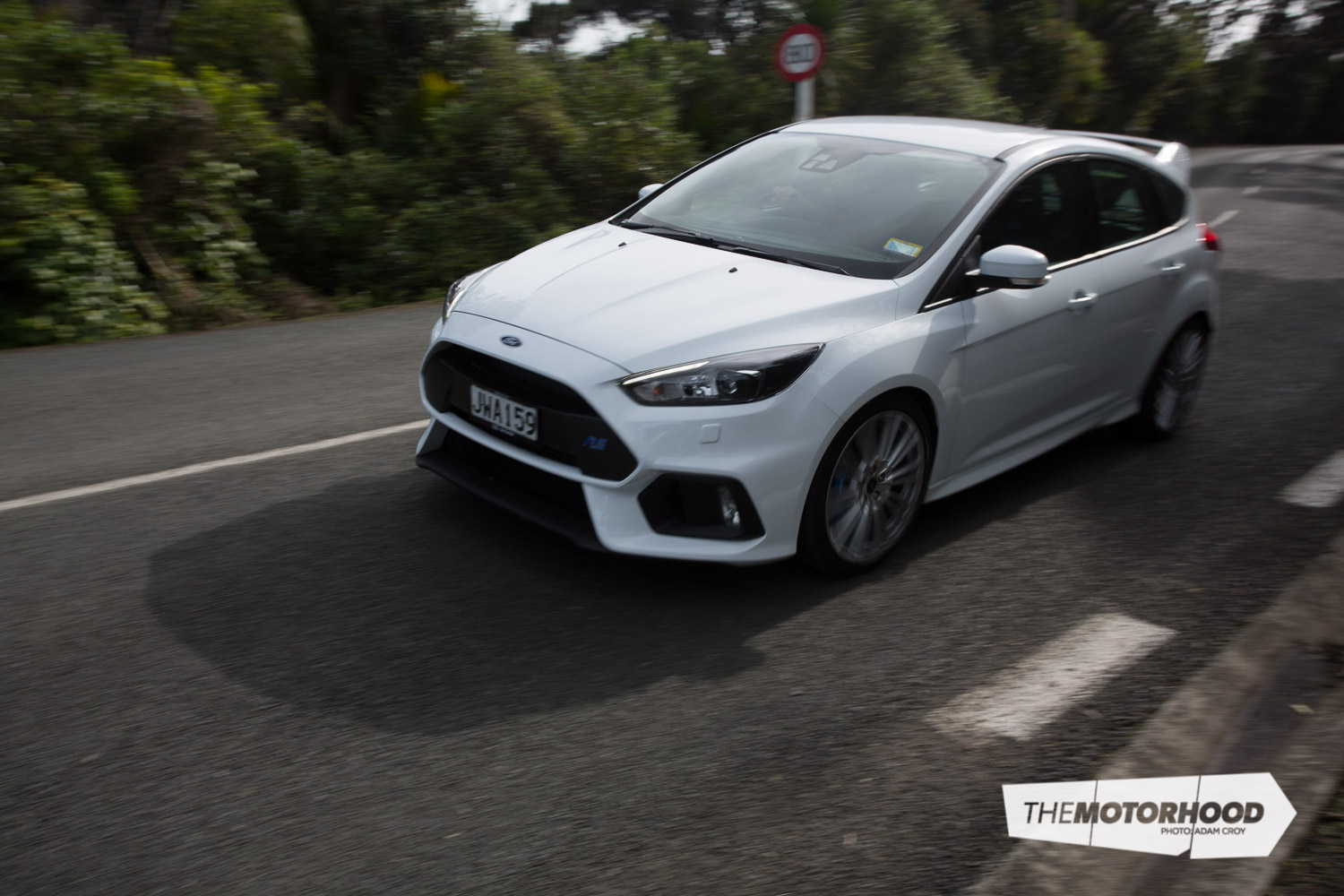
This new machine does a lot of things very, very well indeed. The most impressive feature is just how comfortable it is. Not designed to be a tourer by any means, the Focus still manages to soften the ride enough to ensure that it could indeed be used for such driving. And it should. But the Focus is a hell of a car to drive too, and encourages you to keep pushing.
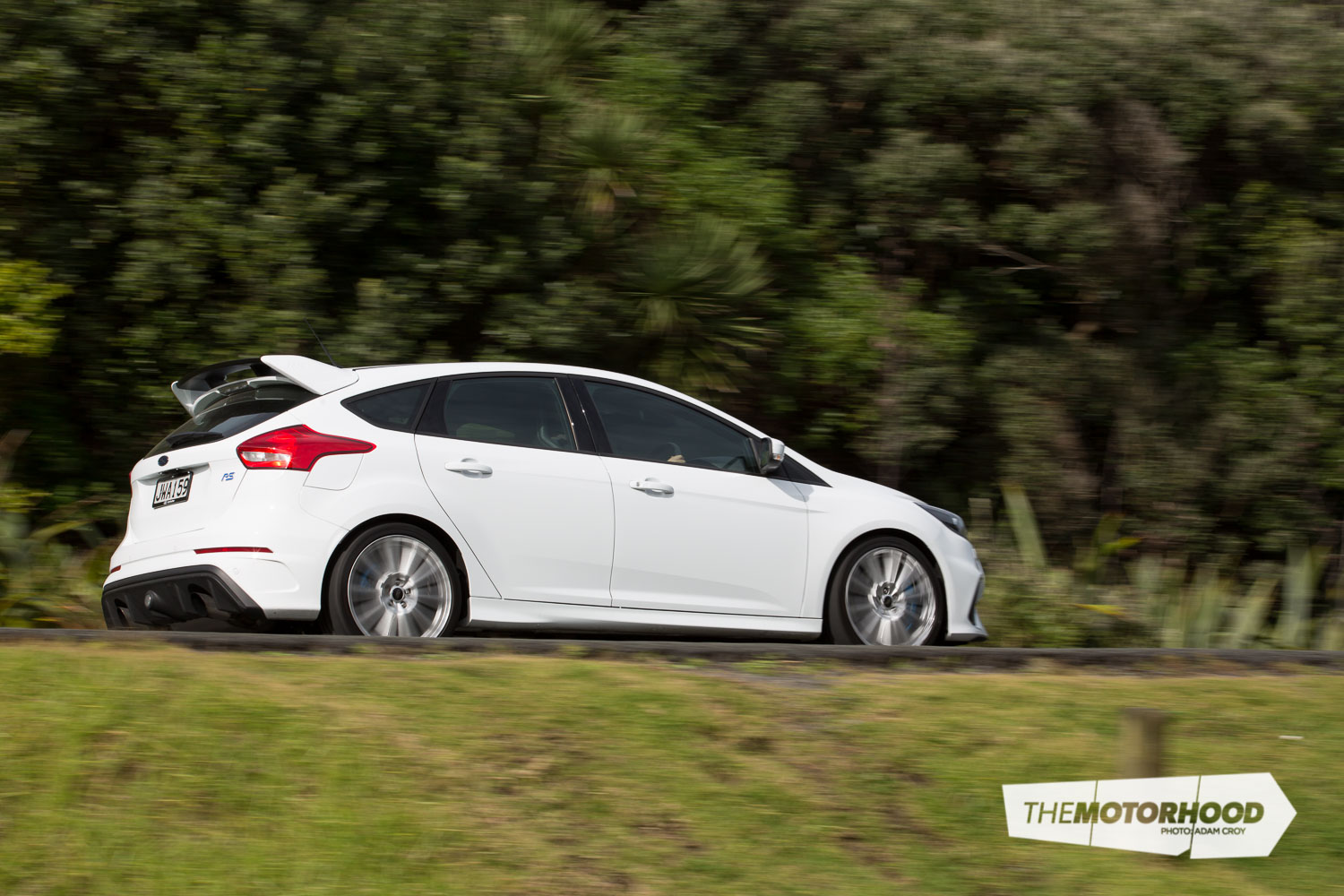
When I reviewed the new Porsche 911 Carrera 4 earlier this year, I explored some excellent driving roads not far from Auckland City. I took the Focus out for a blast along the same route. When I stopped at the end of the road, I referred back to what I’d written about the Porsche, and one sentence stood out. “It felt planted at every point and was forgiving enough to give you a second crack at the occasional apex.”
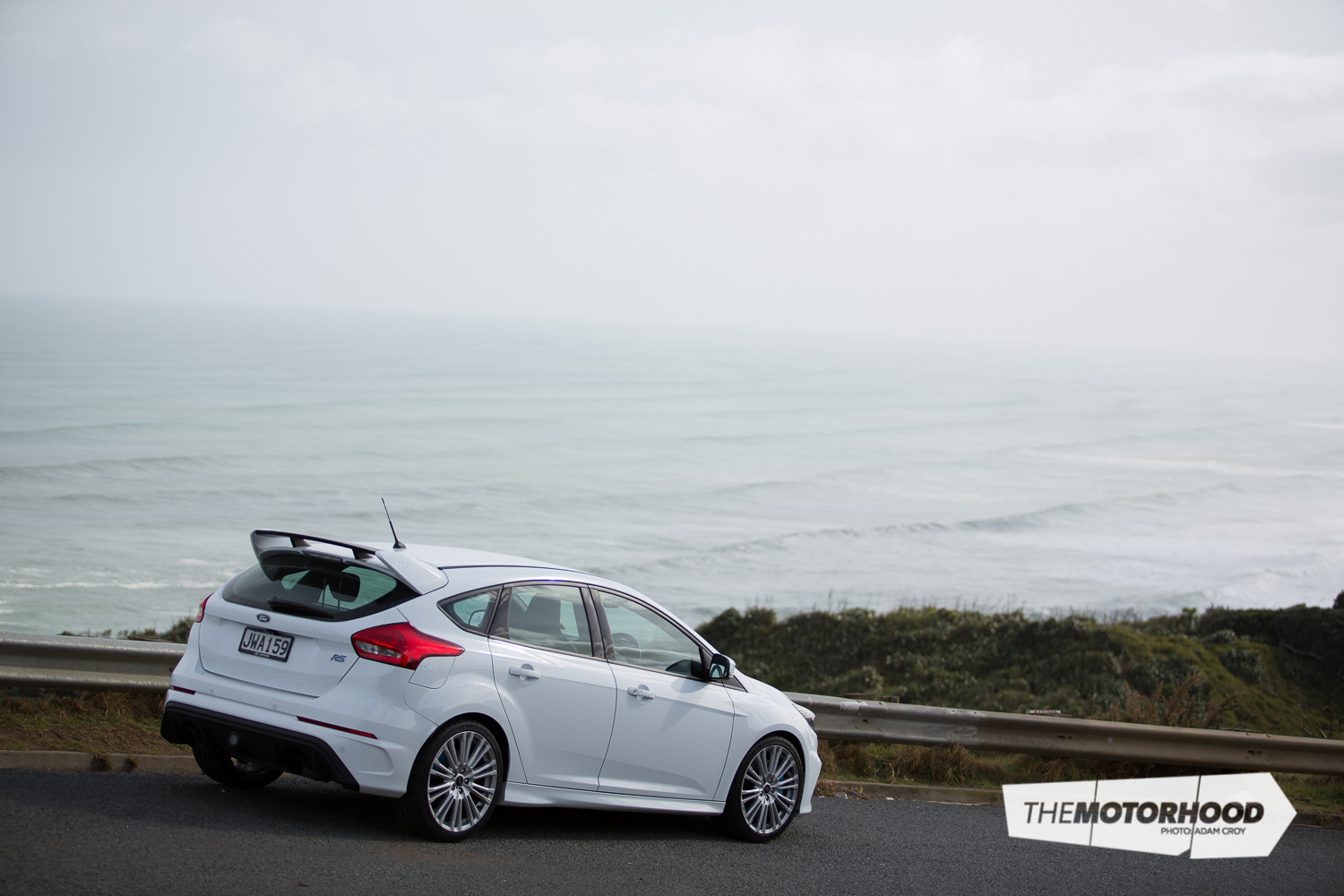
Having just completed the road in the Focus, I could honestly say it felt as if it handled those corners just as well as the Porsche, if not a bit better. Now I’ll be the first person to put my hand up and say that with a different driver on the same roads, things would be very different.
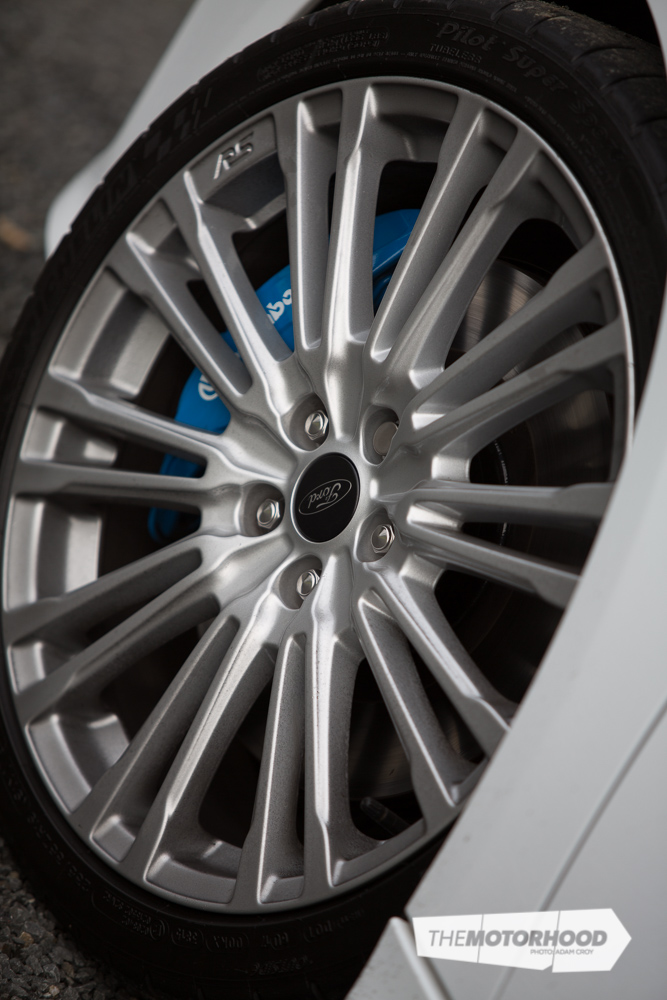
And while neither concept is particularly appealing, the difference between putting a $220,000 car into a ditch versus a $70,000 car that has probably appreciated since it was bought possibly changes the approach to the drive somewhat. But it also offers some insight into the capability the Focus RS offers.
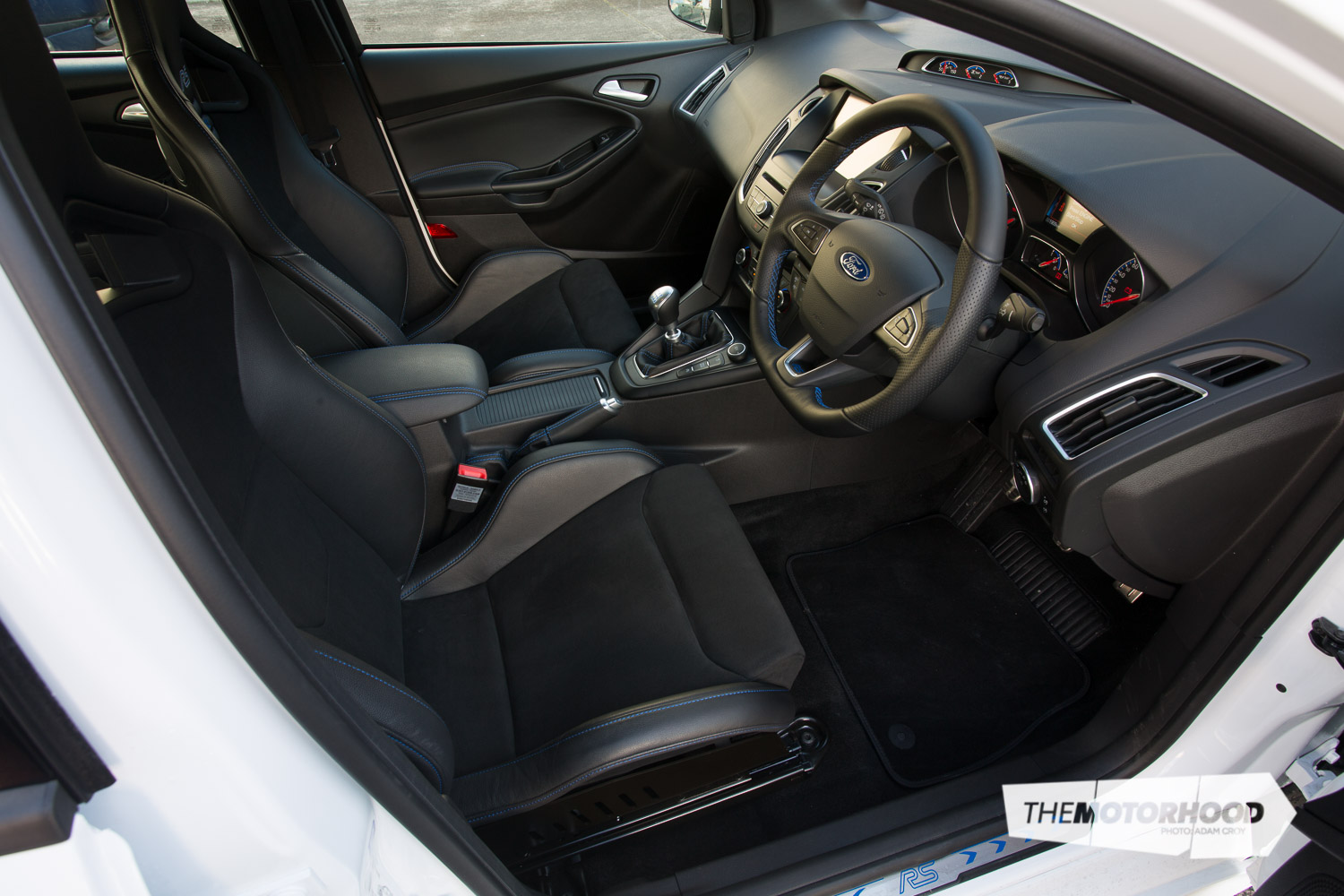
Back in the city driving in ‘Normal’ mode (there are four driving modes, Normal, Track, Race, and Drift), the Focus feels just that. It will tick a lot of boxes as far as room, practicality, economy, and comfort go. Apart from the undeniably race-bred seats (a $2500 option, but worth it) and short-shift manual gearbox, there would really be no way of telling that you’re driving anything but a normal rep-spec hatch.
So any gripes? A couple.
The gearbox. We’ve been through the pain of shitty steering wheel–mounted shifters attached to gearboxes that take an age to engage reverse and a lunar eclipse to skip between second and third, but we’re past that now. There is no way that you could justify owning a manual car by saying that you can change gear quicker than the automatic does, you can’t. And for the most part, those gearboxes are very good at doing the day-to-day stuff, getting in and out of supermarket car parks, and stop-start traffic on the motorways.
If the new Focus RS wants to pitch itself as a daily driver, and potentially even a proper performance car, it may need to look at offering its own version of VW’s DSG or BMW’s TCT. And then there’s the lock. It’s dreadful. I’ve been driving a Ford Ranger for the last while, unfortunately I didn’t have it with me when I was testing the Focus, but I’d suggest that Ford’s steering department was concentrating on the ute’s turning circle more than the Focus’. But then, maybe that’s what Drift Mode is for?
So who will buy this new version of Ford’s racing lineage? Not you or me, because Ford has already sold this year’s allotment of cars (around 50), and as I write, next year’s is very close to being sold out too. But we’d highly recommend getting your name on the waiting list, as it’s a car that needs to be driven.
Ford Focus RS
- Engine: 2261cc (137.9ci) 16-valve
- Formation: Turbocharged in-line four-cylinder
- Transmission: Six-speed manual
- Top speed: 265.5kph (165mph)
- 0 to 100kph (0-62mph): 4.6 secs
- Power: 257kW (345bhp) at 6000rpm
- Torque: 467.7Nm at 2000rpm
- Kerbweight: 1599kg (3525lb)
- Drive: AWD
- 1/4 Mile (est.): 13.05 secs at 104.3mph