data-animation-override>
“Waikato’s Hampton Downs once again played host to the annual New Zealand Festival of Motor Racing — this year dedicated to the history of the famous carmaker Porsche”
Racing took place over two weekends in late January and featured plenty of racing along with static displays and demos, including the mandatory Spitfire demonstration.
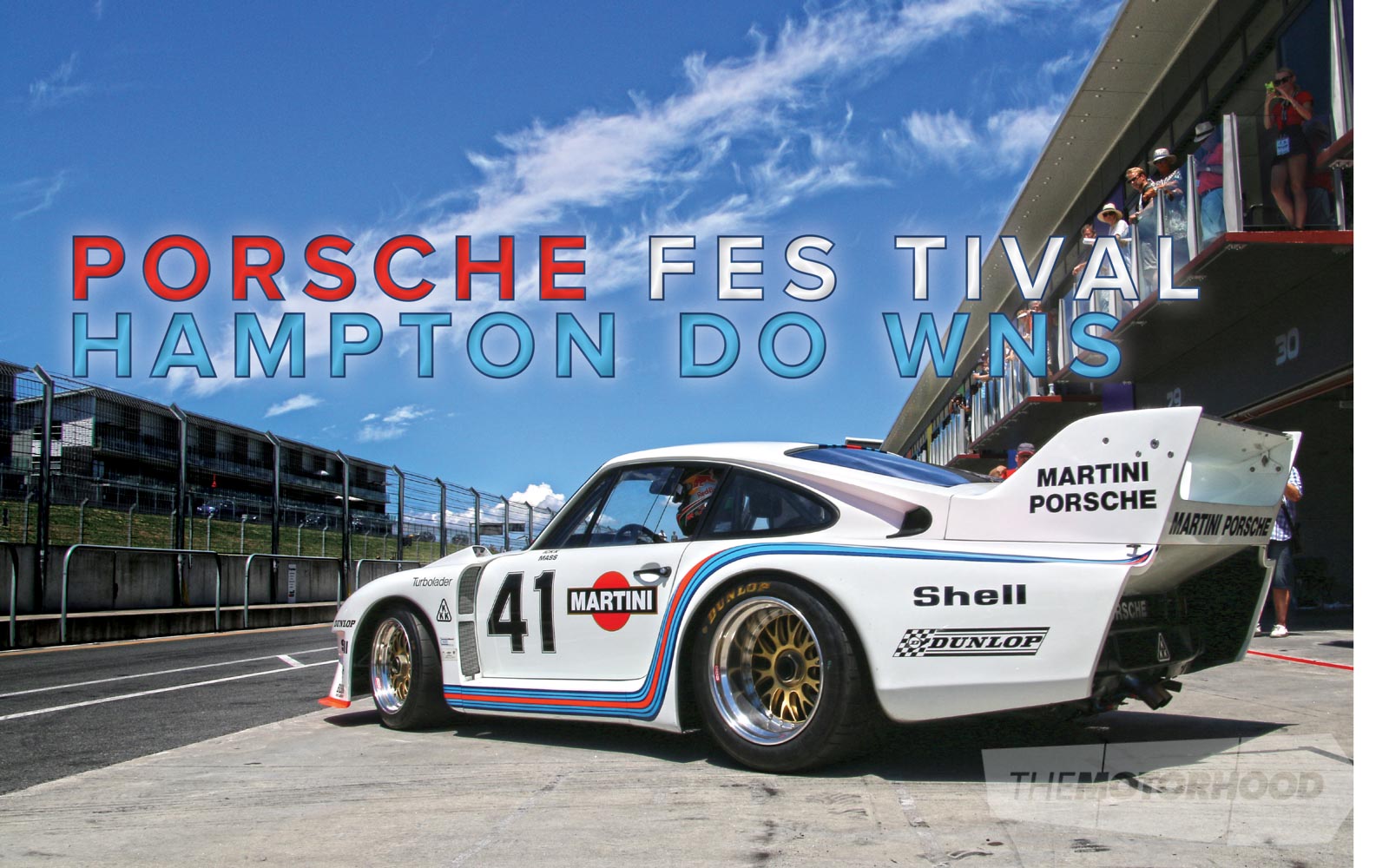
Planning for this event has taken two years and resulted in the mobile Porsche museum landing on our fabled shores. Porsche regulars Brendon Hartley, Earl Bamber, and Mitch Evans were on hand to demonstrate a 1977 Porsche 935, which was very successfully raced in its era, and a 1998 WSC LMP1 prototype. Also in static display from Stuttgart was a 1:1 model of the Porsche 919 Hybrid LMP1, which was successfully campaigned in the 24 Hours of Le Mans in 2015.

Weekend one saw the New Zealand–record-breaking parade of a staggering 402 Porsches lined up on track, four abreast, taking the line-up all the way down the main straight and some. The first weekend also saw the start to the popular F5000 series for 2016. Ken Smith was present for yet another year and showed that he is by no means slowing down by winning all three races. The crowd-pleasing Historic Muscle Cars class was also on hand to lay serious rubber onto the tarmac. Further classes included the European Race Series (ERC), Formula Junior and Formula 3, Historic Formula Ford, Historic Sports Sedans, the Pirelli Porsche Championship, Classic Porsche Racing, Sports, Sports Racing, and GT.
With the F5000s having done their dash in the first weekend, the feature for the second weekend was the one-hour endurance race. This included entrants from the likes of Porsche, Ferrari, and Audi, to name just a few, and was won by the Trass Family Motorsport Ferrari 458 Italia GT3. Other notable inclusions in the second weekend were the Classic Trials, Pre ’65 Racing Saloons, Historic Formula Libre, and Heritage Touring Cars.
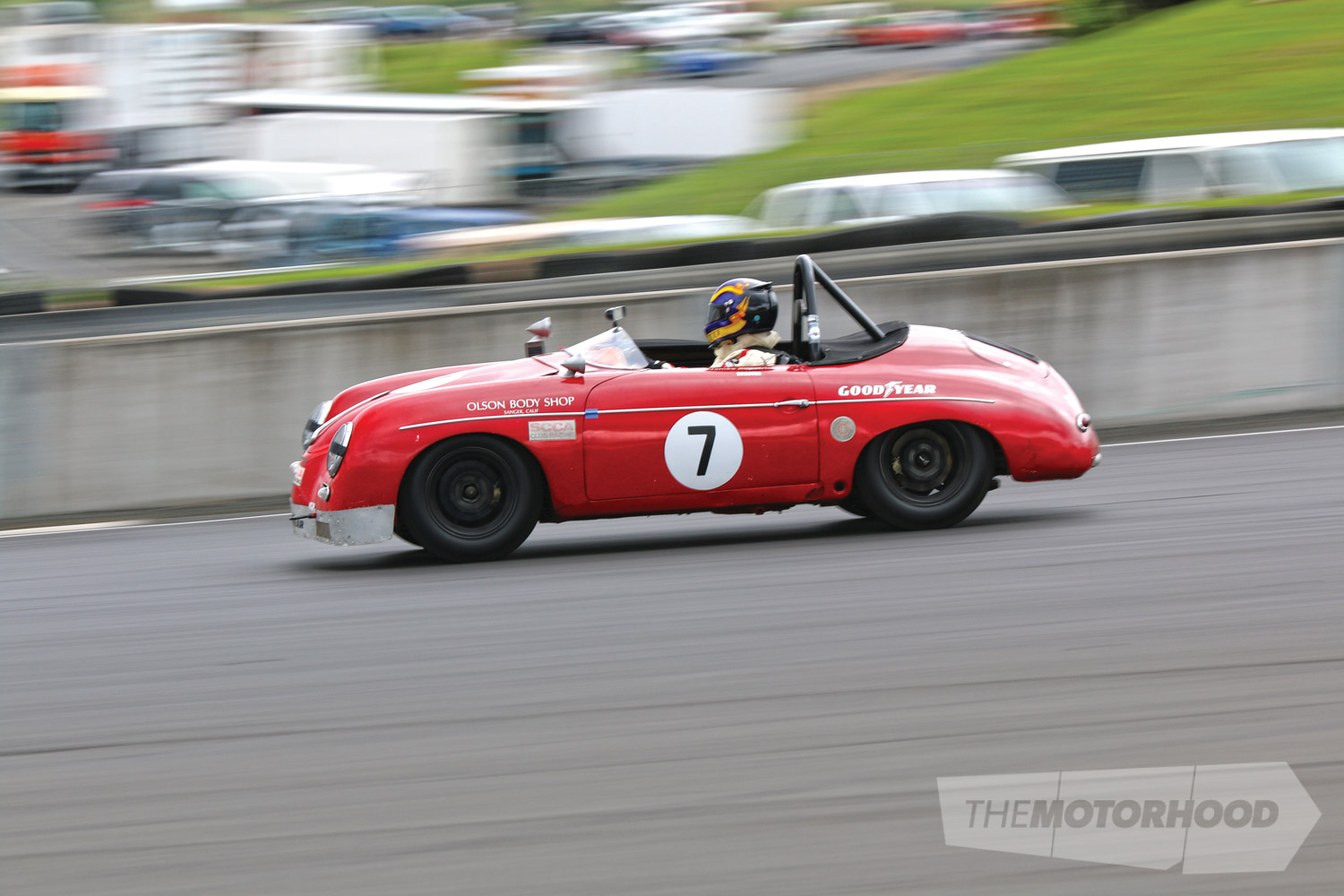


One of the machines from Stuttgart out on track and on static display at the festival was a 1958 Porsche 356, which was once owned by Brigadier General James Kilpatrick in the US. This car raced in the Sports Car Club of America (SCCA) E Production class between 1964 and 1996, and very rarely missed a race, clocking up more than 55,000 miles (over 88,500km) on the ‘aircraft’ gauge. Also in the public eye was a Porsche 914; 118,992 of these were built between 1969 and 1976 as a joint venture between Porsche and VW, generally featuring a flat-four engine with an output of 71kW (95bhp), while 3344 were produced with flat-six engines.
Others on display included the Lighting Direct 911 that used to be raced by Owen Evans and Bill Fulford and a 1958 356 Carrera GS, which was one of the first 10 new Porsches sold in New Zealand. Being a convertible Carrera (four-cam engine) with a hardtop, it is believed to be one of only two in the world that are left-hand drive, according to club president David Mackrell. It is now back in the hands of the Giltrap family.
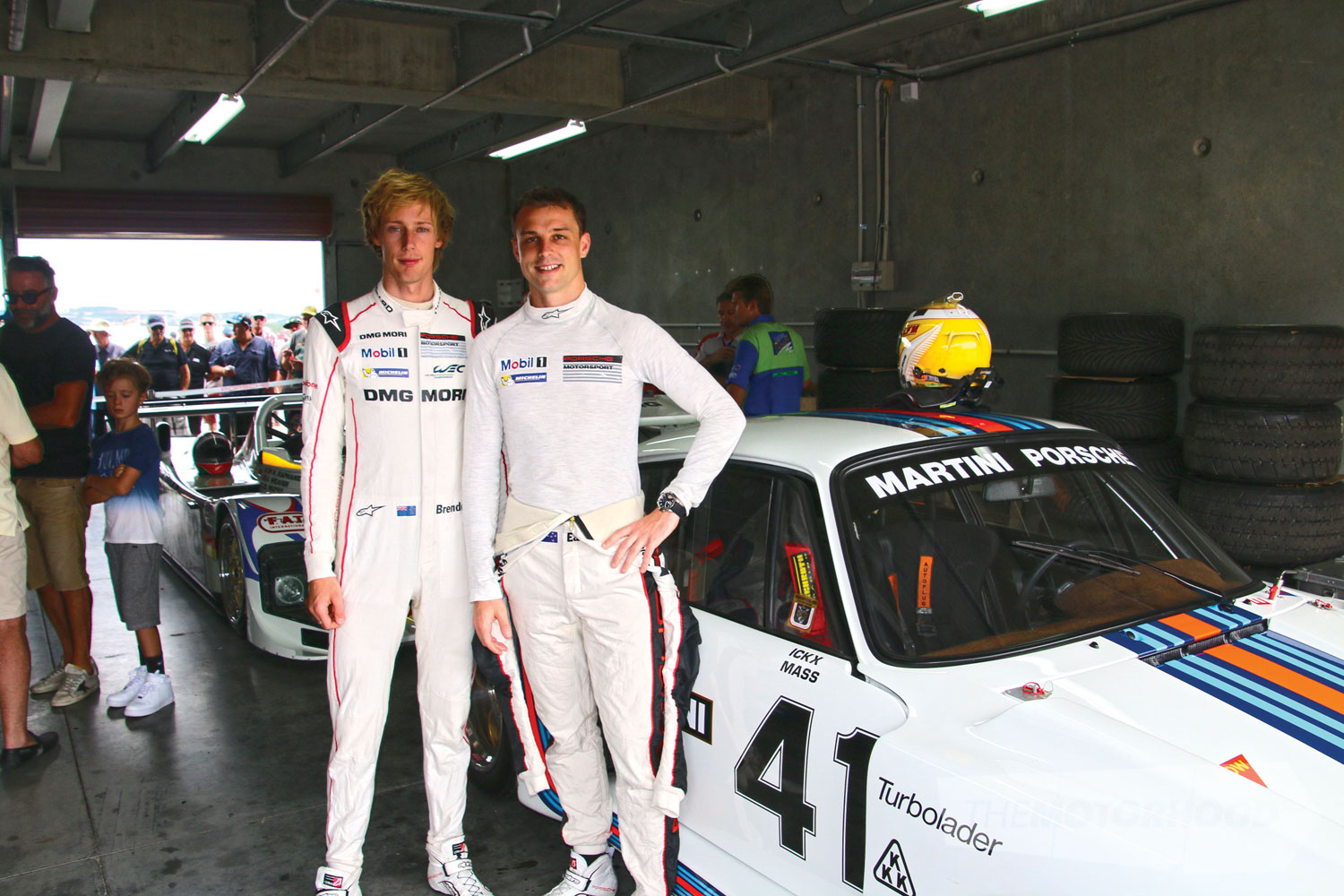
With approximately 380 entrants registered to race, and spectator numbers reaching a commendable 20,000, this year’s festival was a huge success. No doubt the weather helped greatly. We were told that the track temperature at times reached 50 degrees!
Next year we look forward to the Ken Smith Festival, and learning about his story.
Photos thanks to Steve Ritchie