
Classic motor racing is all about fun and camaraderie, and Doug MacDonald has been enjoying motor racing at his favourite racetrack — Teretonga Park Motor Race Circuit — since the very first meeting in 1957.
It was 60 years ago when Doug competed in his MG TD alongside a bunch of dedicated enthusiasts from the Southland Sports Car Club, who helped create the popular southern race track.
“It’s my favourite track [Teretonga Park Motor Race Circuit] and it’s why I decided to come back again this year for the 60th anniversary year of the track,” Doug said.
Now living in Marahau near Motueka, the 85-year-old had also been back for the 25th and 50th anniversary meetings the latter also with an Alfa Romeo built in New Zealand.
Created by Herb Gilroy in 1968, the Alfa Romeo 750 Competizone 1750 was built as close as possible to the original car.
“I saw this lovely little Alfa Romeo for sale alongside another Alfa on the side of the road and after talking to the owner, I got together with some friends and we got it home,” he said.
The Alfa Romeo was modelled on two development cars that the Italian company had built in 1955 but never raced.
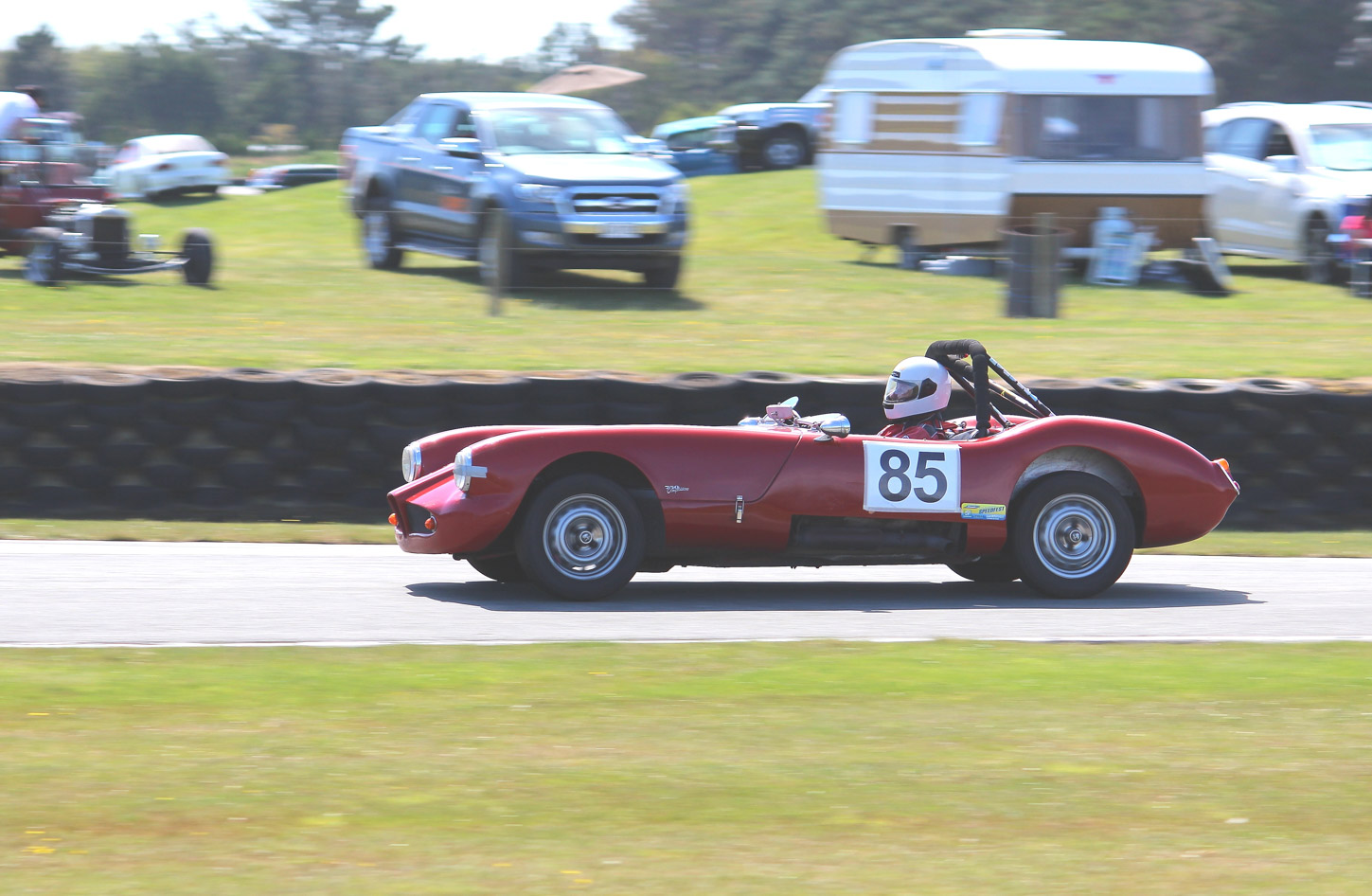
“I believe Herb contacted Fiat, who owned Alfa Romeo, and Cisitalia, who had developed the car, and they forwarded the blueprints to him so he could build it. It’s a lovely little car and so forgiving on the track. It’s very comfortable too,” he said.
Doug was now the car’s third owner and he had decided to keep the 1750cc twin-cam engine pretty much standard.
“We decided to keep it that way for reliability rather than go for more power, and it has been very reliable with 22 races and hill-climb events completed in 2015 with very few problems,” he said.
Doug enjoyed the atmosphere of classic racing, and the Evolution Motorsport Classic Speedfest 2017 event reminded him of the first, back in 1957 when temperatures were very similar.
“Those fellas on the Formula Junior Jubilee Tour will be enjoying this weather. They will be thinking they are in the South of France in this heat,” he laughed.
He was thrilled with the way the club had developed the circuit.
“It really is a very good circuit and I love driving around it. It’s just a great atmosphere,” he said.
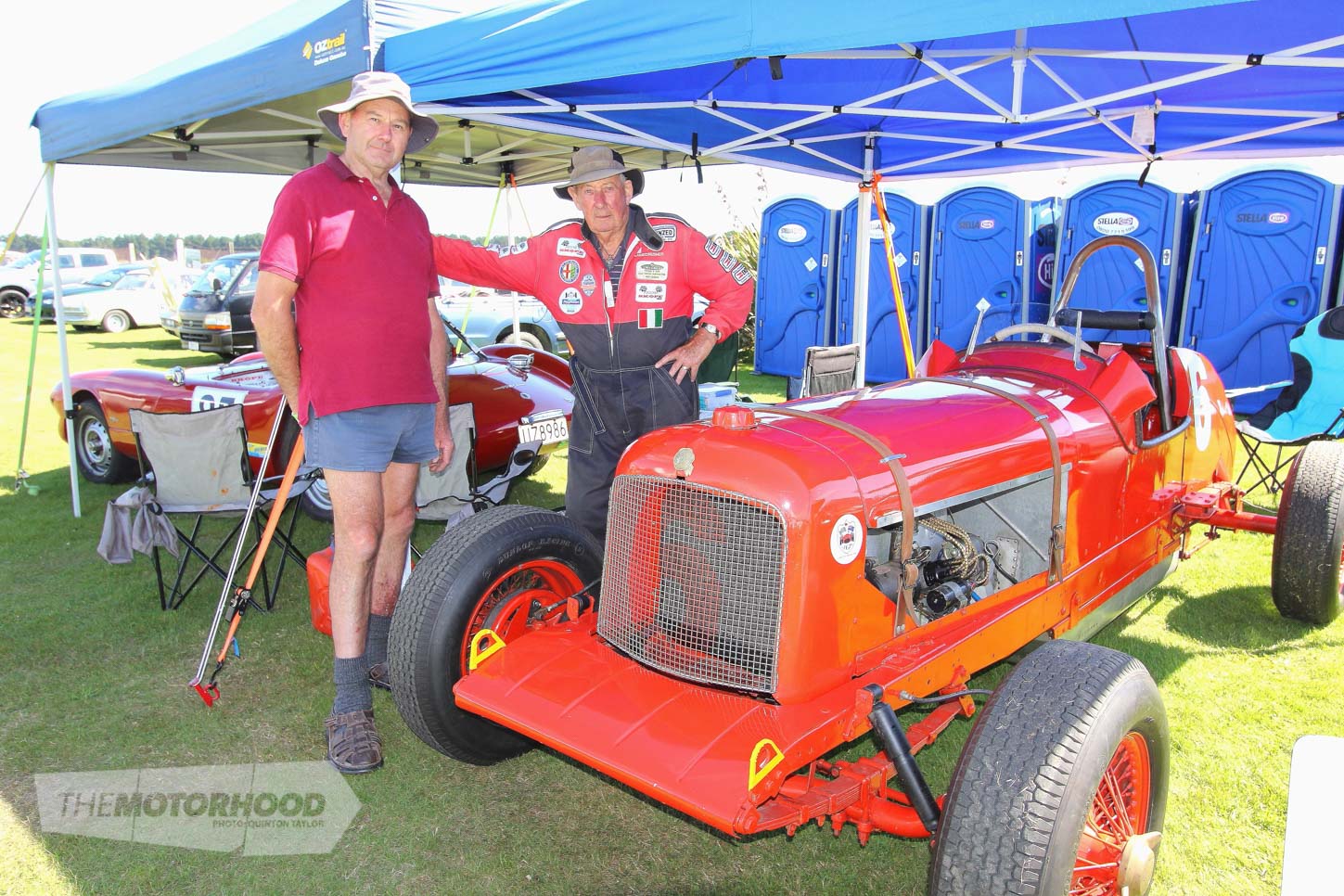
Enjoying the heat with Doug, and sharing the same tent to shelter from the summer heat, was fellow vintage racer Murray Frew from Ashburton, parked up with his big orange Chrysler 62 Special.
Murray has owned his race car for some 20 years, and it was originally built in the Methven area.
“It was built pre 1950, and the fellow who built it knew what he was doing,” Murray said.
Based on a 1929 Chrysler 62, the 250ci (3769cc) side-valve six-cylinder engine provides deceptively quick performance for such a big car. Murray had competed in many circuit races and hill climbs with the car.

“If you look carefully you can see that the fellow who built this cut the rear of the chassis off and welded it onto the front of the chassis, resulting in a long wheelbase and a very well-balanced car. It’s great to drive,” he said.
Typical of New Zealand specials of the day, the car made use of what was available, he said.
“It runs through a Vauxhall gearbox, and if you look carefully at the fuel tank above the rear axle, you can see that the tank is made from two kitchen sinks bolted together,” he said.
Both MacDonald and Murray had thoroughly enjoyed the Southern Classic series of meetings with the good weather adding to the enjoyment.