Rare twin-cam Escort in the deep south

10 March, 2017


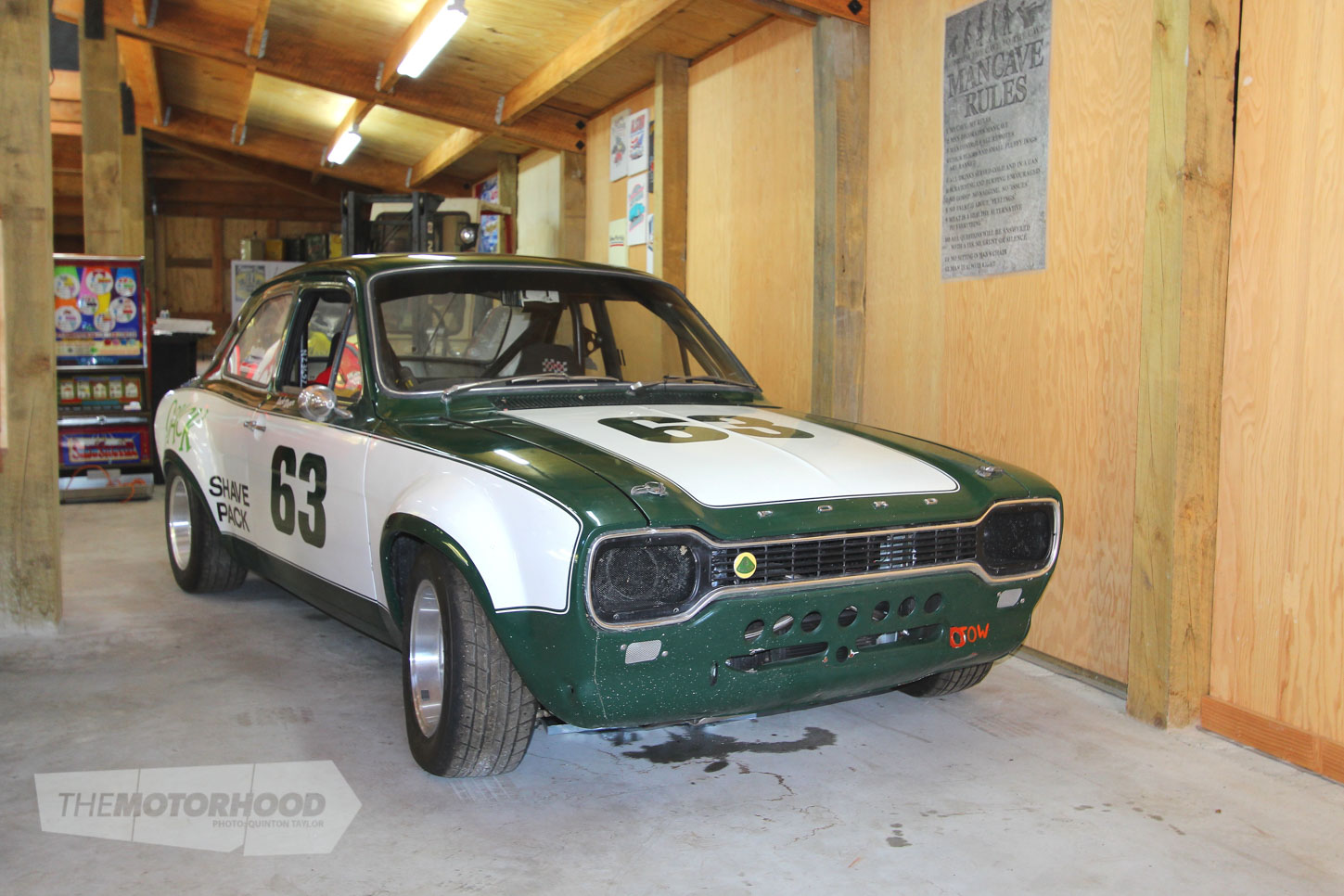
If you enjoy classic racing, then this car could be a great start for you in the healthy South Island classic racing scene. Southland racer John Abbott has a passion for collecting some exciting cars, and his collection includes some notable rarities.

Currently sitting in a corner of his shed, and now offered for sale to free up some garage space is a very rare example of Ford’s mighty twin-cam Mk1 Escort racer.

“Just a handful of genuine factory Escort twin-cams came with rectangular headlights, and this 1968 version was one of four cars bought into New Zealand by Ford,” John said.

Originally intended for Australian racer John Warden, the car was destined for Aussie tracks until Warden’s untimely death, and it was then offered to New Zealand driver Jack Nazer. 
At the time Nazer was well known for his exploits in a quick Ford Anglia, and the Ford Escort was a welcome addition to the racing scene.

“It was originally powered by the Lotus twin-cam engine. In 1969 it possibly raced fitted with a Cosworth FVA, and then, under ‘Cossack’ sponsors colours, a Cosworth FVC engine was fitted,” he said.

Jack Nazar premiered this twin-cam Escort with Dave Simpson’s similar twin-cam at Bay Park on October 5, 1968.

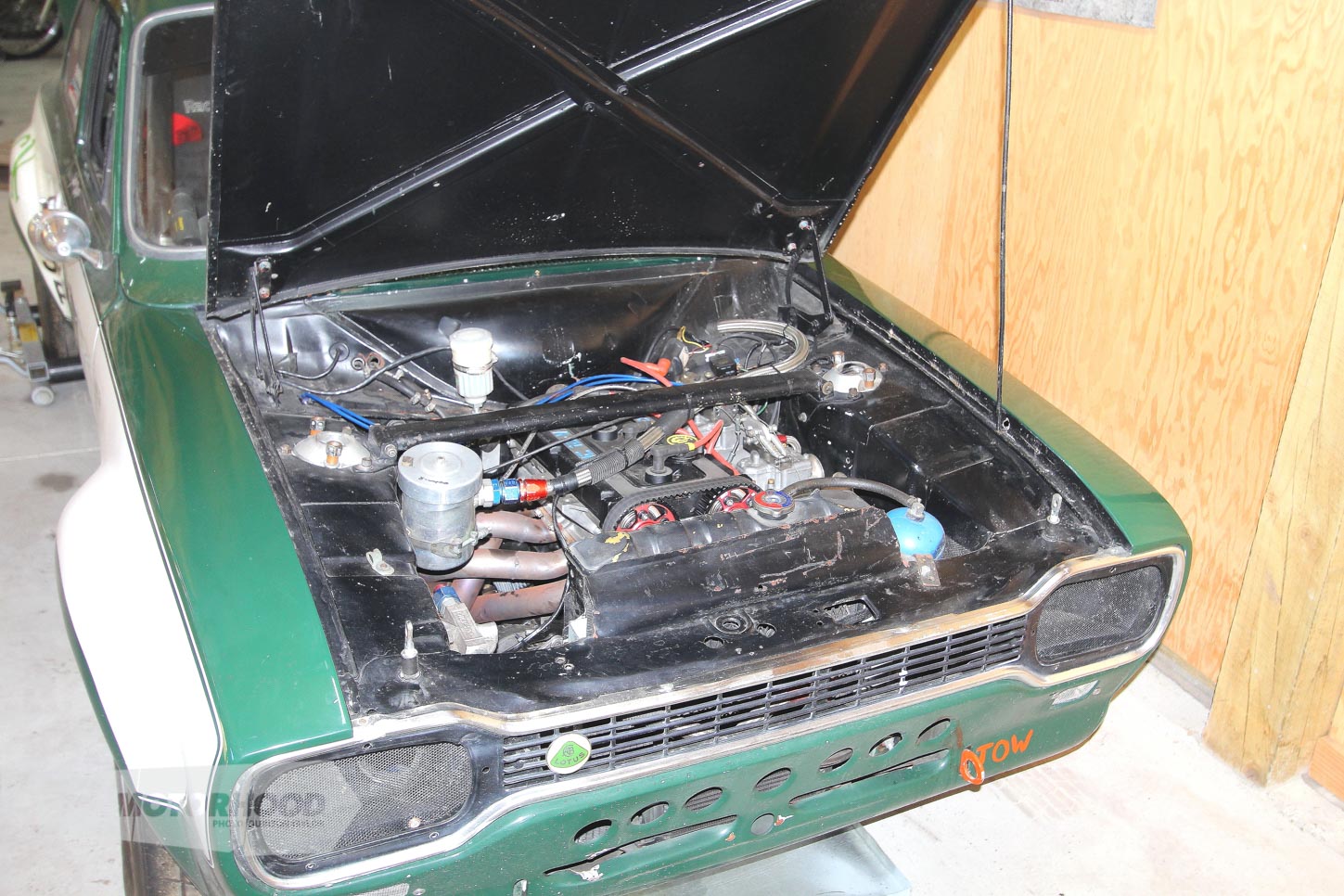
John has owned and raced the car for the past 20 years, and it was now fitted with a Dennis Lyon–built two-litre engine, dry-sumped, and with 48DCOE Webbers, although that engine bay has experienced a variety of engines.

“Jack had it from about 1969–’70, he then sold it to Malcolm Coffey who crashed it in his one and only race at Levin. It then went to Danny Lupp, and I think he had a BDA in it before it was sold to Kevin Ryan, who raced it with a pushrod 1600 Ford motor.”
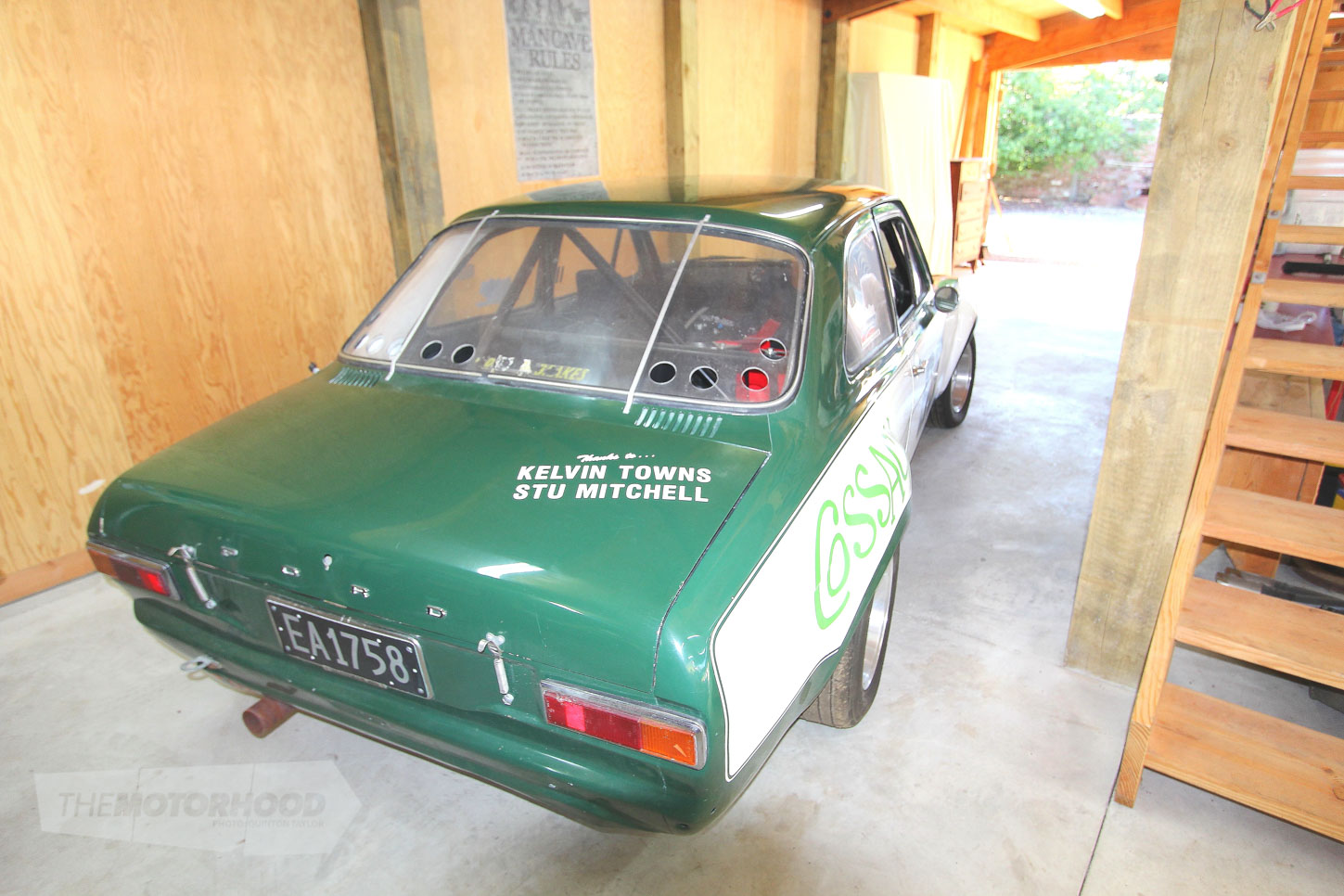
John then purchased it from a Pete Blomfield and today the car is still in its original shell and relatively rust-free.

“It would be great to see someone put it back to its original specification as it’s got a lot of history. I regularly managed one minute and 12 seconds at Teretonga, and it was always a very reliable car. It will be sad to see it go,” John said.
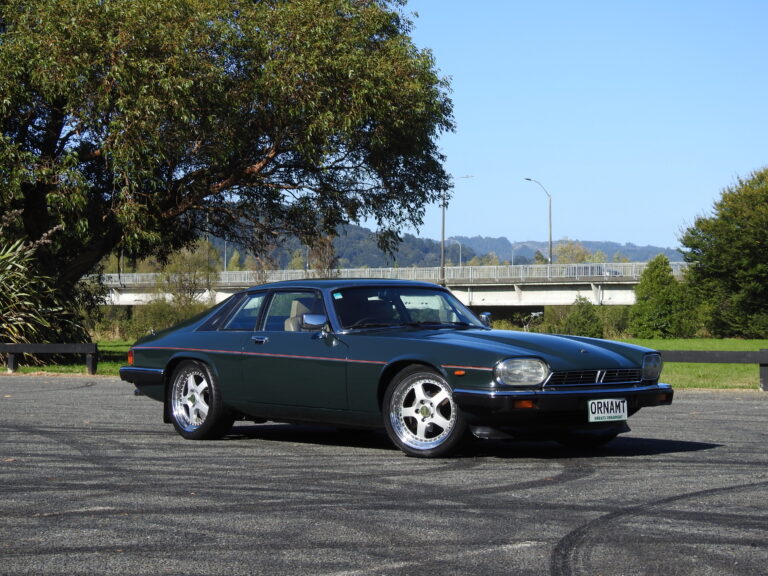
 

Janspeed recreates the Jaguar sports car

Thankfully, a few of these cars made it to New Zealand, the odd one being imported from the UK over the years. However, the 1988 British Racing Green example owned by Bill Slater in Upper Hutt was originally sold as a standard car but converted using the full Janspeed kit by the first owner within a couple of years of buying it.
Bill has owned a few other Jaguars. In fact, after he sold his Jaguar XJ12 in 2018, he found himself pining for another and, when the XJ-S came up for sale, he could not resist it. Having just sold the V12, he was not expecting much from the six-cylinder car other than more reliability and it being cheaper to keep on the road. Naturally, he had heard of the influence Janspeed had on the marque, but it was not until he took the car for a test drive that he became aware of just how superior it was to the car he had just sold. The price of a second-hand Janspeed XJ-S and that of a standard 3.6 XJ-S is quite comparable, making the Janspeed version an incredible bargain, even more so in comparison with other performance classic cars — or even modern cars, for that matter — which cost far more bucks for the bang.

The writing on the wall

Deven, a digital content producer in his 20s, says it was the rear-drive Nissan and Toyota drift cars that fired his imagination in his not-so-distant youth and soon had him wanting one of his own. However, like most of us, he had to start in something less glamorous – in his case, a 1997 Mitsubishi Galant. After that, he bought a four-litre V8 1991 Toyota Soarer, a big change from the Mitsubishi.
“It was my daily driver, and it wasn’t that bad to run back when petrol was affordable,” he says.
When he got fed up with filling it up, Deven bought a 1989 Ford Laser sedan, a 1.3-litre five-speed manual, to be his daily driver. It’s in very good condition, bought from a careful older driver, and he still runs it – although he will occasionally also drive the latest in a series of Nissan Laurel sedans. His current one, from 1993, has done the lowest number of kilometres yet, at 183,000. It has the single-cam version of the engine in his Skyline.
“I’ve had four different versions of that car. It was just a car I always liked. It’s really comfortable, quite luxurious. I bought it from a 90-year-old in Hamilton. It’s in mint condition, and everything is standard.”