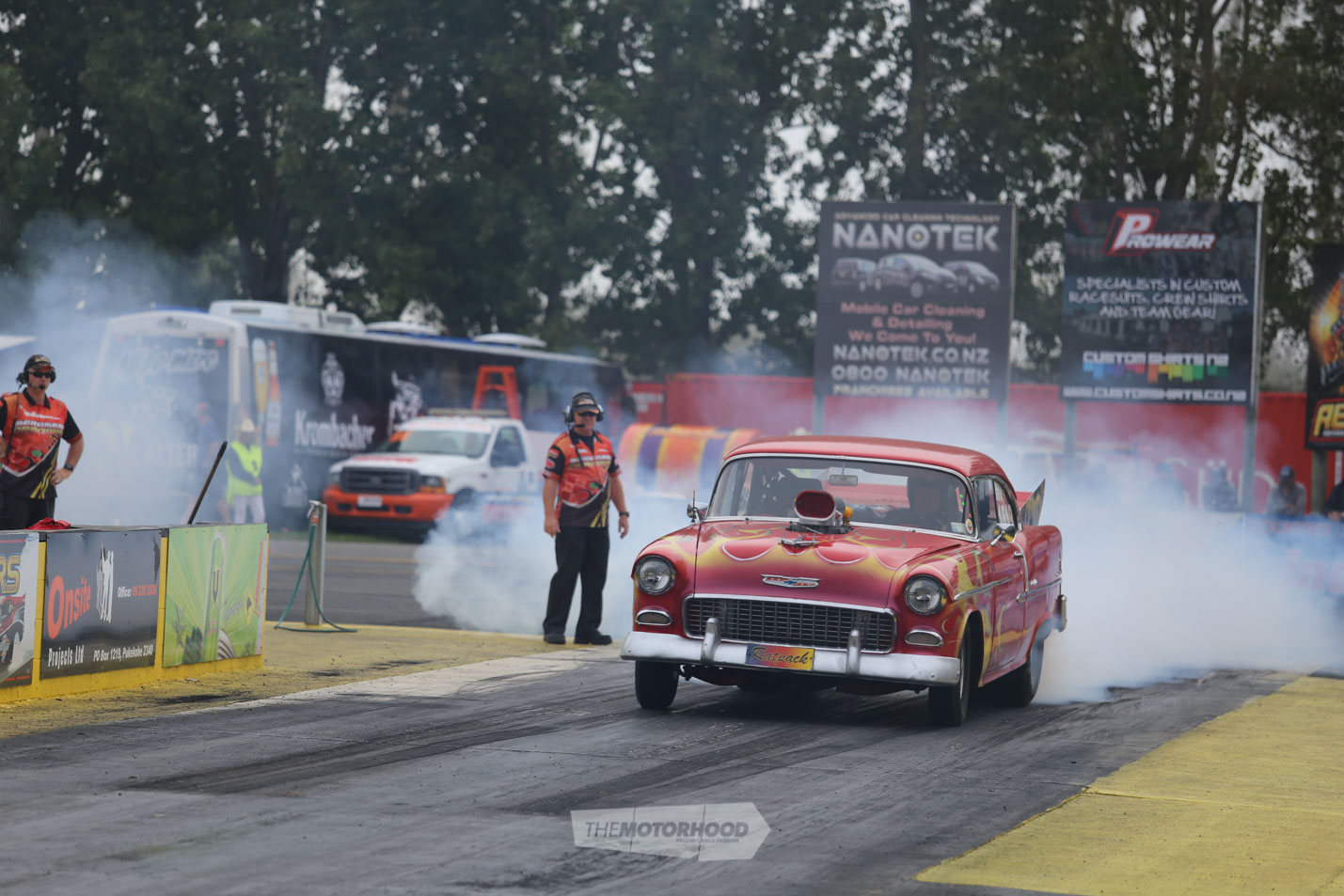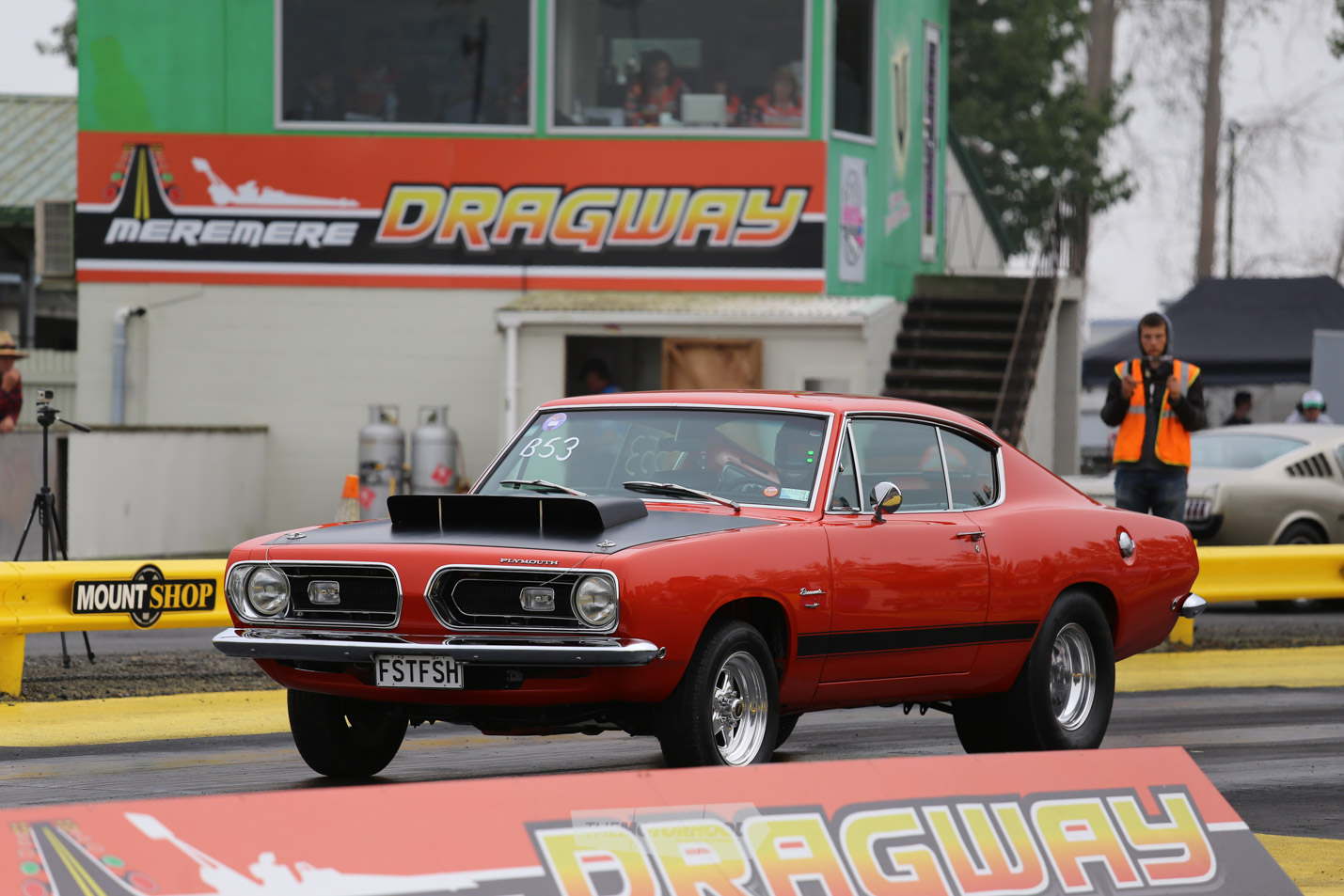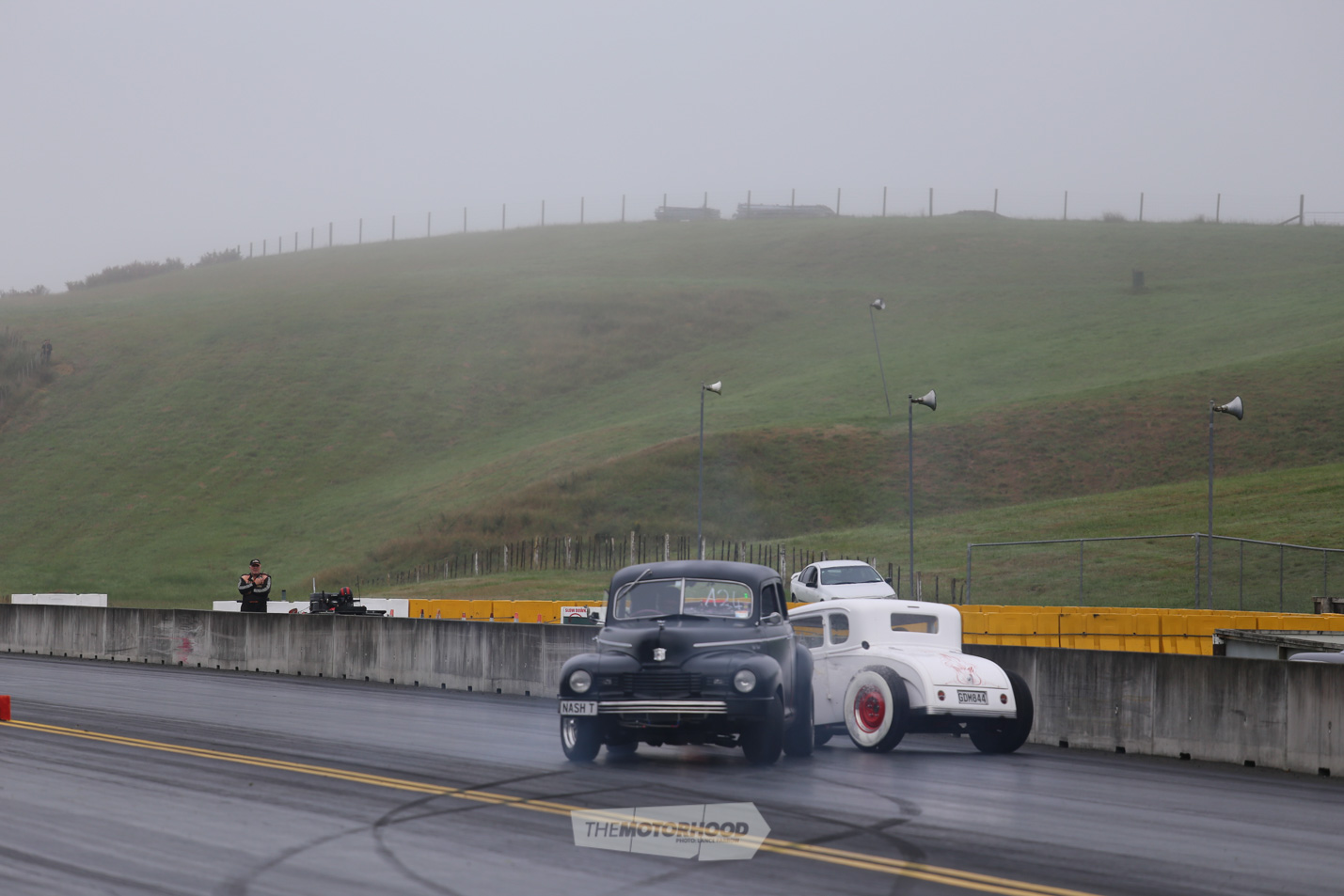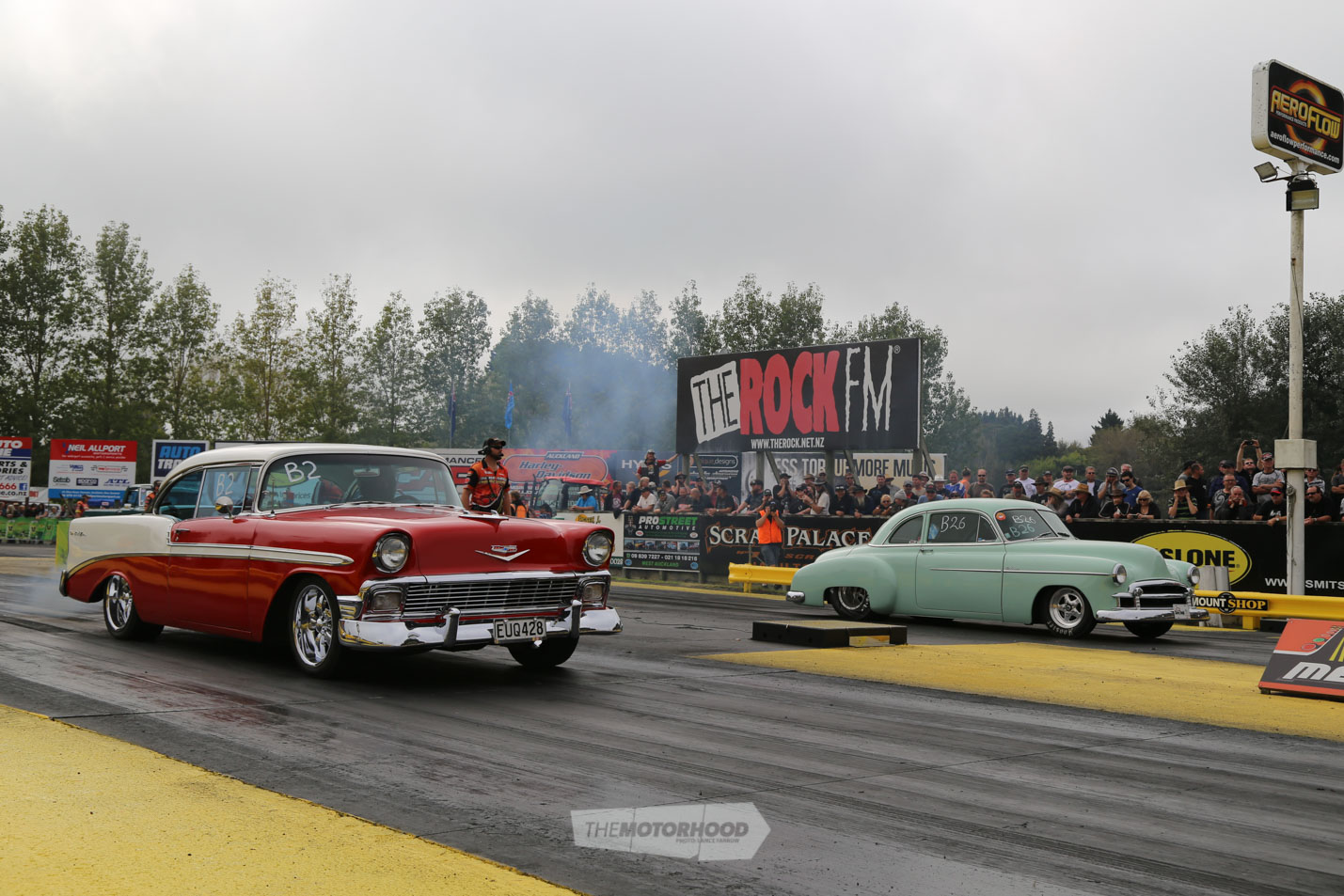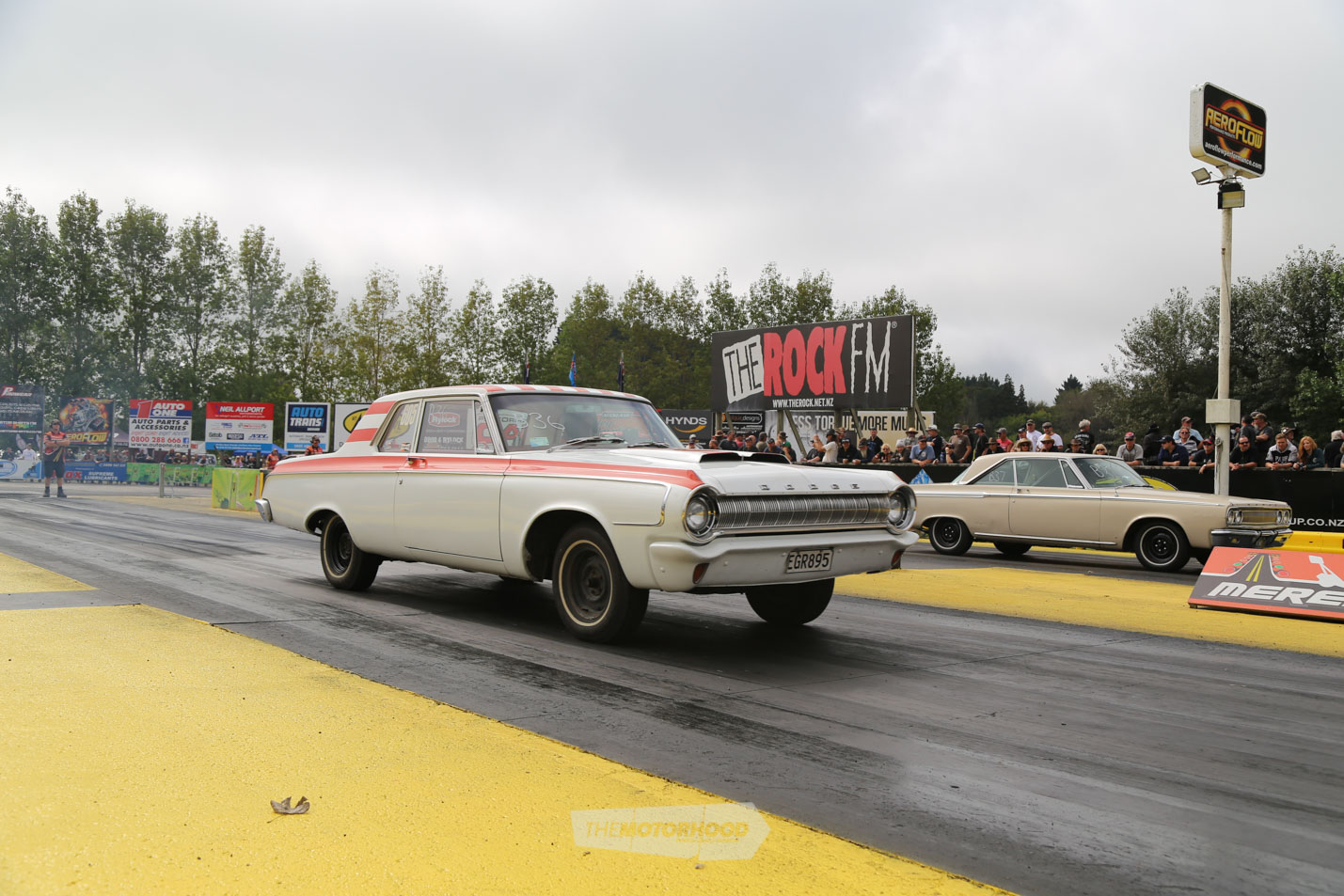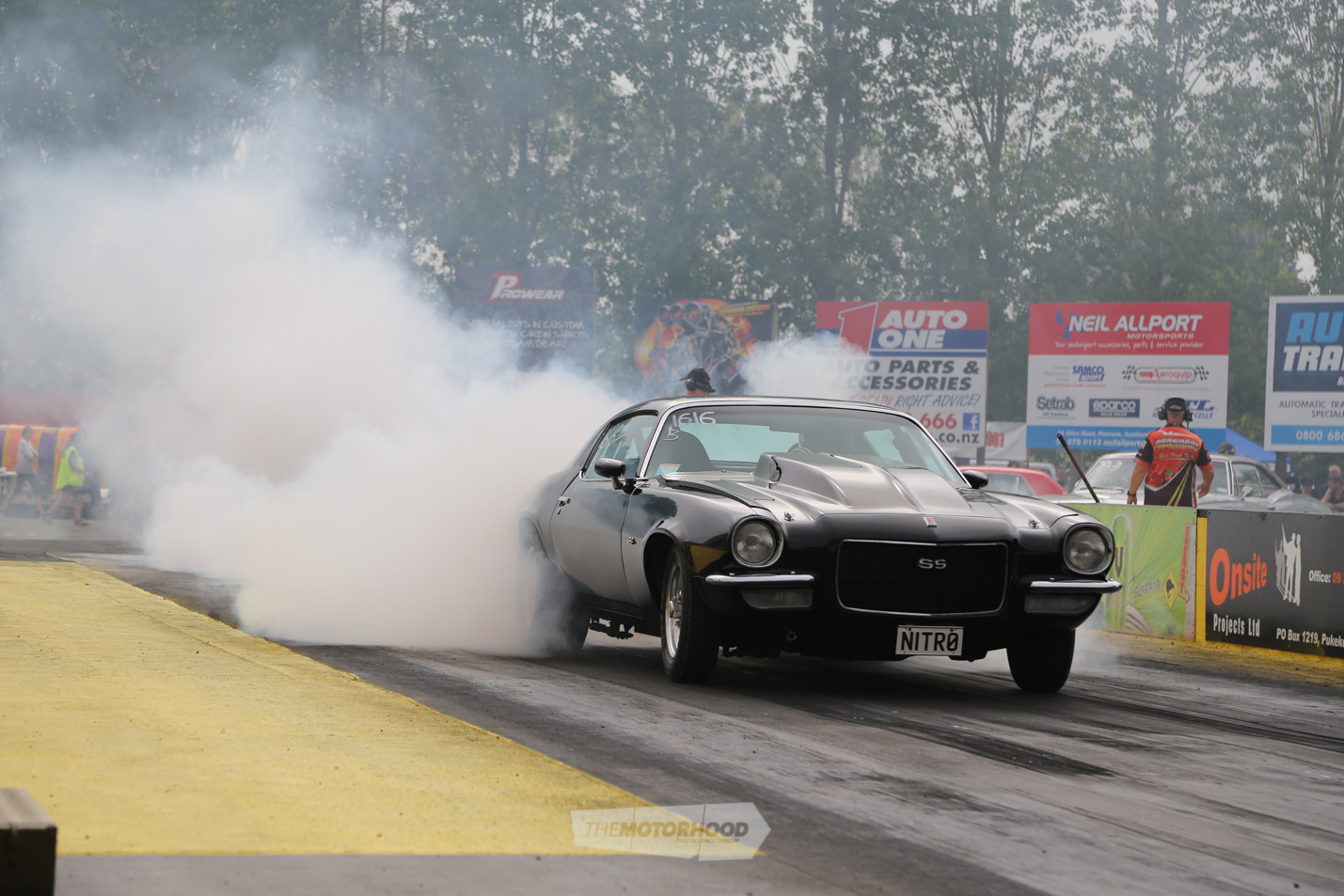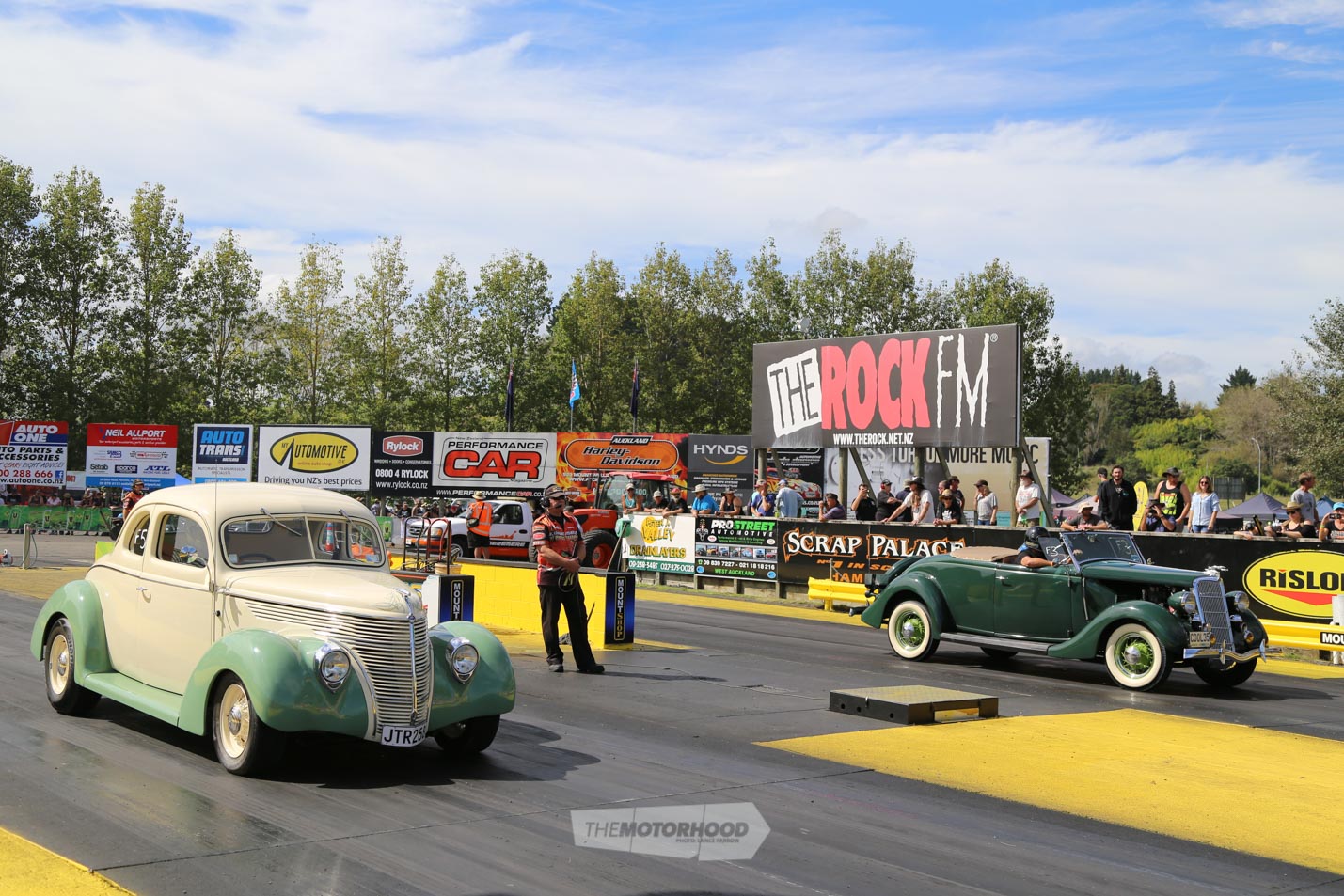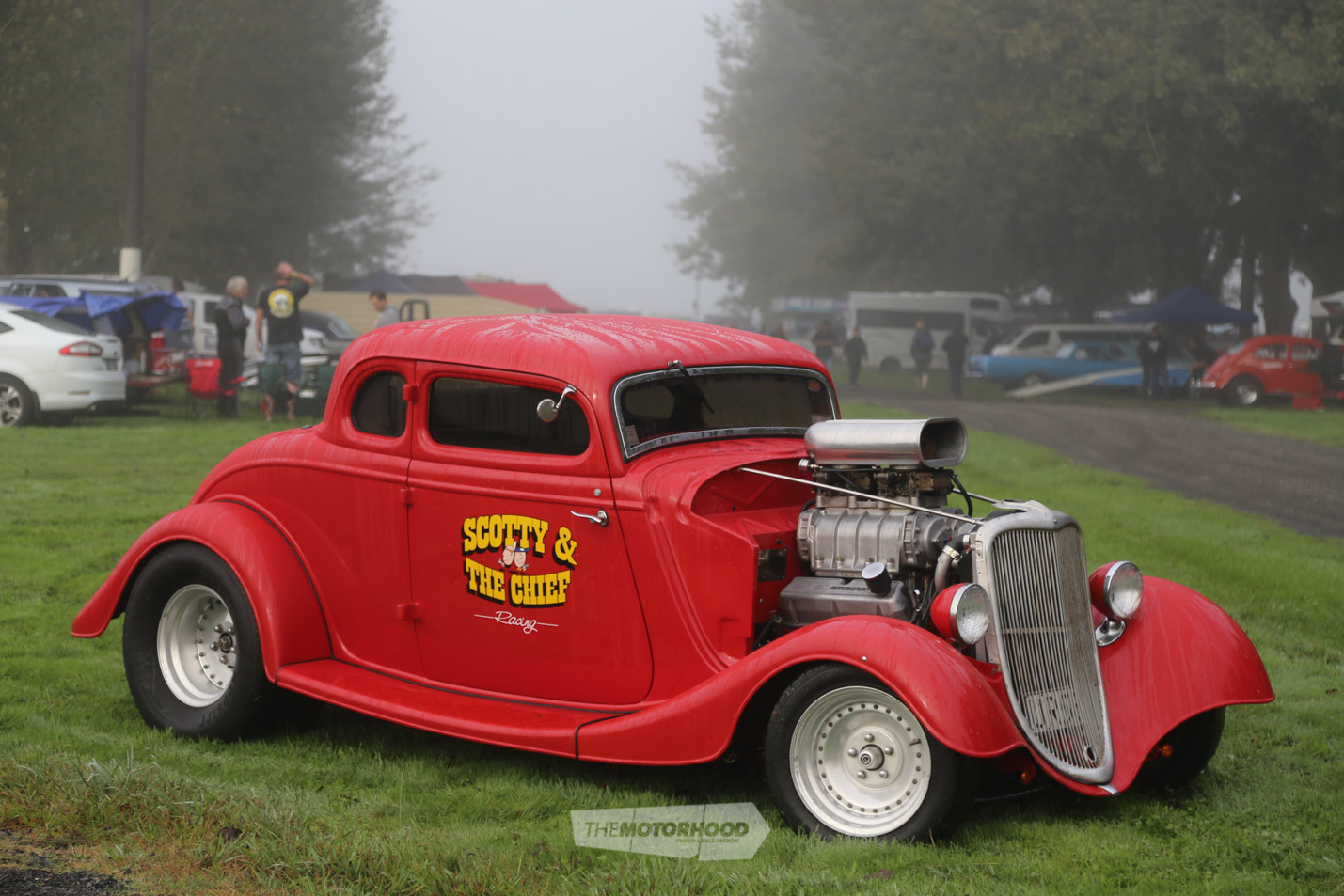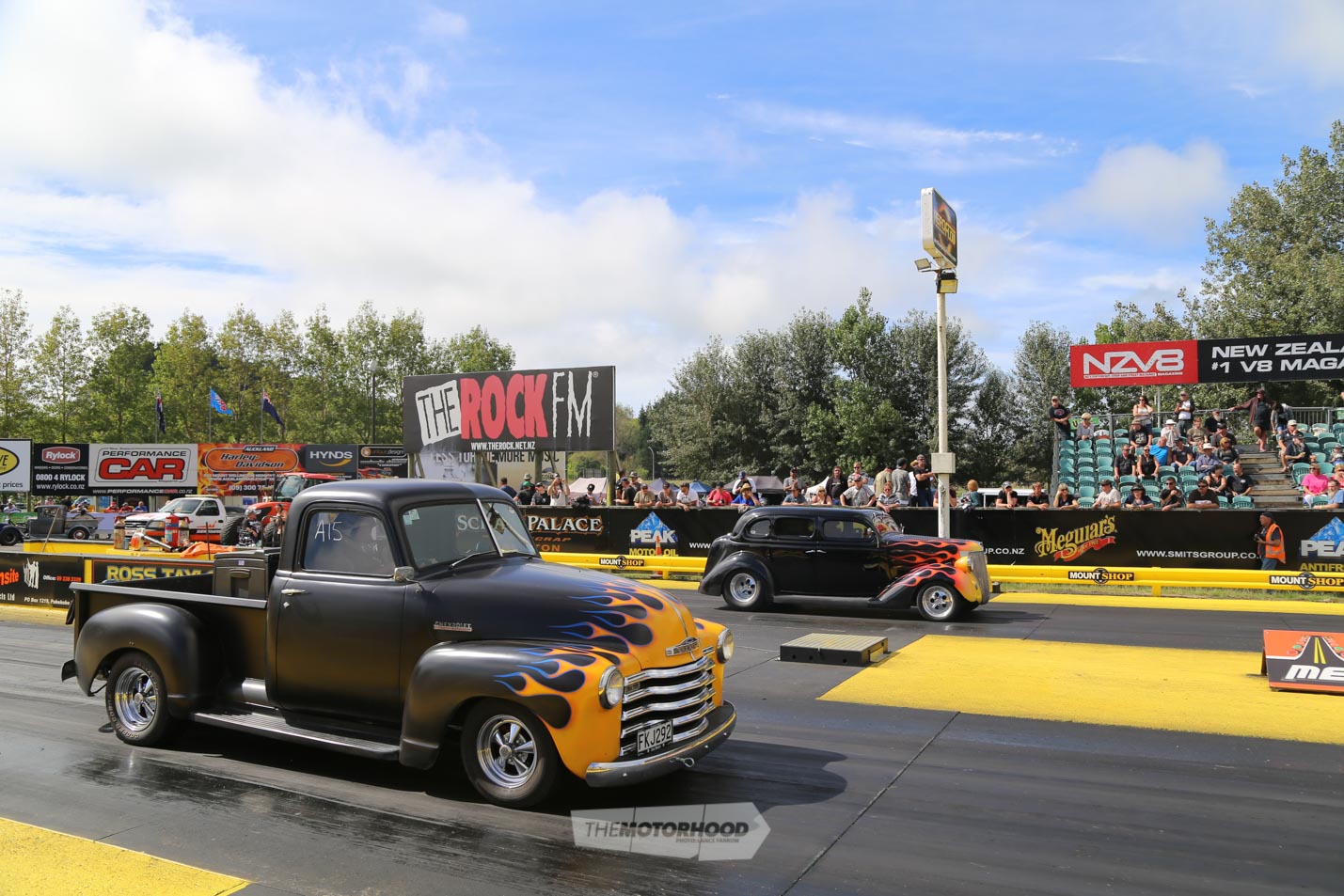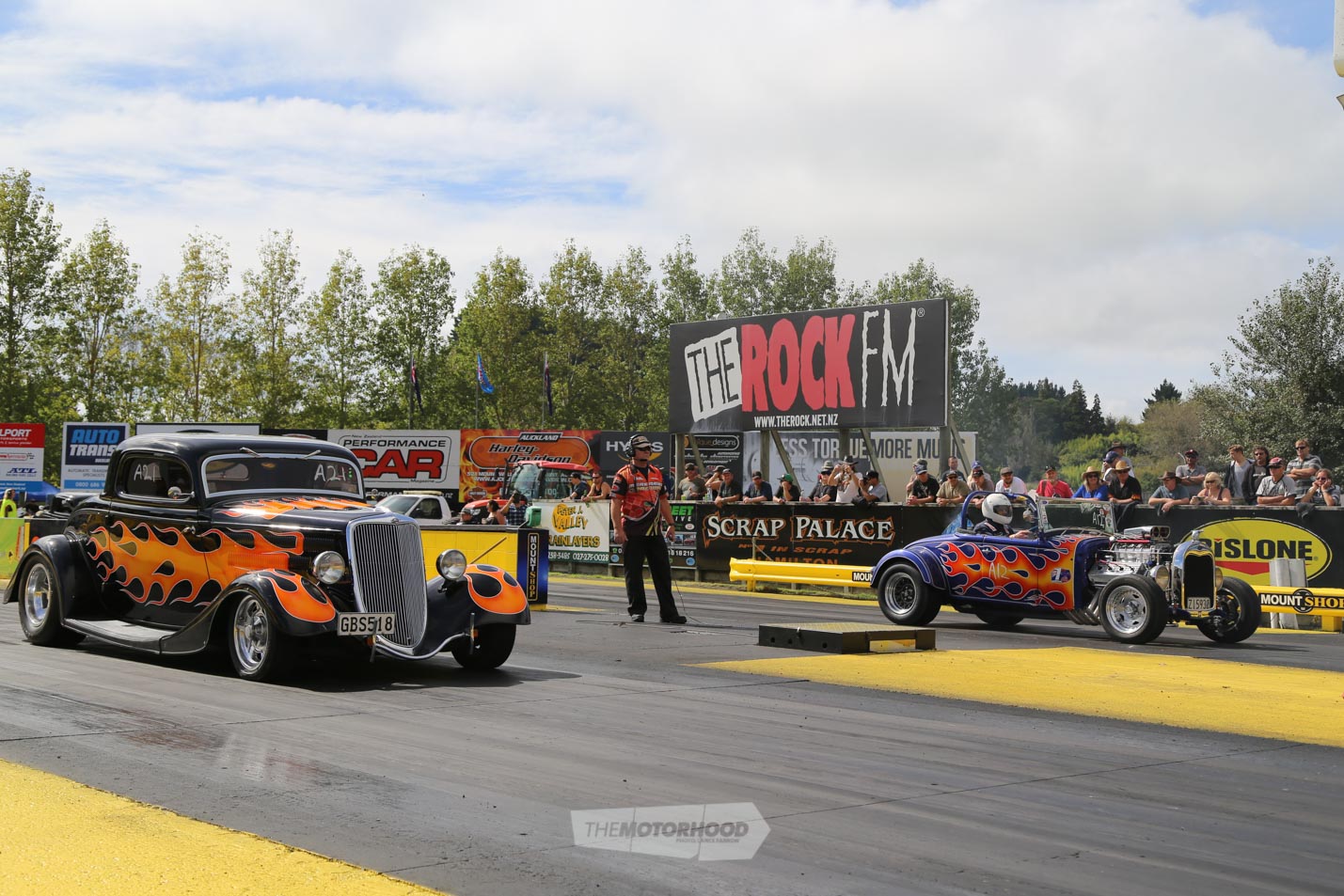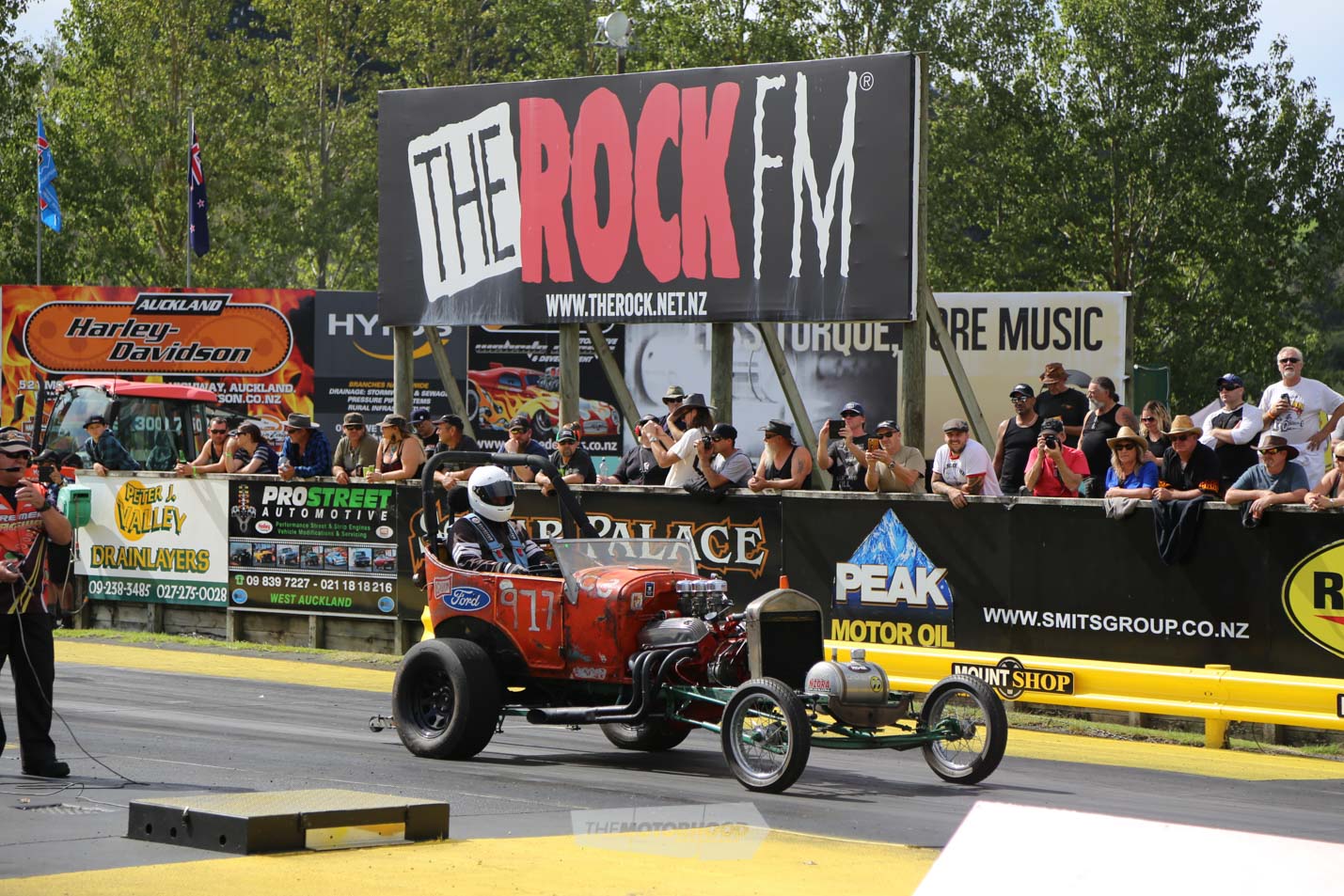
There’s none of the underlying tension prevalent on competition race days where points are at stake and expensive breakages are a very real possibility.
It’s been almost 30 years since the annual Nostalgia Drags race meeting burst onto the local drag racing calendar, and although much has changed in the intervening years, the metronomic quality on the event hasn’t. Champion Dragway is now known simply as Meremere Dragway, the event’s reins are firmly in the hands of the Tauranga-based Bay Rodders car club, and the scope of racing has expanded to include more than just the traditionally ‘traditional’.
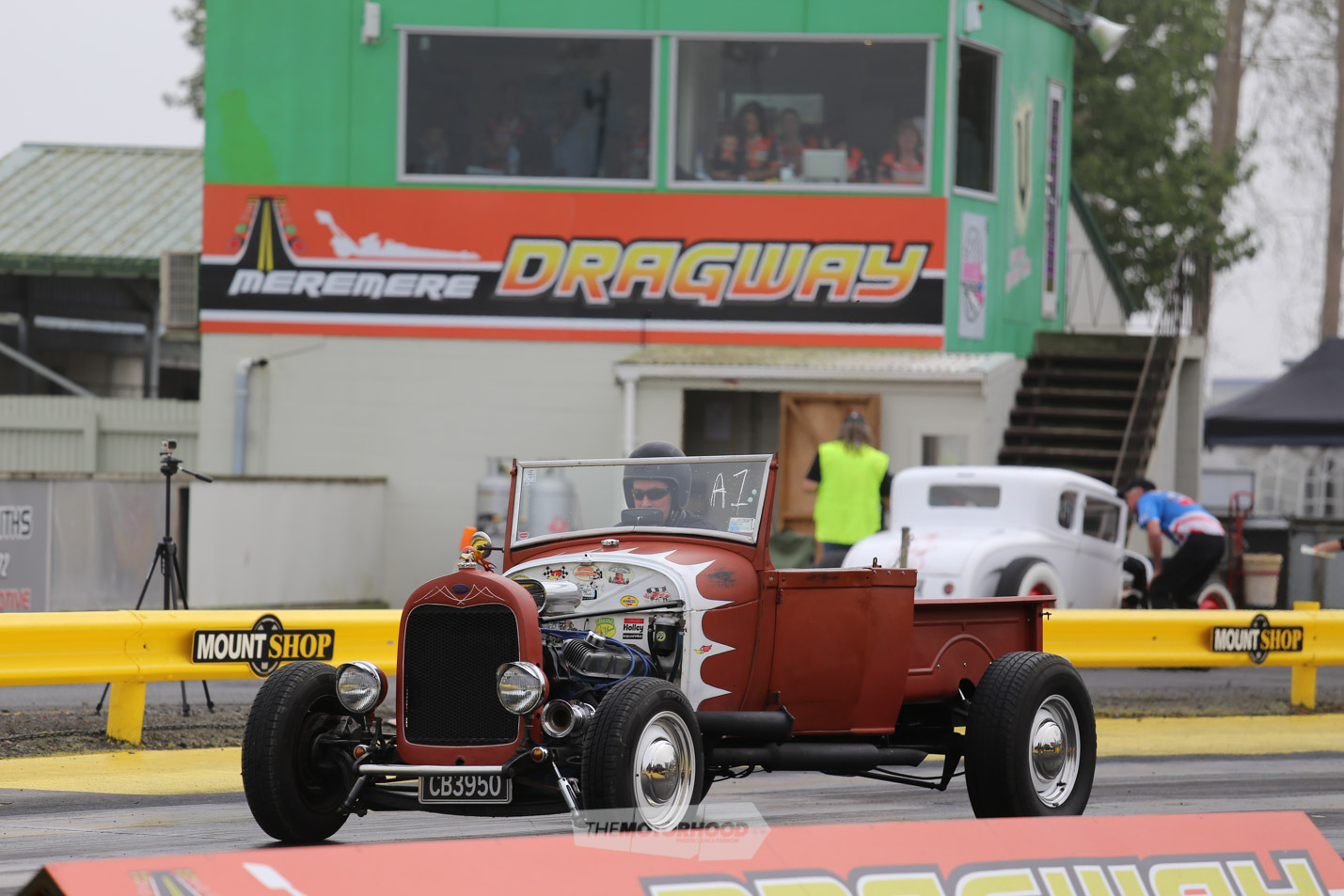
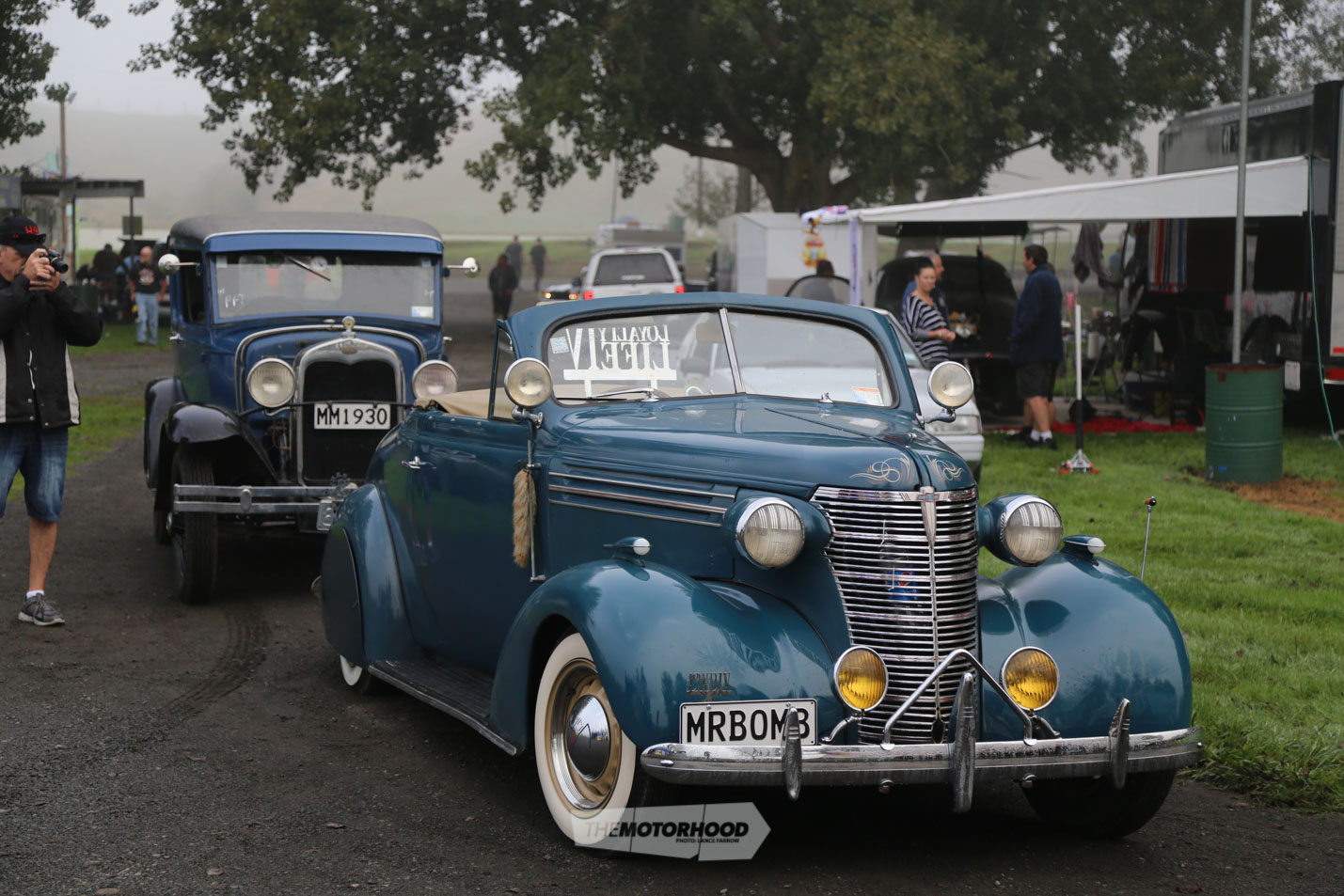
In enduring for as long as it has, the Nostalgia Drags event has generated a nostalgia of its own — a fitting attribute for what is widely recognized as one of the best drag racing events in New Zealand. Cruising through the Meremere Dragway gate on the morning of Saturday, April 1, you know that the Trans America Shipping Nostalgia Drags 2017 is going to be good, but it’s hard to pinpoint just why — it’s just got a really neat vibe to it.
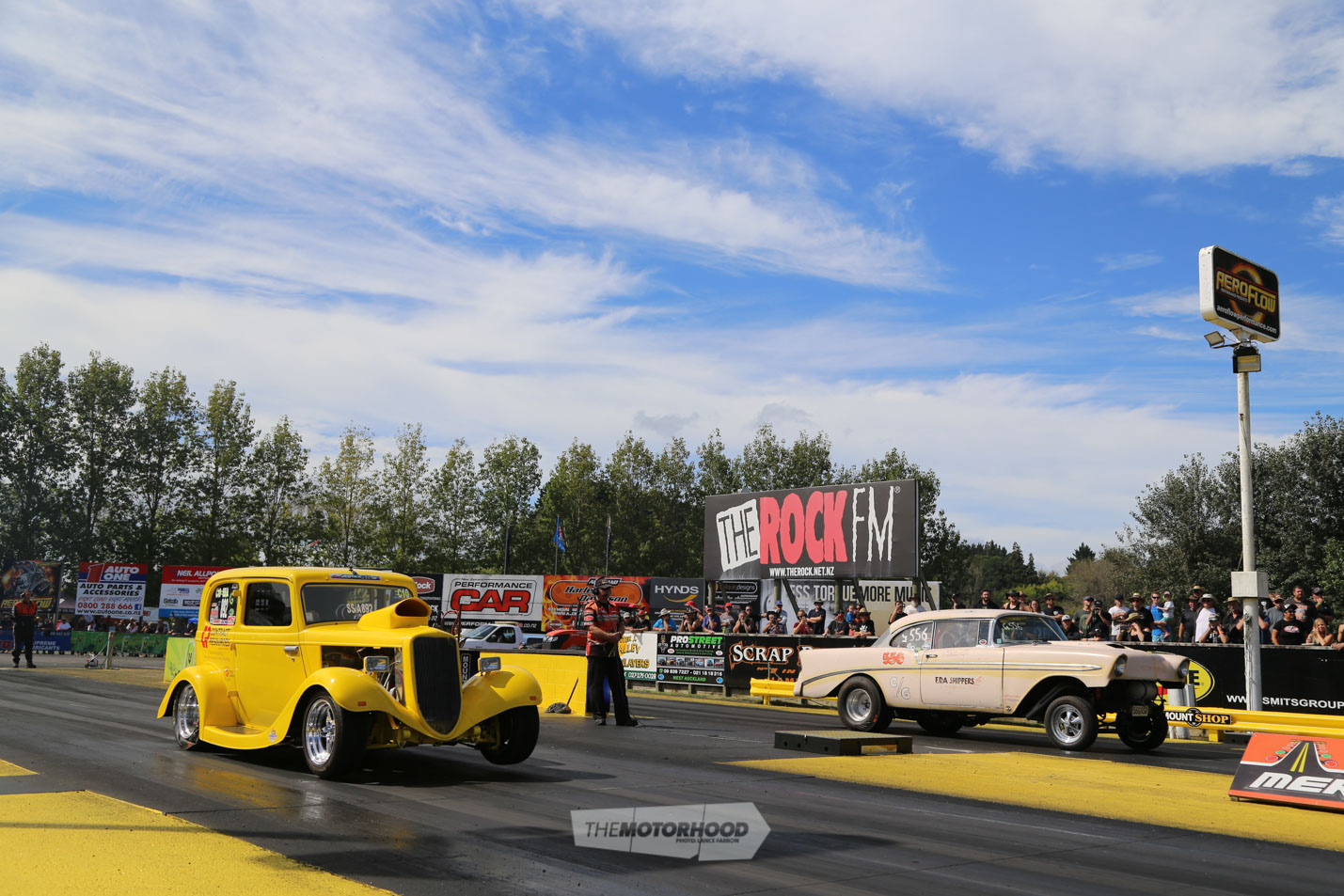
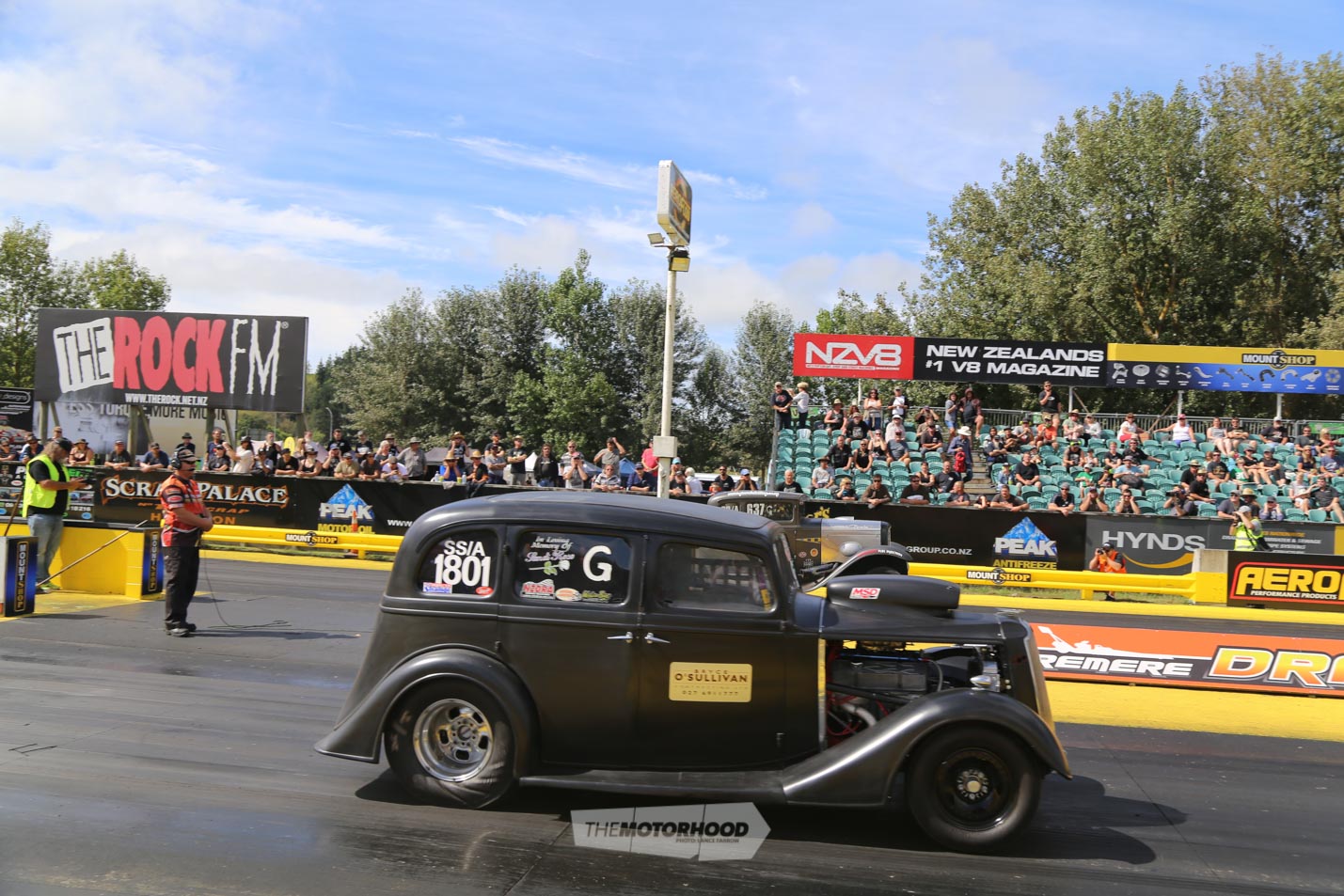
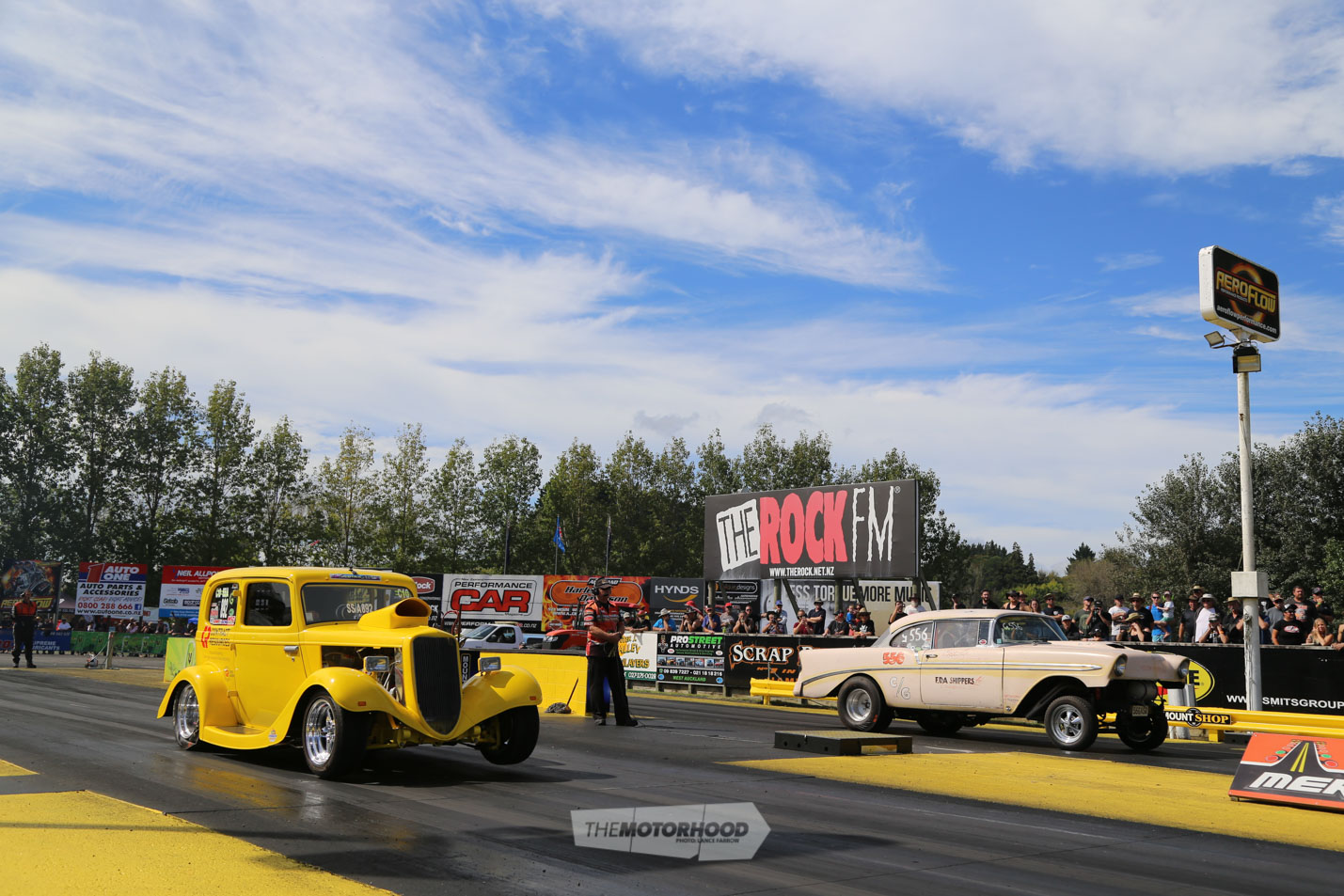
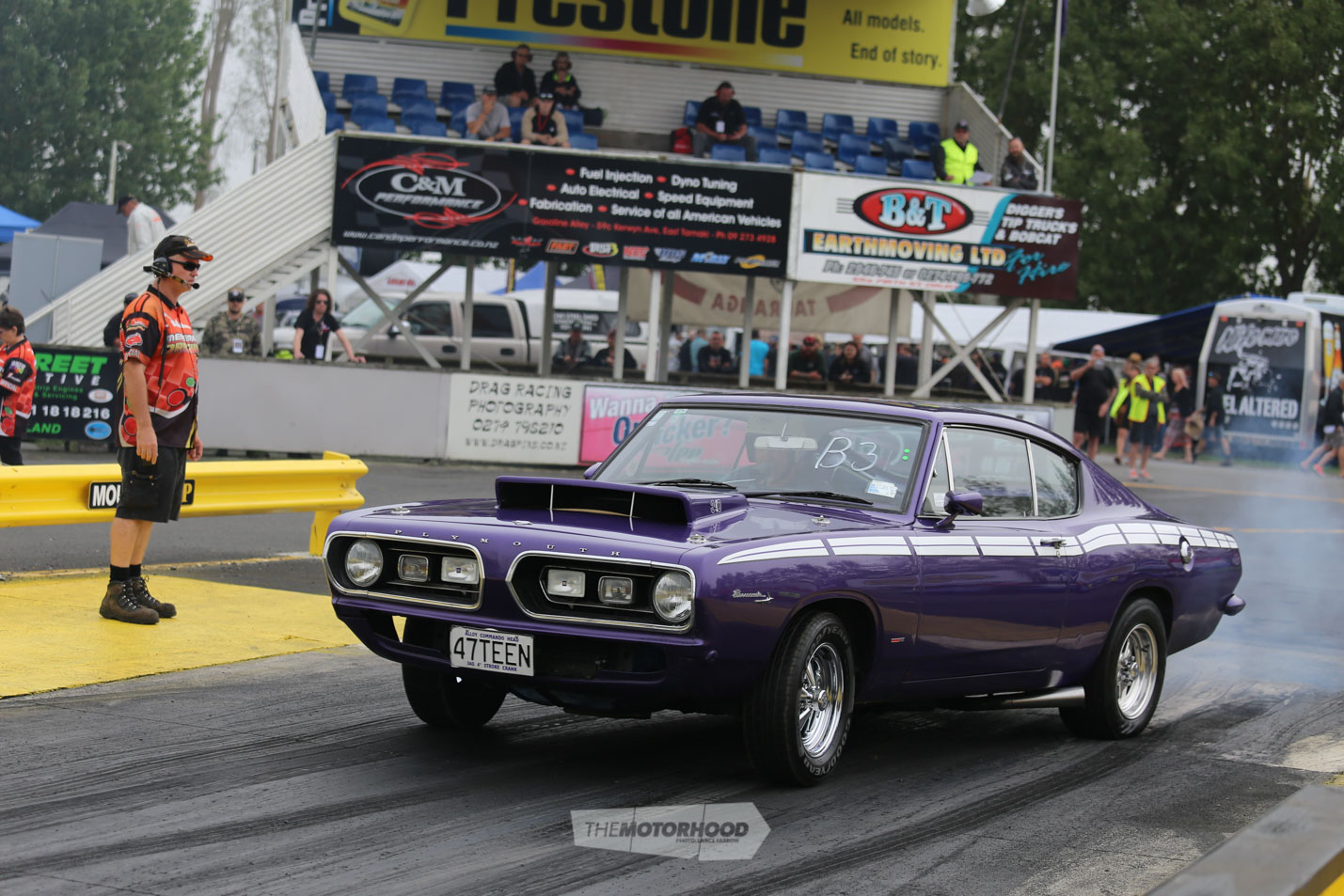
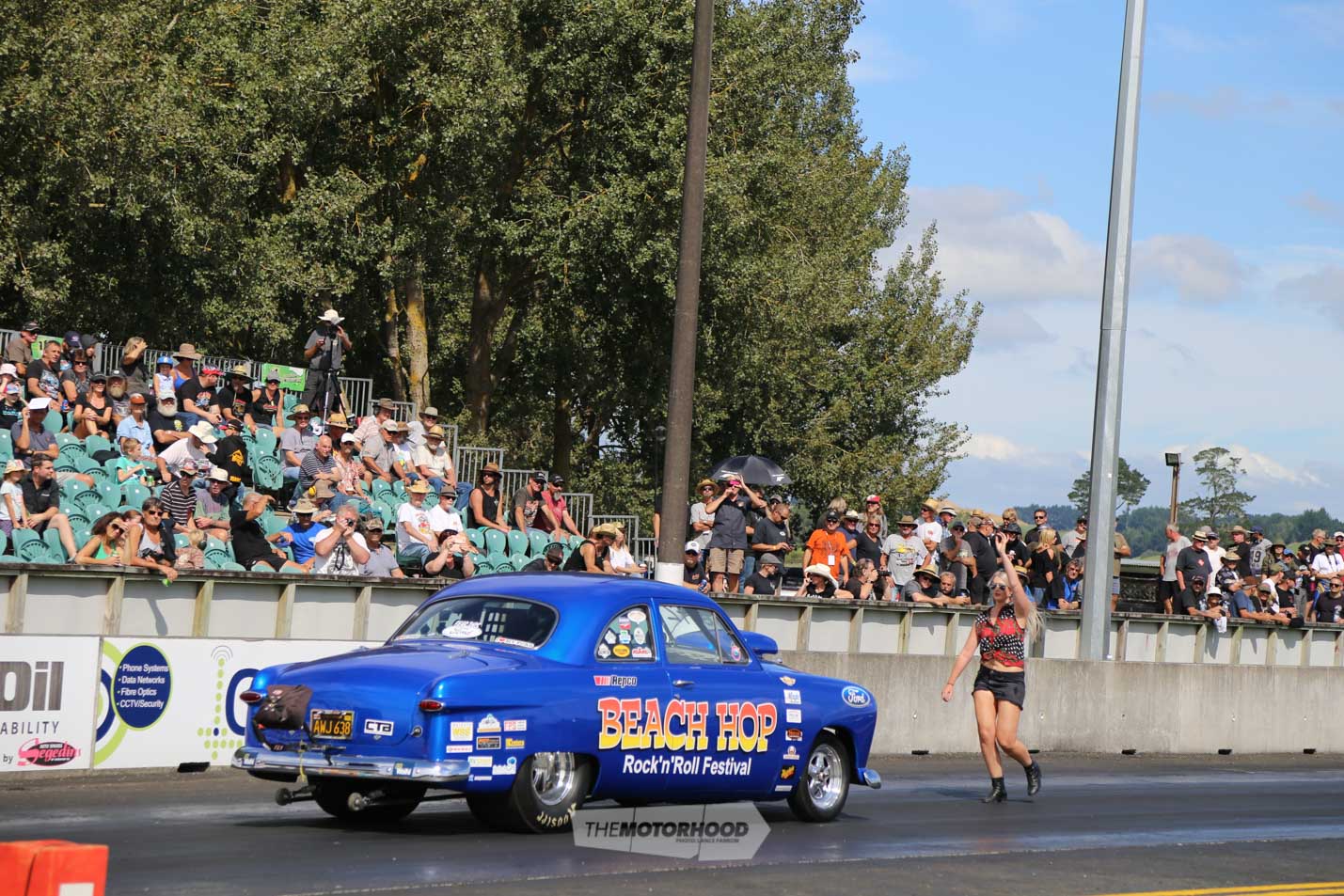
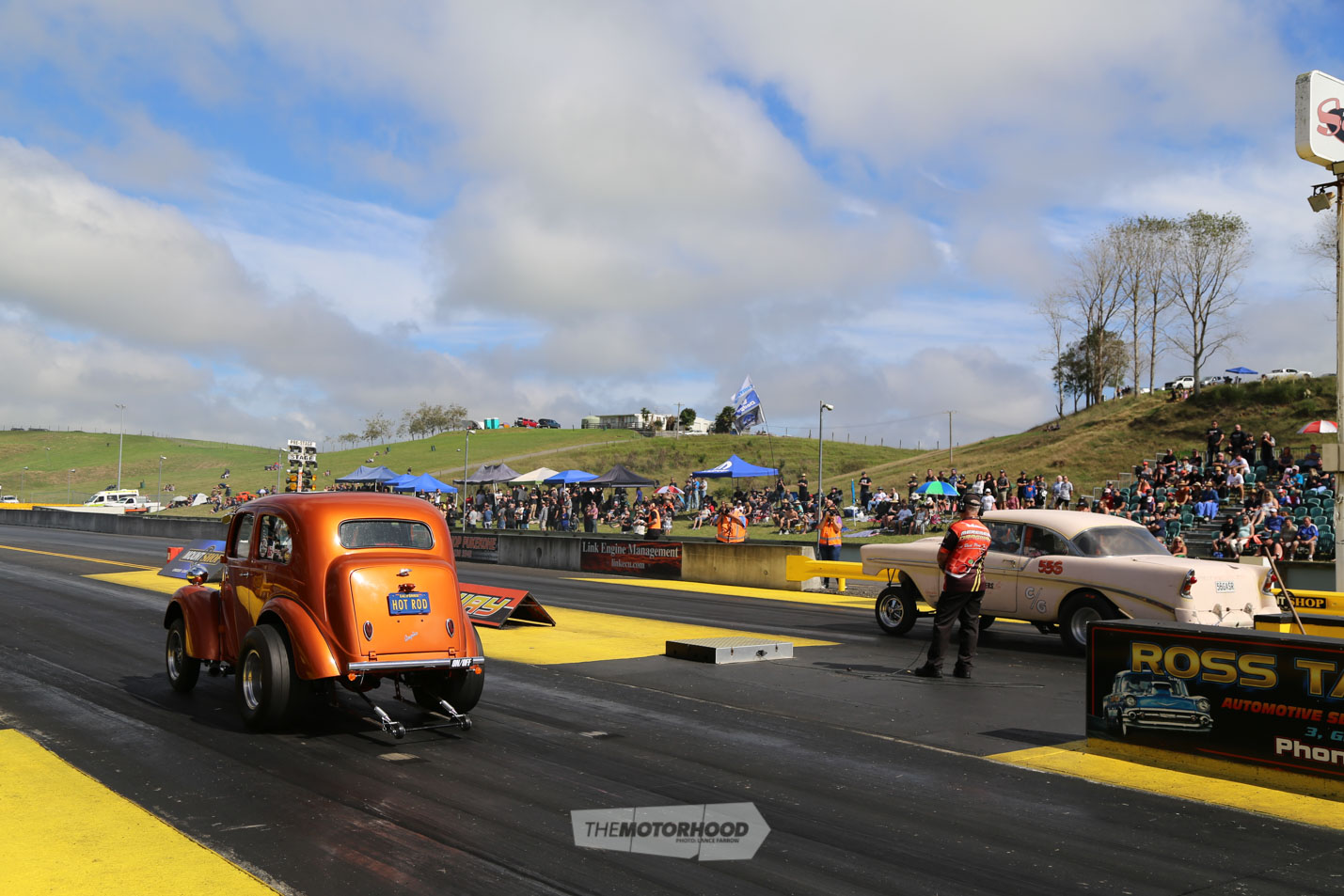
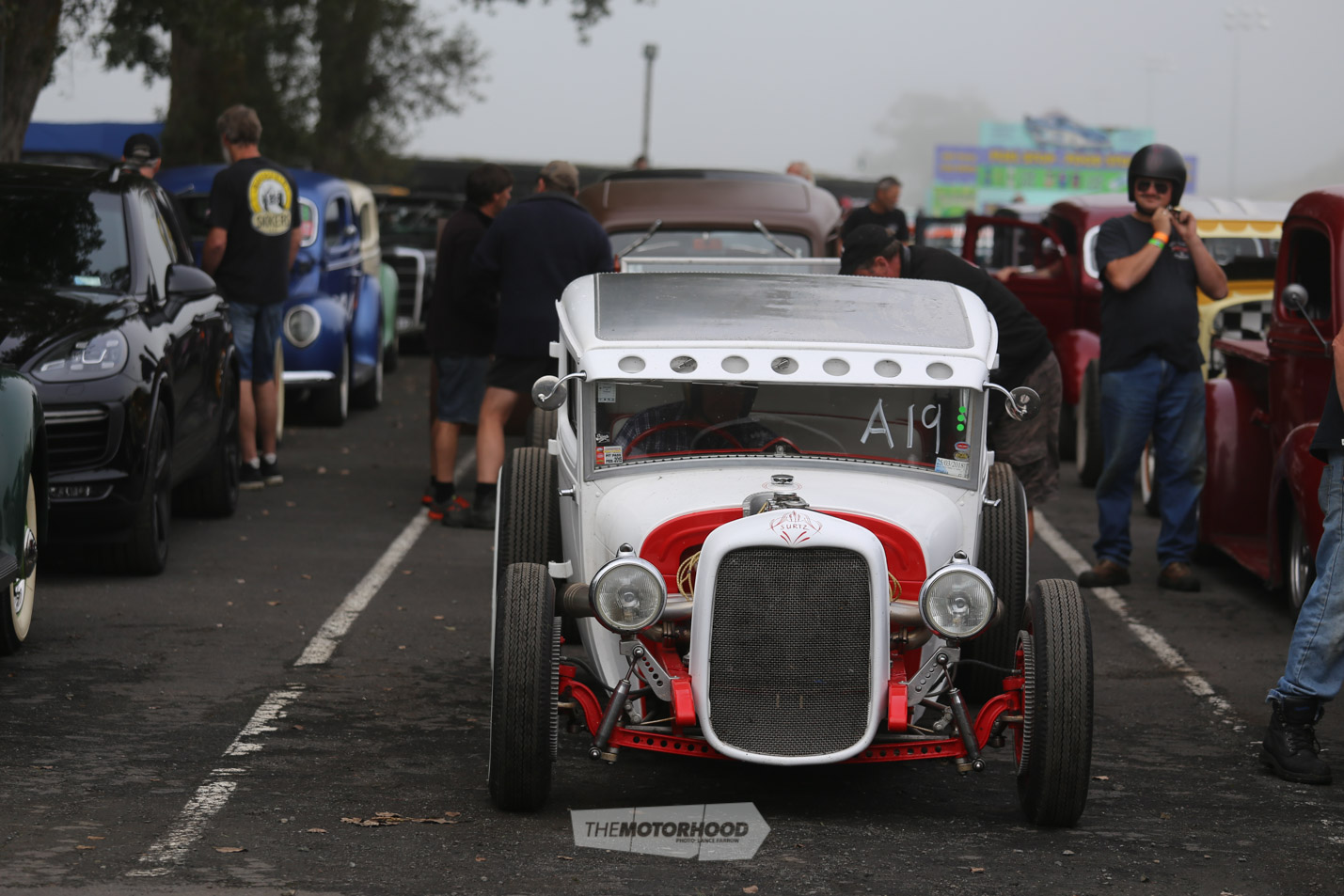
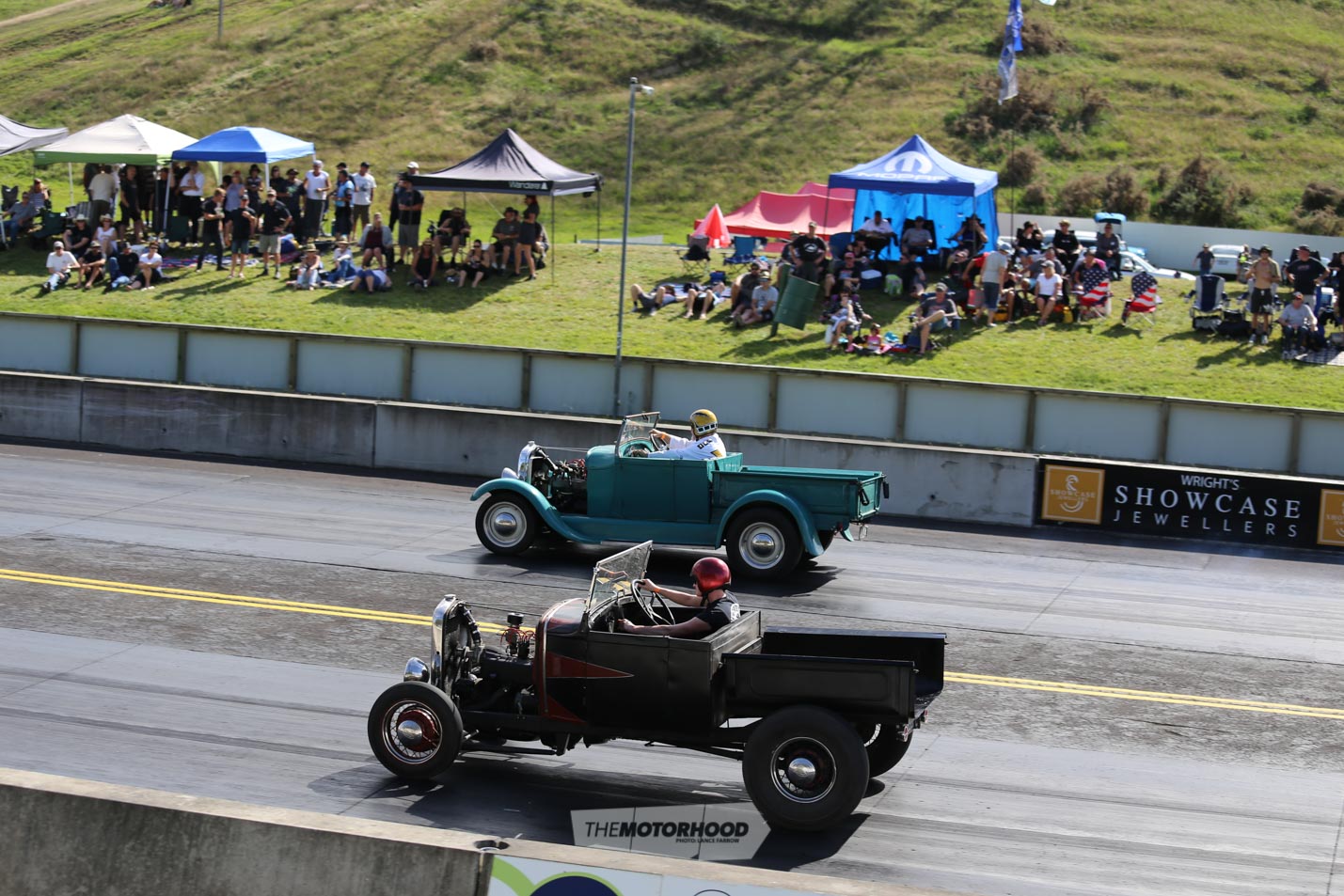
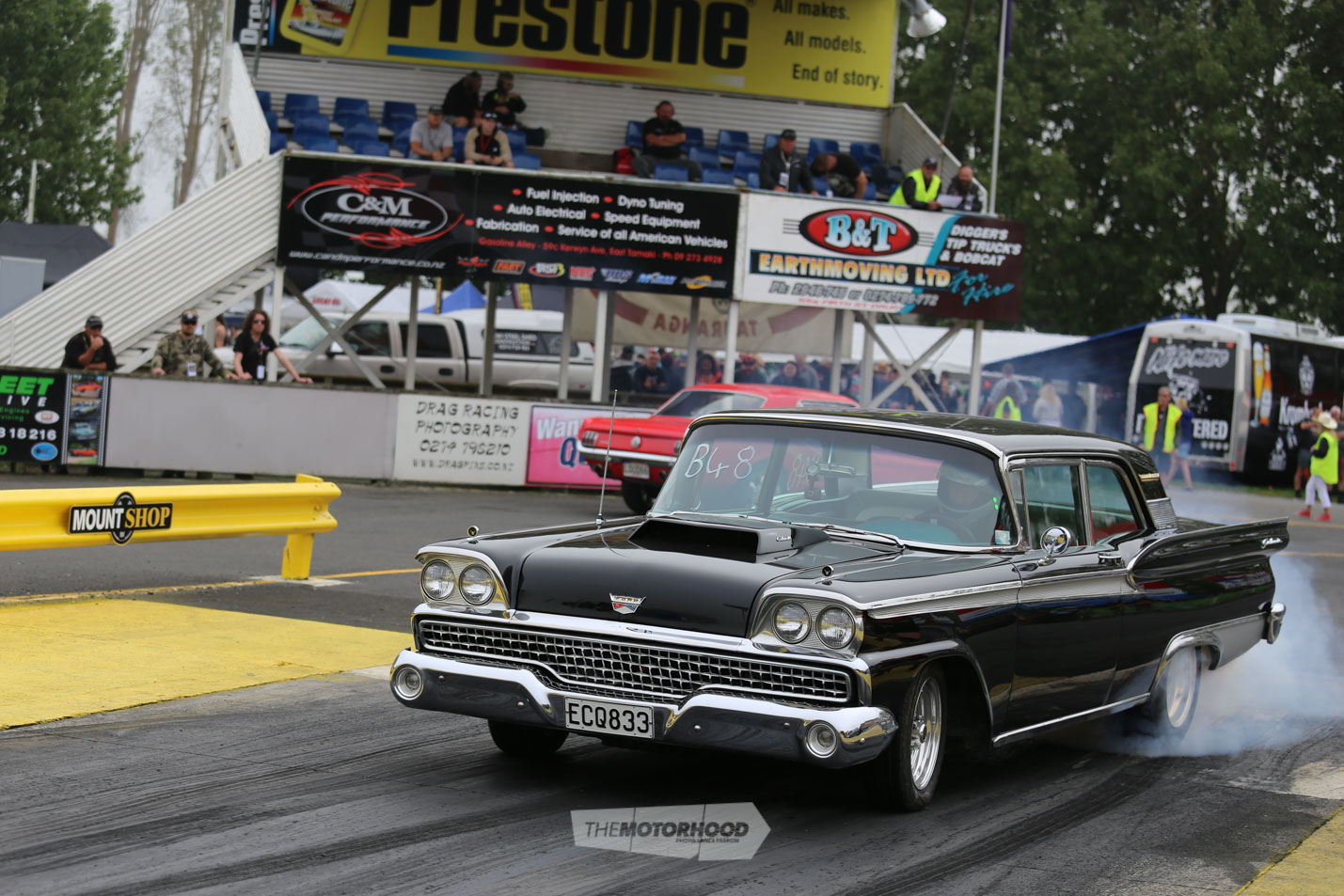
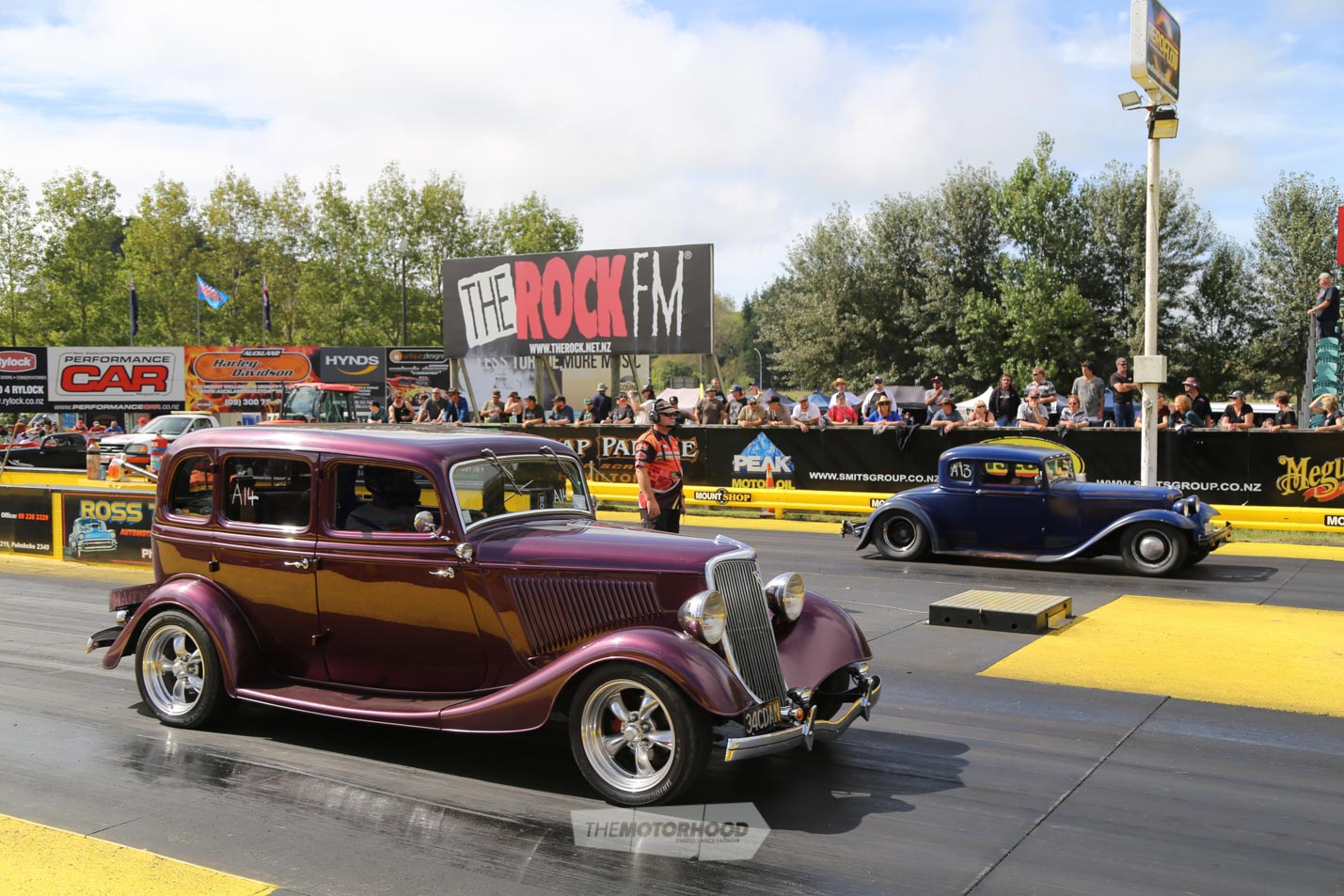
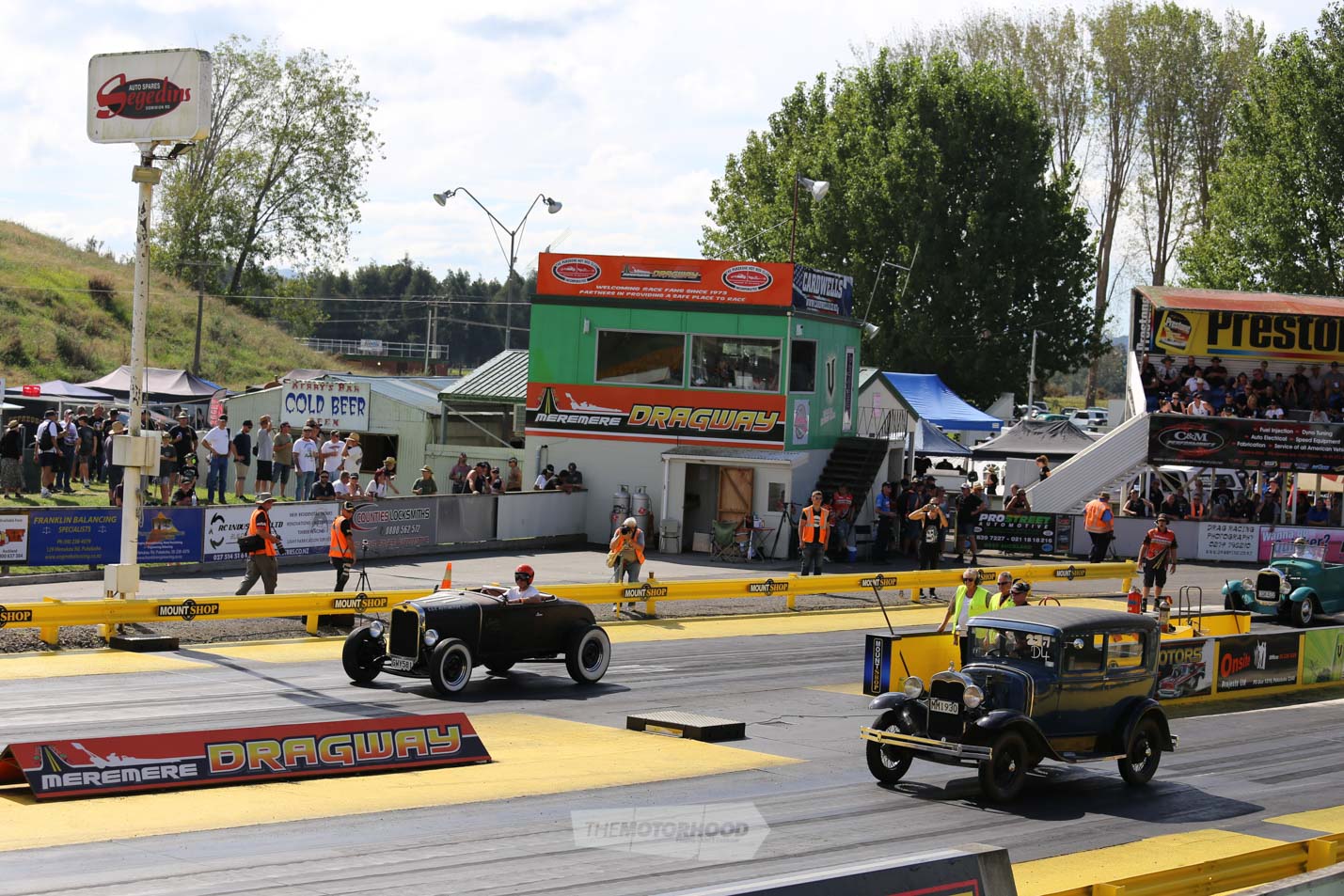
Built around pre-’49 hot rod racing and open to pre-’72 American vehicles, the foundations guarantee an exciting line-up of competing vehicles, but with none of the underlying tension prevalent on competition race days where points are at stake and expensive breakages are a very real possibility. The premise of Nostalgia Drags is fun, for both racers and spectators, and there’s no doubt that was achieved once again this year. If you need proof of that, well, just continue reading …
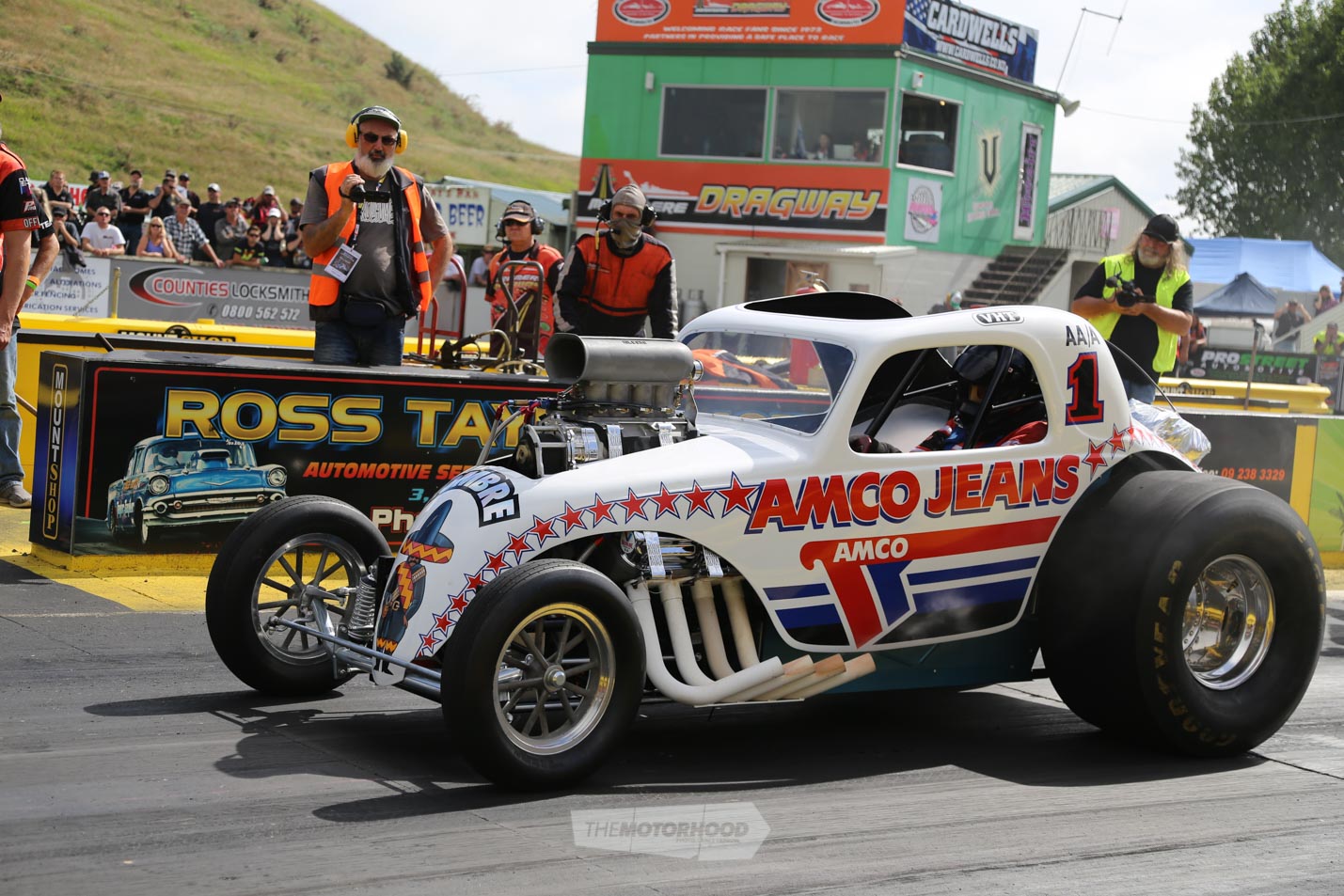
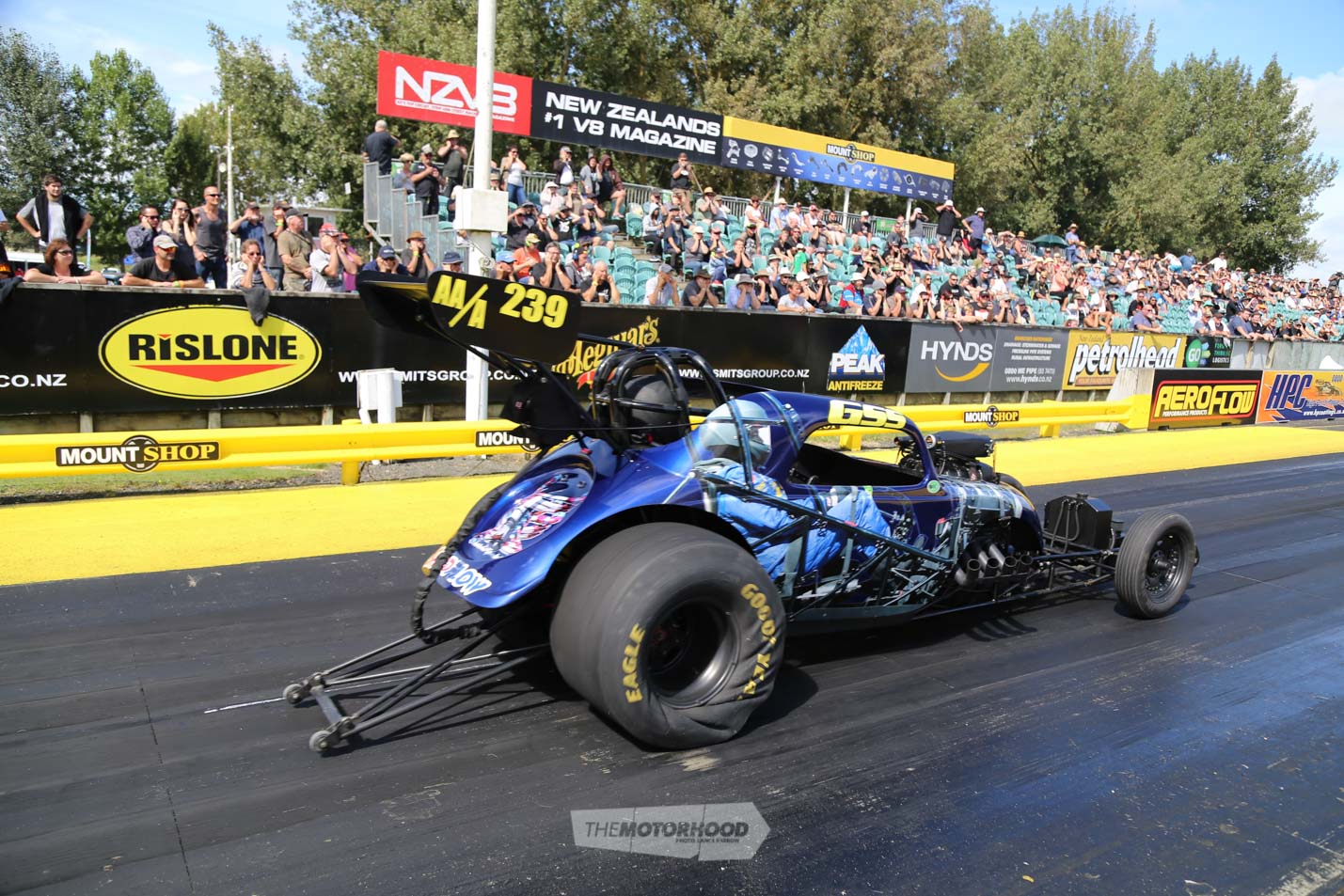
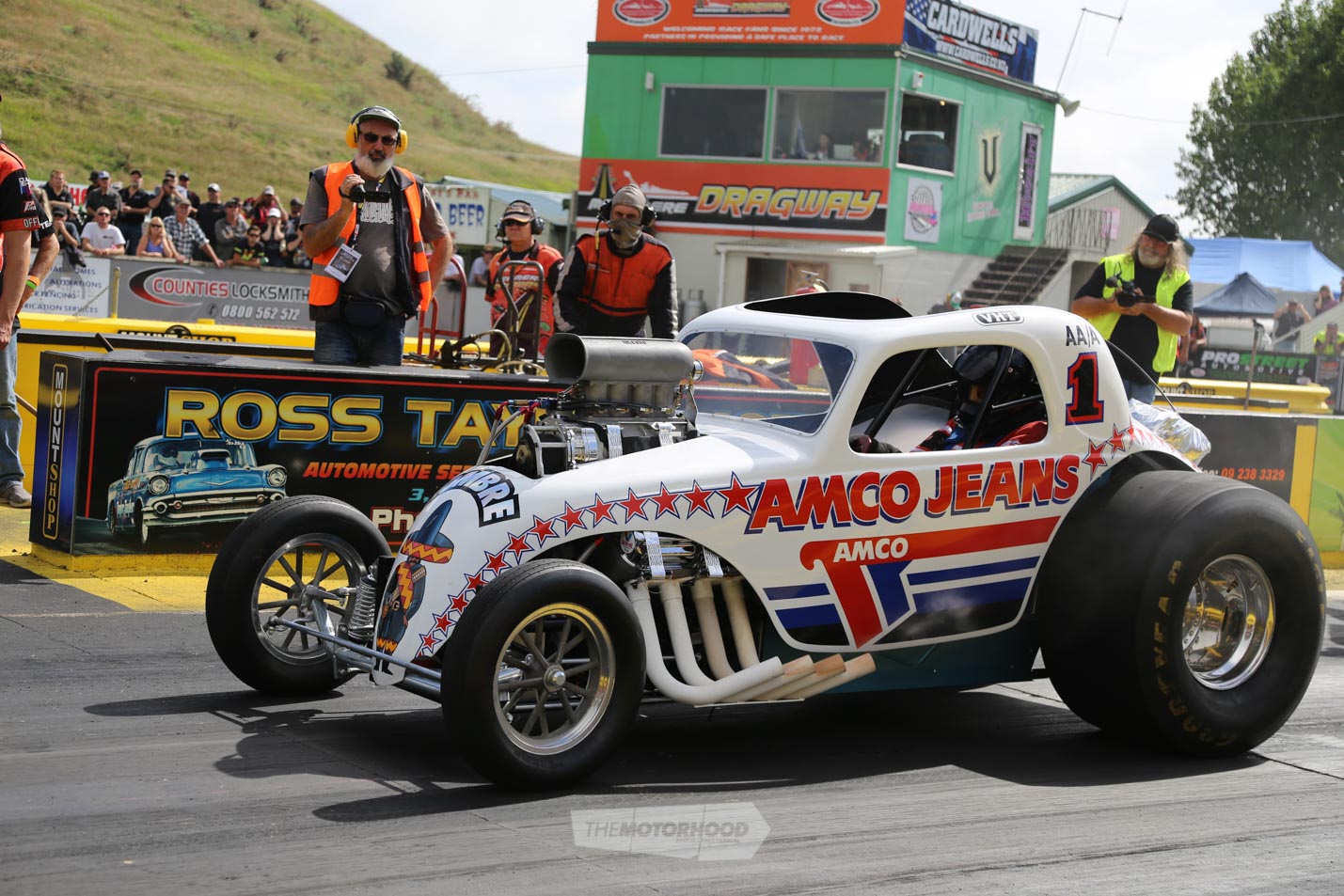
Let’s start with the coolest car in attendance. It doesn’t matter what your tastes are, but if you don’t think the freshly restored ‘Hombre’ Topolino is anything but the duck’s nuts, you’re delusional. The car was restored by Grant Stables, who elected to recreate Hombre in its iconic Amco Jeans livery replicating the guise with which Pete Lodge won Top Eliminator bracket at the 1977 NZ Nationals. The 392ci Hemi features magneto ignition, with a 6-71 blower topped by Hilborn four-port mechanical injection, and is backed by a Lenco transmission. However, what was really cool was seeing Shane Lodge — current Top Alcohol racer and son of legendary Pete Lodge — in the hot seat to pedal the iconic Altered down the strip.
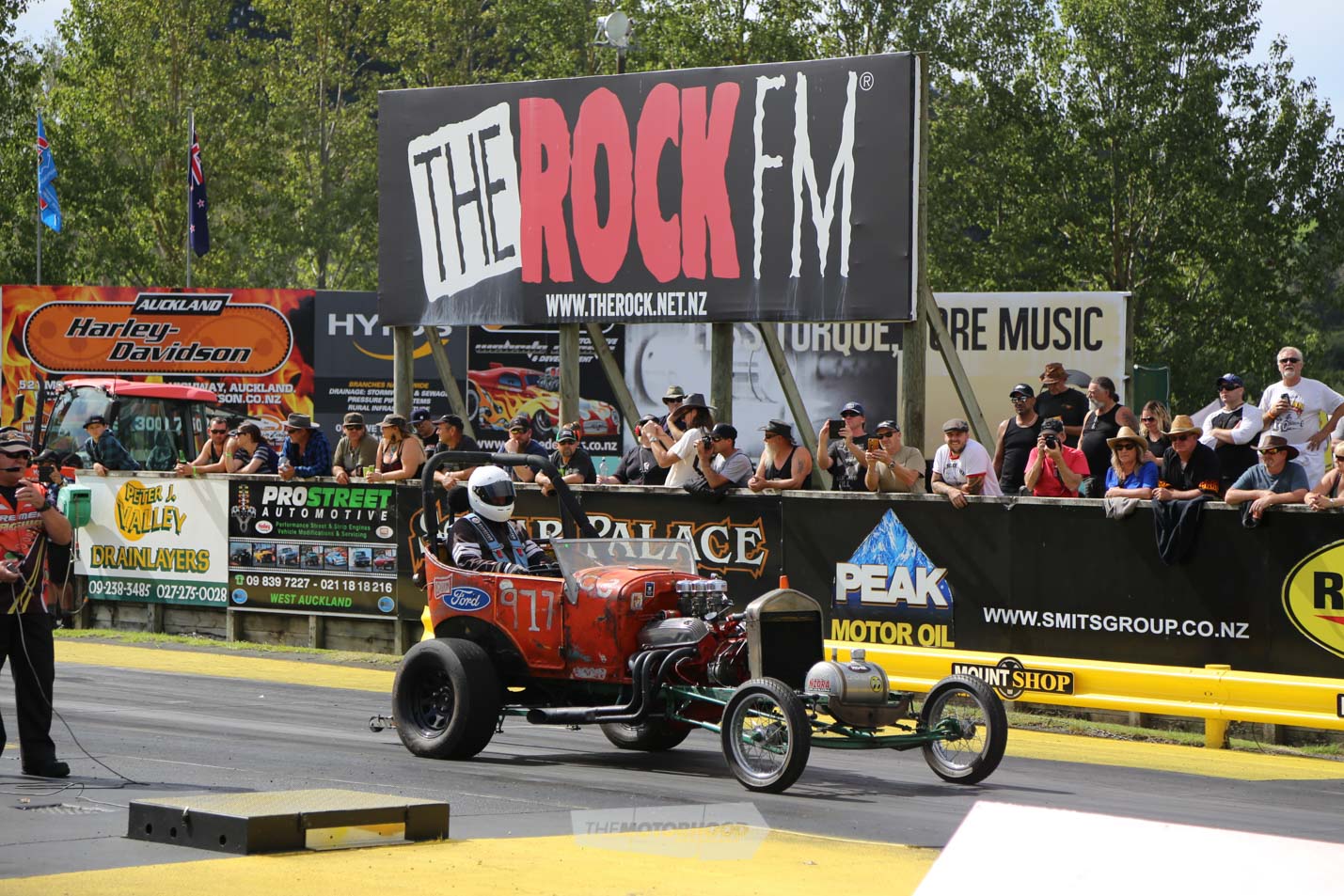
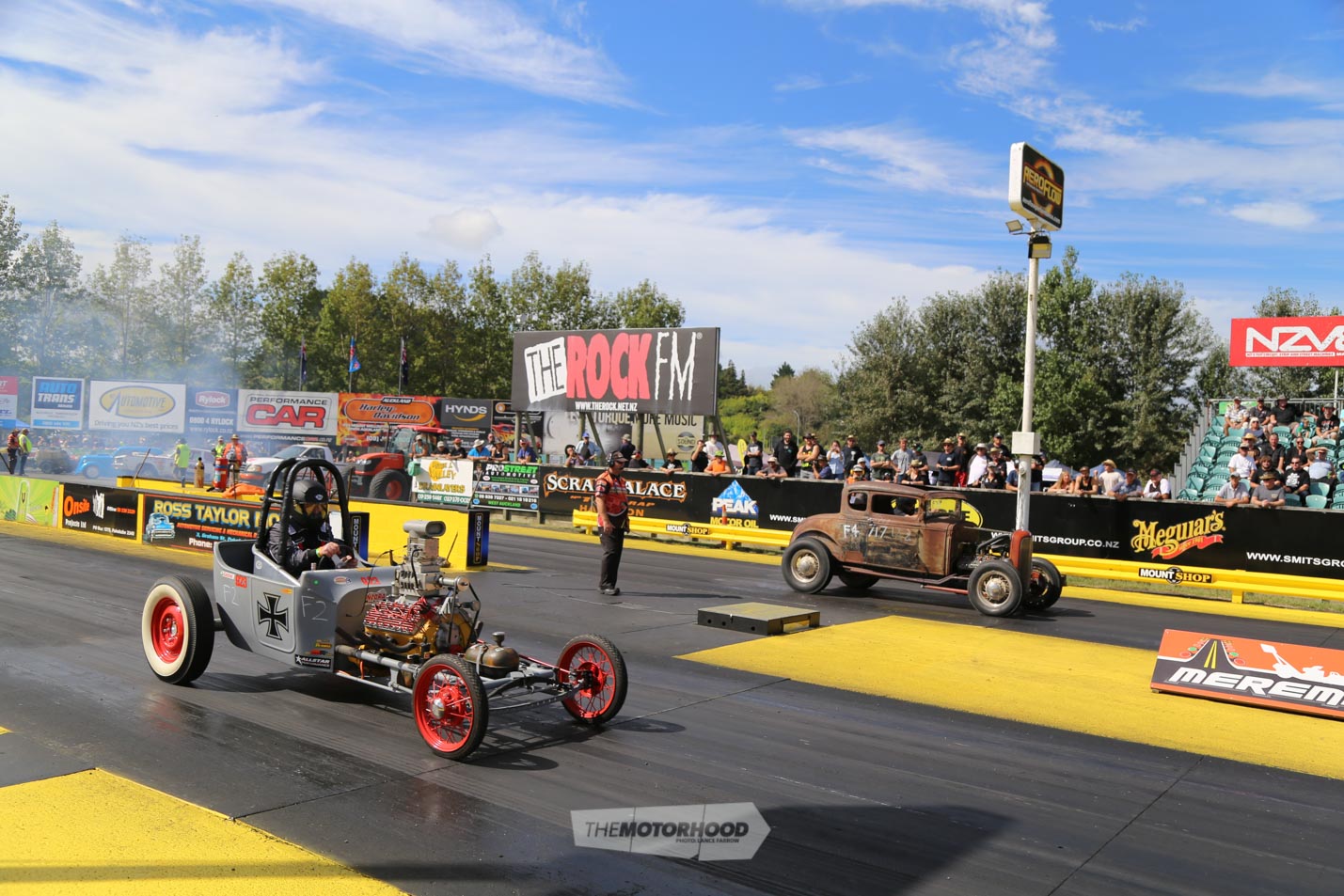
Other iconic machinery included ‘Tom Slick’, the bucket of bolts made famous by Colin ‘Shady’ Lane before he passed away several years ago. With no rear suspension, and a tough Y-block providing the power, the bucket looks like a pretty wild ride, recording a bouncy 18.75s at 74mph on its first pass of the day.
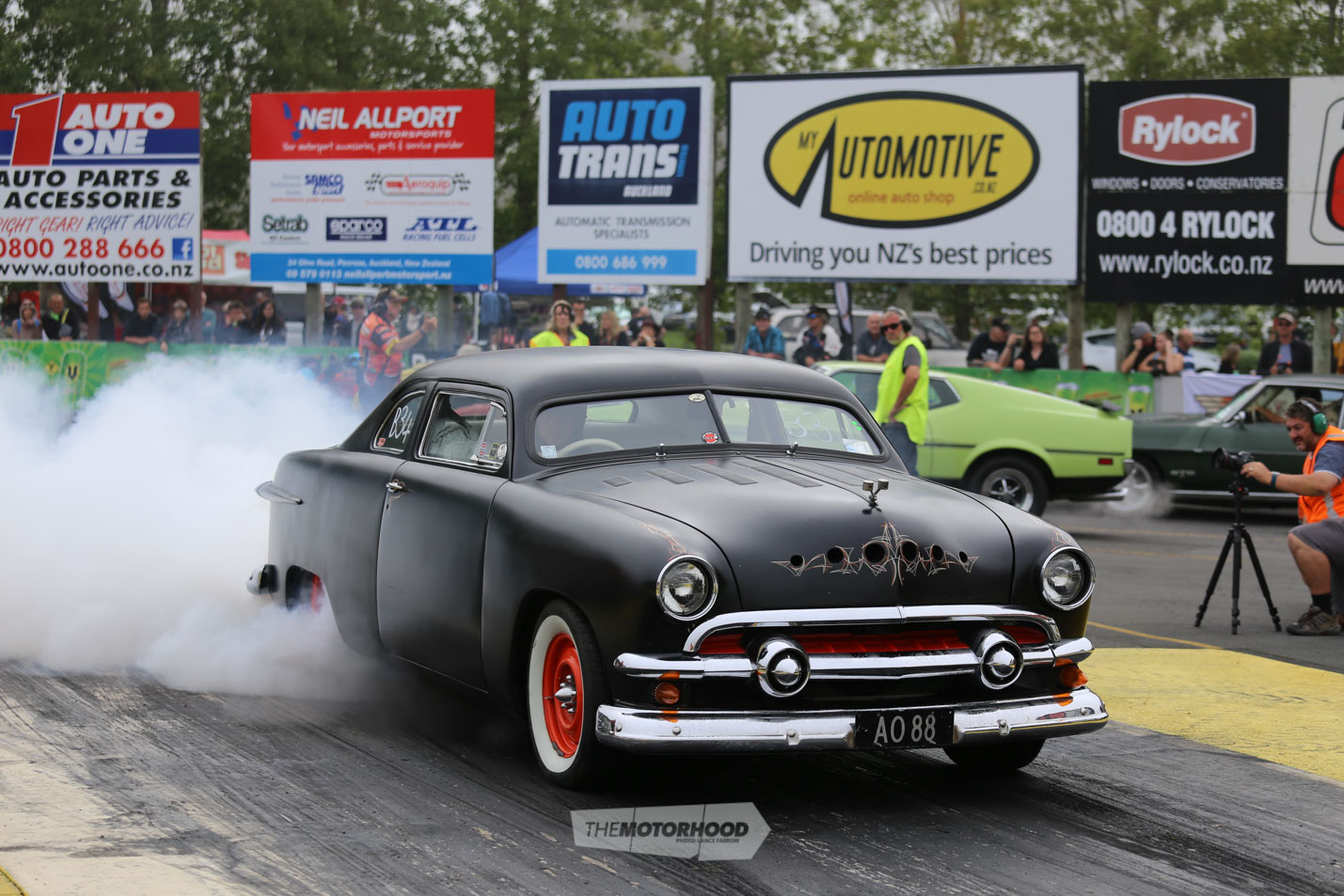
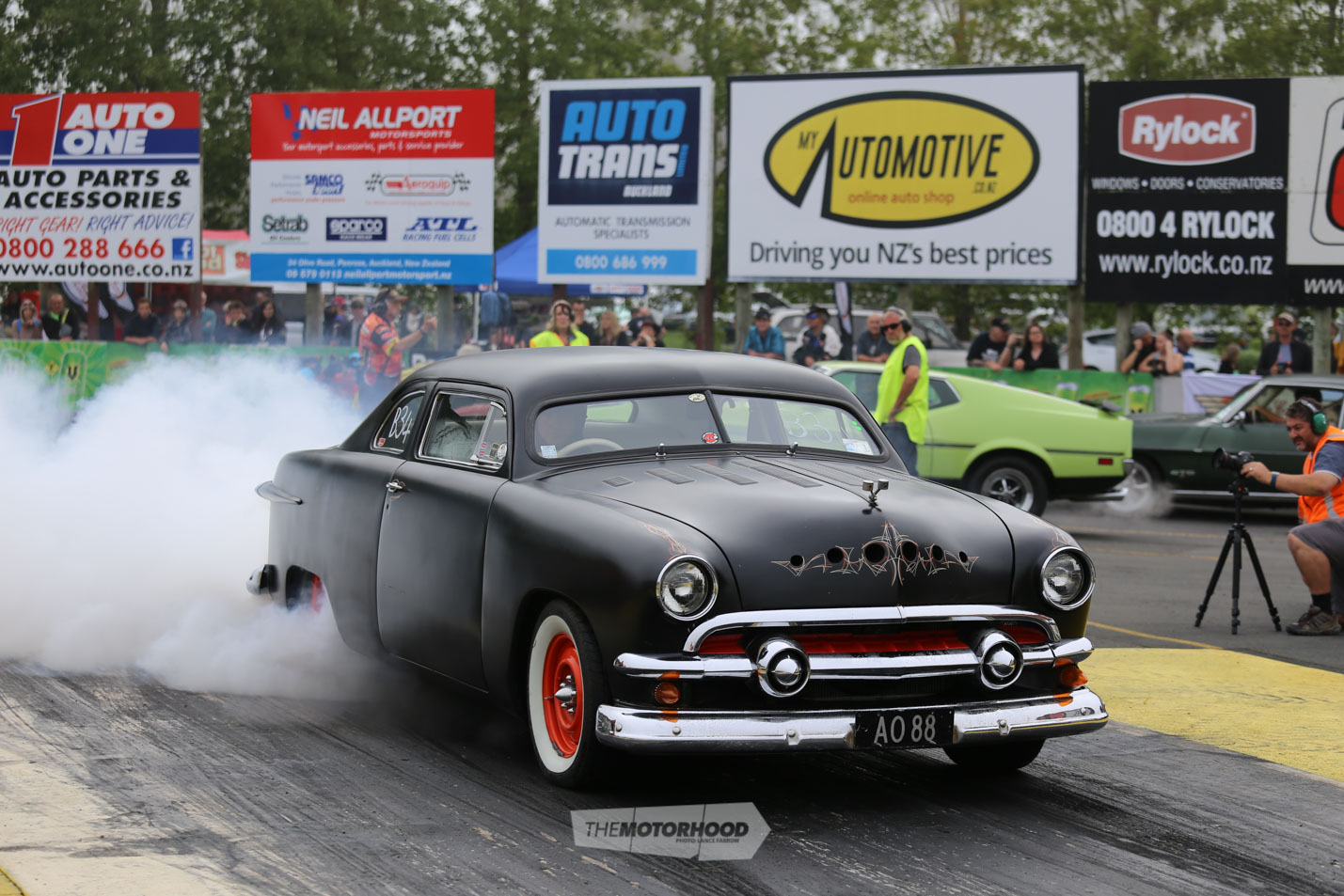
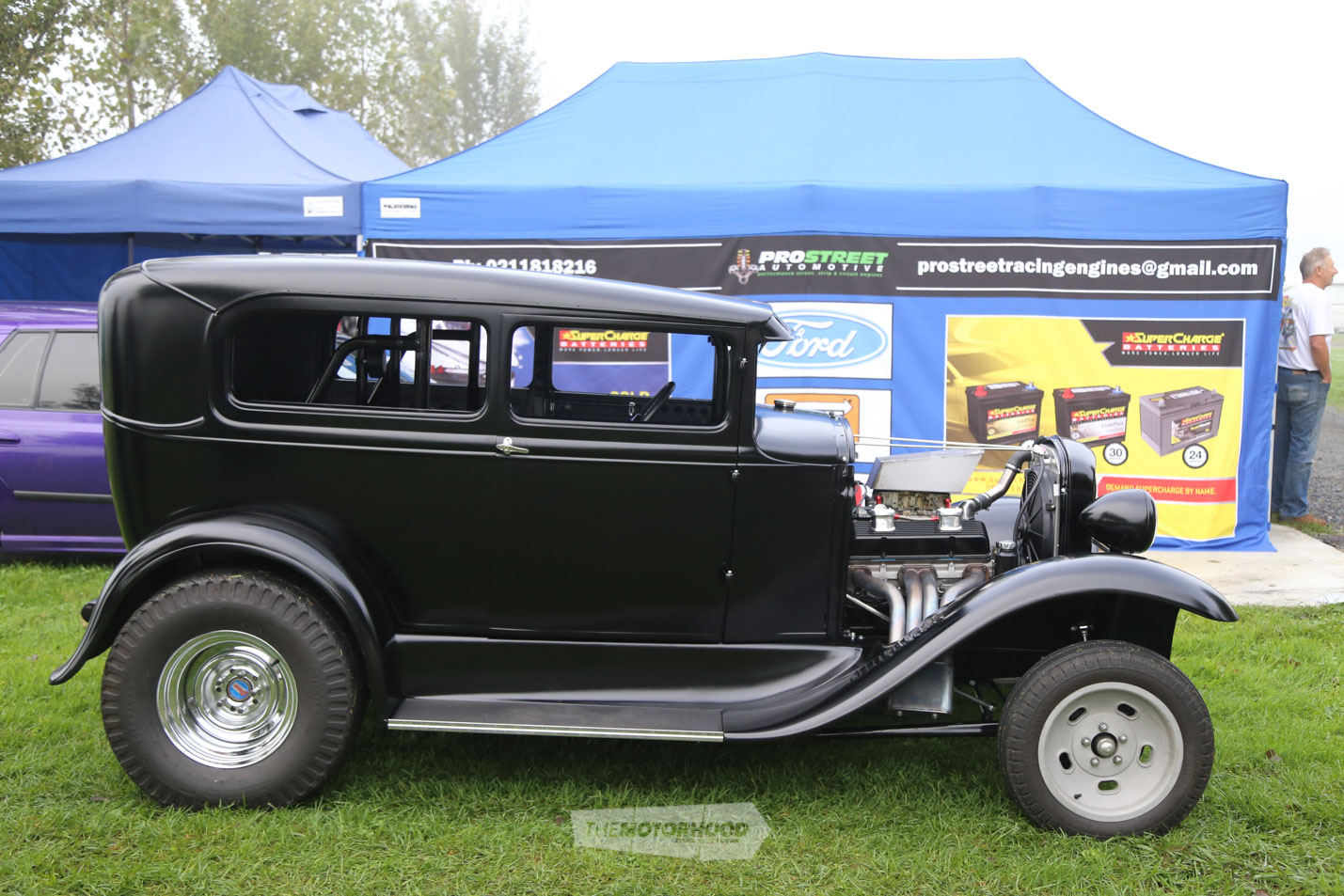
Mister McGlue’s chopped twin-spinner is a seriously nasty piece of gear, with a whole lotta grunt to match its ’50s-style aggression. It’s the automotive equivalent of an old greaser with a duck’s ass hairdo, black jeans, steel-cap boots, and a switchblade tucked into his belt.
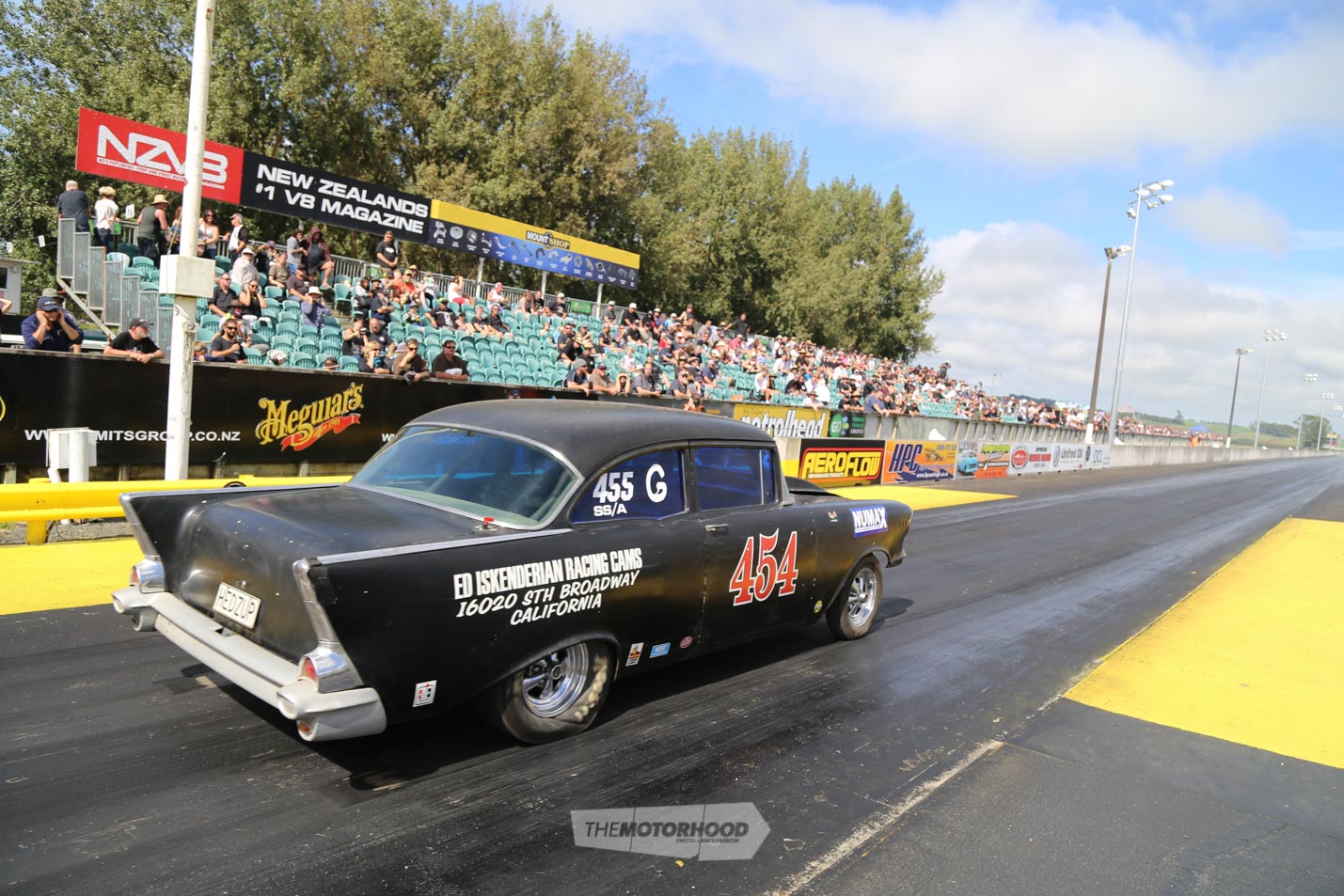
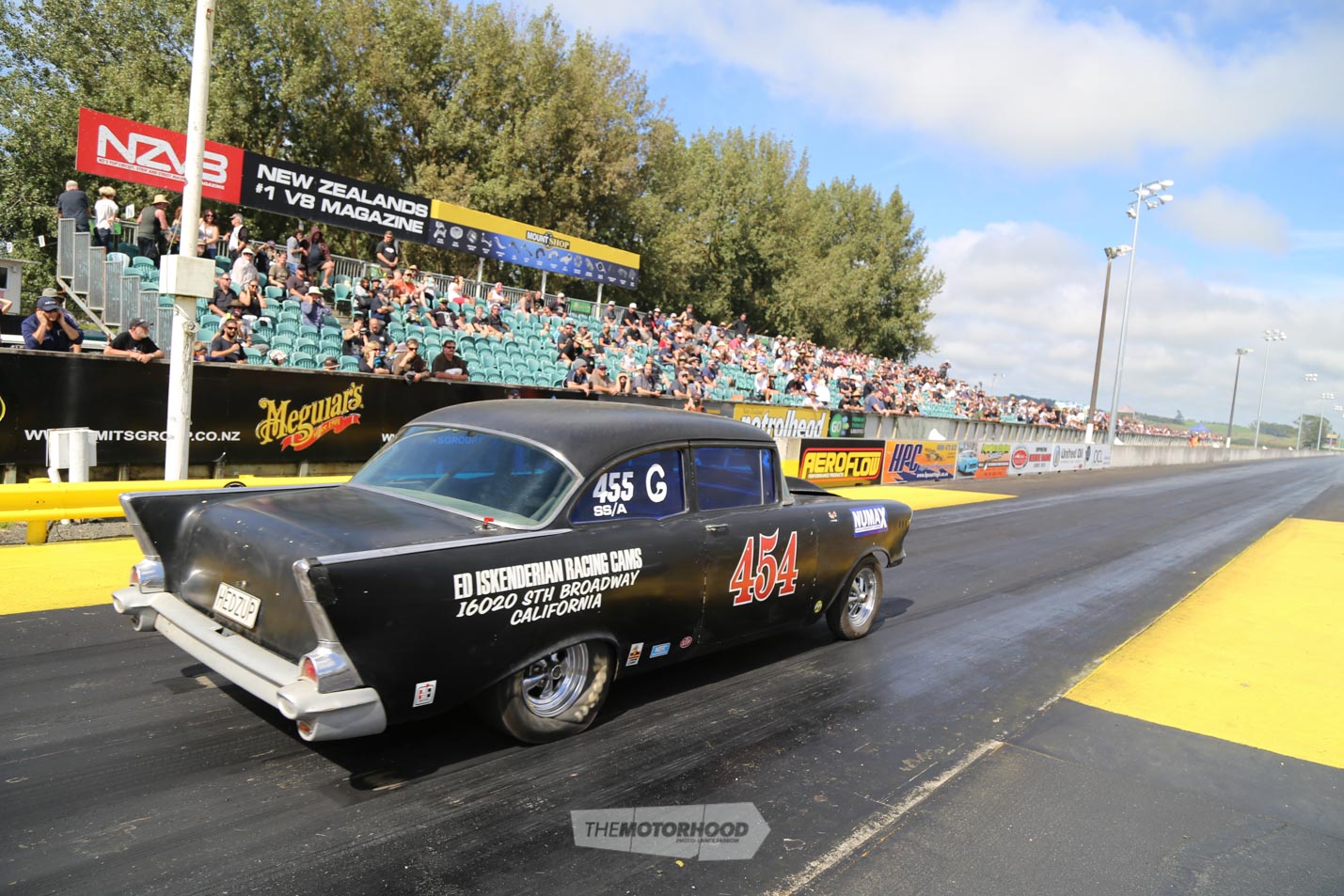
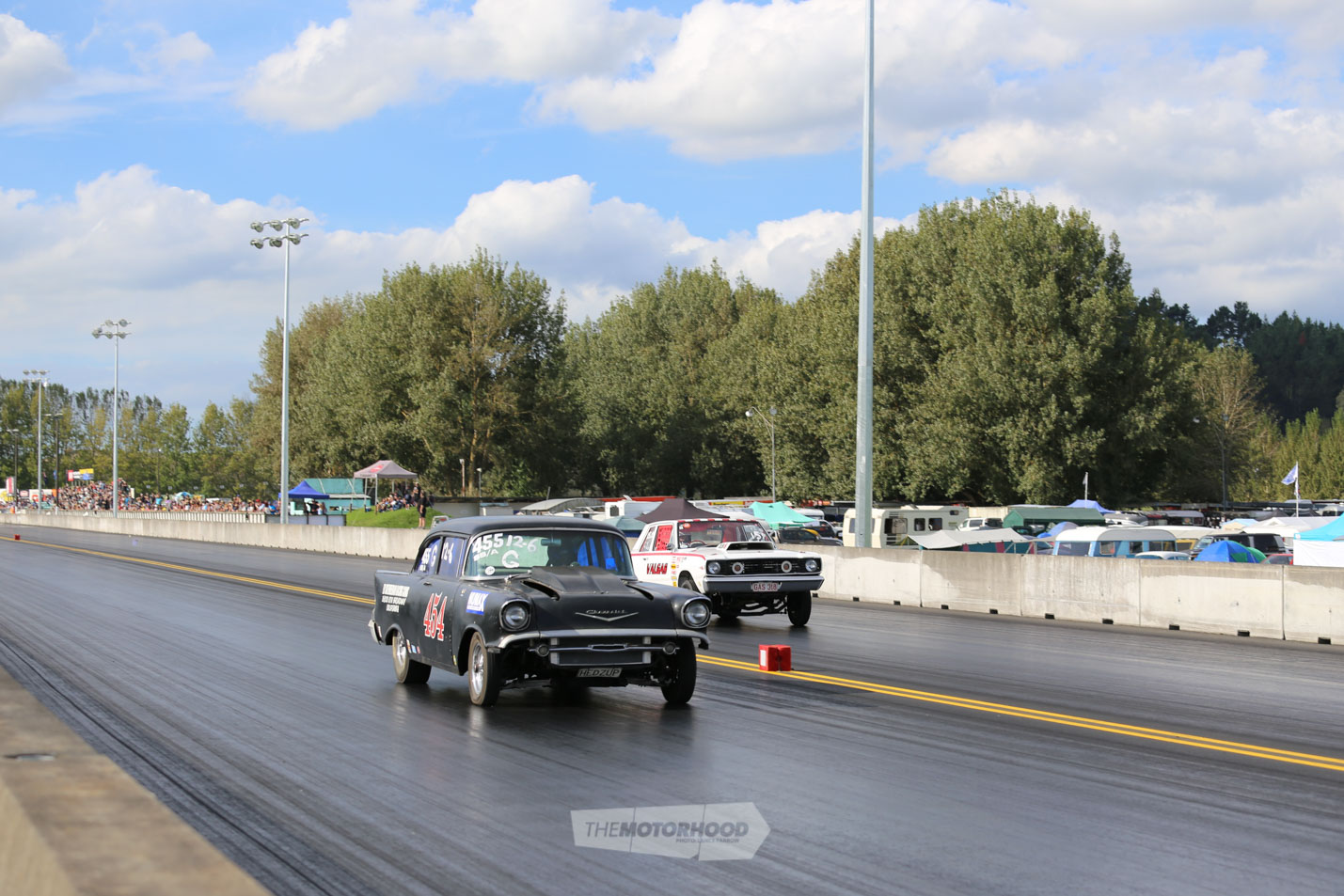
Jason Harrison was another member of the matt black brigade, with his gnarly ’57 Chev. Originally powered by a twin-turbo 454ci big block enabling it to run deep into the nines, it’s now powered by a 350ci LT1 small block backed by a four-speed manual box. 12-second passes are pretty damn impressive for an almost-stock motor, although Jason did say he’s considering rebuilding his Donovan small block or a new big block powerplant for it.
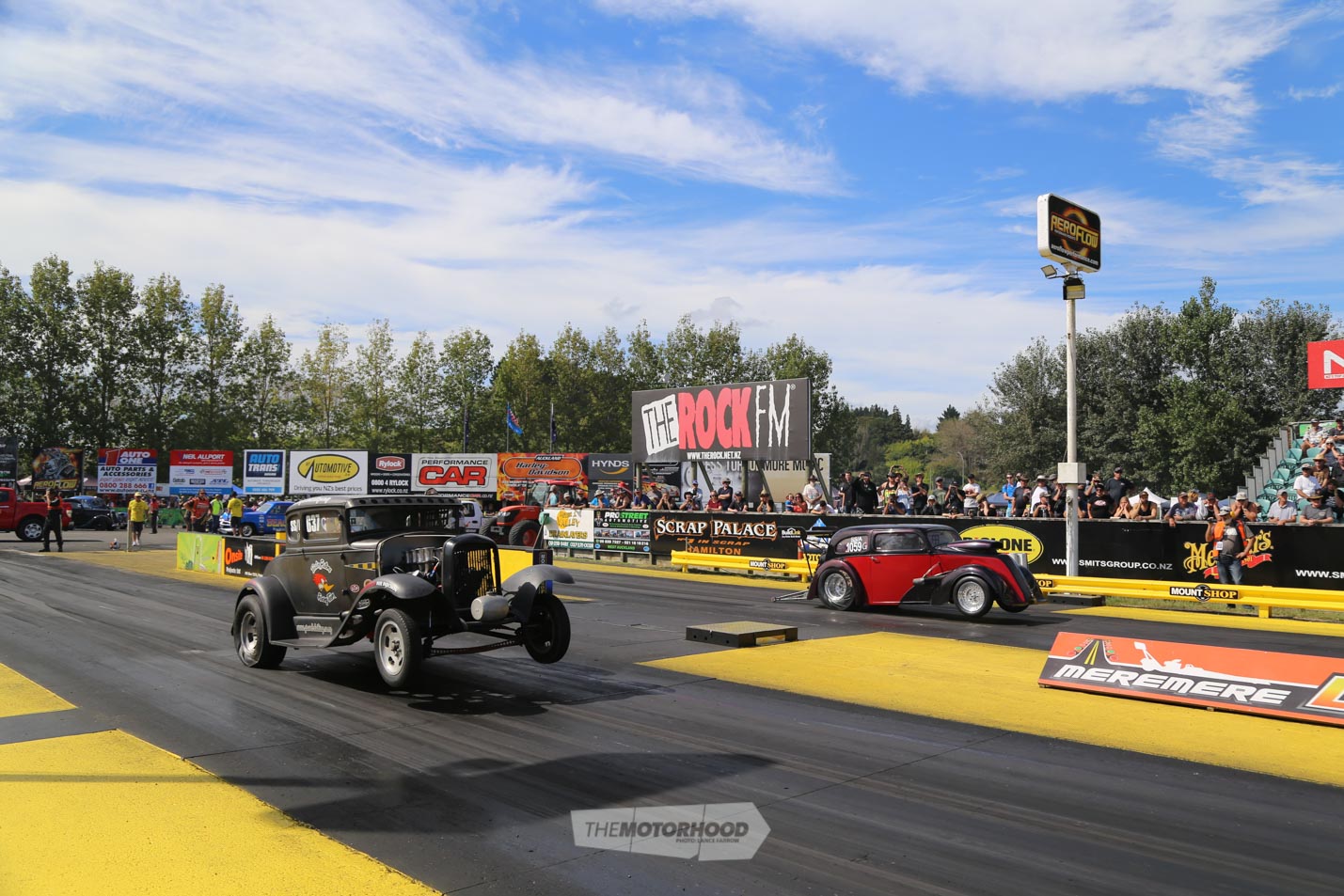
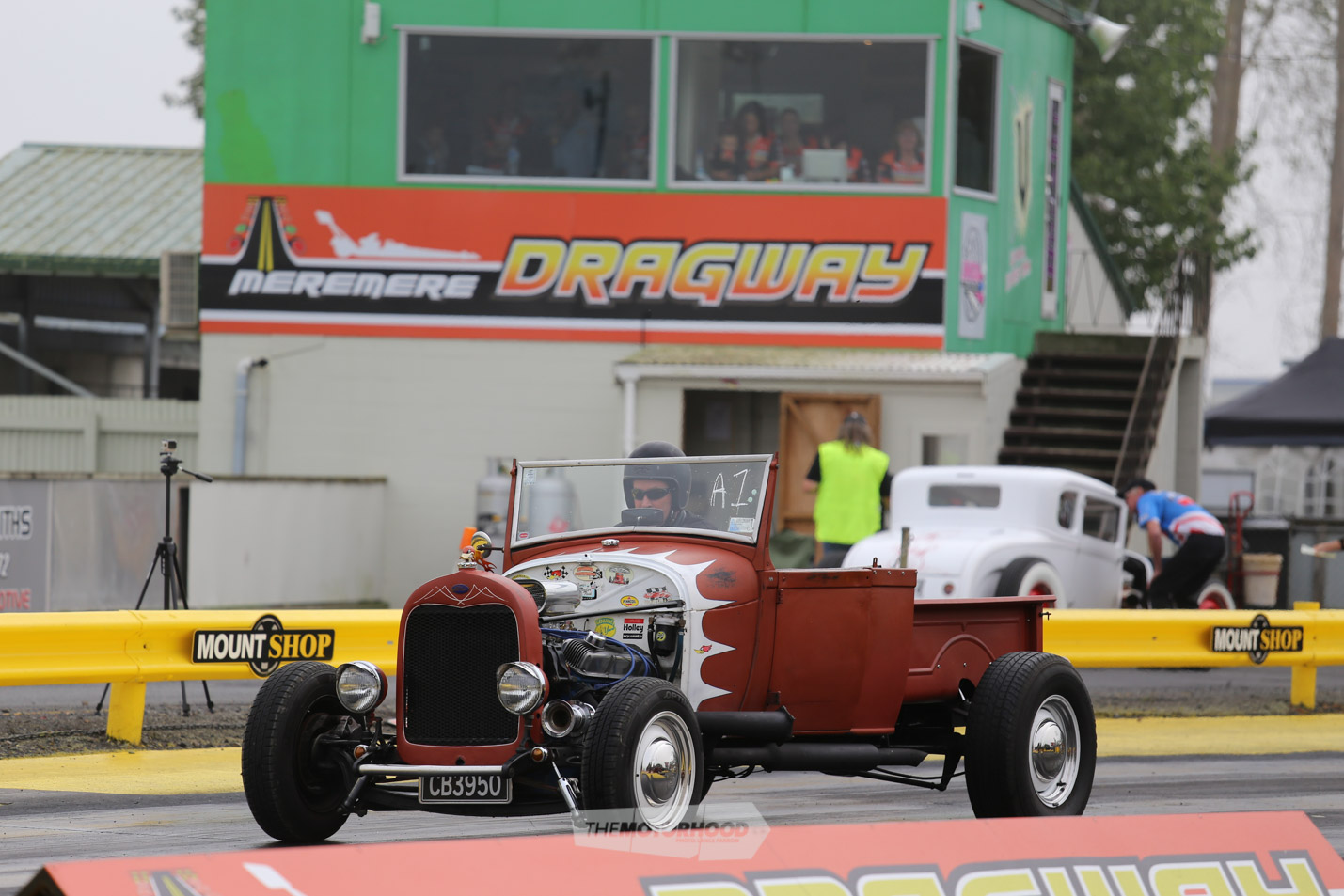
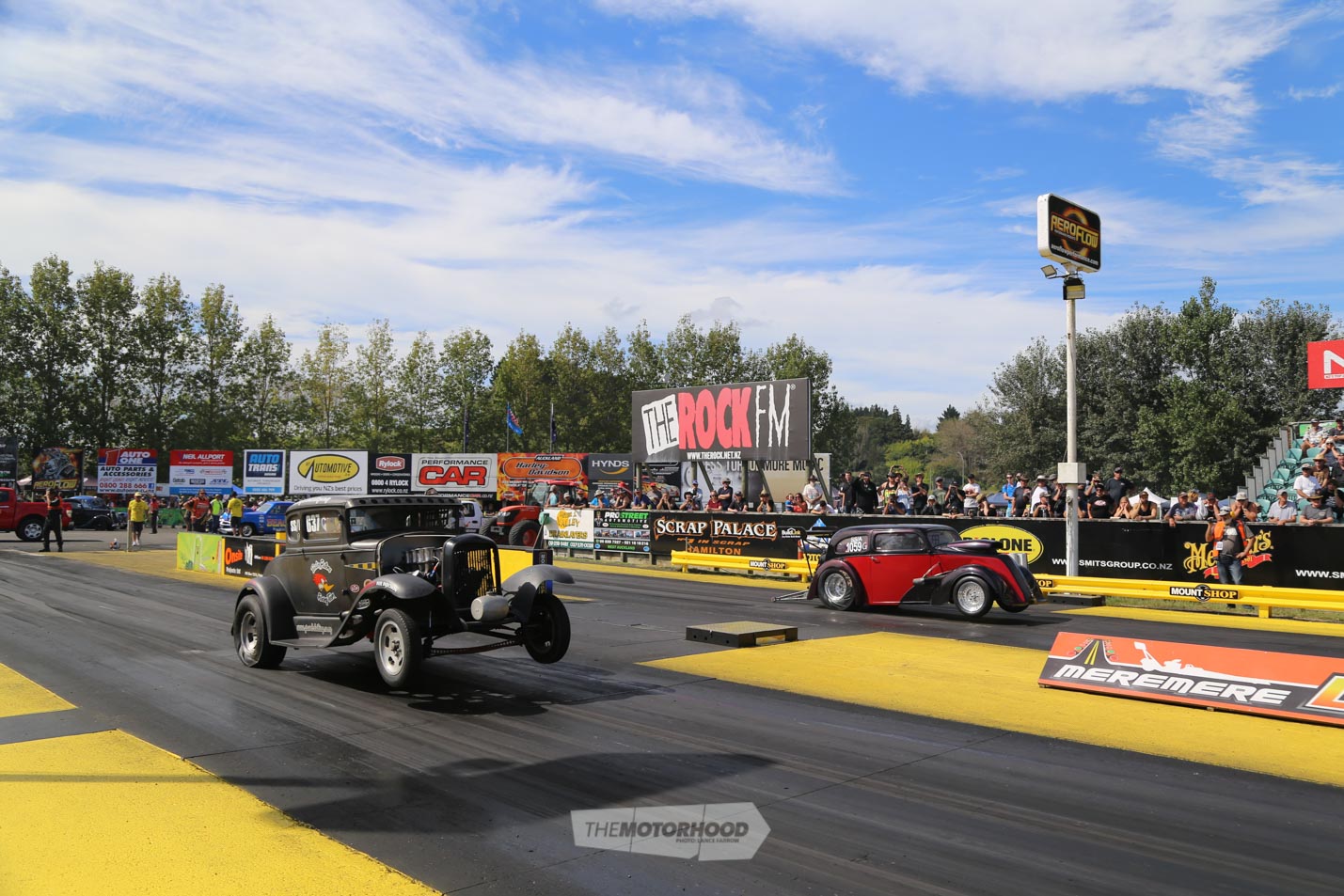
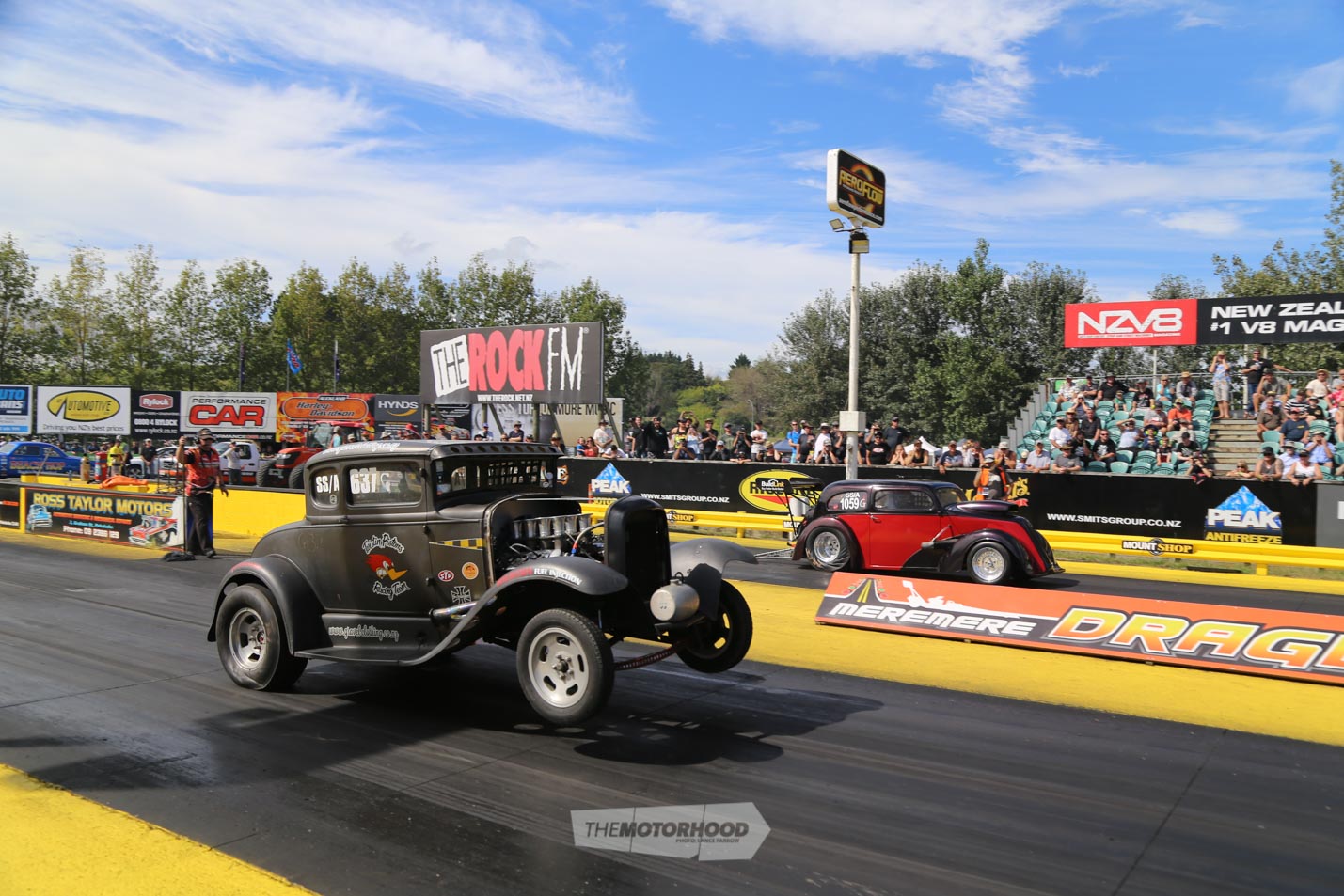
The wild Hemi-powered Model A raced by Dave Best has no problem getting the wheels up in the air, and with a manual box getting it down the strip, has got to be a ton of fun.
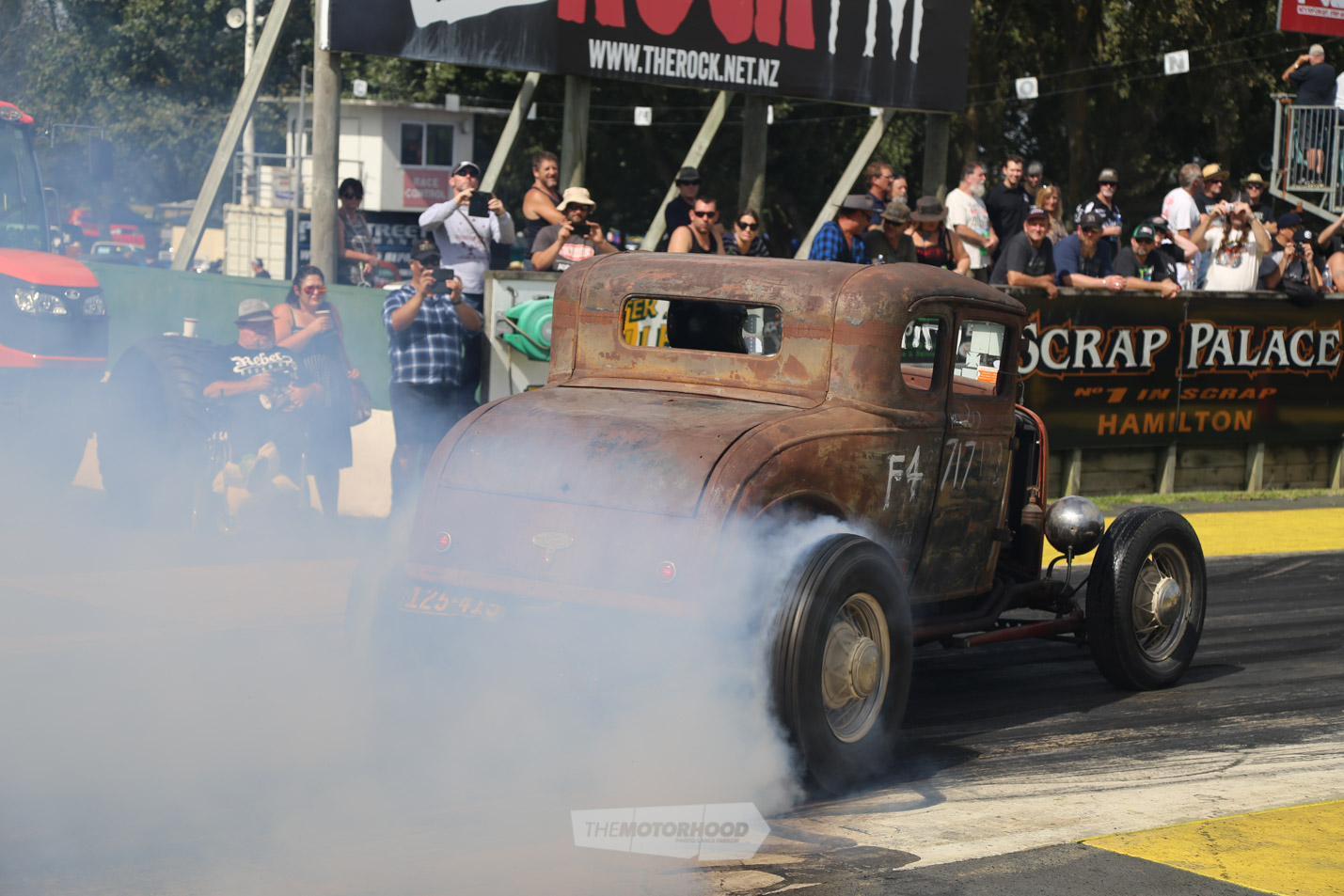
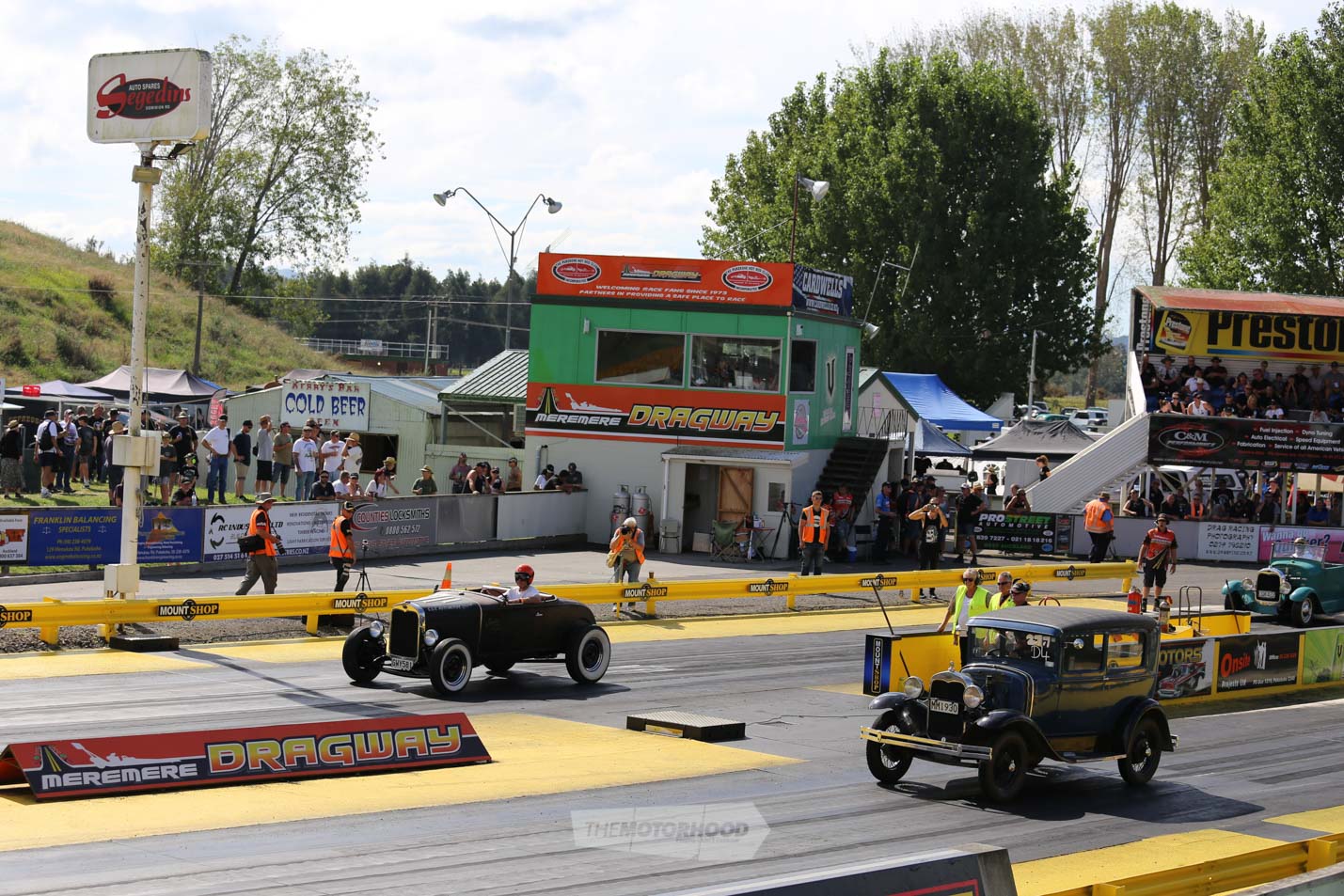
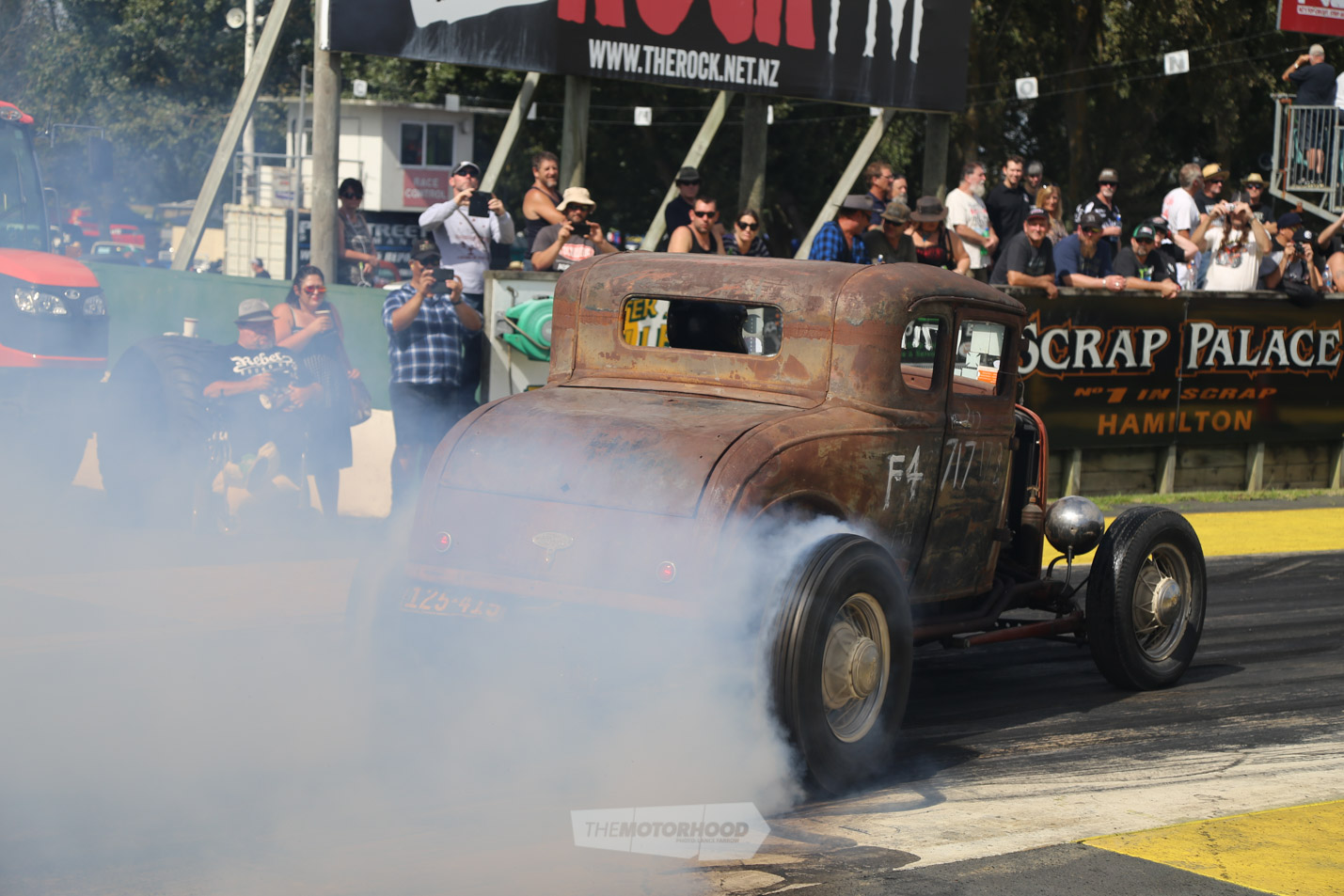
Meanwhile, Russell Lowe’s Model A was nowhere near as tough, but he never built it to be. Russ is an expert at taking the piss, though, and he never failed to fry the rear crossplies whenever he got the chance. He’s no slouch behind the wheel, either, and accidentally made it through to the final round of the Flathead Challenge. Why accidentally, you ask? He’d had his fill of racing by then, and would much rather have been sinking some big bottles of crisp Waikato Draught with the boys!
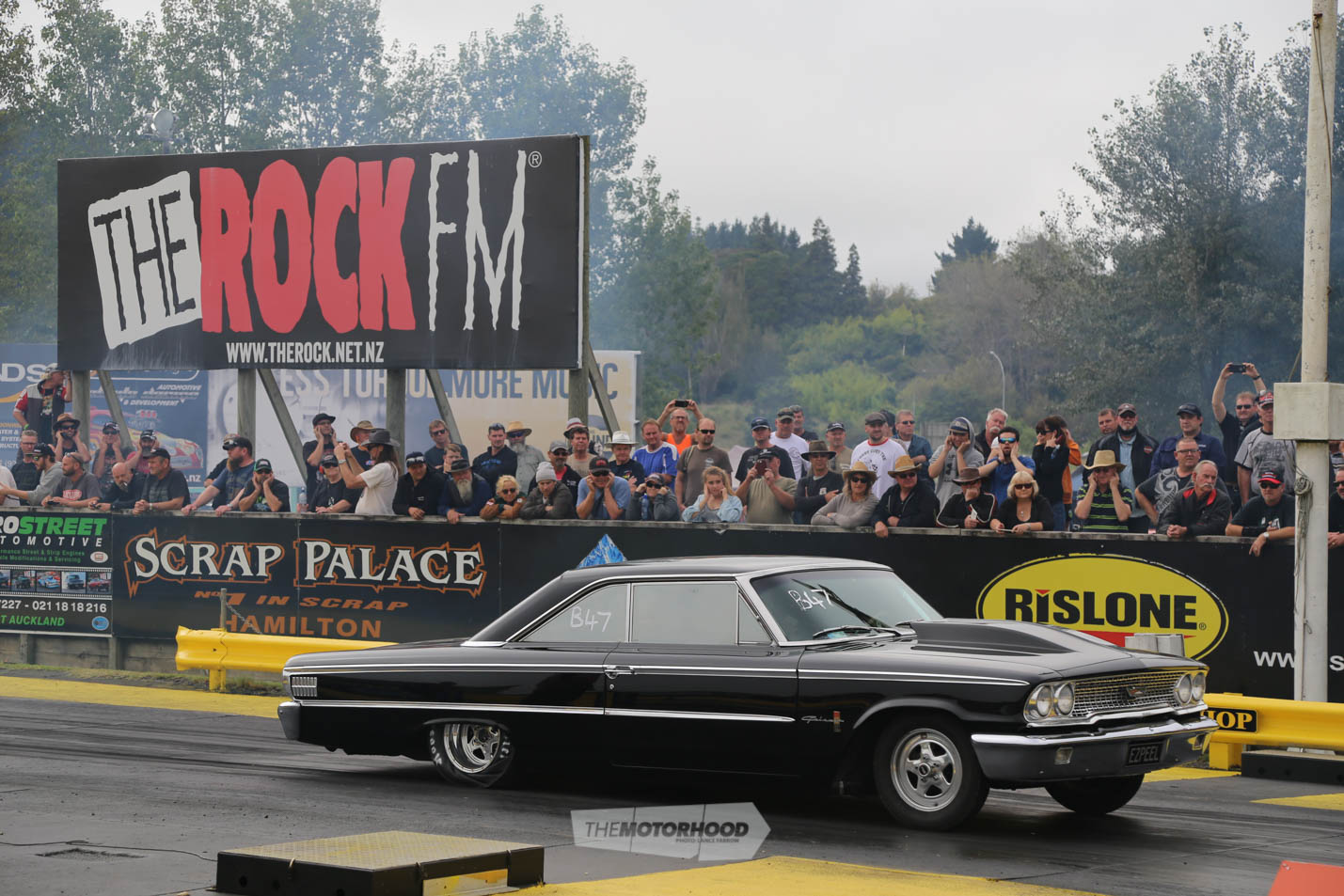
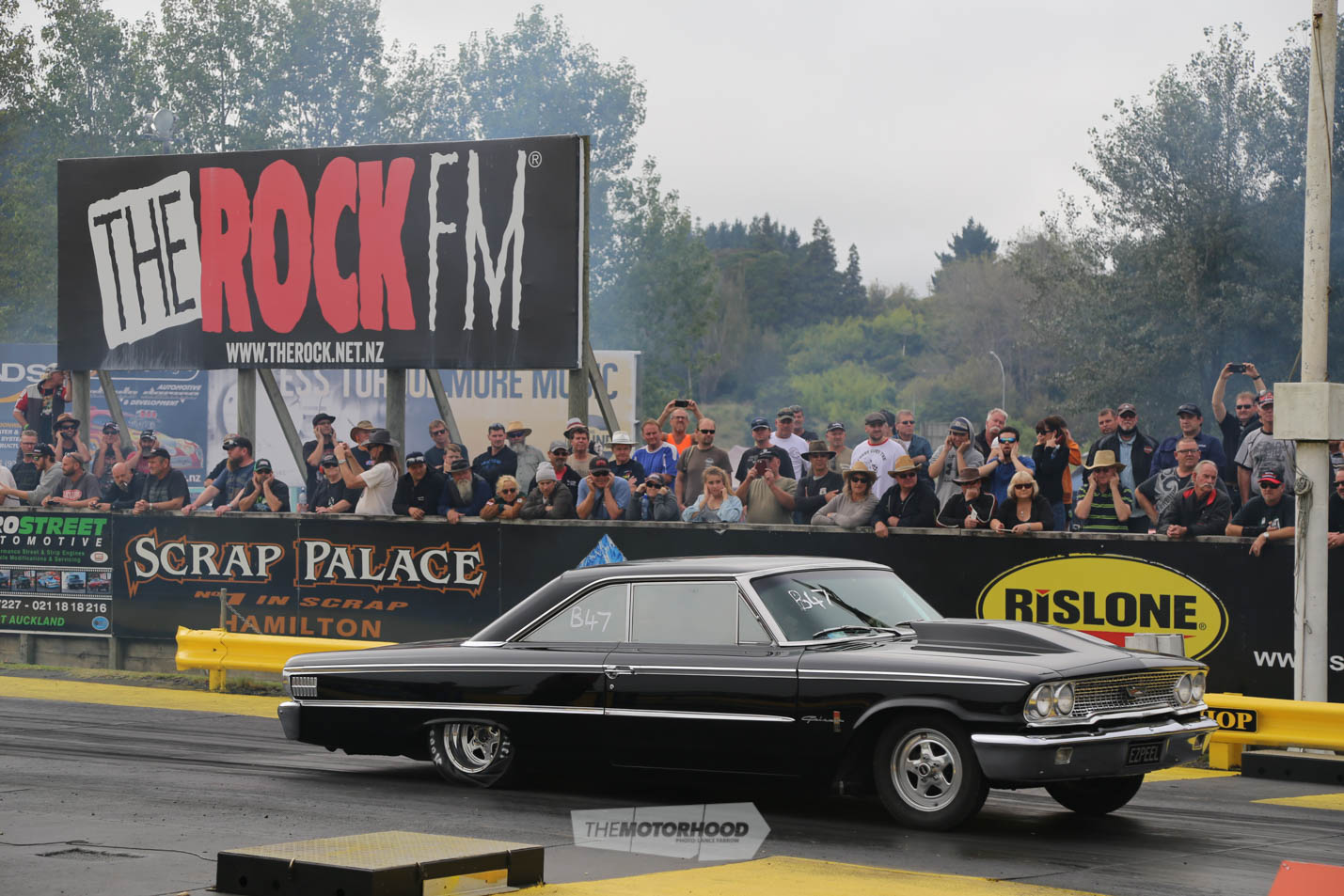
Garth White has owned the famous ‘EZPEEL’ Galaxie for a while now, and he had it out in force at the Nostalgias, sounding as tough as 514 nitrous-assisted cubes does. Though it looks every bit as intimidating as a 10-second all-steel tank should, this thing was built and finished to a show-quality level almost 10 years ago by Mike Kitson of Greenpark Panel and Paint, and is just at home in a show hall as it is on the street or the strip. Not long after this event, Garth pushed EZPEEL into the nines, with an incredible 9.93s at 140.78mph pass.
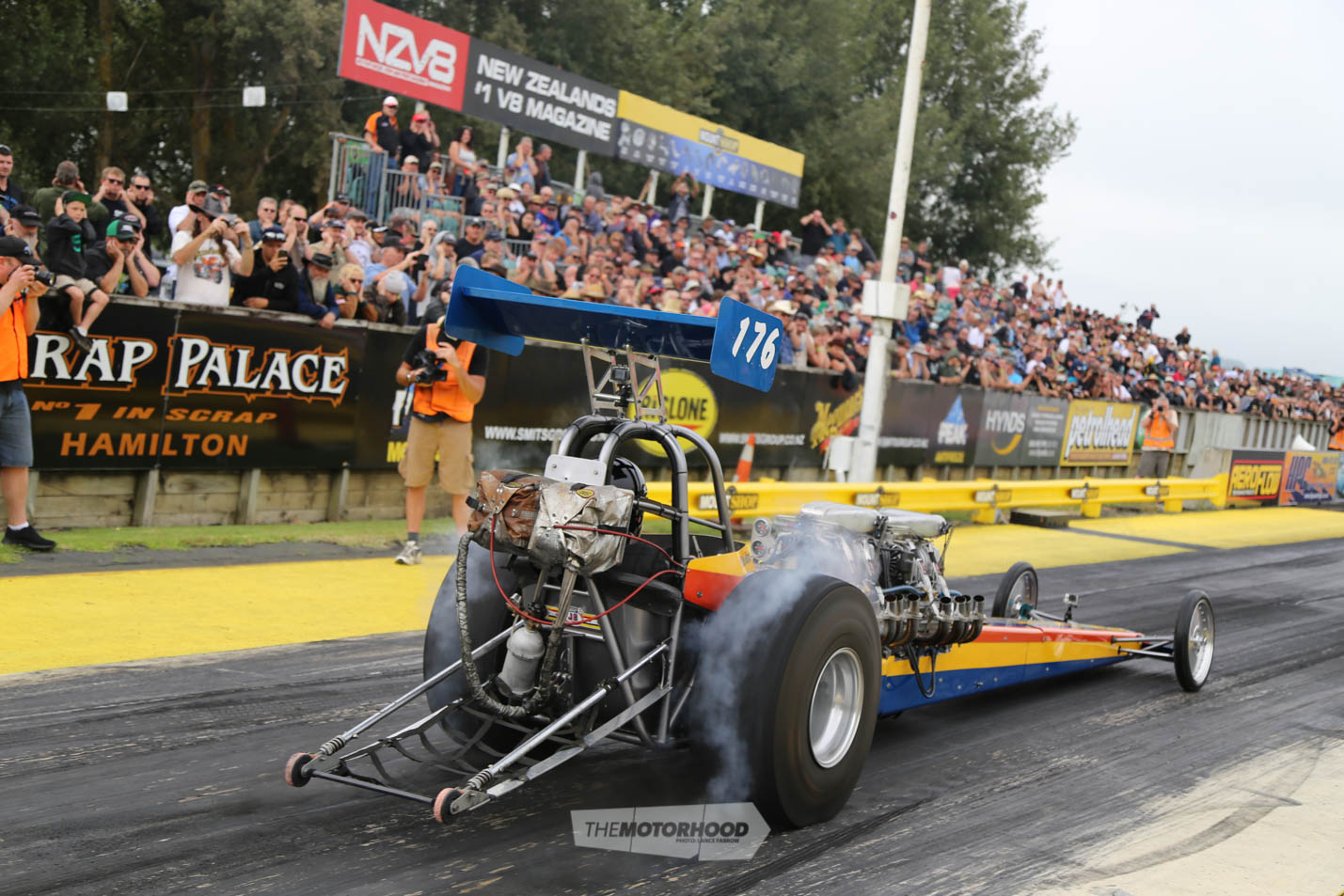
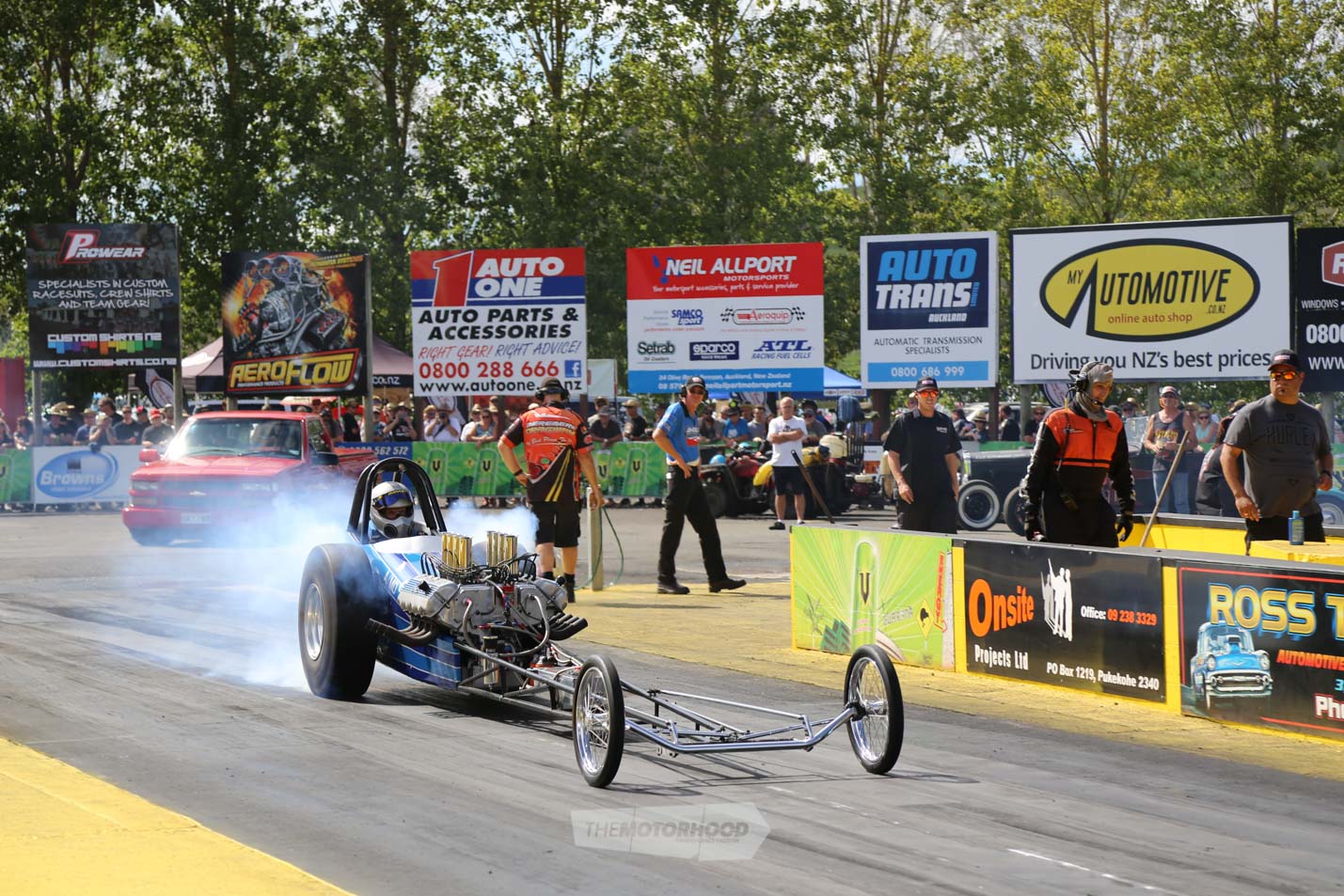
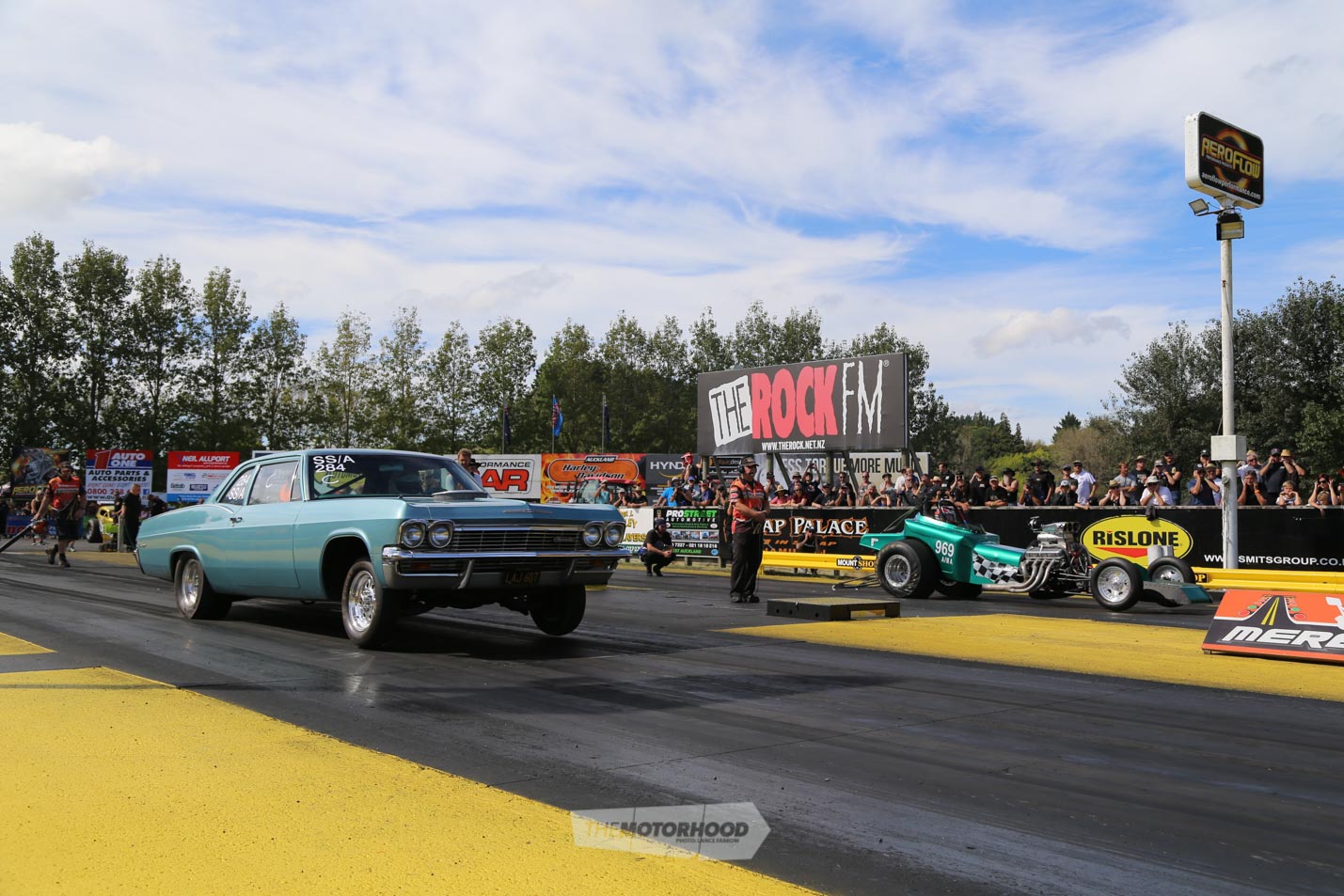
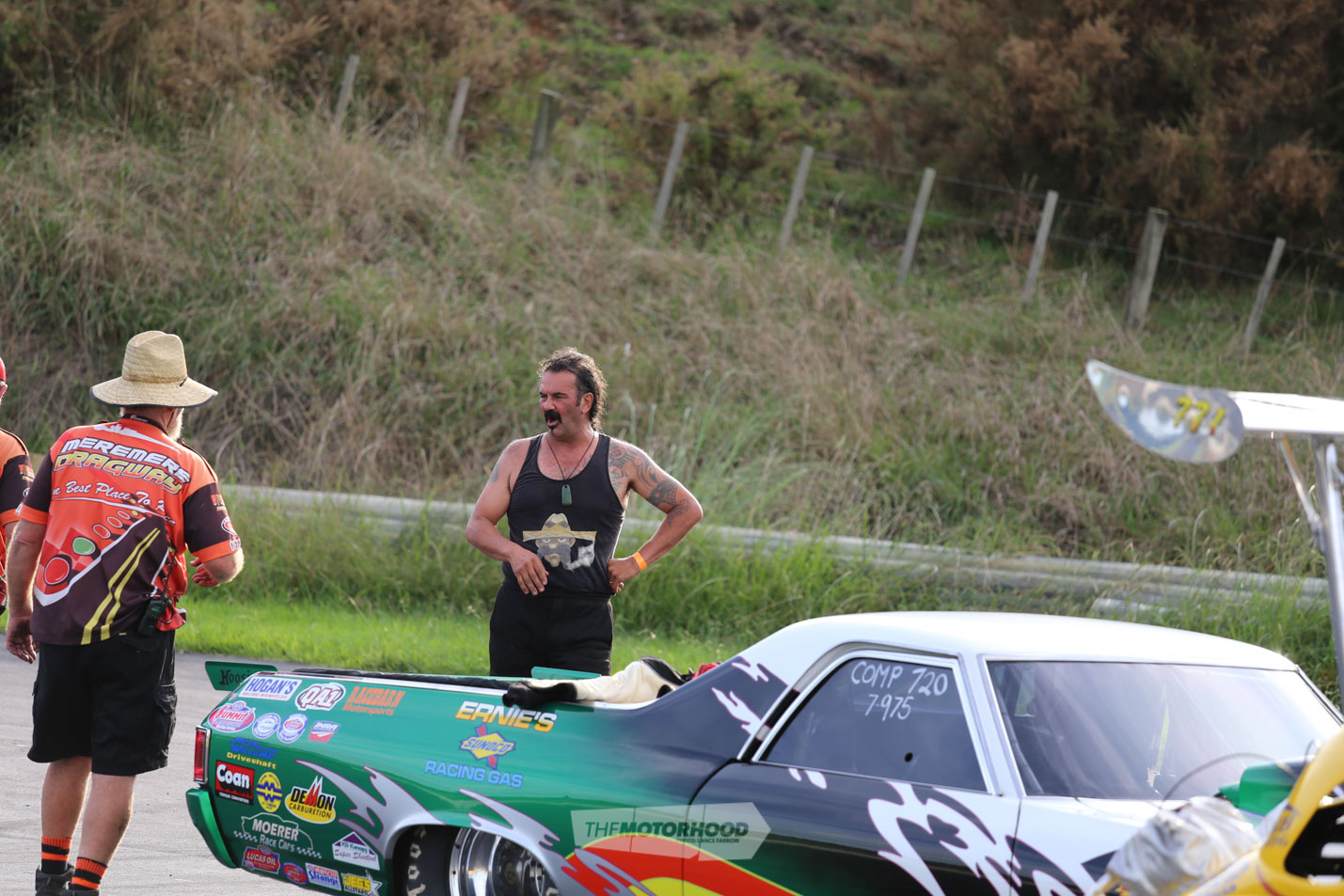
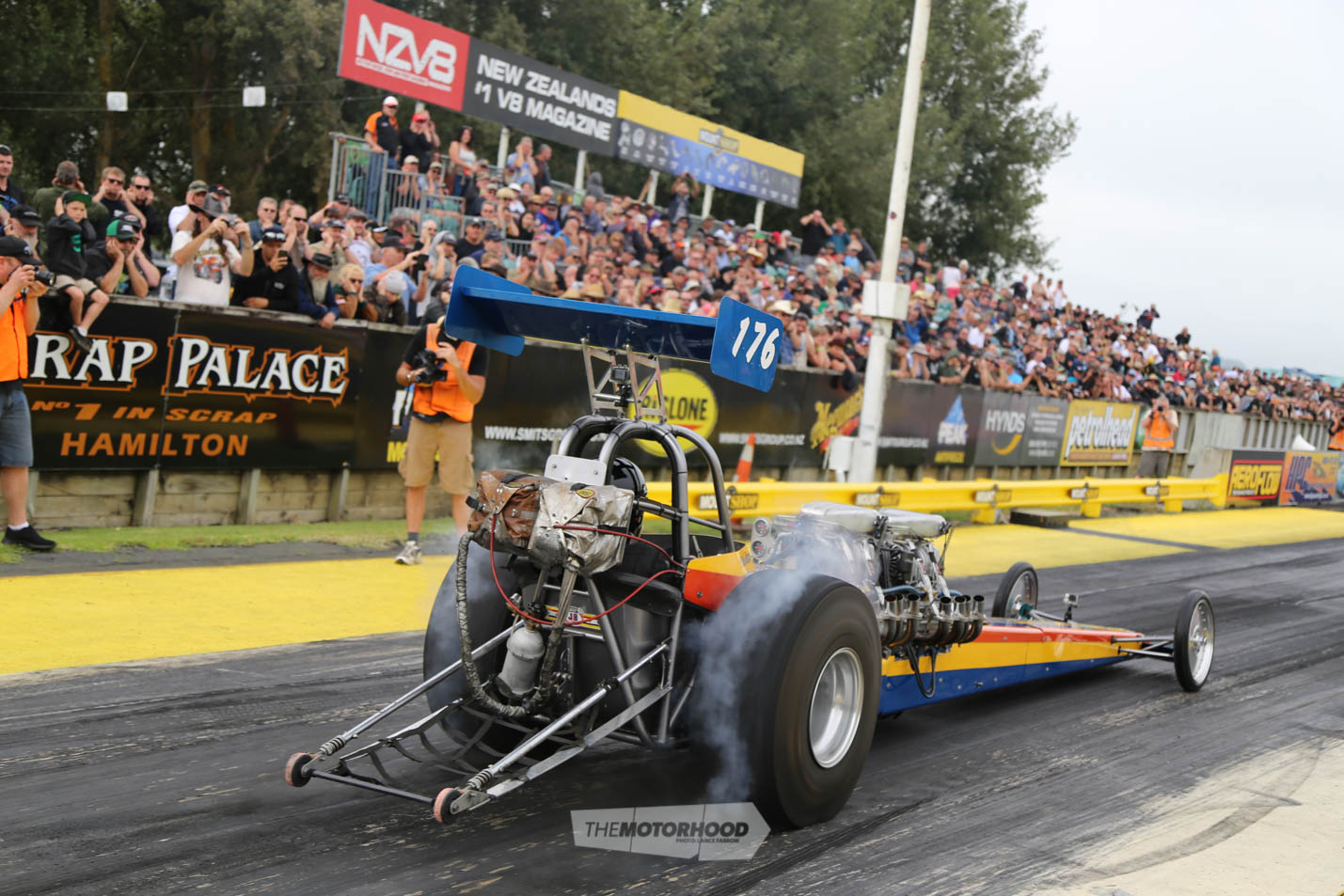
The real spectacle here was with the top-level racers, though. The twin small block–powered ‘Freight Train’ is campaigned by Ken Hopper and Mark Vincent, and wowed the crowds with thundering passes digging into the six-second region.
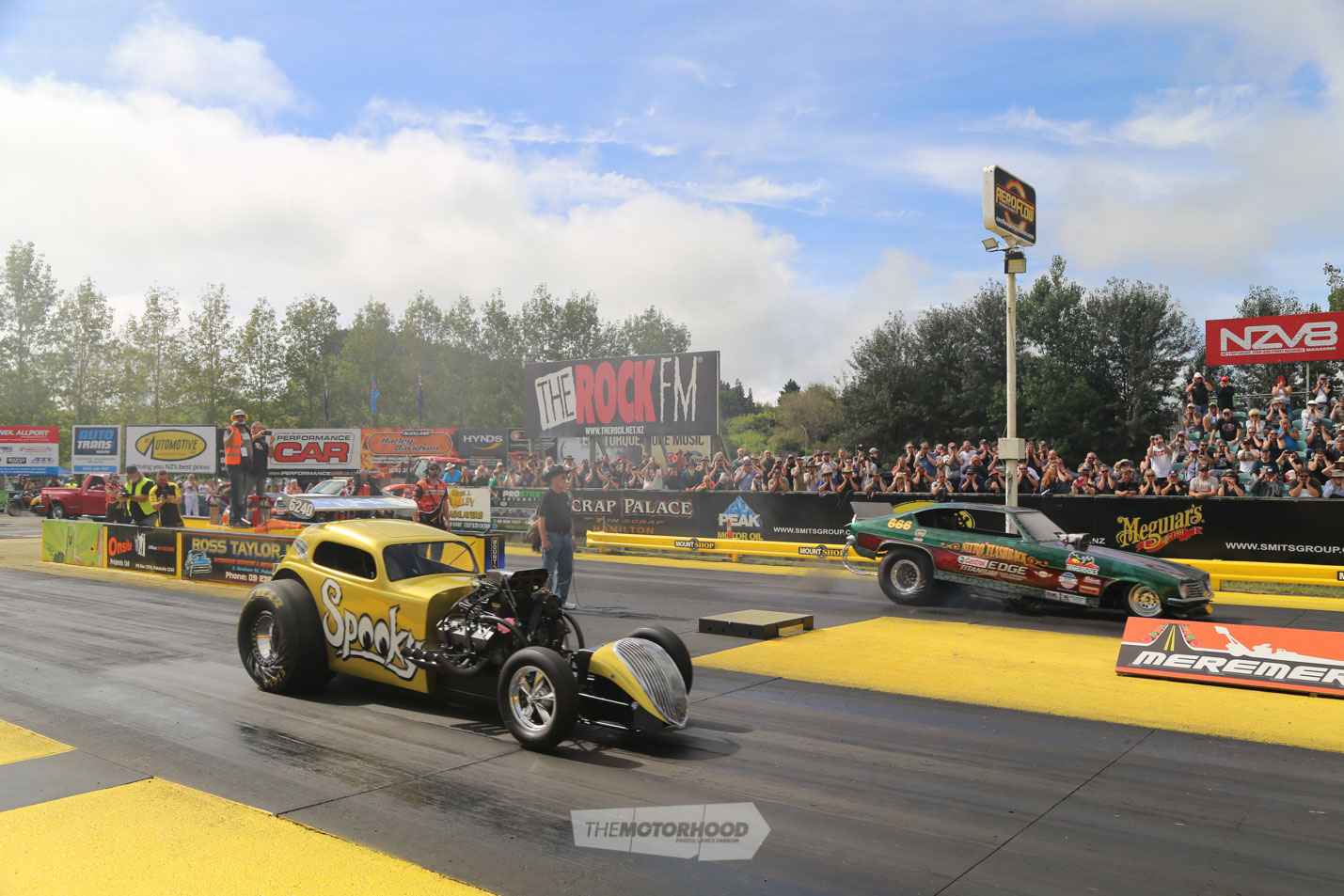
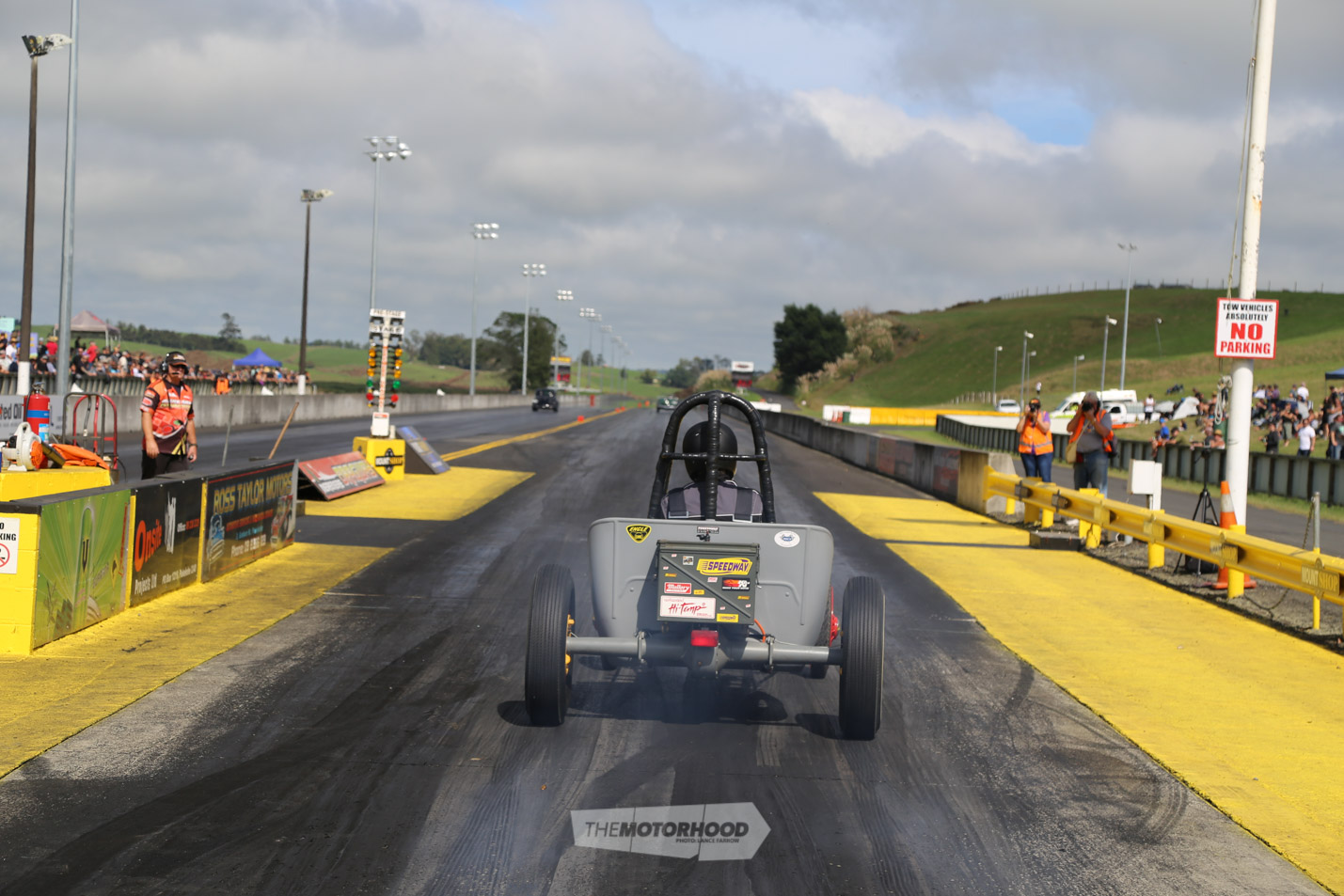
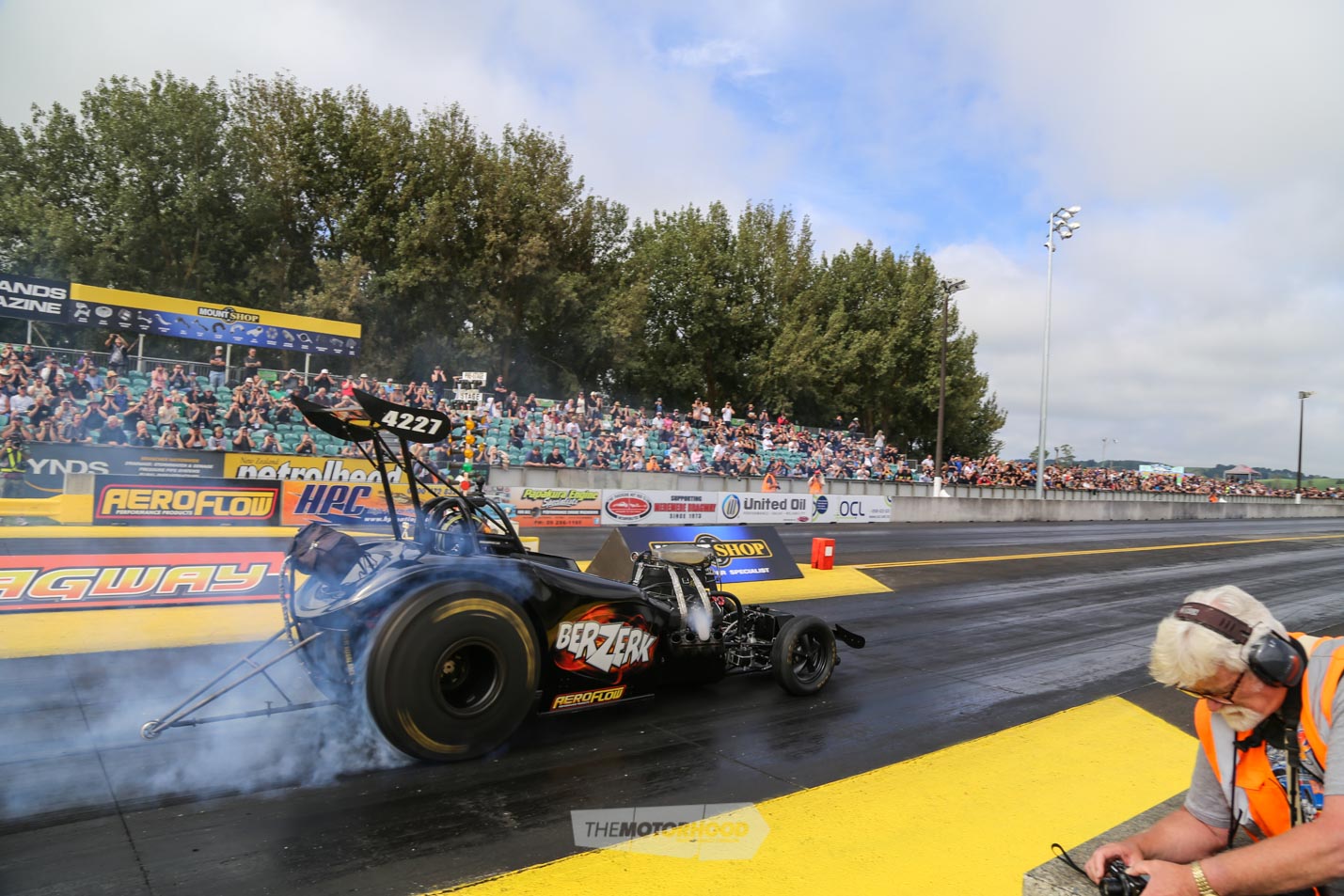
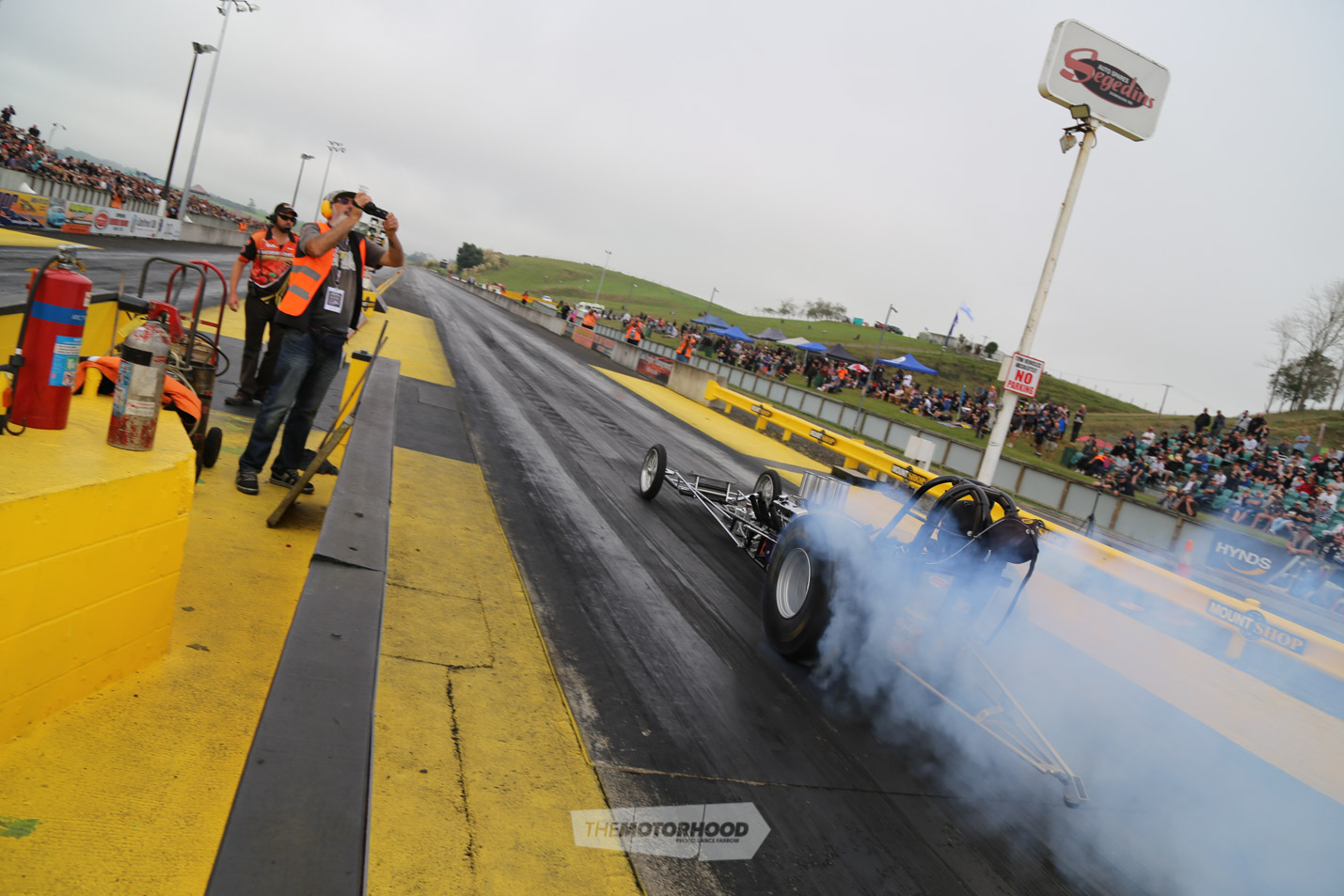
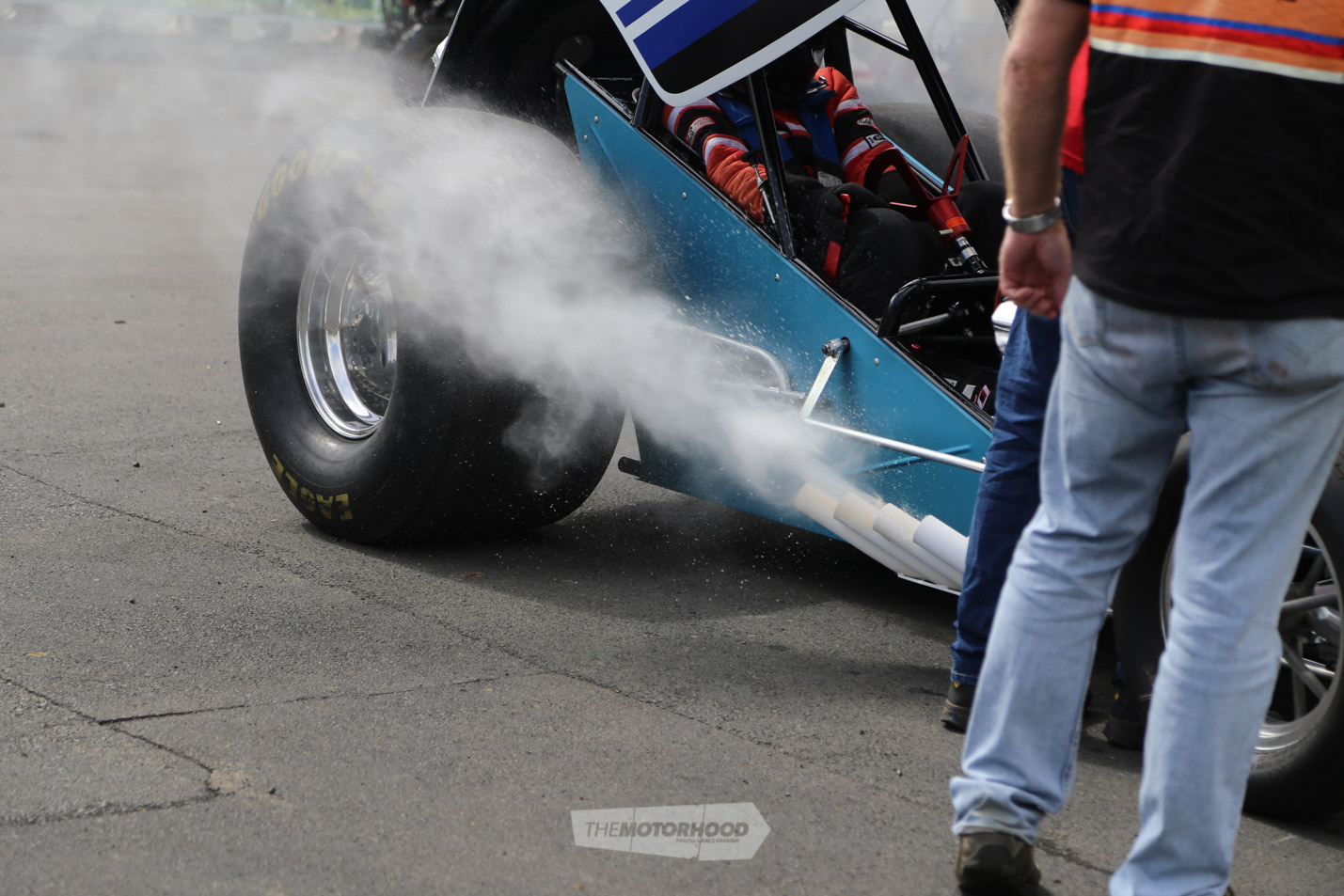
However, the real stars of the show came in the form of a cohort of Australian nitro-fuelled Altereds, brought along for the Aeroflow World Fuel Altered Challenge. Jason Walshe in Graeme Cowin’s ‘Psycho’ T-bucket Altered was joined by the Austin Bantam–bodied ‘Berzerk’ piloted by Rick Gauci, with local export Morice McMillin behind the wheel of the freshly completed ‘Psycho’ Topolino, representing the Kiwi team.
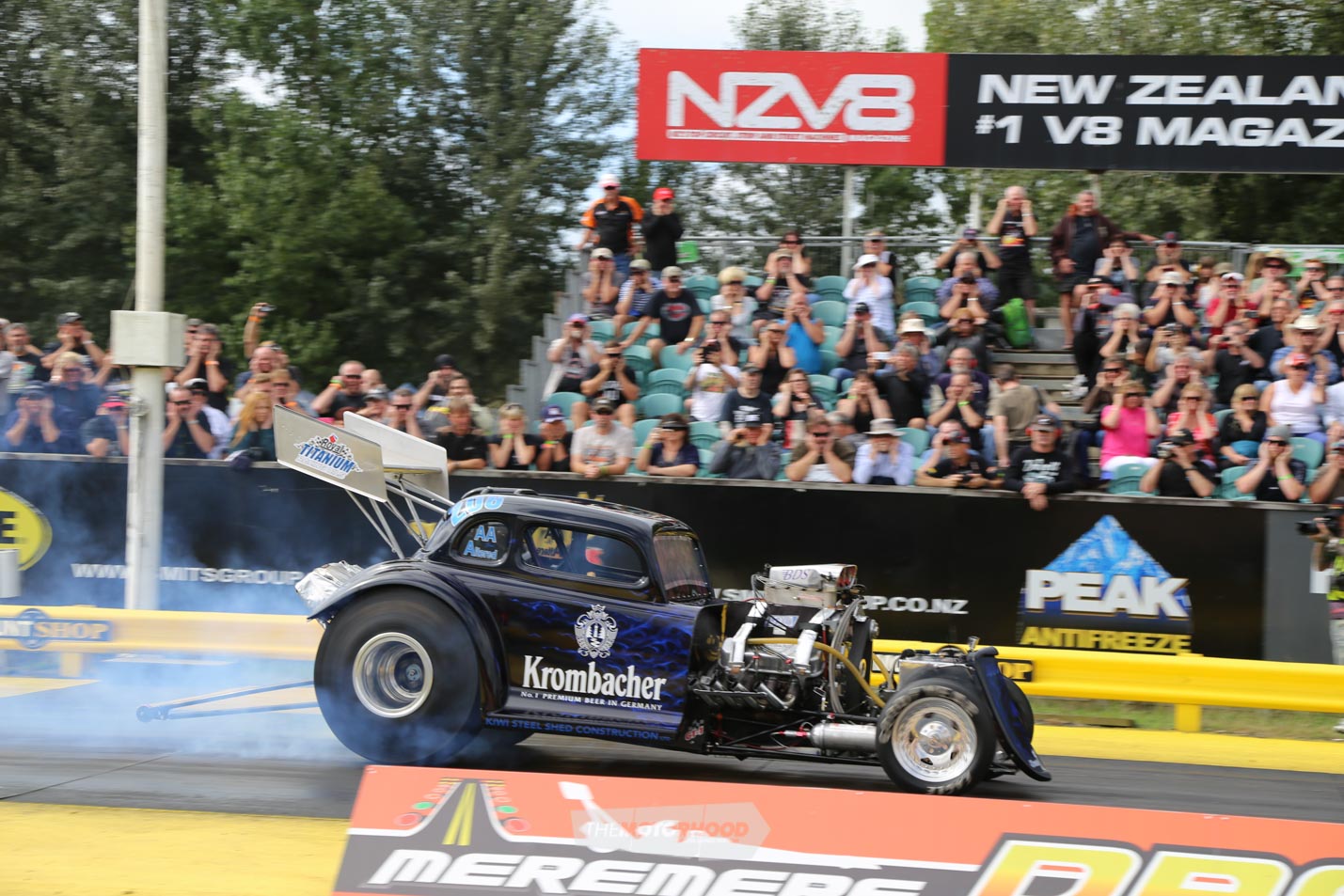
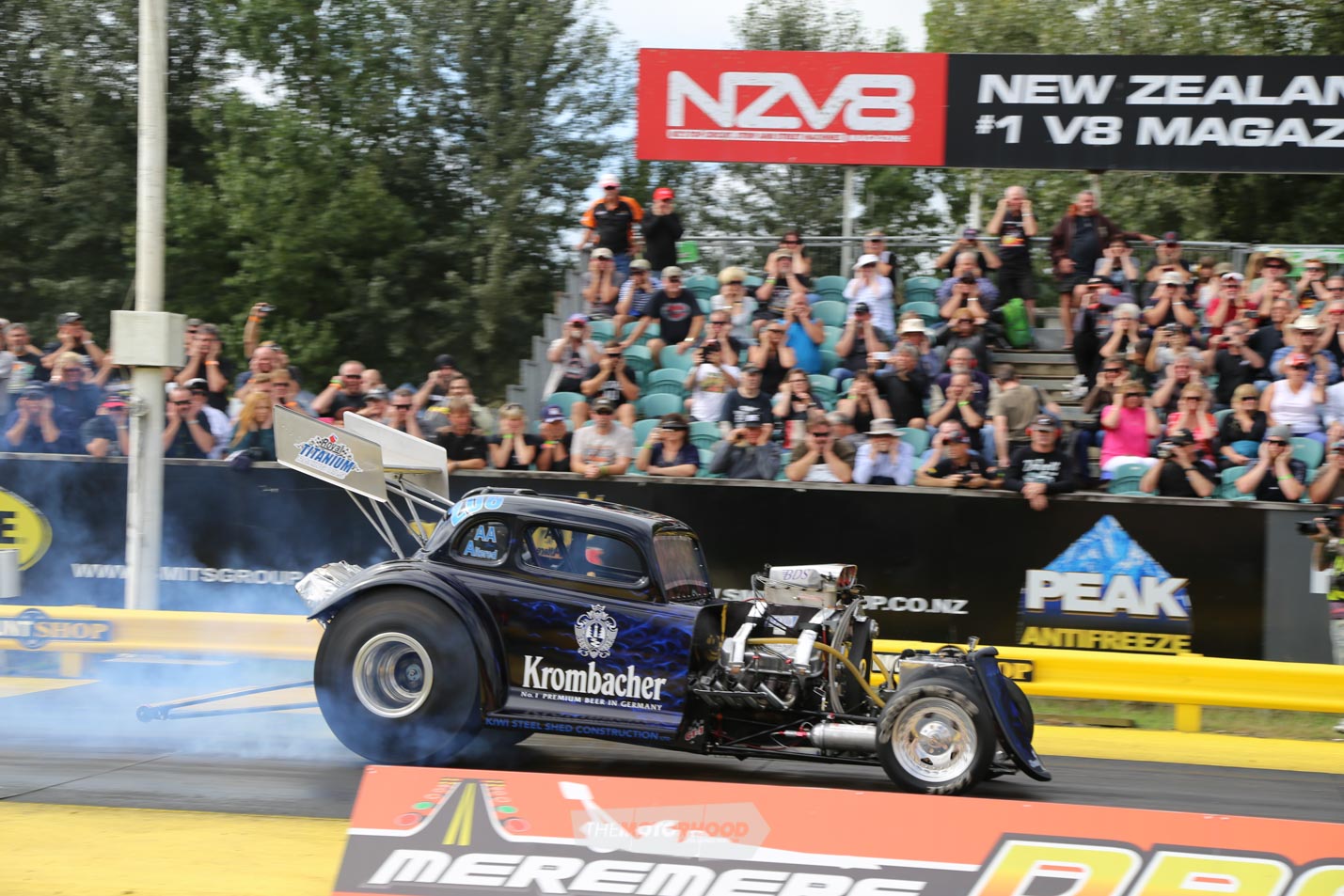
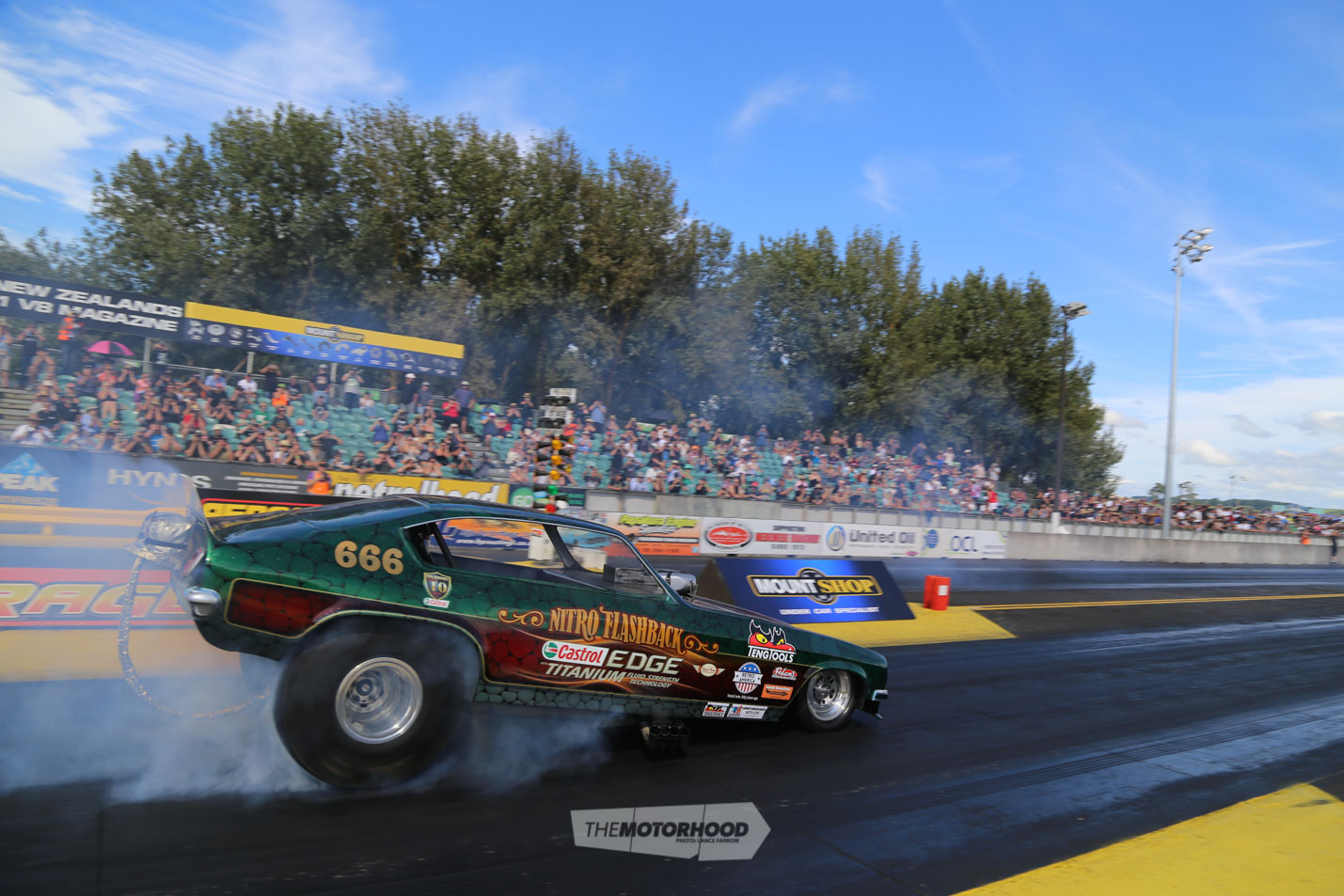
The remainder of the Kiwi contingent was brought up by Karl Boniface in the Castrol-sponsored Nitro Flashback Vega-bodied funny car, and Dave Gauld’s Krombacher-sponsored ’34 coupe.
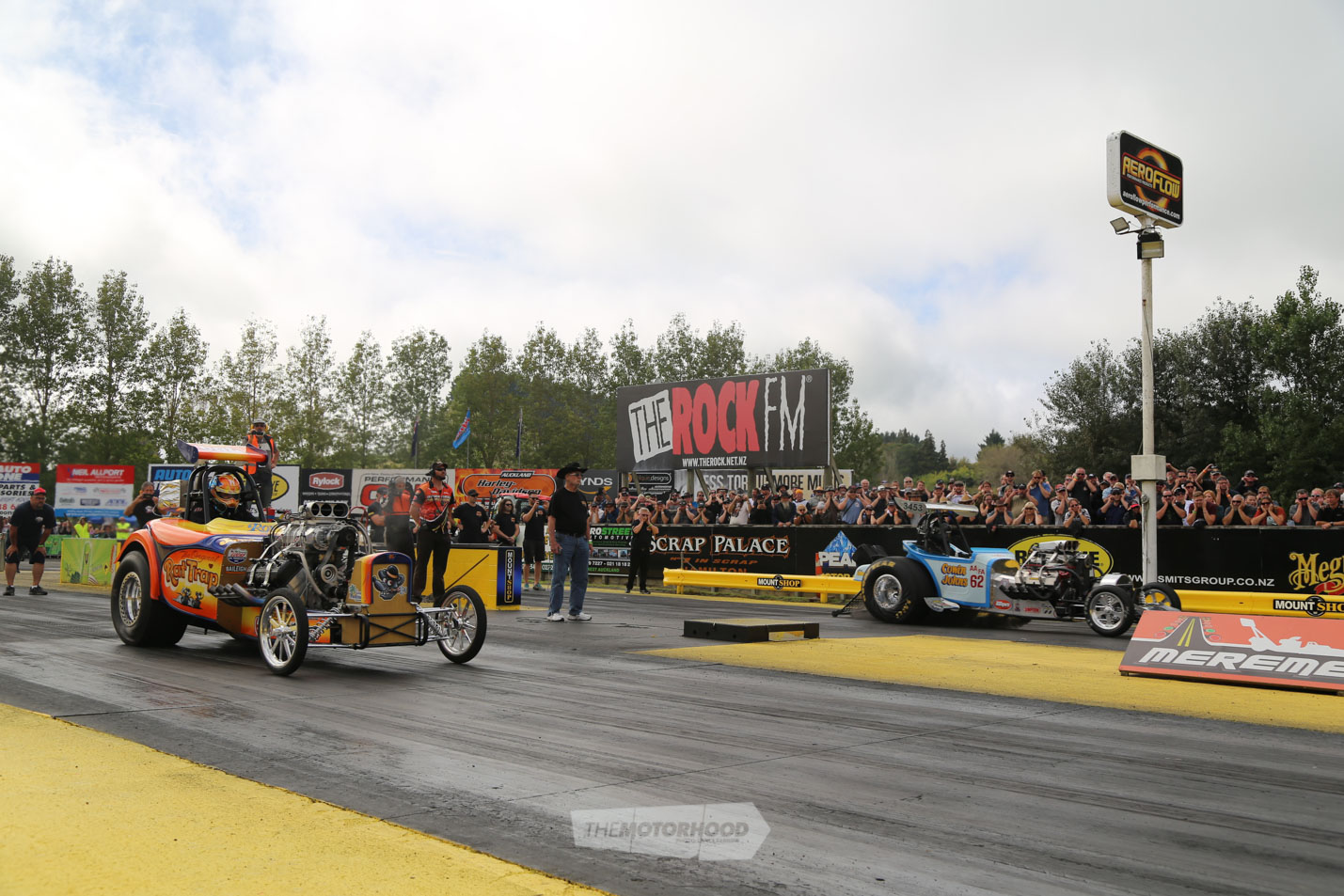
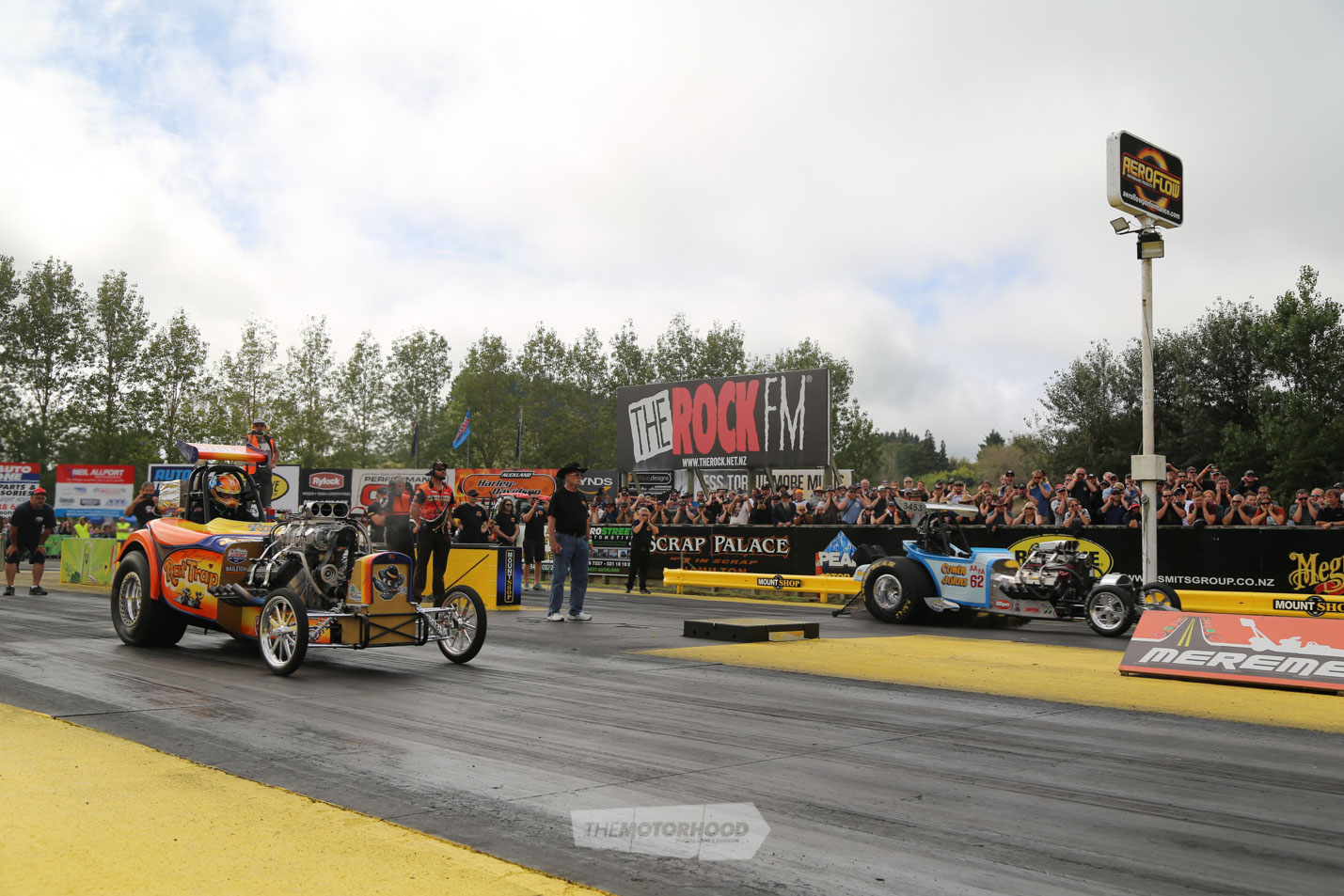
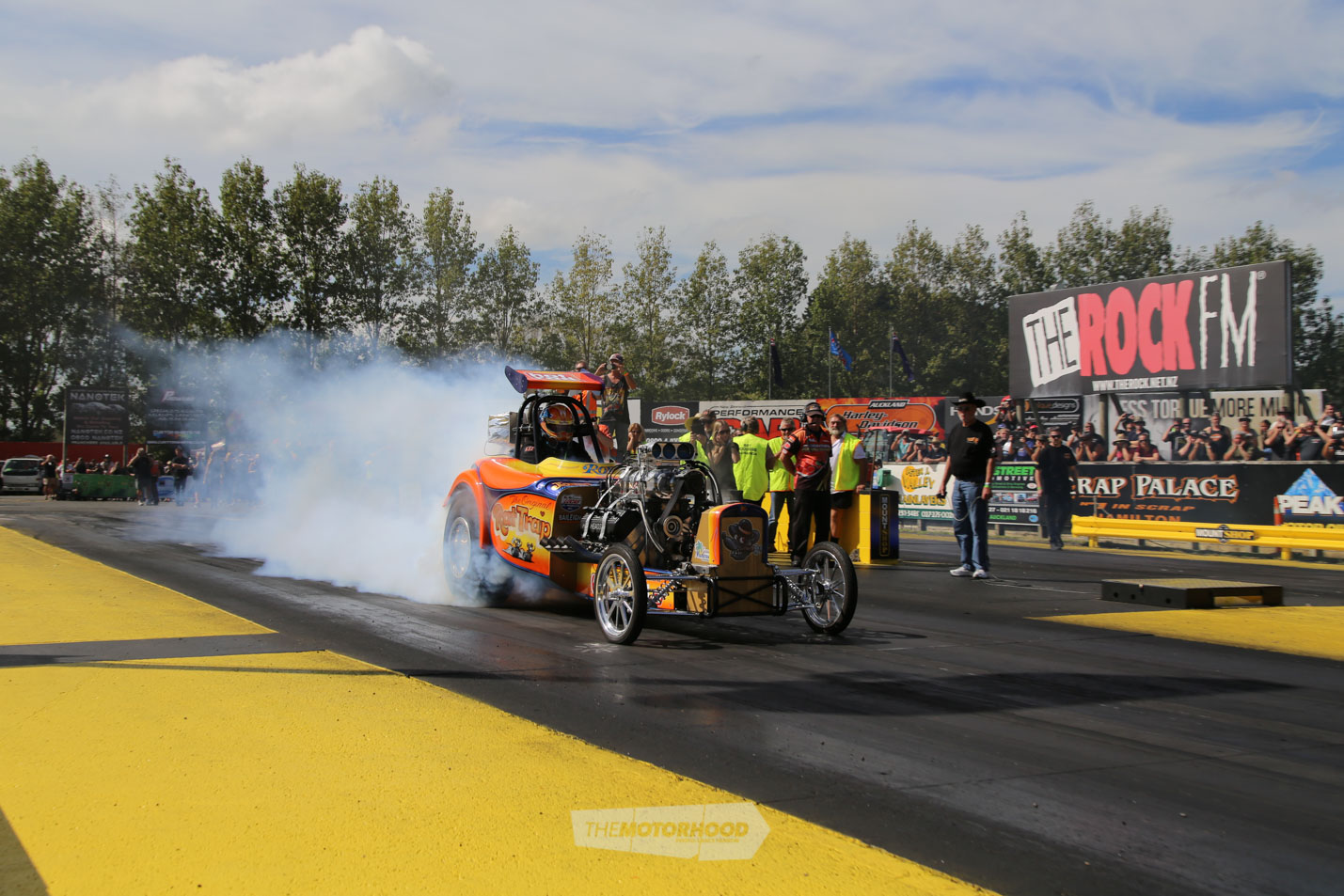
Of course, we can’t forget the legendary ‘Rat Trap’ brought over by Ron Hope. This thing is the Fuel Altered, and everyone in attendance should count themselves lucky to have been able to witness this thing in action.
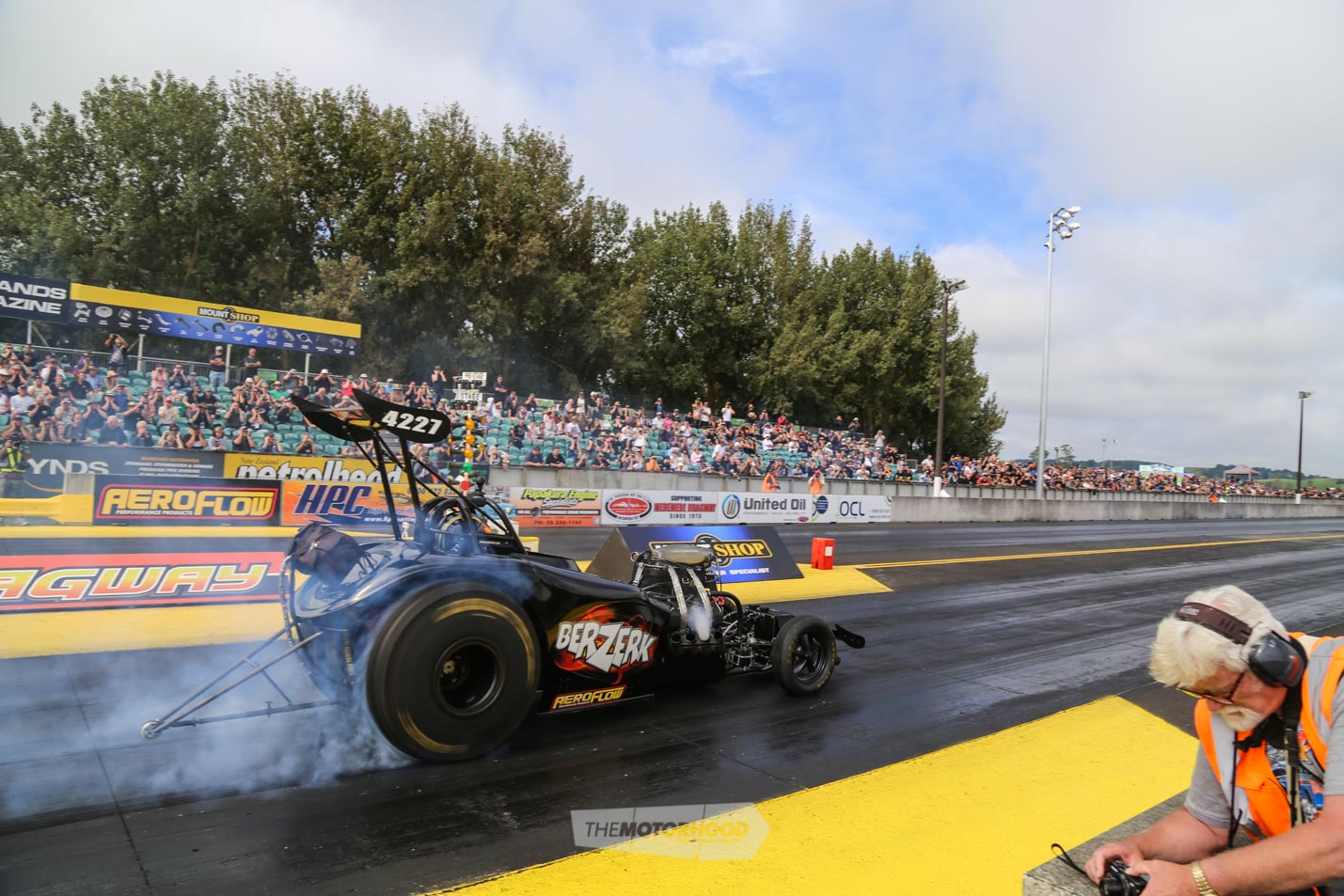
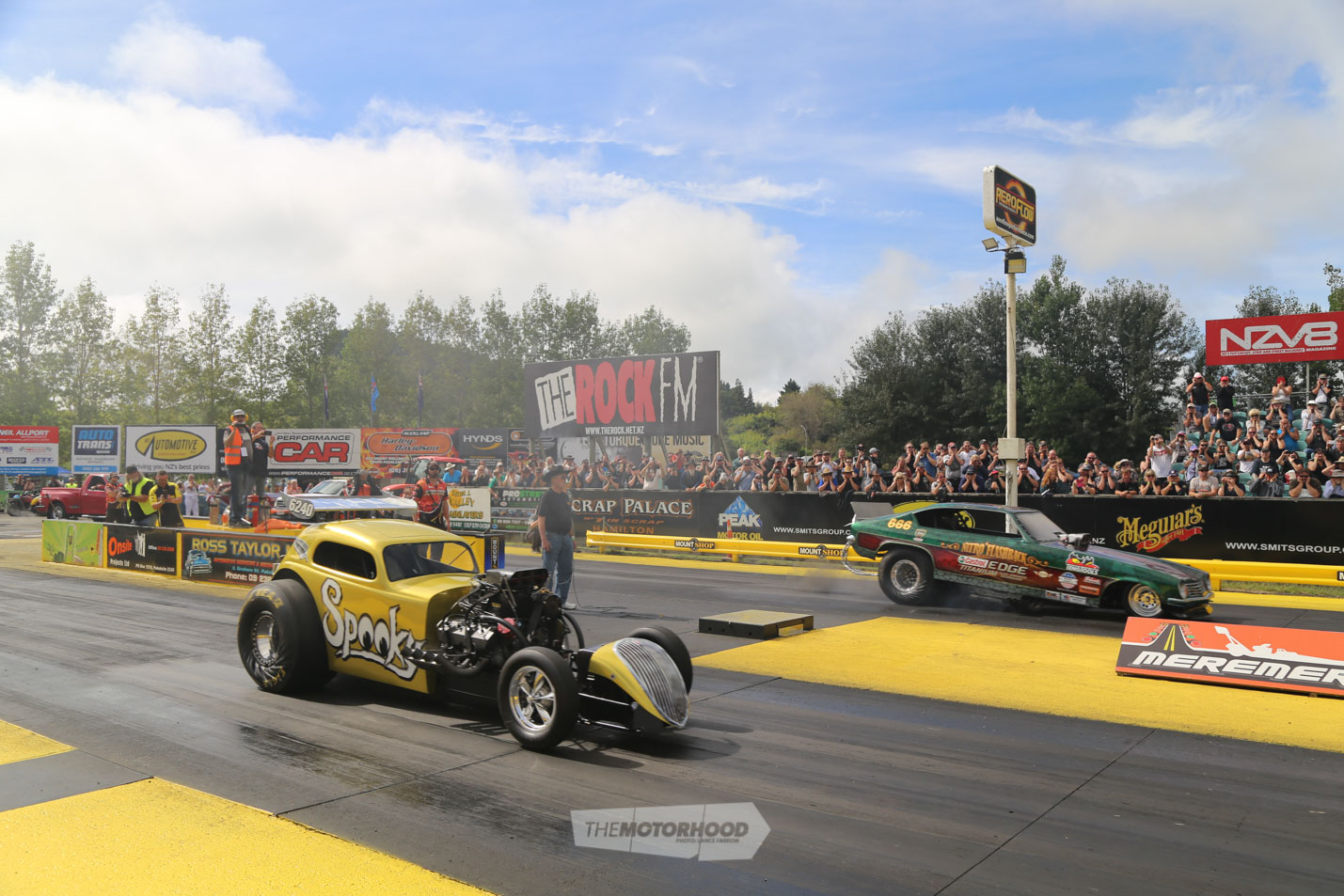
The whole nitro field set the benchmark rather early on, blasting deep into the sixes, and by mid-afternoon the final round revealed a pairing of Spooky against Berzerk. An enormous launch for both cars began what looked to be a very close race, before Spooky ended up on two wheels around the half-track mark, stacking the wall and sliding across the line for a 12.79s at 24.42mph according to the timing board. Rick Gauci did a whole lot better in Berzerk, nabbing the quickest ET of the day with a 6.14s at 236.8mph.
There is little question that the nitro spectacle topped it all off, with all of the noise, speed, and excitement that go hand in hand with that recognizable aroma. While the nostalgia racing continued after the Spooky-meets-wall incident, that is where we’ll end this coverage. For a full run-down on the action, keep an eye out for a future issue of NZV8 magazine — unfortunately, we just missed the print deadline for our current issue.