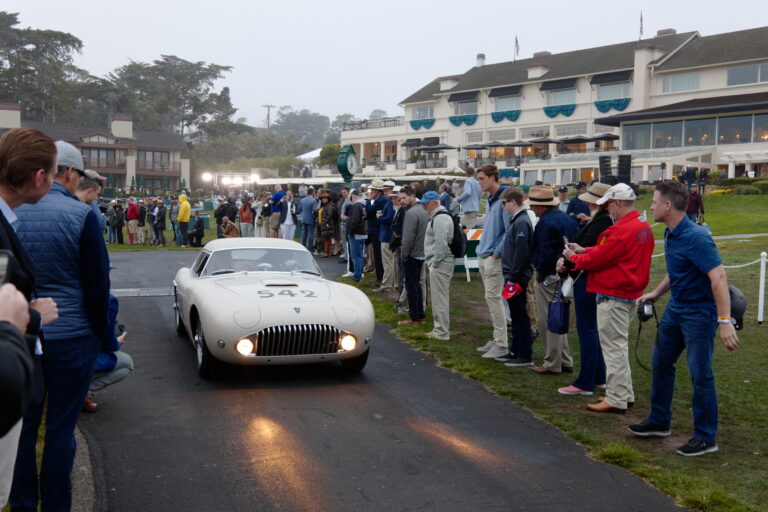
The Hawke’s Bay leg has proved a popular staging post and end point for Targa New Zealand events over the last several years; so when Event Director Peter Martin was casting around for a second two day event to slot in between Targa Rotorua in March, and Targa New Zealand in October, his first preference was of course the ‘Bay (May 20-21)
“For a start there are the roads,” Martin said, “The roads in the ‘Bay are fantastic. You couldn’t ask for better for an event like ours. There’s also a strong and very active motorsport fraternity and some very supportive councils with which we have an excellent working relationship with.”

Things will kick off, and wrap up, in in Havelock North (at the Village Green) and the event incorporates 15 closed special stages covering 378.5 km and a total of 585.2km of touring stages across Hawke’s Bay.
Over 90 entries have been spread over the main competition field (50), concurrent but non-competitive Targa Tour (30), and Hawke’s Bay Car Club Rally of Hawke’s Bay (10).
Sharing joint favourite status after impressing at the Targa Rotorua event in May are Leigh Hopper and co-driver Michael Goudie from Orewa, north of Auckland, and Jason Gill and Mark Robinson from Auckland. Hopper and Goudie led the field on the first day of the Rotorua event in Hopper’s newly-built Subaru WRX Impreza, only to crash out of the event on the first stage on Sunday morning.
Gill and Robinson, in the Mitsubishi Evo 9, were never far behind on the first day — the gap overnight was just 36 seconds — and took over a lead they would never lose when Hopper went off the road. With work rebuilding the Subaru still going on, Hopper and Goudie will contest the Hawke’s Bay event in a leased Mitsubishi Evo 10.
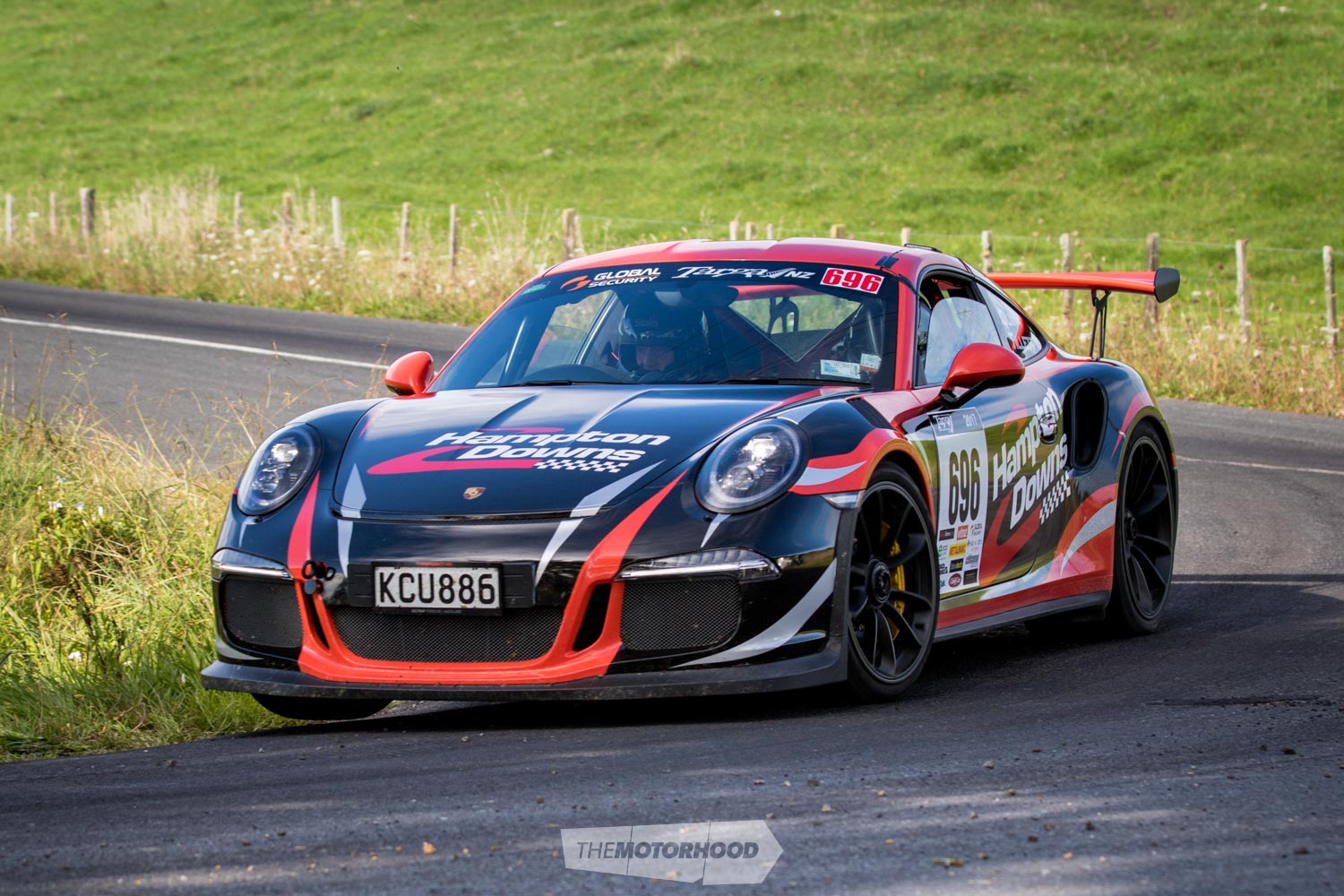
The Rotorua event also saw the Targa debut of a second new Porsche GT3 RS in the hands of five-time Targa NZ winner Tony Quinn and co-driver Naomi Tillett. The pair spent most of that event in a pitched battles for third, then second, place with former Targa NZ winners, Martin Dippie and co-driver Jona Grant from Dunedin, in Dippie’s own Porsche GT3 RS.
Circuit-owning entrepreneur Quinn won a stage on Sunday but Dippie and Grant were ultimately quicker over the two days, setting the scene for a return match in the Hawke’s Bay this month.

Quinn and Tillett, and Dippie and Grant, are expected to set the pace in the Global Security Production 2WD class; while the new Global Securities Allcomers 2WD class is set to be a battle between the BMW M3 of Perth-based expat Robert Darrington and co-driver Dave Abetz, the Holden Torana A9X of New Plymouth husband and wife Ross and Carmel Graham, and the giant-killing Toyota Starlet of Auckland brothers Tom and Ben Grooten.
The Hopper and Goudie and Gill and Robinson pairings are also, obviously, joint favourites to take class honours in the AndrewSimms.co.nz Allcomers 4WD class; while Aucklanders Joe Kouwenhoven and Carl Hannaford have the car — in the Nissan GT-R (R35) — to make the new AndrewSimms.co.nz Production 4WD class their own.
The Metalman Classic 2WD class remains a cornerstone of any Targa event, with Mark and father Chris Kirk-Burnnand from Wellington in a BMW M3; Bevan Claridge and Campbell Tannock from the Horowhenua in a Holden Commodore V8; and Nelson duos, Bruce Farley and Glen Warner in a BMW 325i, and Peter Jones and Mike Lea in a Ford Escort; all pairings to look out for.