
Renault/Nissan hit by ransomware attack

14 May, 2017


“The ransomware was said to have exploited a Windows security weakness, encrypting data on computers and holding it at ransom”

For those of you that haven’t read the news, Friday’s ransomware attack affected tens-of-thousands of computers in almost 100 countries across the world, and reports state that French auto giant Renault became the first major French company to be hit —  an English plant of Renault’s alliance partner Nissan was also hit by the attack. 

Production was stopped of Renault’s European plants as a result of the attack, affecting operation as data on computers was encrypted and held at ransom, according to a Renault spokesman.
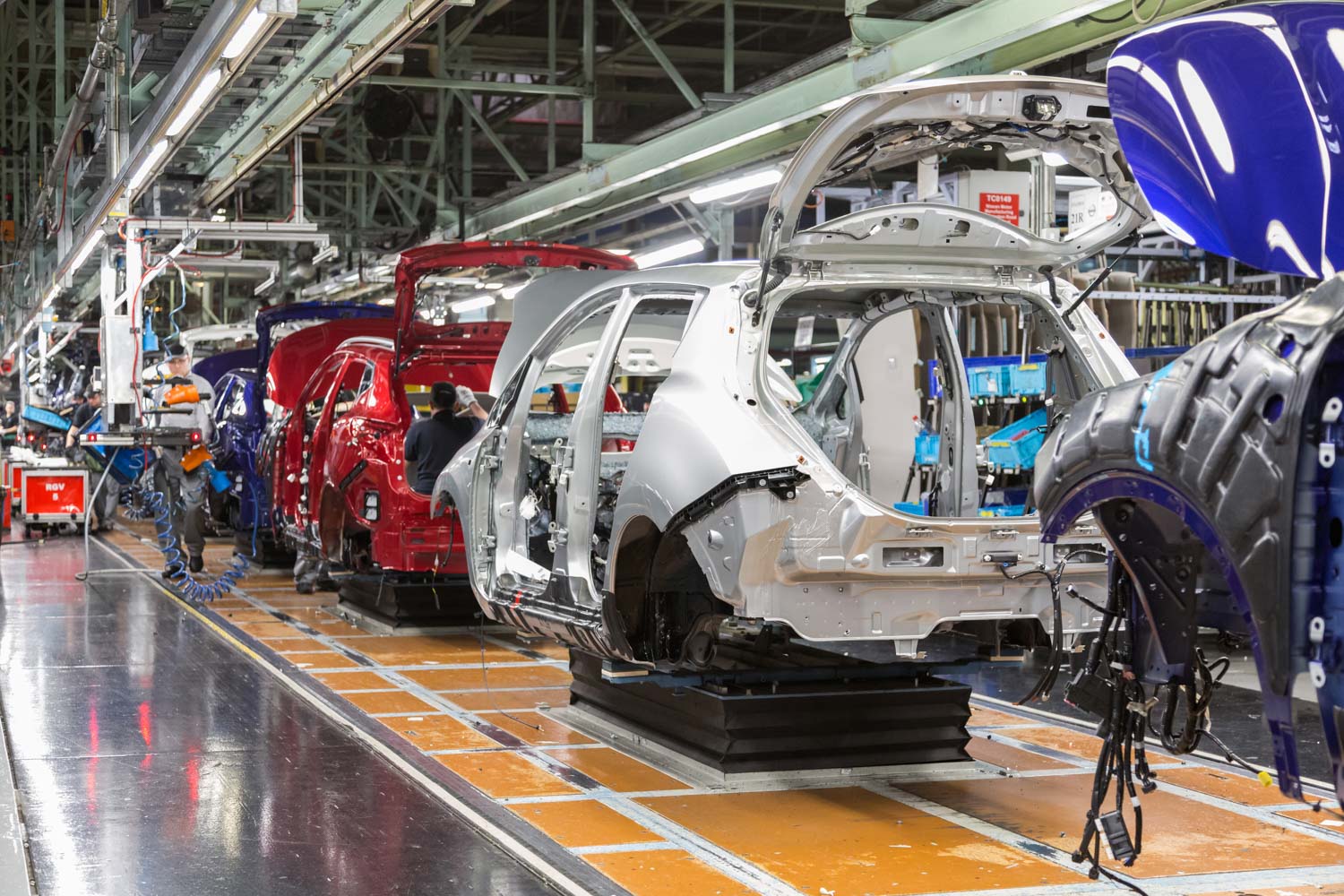
A Nissan spokesman has confirmed that their Sunderland, England, plant was affected by the ransomware but wouldn’t confirm whether production was halted as a result. The plant manufactures the Nissan Leaf, Qashqai, Note and Juke as well as the Infiniti Q30 and QX30. 

The ransomware was said to have exploited a Windows security weakness that Microsoft had already released a patch for, however was still able to wreak considerable amounts of havoc on devices which had yet to be updated — a poignant reminder to update your computer, especially if they control production at your vehicle manufacturing plant …Renault has said that proactive measures have now been put in place.

Following this, a Paris prosecutor has opened an investigation into the attack, which covers “Renault and other possible victims,” according to reports.
The butterfly effect

The man on the mountain bike pedalled over, taking it all in. Gazing in wonderment at this small Japanese coupe with butterfly doors, he said, “Wow, I have never seen one of these before. What is it?” When I told him it was a Toyota, he nearly fell off his bike.
The Toyota Sera is unique amongst ’90s Japanese coupes. The Sera, which is Italian for ‘evening’, can trace its roots back to Toyota’s AXV-II concept car. Launched as part of a trio of Toyota concept cars at the 1987 Tokyo Motor Show, it shared its underpinnings with the P70 Toyota Starlet. The similarities ended there, thanks to the AXV-II’s low-slung and rounded coupe styling with butterfly doors. These doors were held upright by gas struts when fully open. Glass covered the upper section of the doors and the rear hatchback.
These features, much to everyone’s surprise, were carried over to the production Sera in 1990. Toyota marketed the Sera, which means ‘will be’ in Spanish and ‘princess’ in Hebrew, as a funky alternative to the much-loved MR2.

Racing Mazdas

Both Rod Millen and Ron Kendall were rotary racing kings, emanating from the North Shore of Auckland, where I grew up. And the ultimate rotary techno guru was Bill Shiells, who developed the engine into a rocket ship while working out of Gulf Mazda in Takapuna from 1969, and later in his own business, Rotorsport. He began to extract some phenomenal horsepower from the enigmatic rotary engine. Bill was one of the first to race the Mazda RX-2 Coupe in 1971 and achieved immediate success, causing others to sit up and take notice, particularly the North Shore’s racing elite. They included Robbie Francevic, Rod Millen, Ron Kendall, John Woolf, John Le Feuvre, and Rex Findlay.