Video: Paddon goes HAM freeestyling his AP4

30 May, 2017

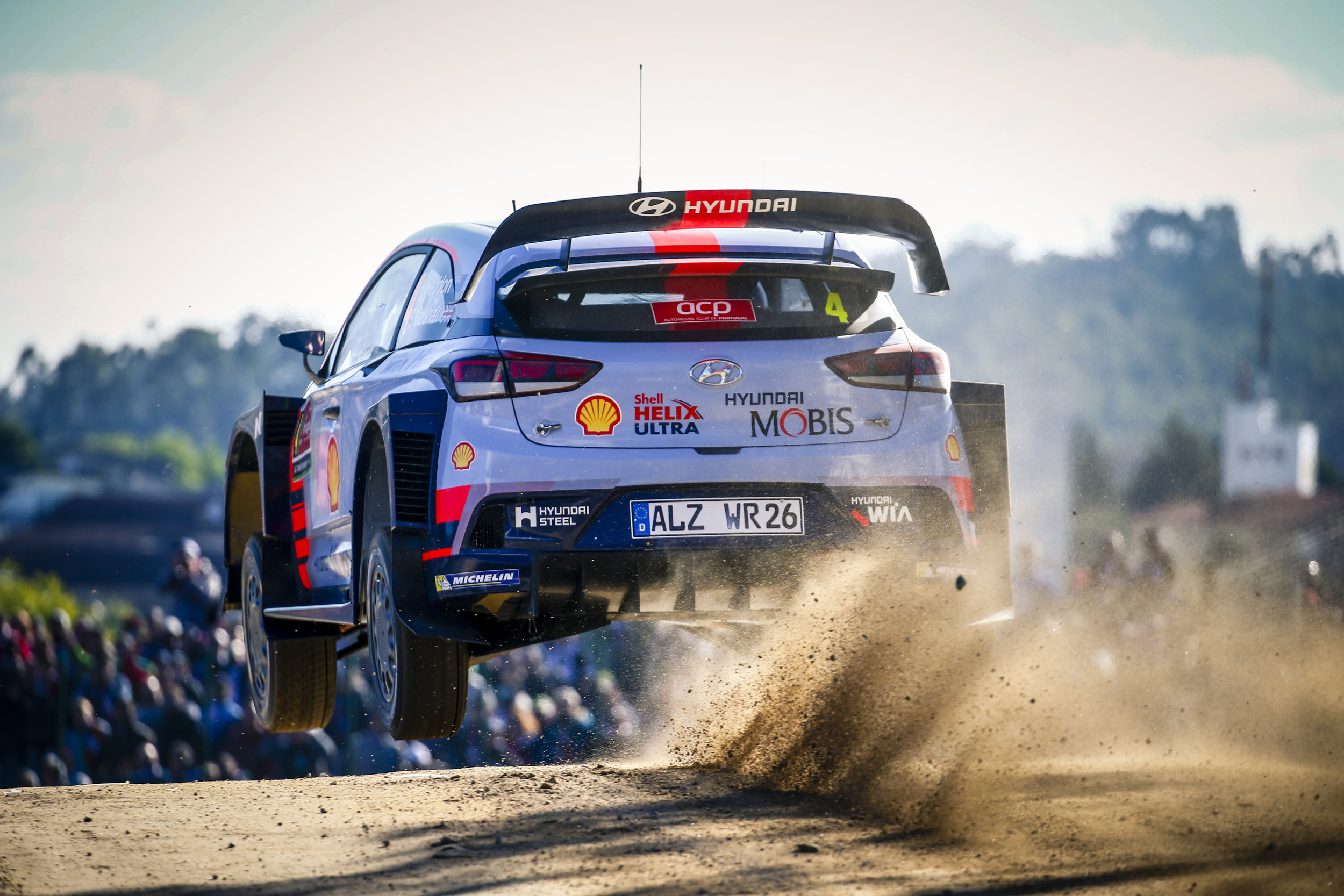
Kiwi WRC extraordinaire Hayden Paddon knows how to pedal, there is no denying that. So when you give Hayden some fresh tracks to slay you know its going to be good. Dubbed Paddon’s Playground, the premise for these low buck videos is simply Hayden, and his NZ based Hyundai i20 AP4, inserted into roads that have never been hit before  this is raw rally at its best. 

The first instalment sees Hayden travel by barge to Minaret Station on the shores of Lake Wanaka and let loose like the local farm boy in a flat deck Hilux. Lets hope this video series goes someway to promoting New Zealand as a return destination for WRC in 2018, which currently has the 14th spot sitting open. 

Our only competition currently is Croatia, and a candidate rally will be held here this September to promote our viability. The promoter will reveal its 2018 calendar to the WRC Commission for autumn ratification by the World Motor Sport Council. 

“I don’t need to tell you about New Zealand,” said Ciesla, continuing, “There is a big passion to go there with Hayden and even though we won’t see the highest number of on-site spectators, we have these beautiful roads which we can use to make great television. I am very much in favour of this.” 

Working in our favour is WRC Promoter’s policy of avoiding more rallies in Europe, though we are unsure if this will prevent them from choosing Croatia, as Ciesla explains, “It’s true that we are not seeking more European rallies … [but the planned event] would go straight into the top five rallies for spectator attendance.” Failing New Zealand returning for 2018, it is expected that a 16-round calendar will be introduced by 2022, of which we are almost guaranteed to make an appearance.


Chrysler’s classy cruiser

I first saw our feature car, a 1970 V8-powered Regal 770 hardtop, towing a trailer carrying the tidy Ford Anglia classic racing saloon in Broadspeed racing colours that has featured in these pages. The coupe is comparatively rare here, which means anyone contemplating purchasing one of these big two-doors is sure to see prices continue to climb. The latter Charger has claimed much of the Aussie Chrysler limelight, but the simpler and classier lines of this car, which appeared dated soon after its introduction, now have a more timeless appeal.
Former owner, Balclutha motor engineer, Mike Verdoner, remembers the car well. He believes it came from Dunedin originally.
“I’m not sure about the car’s history, but I bought it off its owner at Kaitangata. Unusually, it was advertised in the local newspaper, the Clutha Leader, which was a surprise as these usually go for a lot more money on the internet. I had it for quite a few years. It needed a little bit of work to tidy it up, so I had to decide whether to spend the money on it to do it up, which could have been twenty grand. Its value at the time was not like it is now, so I sold it to Ewan. It’s probably now worth three or four times what I sold it for.”

The Pininfarina 230 SL

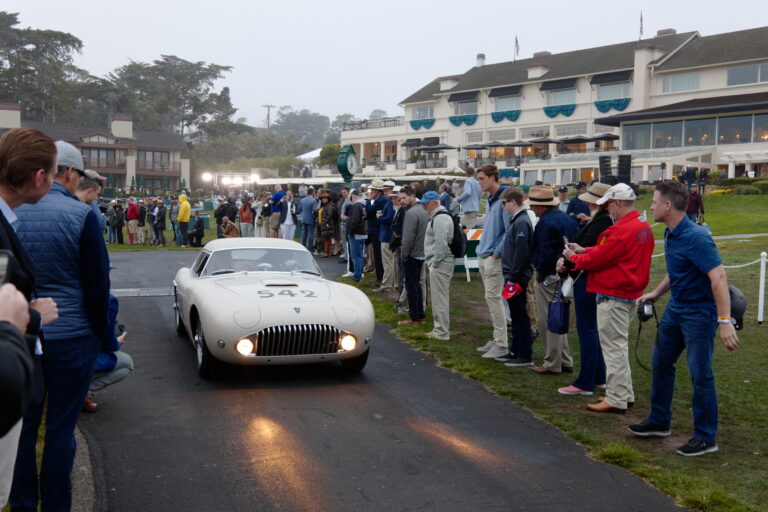
It’s October 1964, and imagine you’re an automotive journalist covering that year’s Paris Auto Show (Mondial de l’Automobile). As you approach the Pininfarina booth, you come across a car that looks a bit like the Mercedes-Benz 230 SL introduced the previous year at the Geneva Auto Show, a car then arriving at Mercedes-Benz dealerships around the world.
But looking closely, its styling and proportions seem to be a bit different. And it has a fixed roof, unlike the Pagoda-style greenhouse of the removable hardtop seen on the production 230 SL. While today, the styling of the W113, under the supervision of Head of Styling Friedrich Geiger, with lead designers Paul Bracq and Bela Barenyi, is considered a mid-century modern masterpiece, acceptance in-period was not universal. Some critics called out the concave design of its removable roof, which ultimately gave the car its “Pagoda” nickname.