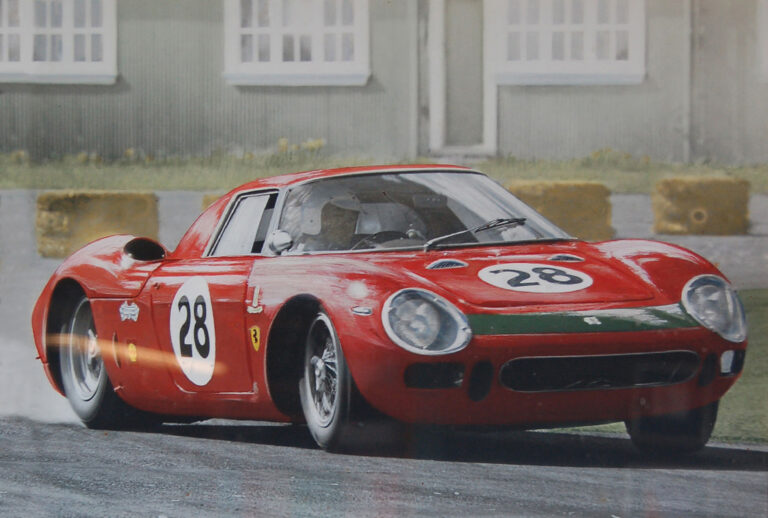
Watch: all the carnage from Goodwood FOS 2017

2 July, 2017

Goodwood Festival of Speed is known for drawing perhaps the world’s greatest collection of historic performance and race cars — located on Lord March’s massive estate in West Sussex, England — and seeing them thrashed within an inch of their life, as they should be. But, the 1.87km long course proves to be no Sunday drive down your local, with the odd driver getting caught out amongst the hay.

In previous years such incidents have claimed the likes of Rod Millen’s Pikes Peak-winning Tacoma, the class-winning 24 Hours of Le Mans Mazda 767B, and even Ayrton Senna’s Lotus 98T.

This year was no different, and although it hurts us to watch, you just can’t look away:

Just praise the fact that they’re hitting hay bales and not concrete barriers, I suppose …

Breakfast of champions – Brink

Some older readers may recall the amusing late 60s advertisement for a breakfast drink using World Champion racing driver Graham Hill which was made while he was out here competing in the Tasman Series.
“Drink Brink” was the phrase, subtly altered by Graham’s characteristic lisp into “Dwink Bwinkl” which drew a grin or two.
Southland Mini racing enthusiast Howard Kingsford-Smith has preserved a little bit of Mini racing history when he re-created the “Brink Mini” some 25 years ago.
“I bought what remained of the original car and made a replica I suppose or look-a-like of the original Brink Mini from Cathy Henderson about 25 years ago,” Howard explained.

The motor car as an art form

We have certainly come a long way since the exhibition entitled 8 Automobiles, shown at the Museum of Modern Art in New York in the autumn of 1951, the first exhibition concerned with the aesthetics of motor car design.
It was here that the often-used term ‘rolling sculpture’ was coined by curator Philip C Johnson, director of the department of architecture and design, when he said, “An automobile is a familiar 20th century artefact, and is no less worthy of being judged for its visual appeal than a building or a chair. Automobiles are hollow, rolling sculptures, and their design refinements are fascinating. We have selected cars whose details and basic design suggest that automobiles, besides being America’s most useful objects, could be a source of visual experience more enjoyable than they now are.”