In 1971 Skoda decided rallying might just give its cars some much needed cool factor — and it very nearly worked. The rear-engined layout and some serious engine fettling paid off in class wins and even some impressive overall results here and overseas.
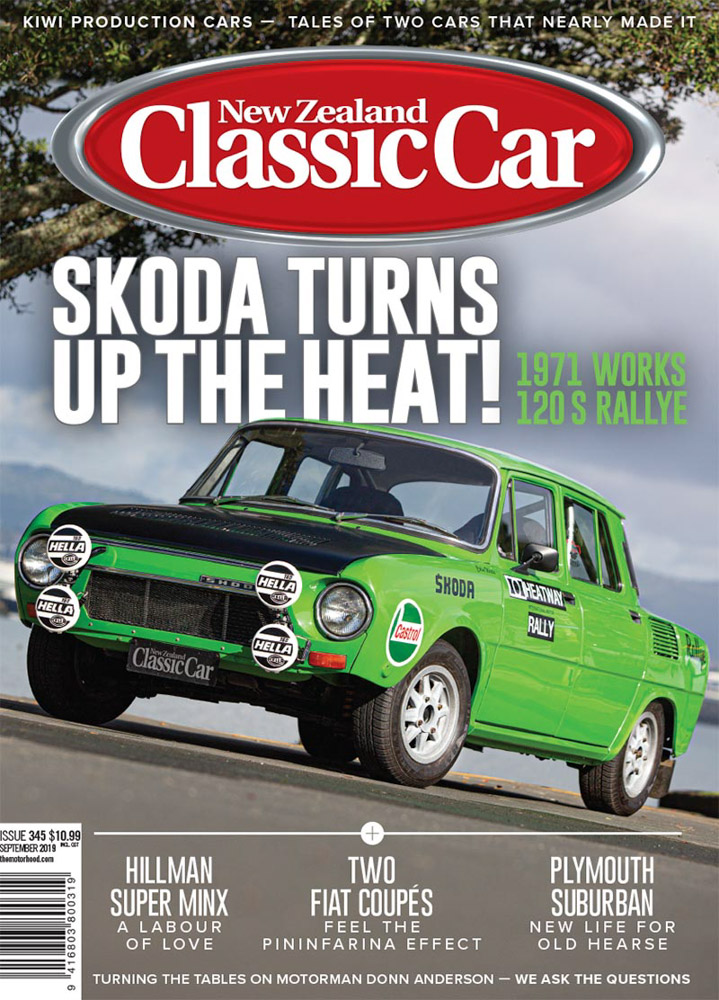
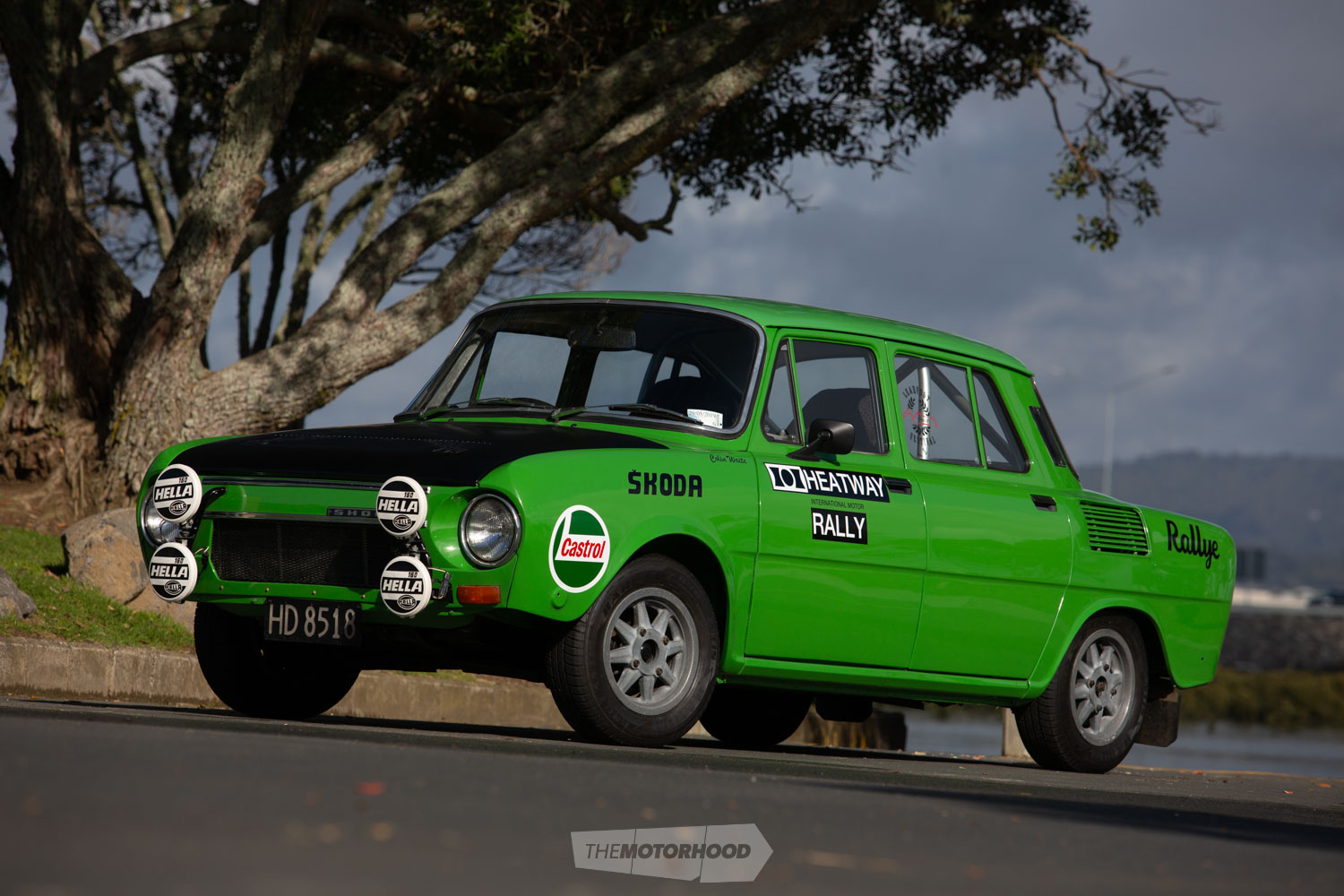
TheŠkoda on the cover of New Zealand Classic Car issue 345 is much rarer than most rally cars. Škoda’s competition department built 100 cars and persuaded the FIA the other 900 required for homologation had been sold to the Czech police…
The 1973 version was even better than the Rallye 110 Colin Waite had campaigned with Laurie Evans for Takapuna Skoda dealer Clifton Motors. Instead of a five-port cylinder head and an engine bay-mounted radiator, the 120 sported a much more effective eight-port cylinder head with twin Weber carburettors, a close-ratio gearbox, and better cooling via a front-mounted radiator.

“The locally built Skoda was especially good in rough conditions,” Colin explains. “When things got slippery, the traction was far superior to some of the rear-wheel-drive Datsun 1200s and Corollas. In some conditions, the 120 S Rallye could outperform some of the much faster BDA Escorts and Mazda RX-3s.”
Twenty-five years later, Colin found his former 1973 Heatway Rally car in a barn quite by chance.
In 2001, he was in the South Island competing in his Formula Junior Stanguellini when he stopped by the Ranfurly museum for afternoon tea. As he was sitting outside on a bench he struck up a conversation with a local chucking some rubbish in a bin next to where he was sitting. After they exchanged a few pleasantries, the conversation turned to cars. Colin explained that he was competing in the Formula Junior.

Colin recalls, “The local asked me what other motorsport I had been involved in and I told him that I’d once competed in a few rallies around the country driving a Skoda. The local immediately responded by saying that his neighbour in Alexandra had two old Skoda rally cars sitting in his barn.”
Colin couldn’t resist the urge to take a look. He eventually found the cars hidden away in an old barn just out of Alexandra that was once used as a staging post for the Cobb & Co stagecoaches back in the 1800s. Colin recognized the cars immediately. They had suffered the effects of time and the harsh cold for 18 yearsThe owner had bought the Skodas in 1983 with the intent of restoring both cars, but that plan never eventuated.

There were the makings of one good car there and Colin couldn’t resist taking it on another journey — back to its prime. And, for September, in Classic Car 345, it is a genuinely cool cover car.