Silverstone Classic honours legendary Bentley Boy Glen Kidston

24 July, 2015

Running over July 25–26 in the UK, the 25th Anniversary Silverstone Classic has attracted the largest field of pre-war race cars ever assembled — all competing for the inaugural Kidston Trophy, which is named for legendary Bentley Boy and Le Mans–winner Glen Kidston.
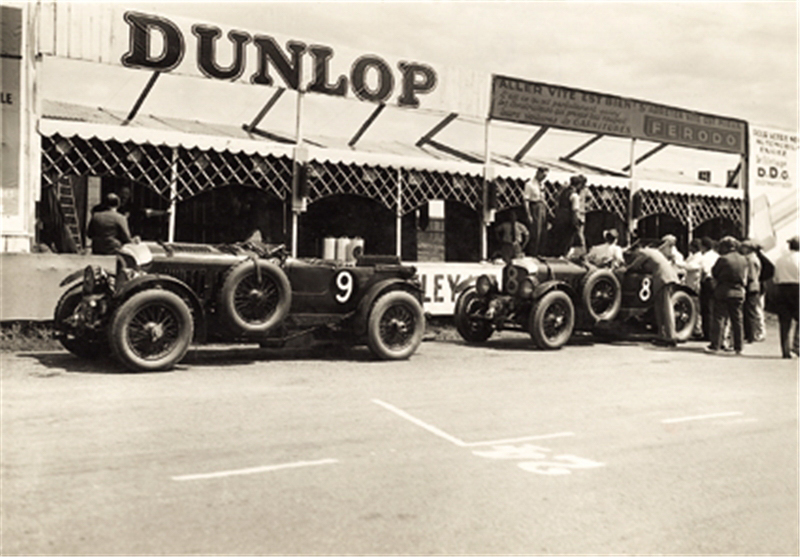
A brace of Blower Bentleys in the pits during practice for Le Mans in 1930 / Bentley Motors

Among the 57 competitors will be 12 of the rarest and most valuable Bentleys in the world — a stellar ensemble that will include several Bentley three-litre models, a collection of 4.5-litre racers and a legendary supercharged ‘Blower Bentley’.
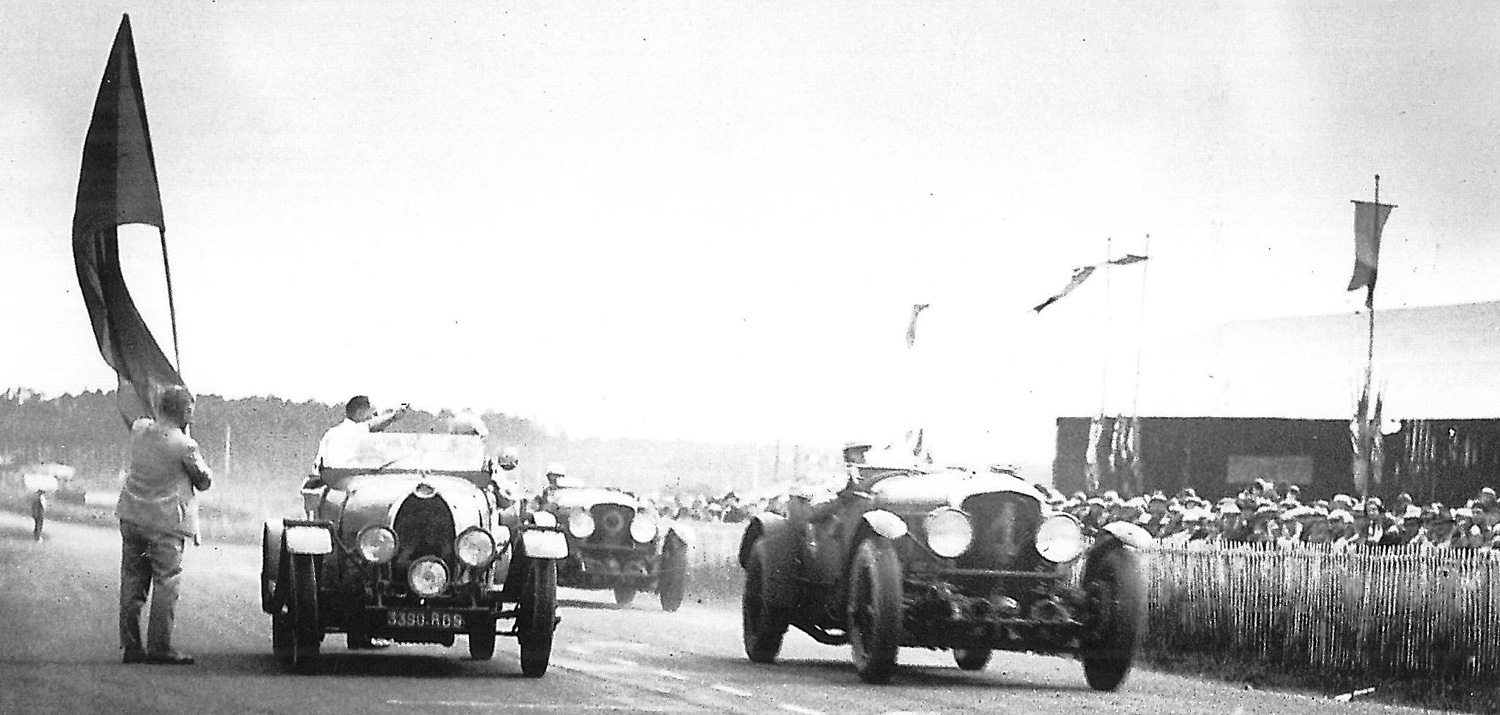
Victory at Le Mans — the winning Bentley takes the chequered flag / Bentley Motors

Glen Kidston and Bentley Chairman Woolf Barnato famously won the 1930 Le Mans 24-hour race in the Bentley Speed Six ‘Old Number 1’. This was the second year in succession that the Speed Six had taken the chequered flag, and the fourth year in a row that a Bentley was victorious.

An adventurer and aviator, Glen Kidston was one of the original Bentley Boys. A former lieutenant commander in the Royal Navy, he was famously torpedoed twice in the same morning during World War I.  He later became a submarine commander, but when not at sea he set records as an aviator and motorcycle speed trialist.

Glen Kidston (L) and Woolf Barnato after their famous 1930 Le Mans victory / Bentley Motors

Kidston died less than a year after his Le Mans win when the de Havilland Puss Moth he was flying crashed during a dust storm over the Drakensberg Mountains in Southern Africa. A memorial to him stands at the crash site — an aluminium propeller set in stone designed to warn passing aviators.

Bentleys at Le Mans painting / Bentley Motors

Look out for the next (September) edition of New Zealand Classic Car magazine as we’ll be featuring a gorgeous 1952 Bentley R-Type. Although the R-Type appeared well past the era of the Bentley Boys, this particular example was once owned by Oscar-winning British actor Ronald Colman, and Dinah Sheridan — who starred in that iconic motoring movie, Genevieve — rode in the Bentley as part of the Auckland to Christchurch Rally in 1997.
Last Tango in the Fast Lane

In the mid ’80s, I locked into a serious Nissan/Datsun performance obsession. It could have kicked off with my ’82 Datsun Sunny, though this would have been a bit of a stretch of the imagination, given its normally aspirated 1.2-litre motor — not the sort of thing to unleash radical road warrior dreams. But it did plant a seed, and it was a sweet little machine and surprisingly quick, in contrast to all the diabolical English offerings I had endured.
I was living in South Auckland at the time and was an unrepentant petrolhead. Motor racing was my drug of choice, and I followed the scene slavishly. Saloon car racing, with the arrival of the international Group A formula, was having a serious renaissance here and in Australia and Europe. There was suddenly an exotic air in local racing that had been absent for 15 years.
I was transfixed by this new frontier of motor racing that had hit our tracks in 1985–87 and the new array of machinery on display. In 1986, the Nissan Skyline RS DR30 made a blinding impression on me. The Australian Fred Gibson-run, Peter Jackson-sponsored team of George Fury and Glenn Seton were the fastest crew of the 1986 Australian Touring Car Championship. But Kiwi legend Robbie Francevic snuck through to win the Aussie Championship in his Volvo 240T after a strong start and consistent finishes.

NZ Classic Car magazine, May/June 2026 issue 405, on sale now

Reincarnation of the snake
We are captivated by a top-quality sports car
The Shelby NZ build team at Matamata Panelworks has endured a long and challenging journey, culminating with the highly anticipated public unveiling of the 427SC and firing up of its sonorous V8 at the 2026 Ayrburn Classic Festival of Motoring in Queenstown on February 20. This is a New Zealand-built car with loads of character and potential.
The car is now back in Matamata, and I finally have an opportunity to get up close and personal with it. But before then, the question that must be asked is, “Why would ya?”
The first answer is easy, as mentioned in the last issue of New Zealand Classic Car (#404). It was a great way to use up all the surplus Mustang parts acquired while converting brand-new Mustangs into Shelbys. The unused new Mustang parts would be great in any kit car, but the 427SC in front of me cannot be classified as one.
This is not a kit car. The reality is that it is a high-quality, factory-made production car.
Possibly the second answer is because the CEO of Matamata Panelworks, Malcolm Sankey, wanted to build a replica of the car that is a distant relation to the Shelby Mustangs scattered around his showroom floor, a car created long before the first Mustang was even thought of, and the brainchild of Carroll Shelby back in the early ‘60s.