The battle between Australia’s Enzed Touring Car Masters (TCM) and New Zealand’s Enzed Central Muscle Cars (CMC) is set to be one of the highlights of Highlands Festival of Speed, running from January 31–February 1 at Highlands Motorsport Park in Cromwell, Otago. It will be the third time the TCM and CMC have competed for a trans-Tasman trophy, but it marks the first time the groups have raced on New Zealand soil.
Dr John Elliot, the president of CMC says, “We’re all looking forward to it enormously!” Many of the CMC cars that you know and love will be present at the event, ready to wage war on the track with their Australian cousins.
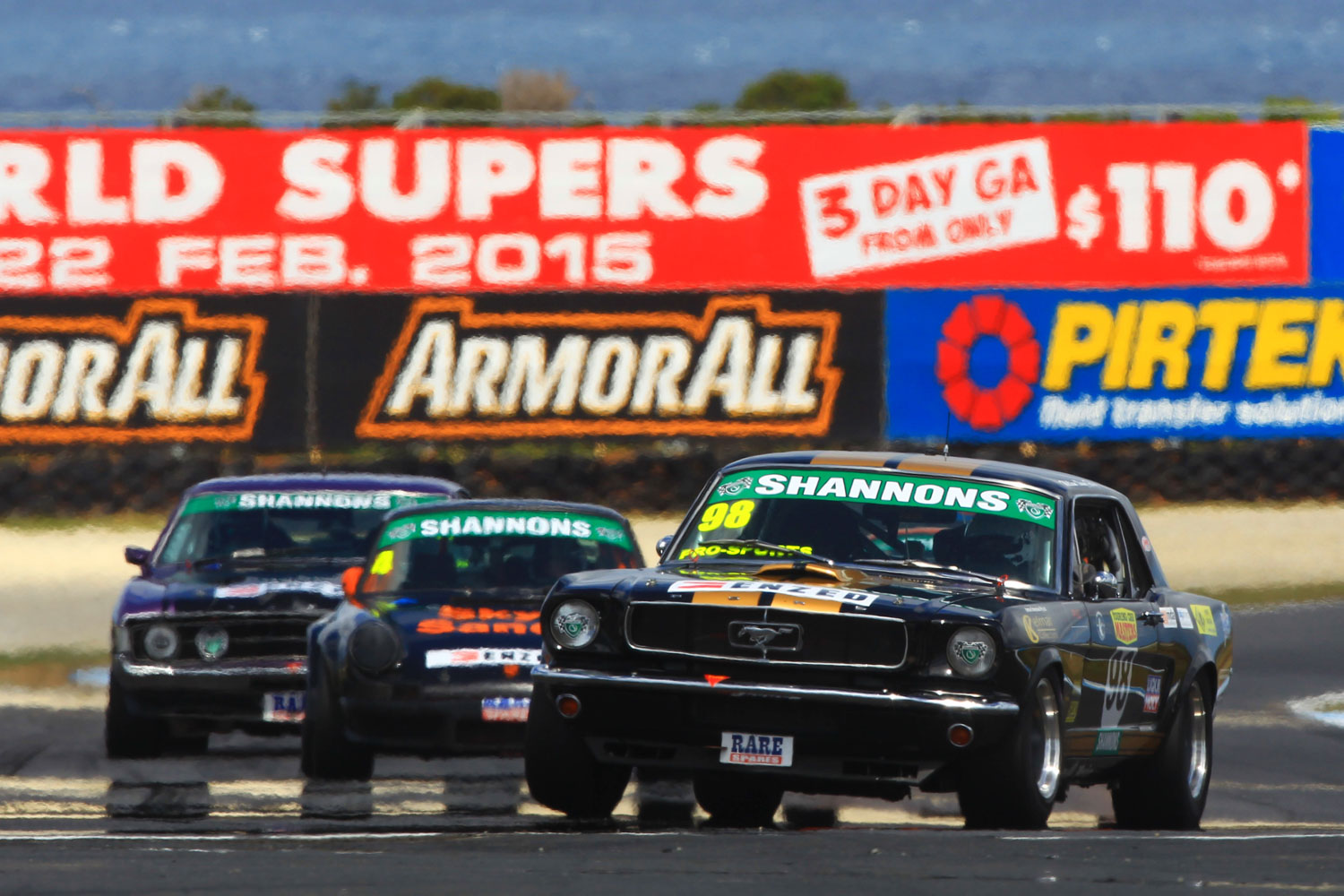
Double Australian Touring Car Champion Glenn Seton has put his expertise to good use in setting up several leading TCM cars. One such car is the 1964 Ford Mustang regularly driven by Will Vining in TCM’s ProSports class, which he will race at Highlands. Blue Oval fans will also be excited to watch the ’66 Ford Mustang Fastback, driven by 2007 TCM champ Steve Mason, as well as Wayne Mercer’s Falcon XB GT, Tony Karanfilovski’s ’69 Mustang, and Keith Kassulke’s ’74 Falcon Coupe.
That’s not to say Holden has been neglected — with noted historic racer Carey McMahon’s Holden Torana SL/R 5000, and Garry Treloar’s ’72 HQ Monaro making an appearance, Holden’s finest will be well represented by the Aussie brigade.
The event is a celebration of New Zealand motorsport through the years — including vintage and classic saloons, and open wheelers competing on the Highlands’ circuit. As a true family event, the motoring is not the sole attraction; there is also a mass of festival-style entertainment, food, and refreshments to keep every member of the family happy.
Tickets cost $39 for an adult on Saturday only, or $49 for an adult on Sunday only. Otherwise an adult can attend both days with a weekend pass costing $80. Children 16 years and younger receive free entry with a paying adult.