data-animation-override>
“Every month we ask the cover car owner for the concept they’d most like to build, or see built”
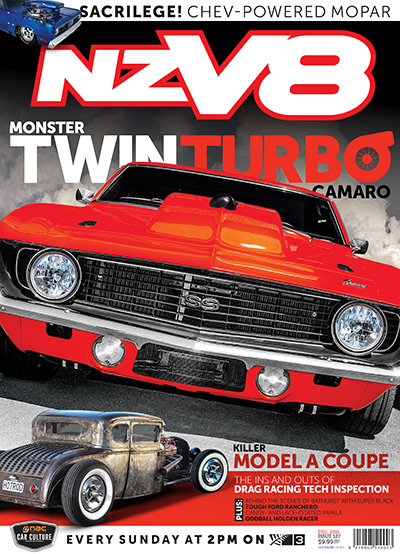
As you’ll know, if you read the feature article on his radical ’69 Camaro, Jason Fell knows how to build a standout car. This issue is the second time his Camaro has graced the cover of NZV8 — he has a knack for building the most incredible machines. So, when it came time to quiz him about what he’d most like to build, given the means, we knew we’d be in for a treat. Here it is, in all its glory:
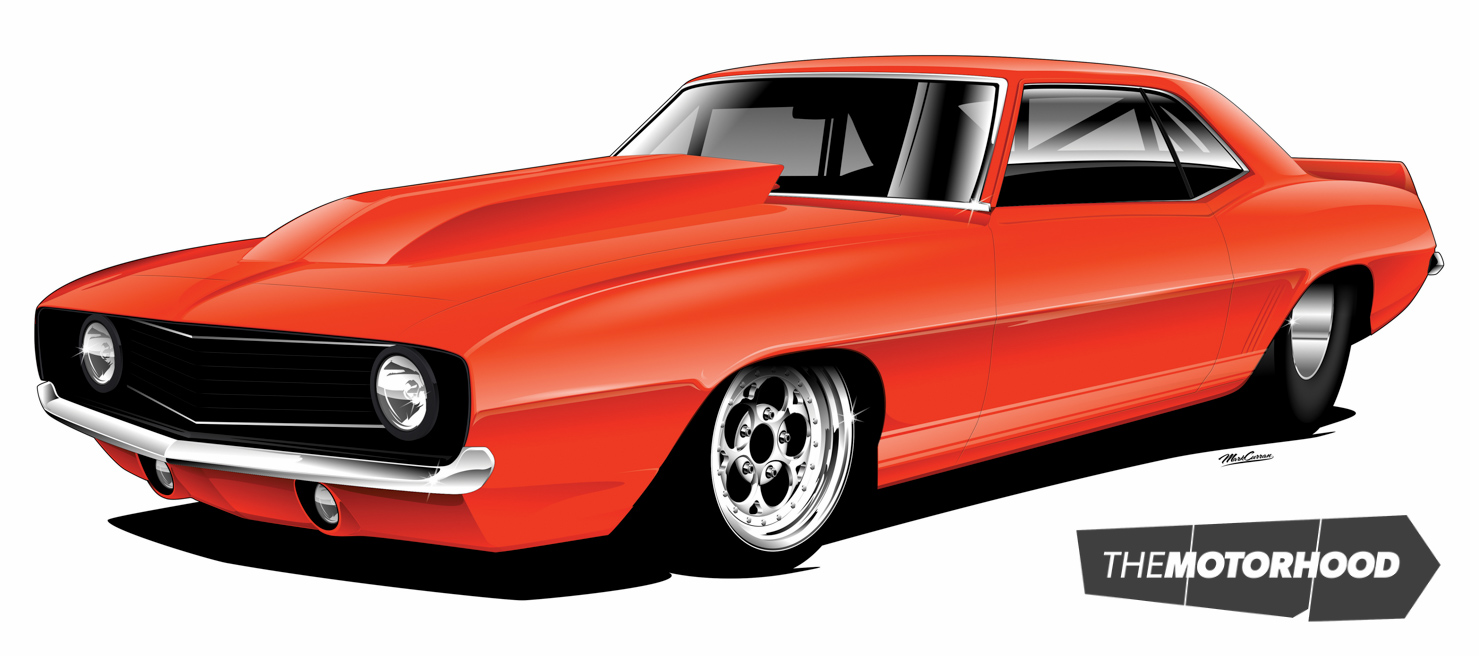
“I’ve had a good think about what I’d most like to build, and, if I had an unlimited budget, it’d still be a ’69 Camaro — you can’t beat that shape!” Jason begins. “I’d go for a totally different style from what I’ve got now, but it would still have to be built to be completely street legal.
“It’d be cool to go for something that could contend for New Zealand’s quickest street car, and the first thing I’d do differently would be to fully tub the rear end. For the wheels, I’d go in the totally opposite direction from what I’ve got currently, with some drag-spec ‘big and littles’ — 15×5-inch and 15×15-inch Weld Magnum III RTs and Mickey Thompson tyres.
“The rear end would be four-linked, with a Mark Williams sheet-metal diff housing and all the best internals. It’d need to be strong, because I’d also do something completely different for the engine.
“Since unlimited budget is key here, I couldn’t go past one of Sonny’s 959ci Pro Mod Wedge motors — 1800hp naturally aspirated, or more than 3000hp with four stages of nitrous! Transmission would be a G-Force GF-5R five-speed manual, because, even though it’d built for drag racing, I’d still want to drive the thing ‘properly’!
“Inside, I’d keep the full interior I’ve got at the moment, but add a fully certified roll cage. This would be upholstered over, though, to keep it as hidden as possible — luckily, we’d be able to handle all of that in-house at Waikato Motor Trimmer. The outside would be the same orange as my current Camaro, but I’d add some factory-style ghost stripes.”
We didn’t expect Jason’s concept to be anything short of amazing, and he’s definitely fronted up with the goods. Now all he needs is that elusive lotto windfall!
This article was published in NZV8 Issue No. 127. You can pick up a print copy or a digital copy of the magazine below: