Want to add Pope Francis’ Harley to your collection?

4 December, 2014

In a special countdown to Harley Davidson’s 110th anniversary celebrations, two commemorative motorcycle petrol tanks were presented to Pope Emeritus Benedict XVI — they were signed, and returned to Harley Davidson’s US headquarters to be mounted to their respective motorcycles.
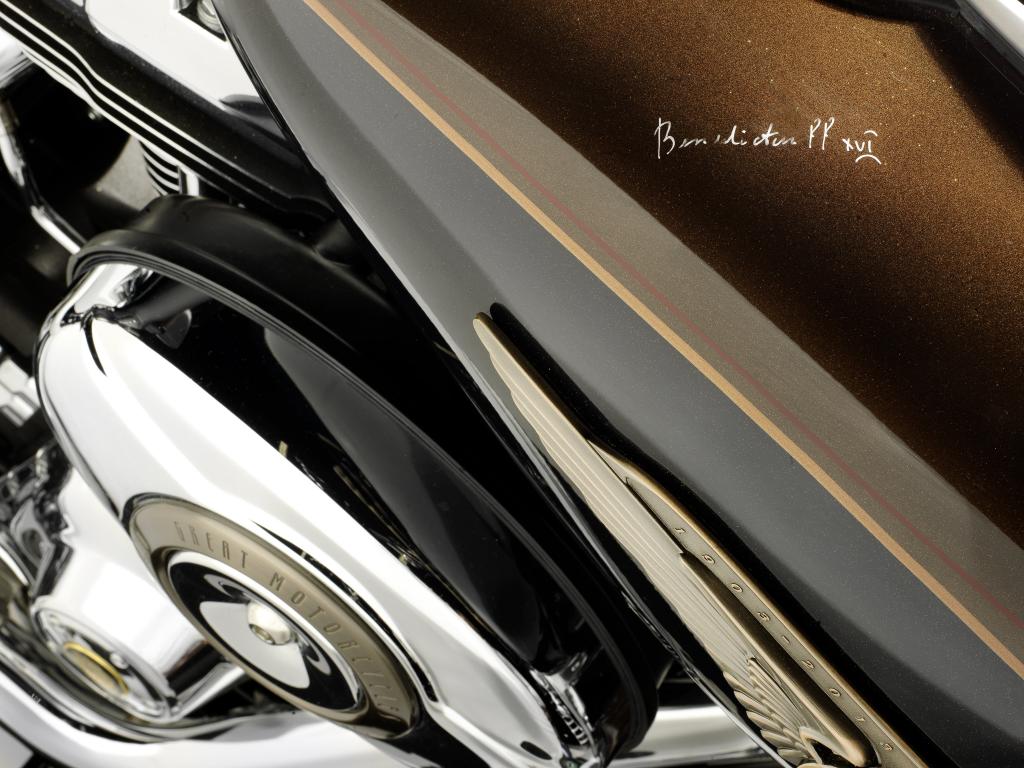
Pope Emeritus Benedict XVI’s signature on the petrol tank

One of these remains in the Harley Davidson museum in Milwaukee, USA. The other — the FLSTC 103 Heritage Softail Classic, destined for Bonhams’ 2015 sale — sat awaiting a special ceremony where it would be presented to the Pope at the 110th anniversary celebration back in 2013.

Pope Benedict unexpectedly abdicated in January 2013 and, as a result, the motorcycle was presented to the newly inaugurated Pope Francis.

Entered at no reserve the motorcycle is expected to fetch €15,000–25,000 (NZD$23,800–39,700 approx.) and auction proceeds will be donated to Stowarzyszenie Przyjazny Świat Dziecka (Friendly World Association), a Polish non-profit organization that offers care and support to children and families in need. The Harley-Davidson will be sold on February 5, 2015 as part of Bonhams’ Les Grandes Marques du Monde sale at the Grand Palais in Paris.
Racing Mazdas

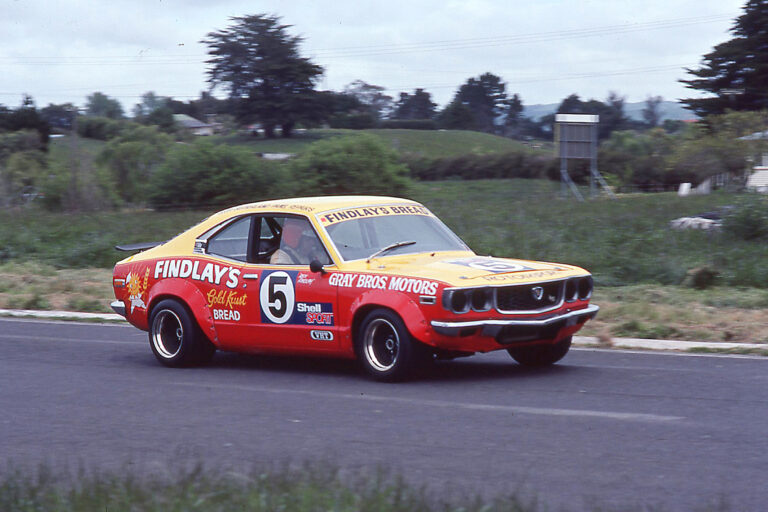
Both Rod Millen and Ron Kendall were rotary racing kings, emanating from the North Shore of Auckland, where I grew up. And the ultimate rotary techno guru was Bill Shiells, who developed the engine into a rocket ship while working out of Gulf Mazda in Takapuna from 1969, and later in his own business, Rotorsport. He began to extract some phenomenal horsepower from the enigmatic rotary engine. Bill was one of the first to race the Mazda RX-2 Coupe in 1971 and achieved immediate success, causing others to sit up and take notice, particularly the North Shore’s racing elite. They included Robbie Francevic, Rod Millen, Ron Kendall, John Woolf, John Le Feuvre, and Rex Findlay.

Range Rover CSK — the original SUV

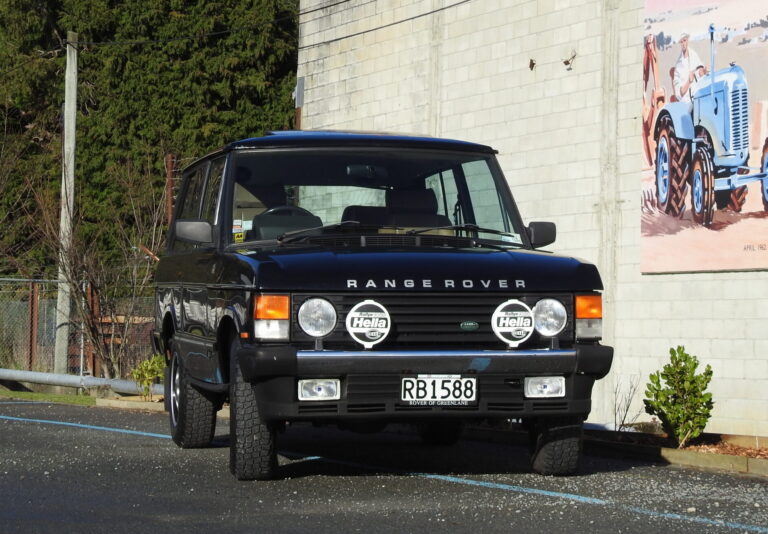
The Range Rover, thanks to Charles Spencer King, went into production in 1970 boasting an iconic shape that would last until 1996. The vehicle that would create the SUV moniker came about because Rover decided it was time to add a bigger four-wheel-drive vehicle, one with a 100-inch wheelbase, to the model range. Land Rover made a 109-inch wheelbase model but the standard vehicle had a 88-inch wheelbase.
The new model would be more suitable for road use than the existing Land Rover, which was considered to be predominantly for rural use. To make sure it could cope on any road it came standard with the Rover 3.5-litre V8 engine. The body design was originally sketched by King and went into production with only a few minor touch-ups by the Rover styling team.
According to King, “The idea was to combine the comfort and on-road ability of a Rover saloon with the off-road ability of a Land Rover. Nobody was doing it.”