Celebrating 300 issues: the special edition of New Zealand Classic Car

31 December, 2015

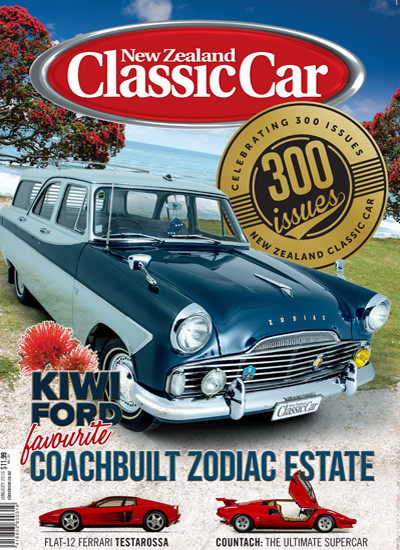
With the January edition of New Zealand Classic Car now on sale, we celebrate our 300th issue with a special edition of New Zealand’s first and best classic car magazine. And, as a special bonus for our readers, every copy comes with a 2016 New Zealand Classic Car calendar and a terrific pack of classic car playing cards.

In what has now become something of a summertime tradition, our January cover car is a rare and rather splendid coach-built Ford Zodiac Estate — one of a number of bespoke vehicles built by Abbotts of Farnham.

Moving away from British Fords, we indulge ourselves and take a test drive in a pair of classic supercars — Ferrari’s fabled flat-12 Testarossa and Lamborghini’s totally over-the-top Countach.

Meanwhile, we also give readers an insight into what it takes to put together an eye-grabbing New Zealand Classic Car front cover — and reveal, for the first time, some of our more crazy ideas.

All your favourites are on board as well — Nationwide News, Behind the Garage Door, Motorsport Flashback, and, of course, Donn Anderson is Motor Man.

Pick up your copy of our 300th edition at your local supermarket or bookshop, or buy a print copy or a digital copy of the magazine below: 

Racing Mazdas

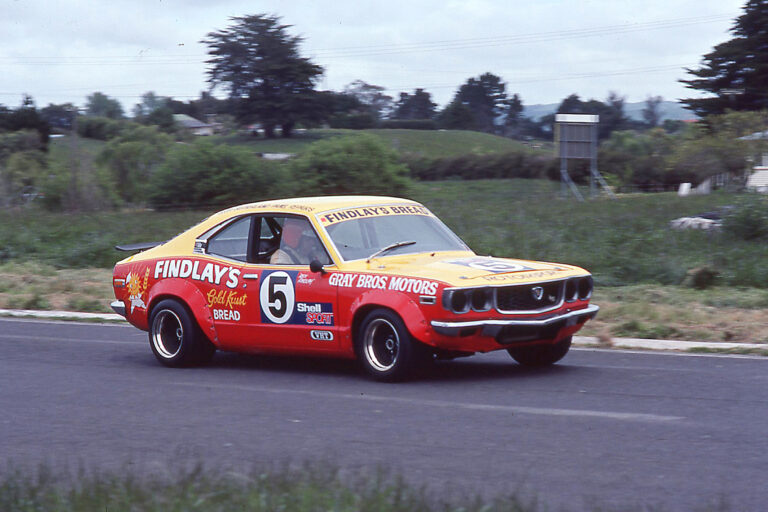
Both Rod Millen and Ron Kendall were rotary racing kings, emanating from the North Shore of Auckland, where I grew up. And the ultimate rotary techno guru was Bill Shiells, who developed the engine into a rocket ship while working out of Gulf Mazda in Takapuna from 1969, and later in his own business, Rotorsport. He began to extract some phenomenal horsepower from the enigmatic rotary engine. Bill was one of the first to race the Mazda RX-2 Coupe in 1971 and achieved immediate success, causing others to sit up and take notice, particularly the North Shore’s racing elite. They included Robbie Francevic, Rod Millen, Ron Kendall, John Woolf, John Le Feuvre, and Rex Findlay.

Range Rover CSK — the original SUV

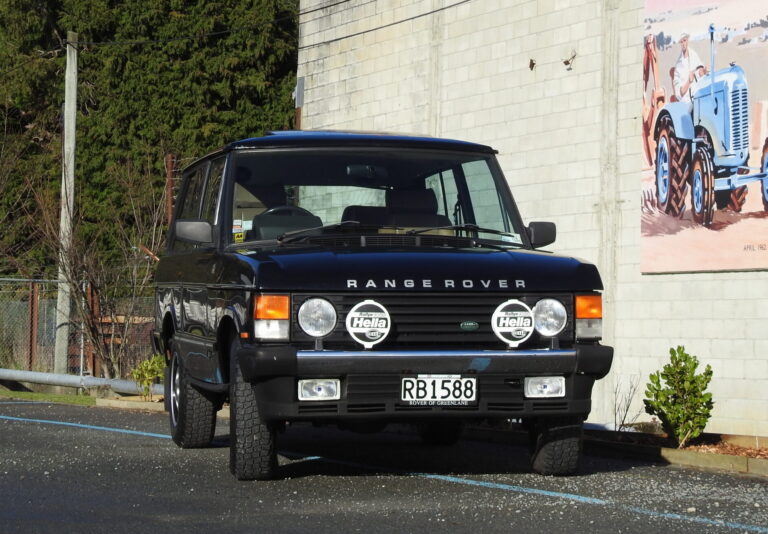
The Range Rover, thanks to Charles Spencer King, went into production in 1970 boasting an iconic shape that would last until 1996. The vehicle that would create the SUV moniker came about because Rover decided it was time to add a bigger four-wheel-drive vehicle, one with a 100-inch wheelbase, to the model range. Land Rover made a 109-inch wheelbase model but the standard vehicle had a 88-inch wheelbase.
The new model would be more suitable for road use than the existing Land Rover, which was considered to be predominantly for rural use. To make sure it could cope on any road it came standard with the Rover 3.5-litre V8 engine. The body design was originally sketched by King and went into production with only a few minor touch-ups by the Rover styling team.
According to King, “The idea was to combine the comfort and on-road ability of a Rover saloon with the off-road ability of a Land Rover. Nobody was doing it.”