
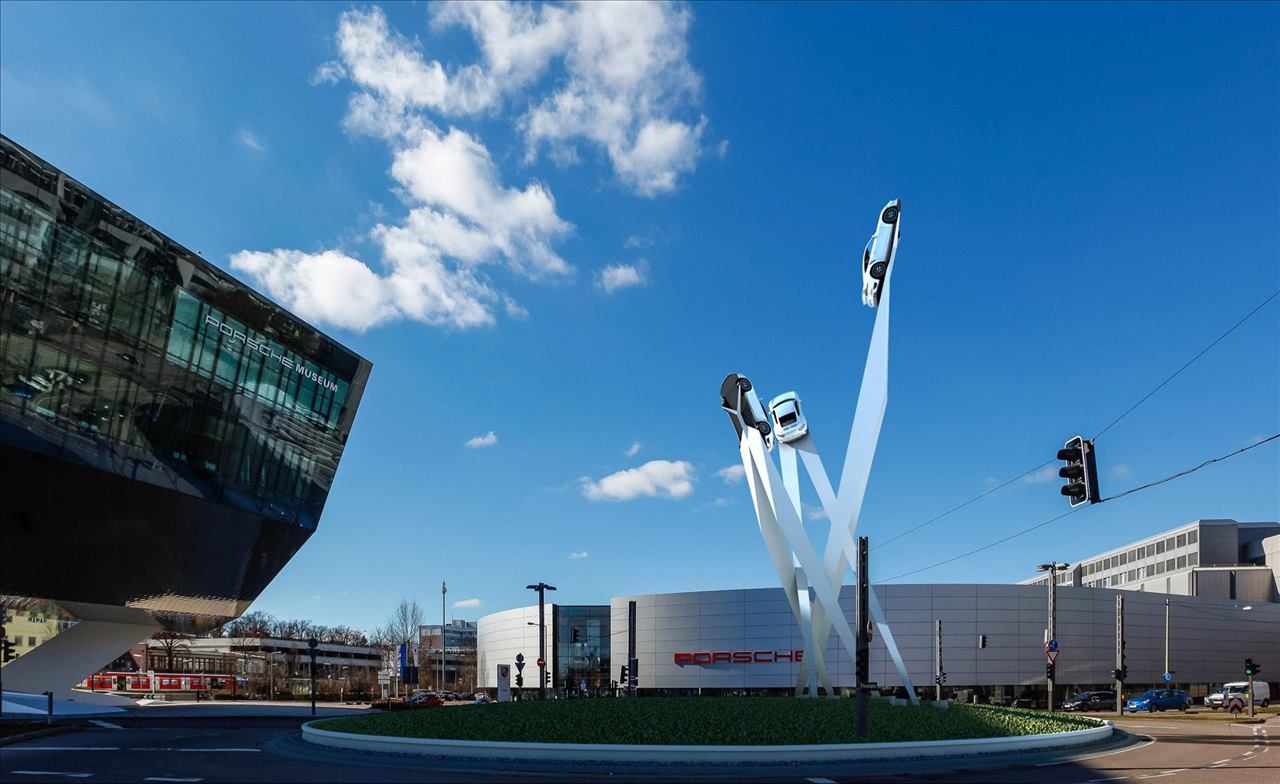
Iconic Porsche 911 models driving into the sky

18 November, 2014


Three Porsche 911 vehicles are planned to tower above traffic with Porsche AG looking into erecting a new landmark at its Stuttgart headquarters in Germany.

The sculpture, which can be described as a work of art in its own right, will be erected on the roundabout in the centre of the traffic-light-controlled intersection on Porscheplatz. The aim is to achieve a visual link with the Porsche Museum by creating an interesting and living scenic impression.
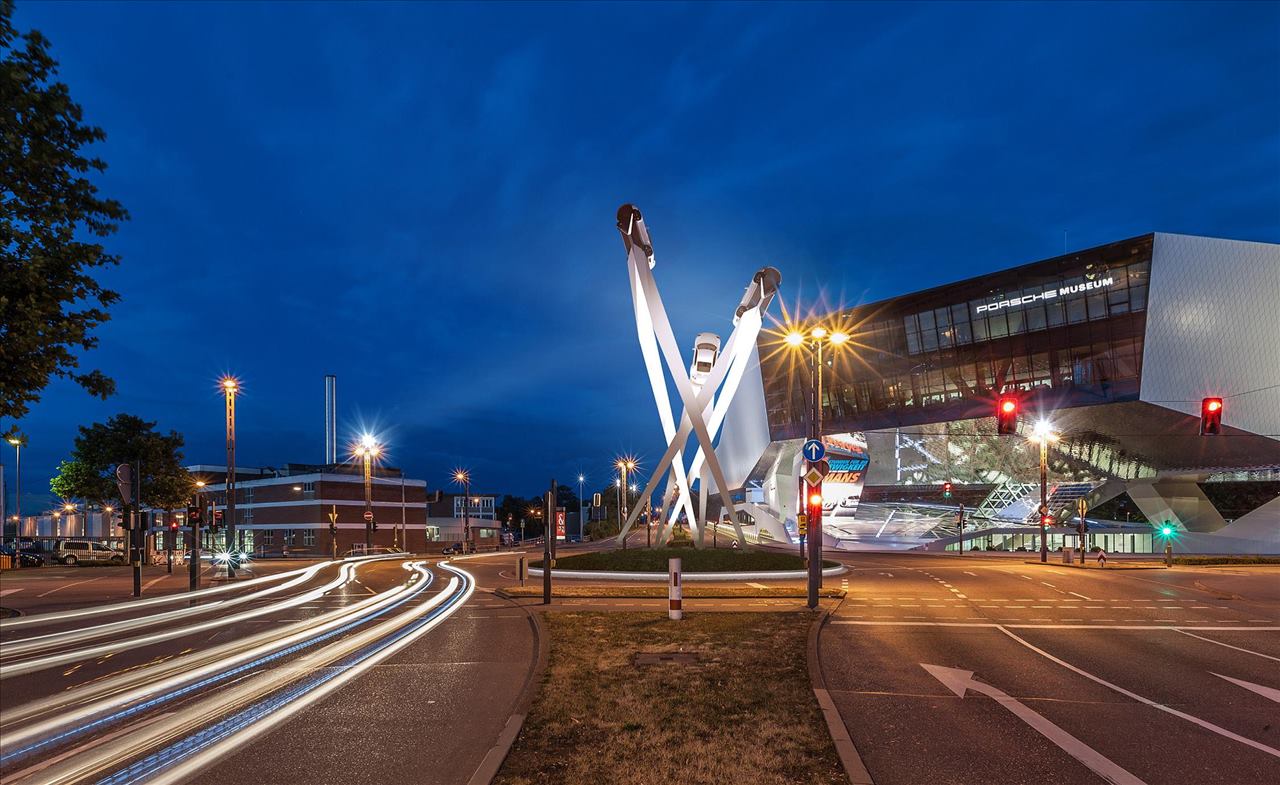
The sculpture is to stand around 24m high, measuring about 10m around its base. It consists of three steles, each of which has a Porsche 911 perched on its top. The cars stem from various model years to document the history of the iconic car, which has rolled off the Stuttgart production lines for the past 50 years. The roundabout’s existing white gravel surface is to be removed, and grassed over.

The position of the work of art does not contravene any existing traffic regulations or disturb the existing infrastructure, and work is to be performed during the 2015 summer holidays. Porsche is currently working with the City of Stuttgart to provide the general preconditions relating to planning law, with a view to having the sculpture inaugurated in an official ceremony in autumn next year.

Breakfast of champions – Brink

Some older readers may recall the amusing late 60s advertisement for a breakfast drink using World Champion racing driver Graham Hill which was made while he was out here competing in the Tasman Series.
“Drink Brink” was the phrase, subtly altered by Graham’s characteristic lisp into “Dwink Bwinkl” which drew a grin or two.
Southland Mini racing enthusiast Howard Kingsford-Smith has preserved a little bit of Mini racing history when he re-created the “Brink Mini” some 25 years ago.
“I bought what remained of the original car and made a replica I suppose or look-a-like of the original Brink Mini from Cathy Henderson about 25 years ago,” Howard explained.

The motor car as an art form

We have certainly come a long way since the exhibition entitled 8 Automobiles, shown at the Museum of Modern Art in New York in the autumn of 1951, the first exhibition concerned with the aesthetics of motor car design.
It was here that the often-used term ‘rolling sculpture’ was coined by curator Philip C Johnson, director of the department of architecture and design, when he said, “An automobile is a familiar 20th century artefact, and is no less worthy of being judged for its visual appeal than a building or a chair. Automobiles are hollow, rolling sculptures, and their design refinements are fascinating. We have selected cars whose details and basic design suggest that automobiles, besides being America’s most useful objects, could be a source of visual experience more enjoyable than they now are.”