Bangers and Ash: the 22nd annual Targa New Zealand

19 September, 2016

 It’s hard to believe it’s that time again. New Zealand Classic Car magazine is once again proud to be associated with the 22nd annual Targa New Zealand event. 

This year’s Targa will kick off from Taupo for the first leg then head south to Ohakune for the night. The second leg will head further south, finishing in Palmerston North after six gruelling special stages, and resume the following day to head eastwards to Havelock North on leg three. The final day, leg four, will be confined to the Hawke’s Bay region, with the event finally finishing once again in Havelock North. 

This Targa’s 640km of special stages and almost 1100km of touring stages are sure to be hotly contested by the competitors, and will test man and machine alike.

A full and comprehensive official Targa programme, providing all the event details — including a complete driver directory, route maps, and route schedule — is included in the October 2016 issue. This will allow you to pick out a decent vantage point to watch some of the best drivers in the business, such as Clark Proctor, Tony Quinn, Glenn Inkster, and Leigh Hopper — to name a few — as they display their driving prowess on some of the country’s most testing and treacherous tarmac stages.

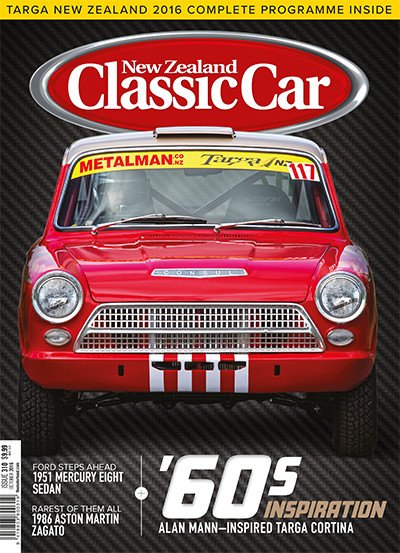
In addition, we feature Chris Alexander’s stunning Ford Cortina MkI. Chris is definitely no stranger to sitting behind the wheel of a rally car, and he’s competed — rather successfully, I might add — in many gravel and tarmac events. He has also built a number of rally cars, primarily Ford Escorts, and this is his first Ford Cortina, a build that was inspired by Alan Mann, who gained a reputation for building fast Fords wearing striking red and gold livery back in the 1960s. 

Looking at this car leaves absolutely no doubt that Chris is a consummate perfectionist in everything he attempts, and it was built especially with this Targa event in mind, but he has been dealt a cruel blow. Chris was recently diagnosed with cancer, and, unfortunately, had to withdraw from competing this time around while he receives treatment and undergoes surgery. His prognosis is positive, thanks to early detection, and he is looking forward to getting back behind the wheel of his beautifully prepared Cortina next year. 

On behalf of New Zealand Classic Car magazine and our readers, we wish Chris a speedy recovery.

Want to find out more about the Targa New Zealand drivers, the cars, the events, and the maps? Grab a copy of the October 2016 issue of New Zealand Classic Car (Issue No. 310), which features the 2016 Targa New Zealand programme!
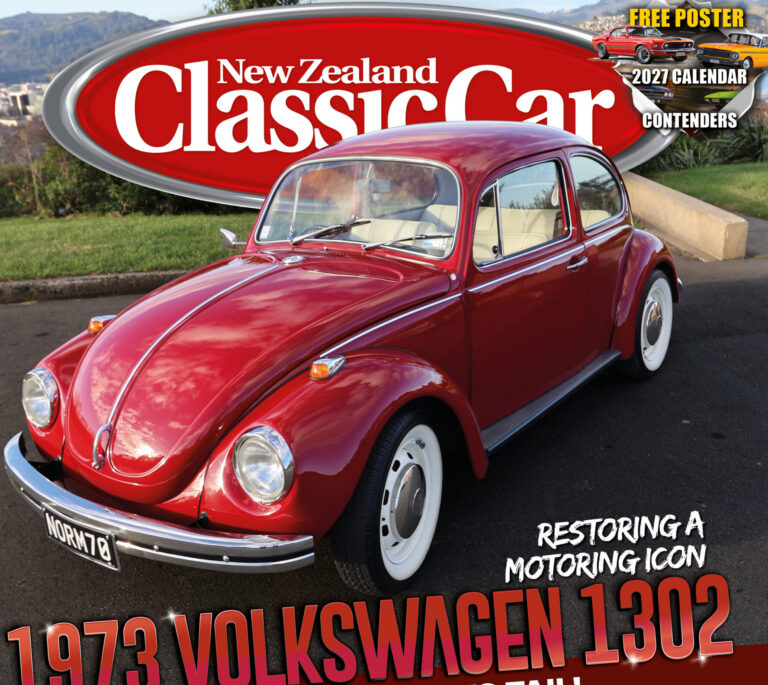
NZ Classic Car magazine, September/October 2026 issue 407, on sale now

We love bugs!
A bit of TLC that became a major restoration
The 1302S, or ‘Super Beetle’ as it became known, was built for two years before it, too, was replaced by a further-enhanced Beetle, the 1303, continuing an amazing 65-year lineage for one of the World’s best-known shapes.
The world’s best-selling single-model vehicle, the VW Beetle, possibly established another record for the amount of controversy it has created since the inception of the Type 1.
In a meeting with Hitler in June 1934, Ferdinand Porsche was contracted to build a ‘People’s Car’ that could accommodate two adults and three children, was air-cooled and simple to maintain, and could cruise economically at moderate speed along Germany’s proposed new Autobahns.
Our feature car, a 1972 1302S ‘Super Beetle’, was found by Dave and Michelle Dickie in Mosgiel a few years back. It was a runner, but like most VWs of this age, it needed a little TLC. They were looking for a daily driver for Michelle when they first came upon the VW being sold locally on behalf of its owner.
“The owner offered it to his grandchildren, and they didn’t want it, so he got the guy out at Mosgiel in the Mobil petrol station to sell it for him, and he put it on Trade Me for them. We never met the owner, and we were always dealing with the guy at the petrol station. We put a bid on it, and we were the only people that bid on it.”
Their bid was eventually successful, eight years ago. Not knowing much of the history, in situations like that, it’s always a risk buying a car, but they were in for a bit of a surprise.

The other Q car

Say the word ‘bond’ to anyone in the street and around 80 per cent straight away think of pop culture’s least-secret secret agent. The other 20 per cent may think of the wad of cash required to secure a flat or hire equipment that one gets back providing the fixtures and fittings stay much as they were.
However, mention ‘bond’ in specialist classic car circles and people will spin a very different yarn. If you dig deep enough, you will find an eccentric British carmaker that, throughout its 23 years in business, spawned some quirky and charming little cars.
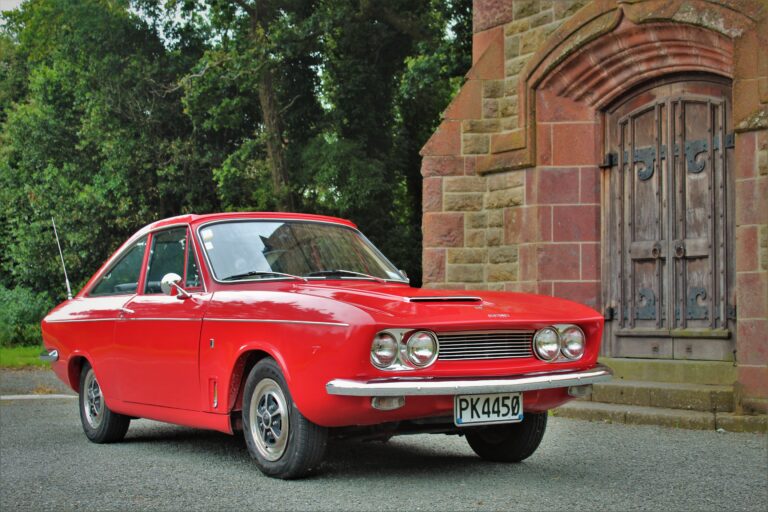
The company was founded by Paul Sharp in 1922 under the name of Sharp’s Commercials Limited. However, the company did not start producing cars until 1948. The first car to carry the Bond name was the Bond Minicar. A three-wheeled, soft-top, two-cylinder eco car, the Minicar was a big hit at the time as the desire for an economical urban runabout that didn’t attract four-wheel car tax was strong in post-war Britain. All in all, 34,285 Minicars were produced over 26 years in a variety of variants.