The near-mint, seldom-driven 1958 Studebaker Champion saloon that inspired Love’s Lost Studebaker (featured in the September 2006 issue of New Zealand Classic Car, Issue No. 189) sold on Trade Me for $56,000 a few months ago.
Turners handled the auction of this American classic, which featured rock ’n’ roll–era tail fins and a dashboard compared to a jukebox. During the auction the foam-green sedan was displayed at Turners’ Palmerston North branch. While the online auction was live it attracted nearly 40 bidders, and the listing was visited 44,729 times.
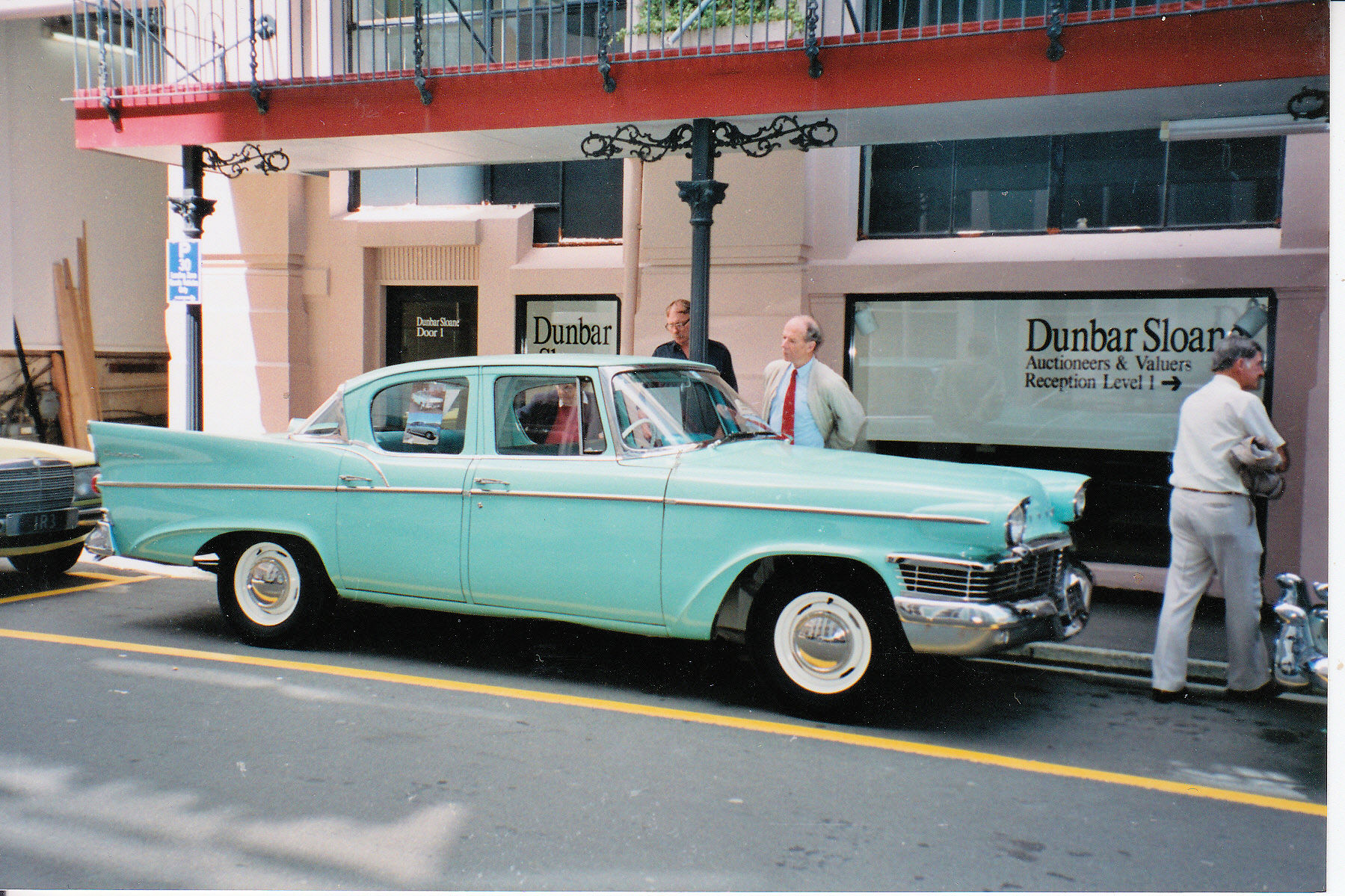
When auctioned in Wellington during January 1993 by Dunbar Sloane Ltd, this Studebaker — from the year that the US army conscripted Elvis Presley — had an odometer showing 72 miles (116 km). In the Trade Me auction the reading was 74 miles (119 km).
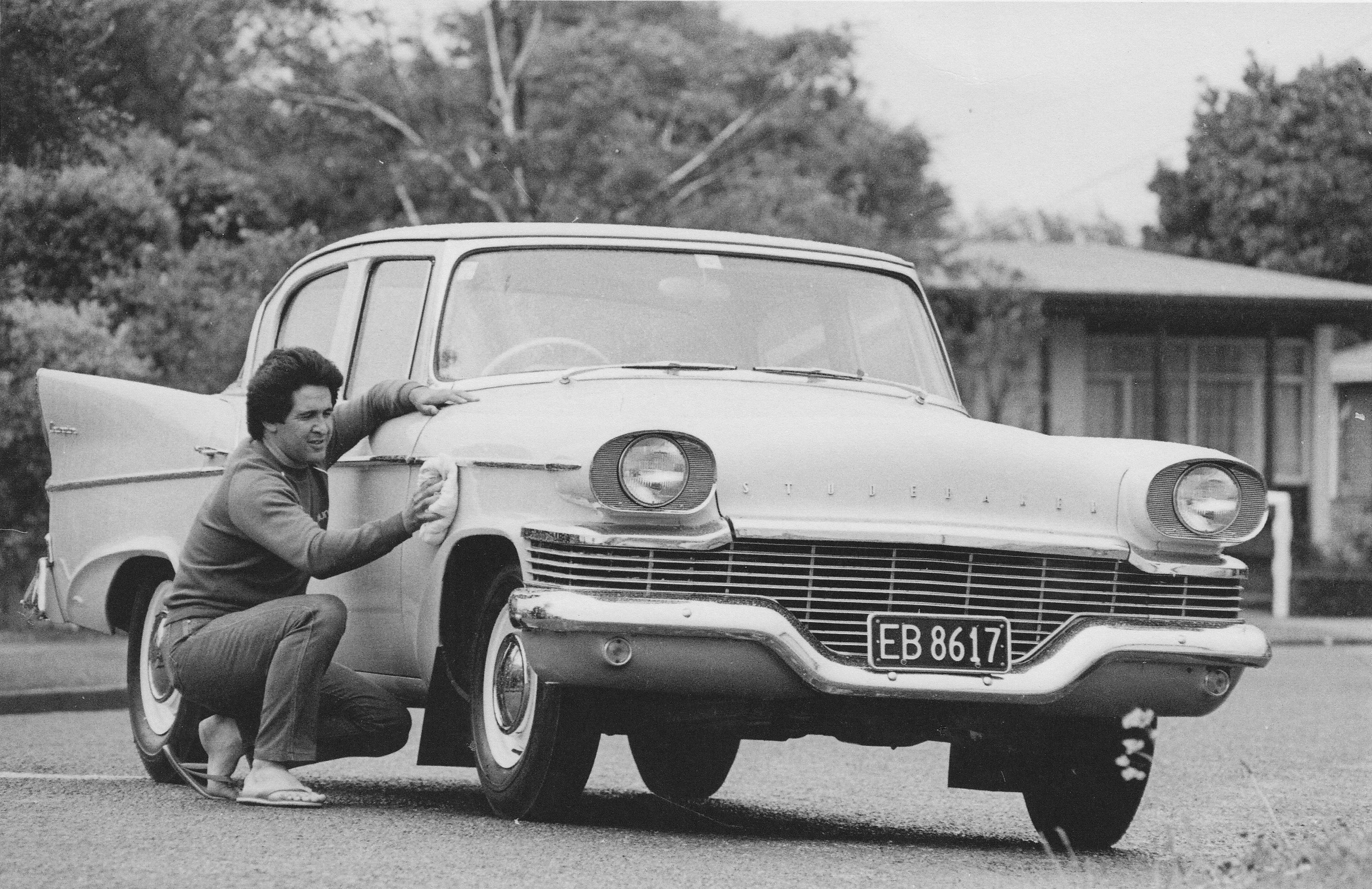
Tony Edwards polishing the car while in his ownership.
The saloon was owned by the adult children of Tony Ford and Bernie Vanston. Ford and Vanston are the two surviving members of the seven Wellington businessmen who had purchased the car in 1993. The main reason for its disposal was that the car’s mechanic for the past 23 years was selling his Wairarapa property.
No explanation for the additional two miles on the odometer could be located, although the owners had told Turners that the car ran, and the auctioneers did not try this presale because they were worried about sediment, etc., in the fuel tank and lines. Those extra two miles on the odometer might be explained by the mechanic keeping the engine in running order.
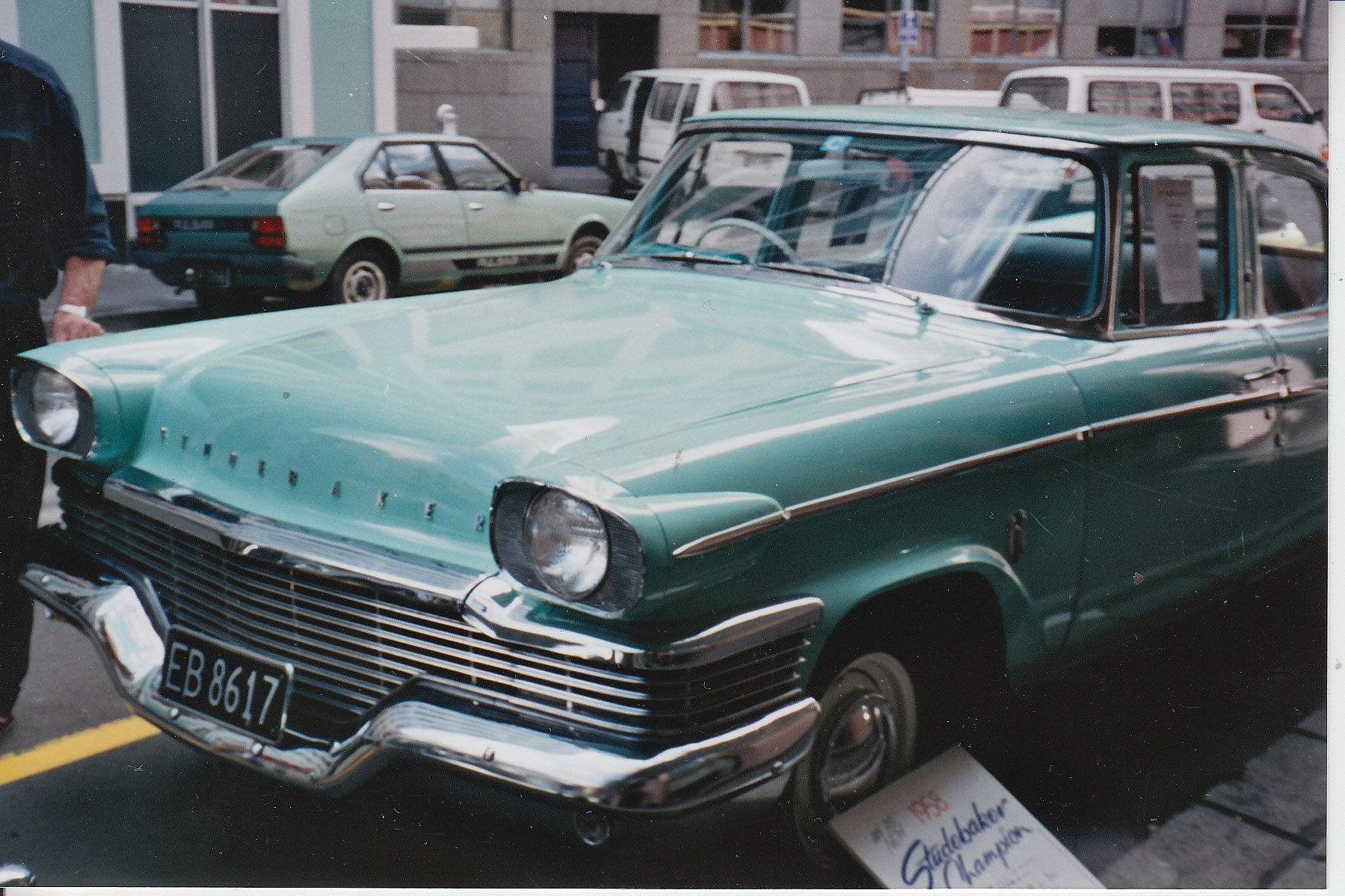
On-road costs weren’t included as part of the auction price, and these may include a current WoF, registration, and vehicle licence fees if the new owner wants to drive the car. However, previous owners wish that the car was kept as a museum piece. Leanne Ranson, Turners’ office manager, said, “It’s got the original patina and hasn’t been tampered with or restored.” But that may not be correct. Henricus Van der Storm, who prepared the car twice for a WoF on behalf of Vincent Roberts, the original owner, said Roberts had painted the chassis grey in 1962, and in 1966 he had begun repainting it black, which he did not complete.
Roberts was a Wellington plumber who had purchased the Studebaker new in 1958 as a honeymoon car for a marriage that failed to eventuate. The car remained mostly in his Kilbirnie garage until it was purchased by its second owner, Tony Edwards, in mid 1984.
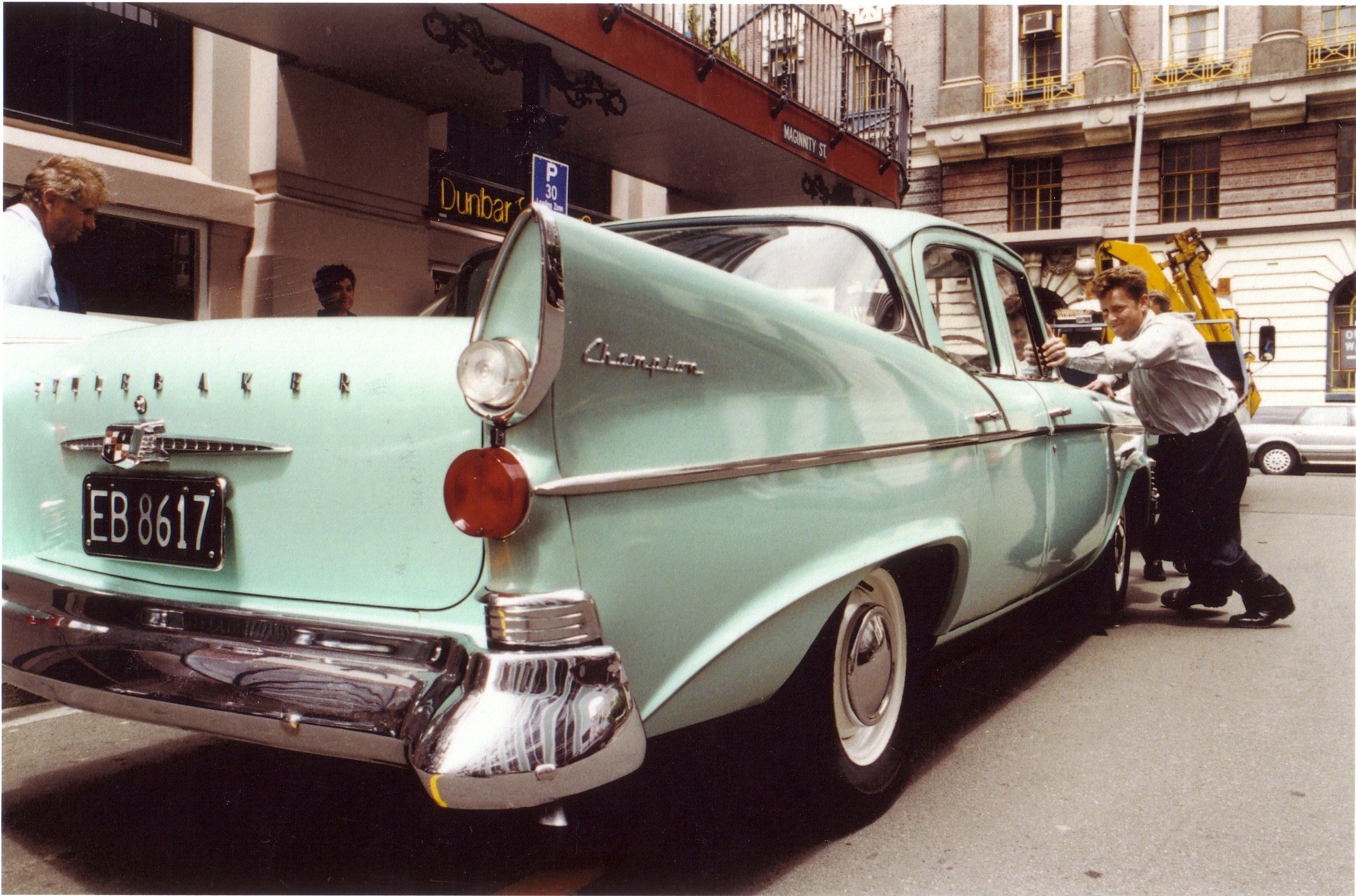
Andrew Grigg pushes the Studebaker into place for viewing prior to the January 1993 auction.
The Studebaker had at least two other owners before being auctioned in 1993. At the time the low odometer reading was attributed to delivery mileage and Van der Storm getting the car ready for the WoFs.
When auctioned by Turners the factory-fitted plastic protective seat covers remained in place. Some staining showed on the hood lining, and the front door matting had cracked with age. The right rear tyre was flat, and all the tyres including the spare had perished.
During the auction the car was listed as having 2058cc. Turners were unable to change this to 3000cc because bidding had commenced on the auction. The 2058cc came from the car’s original registration form.
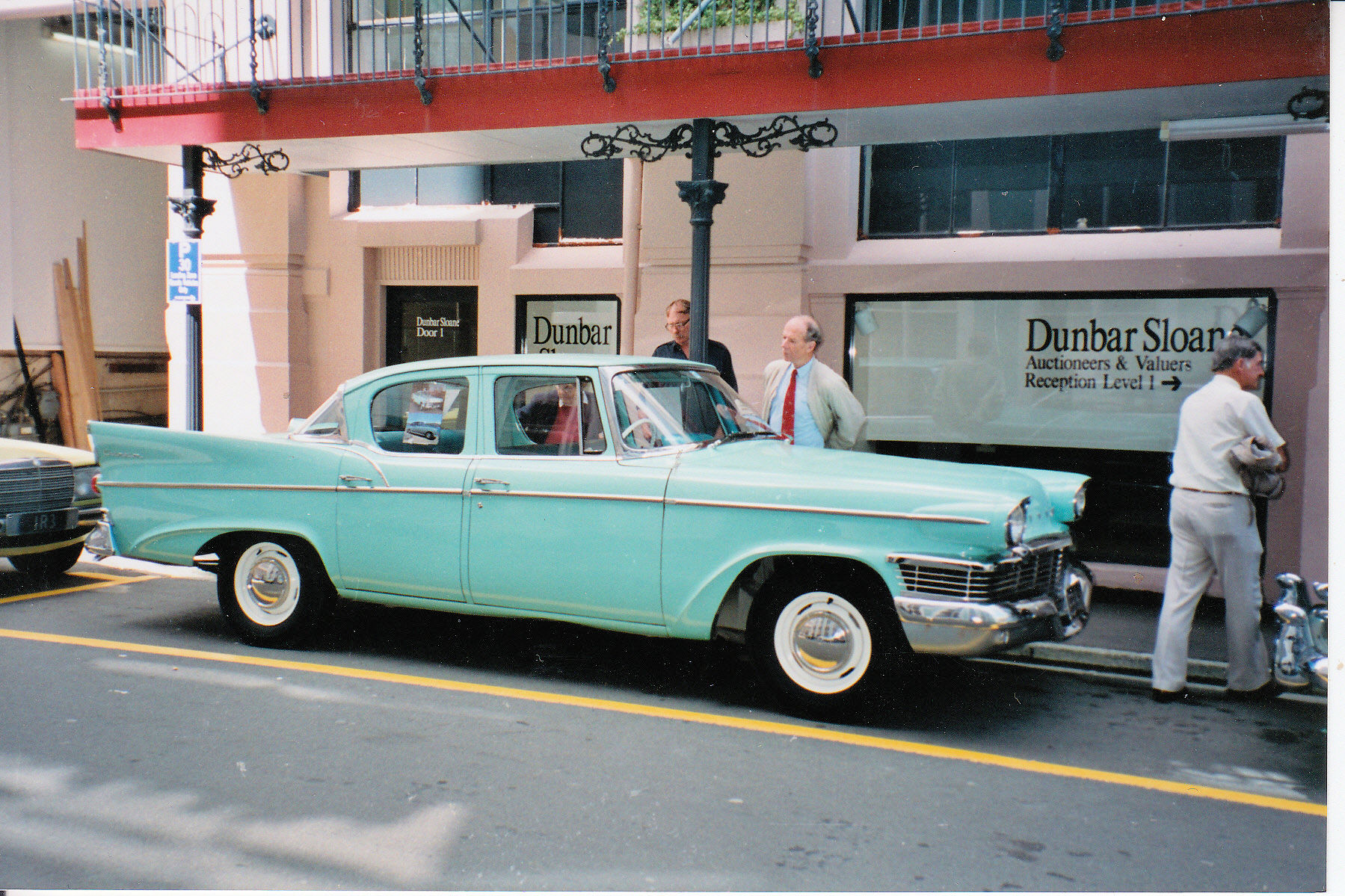
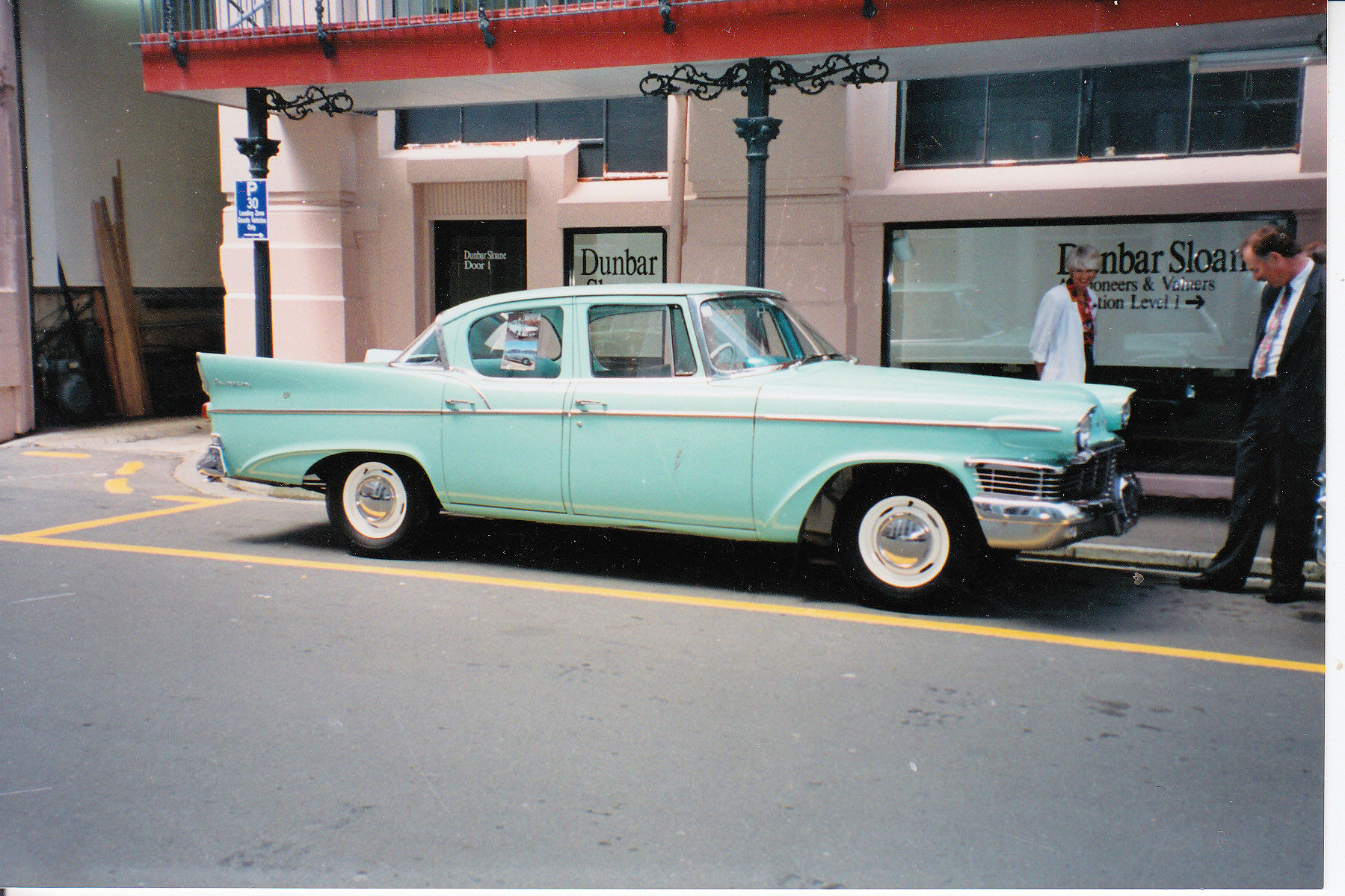
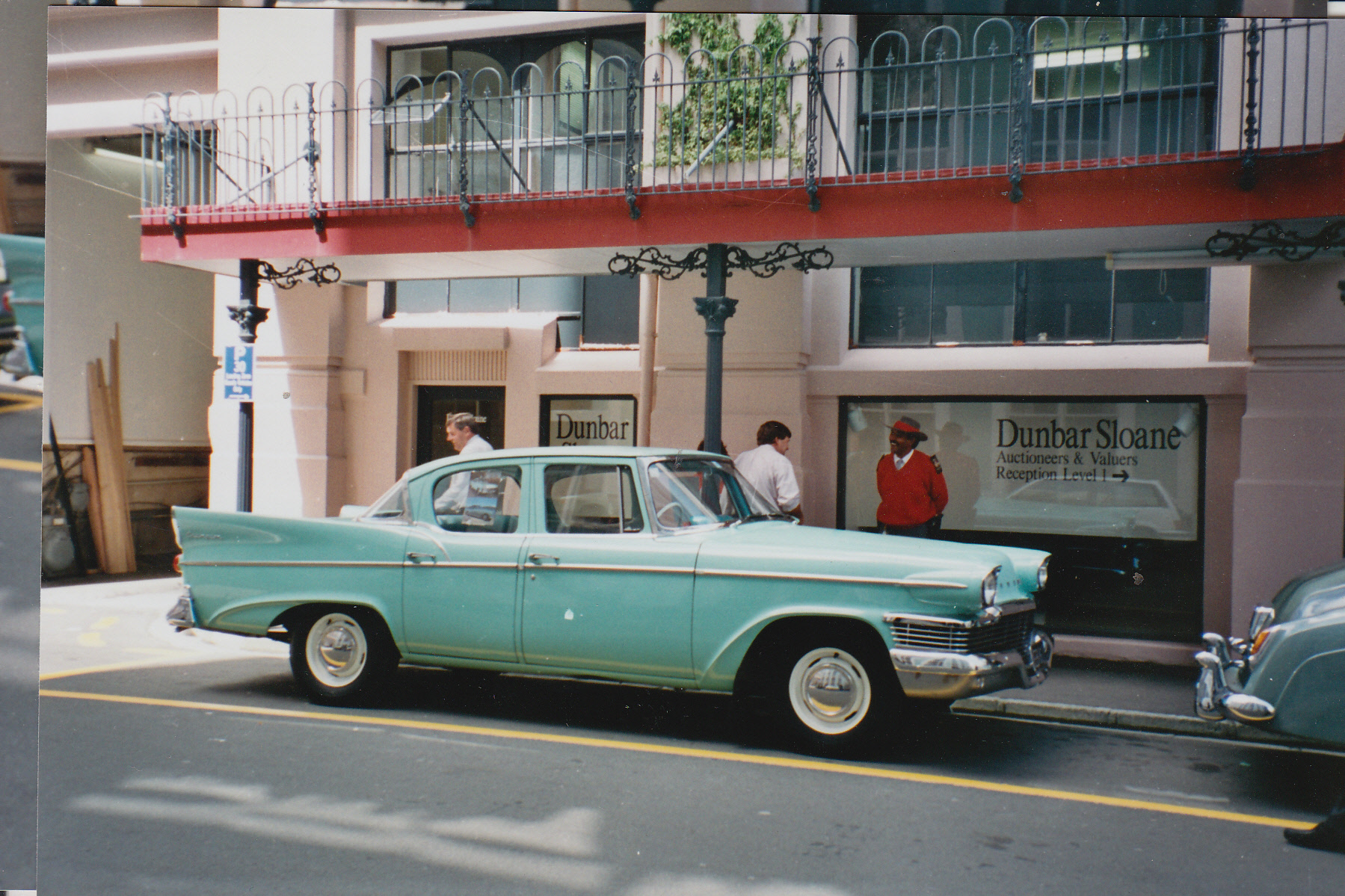
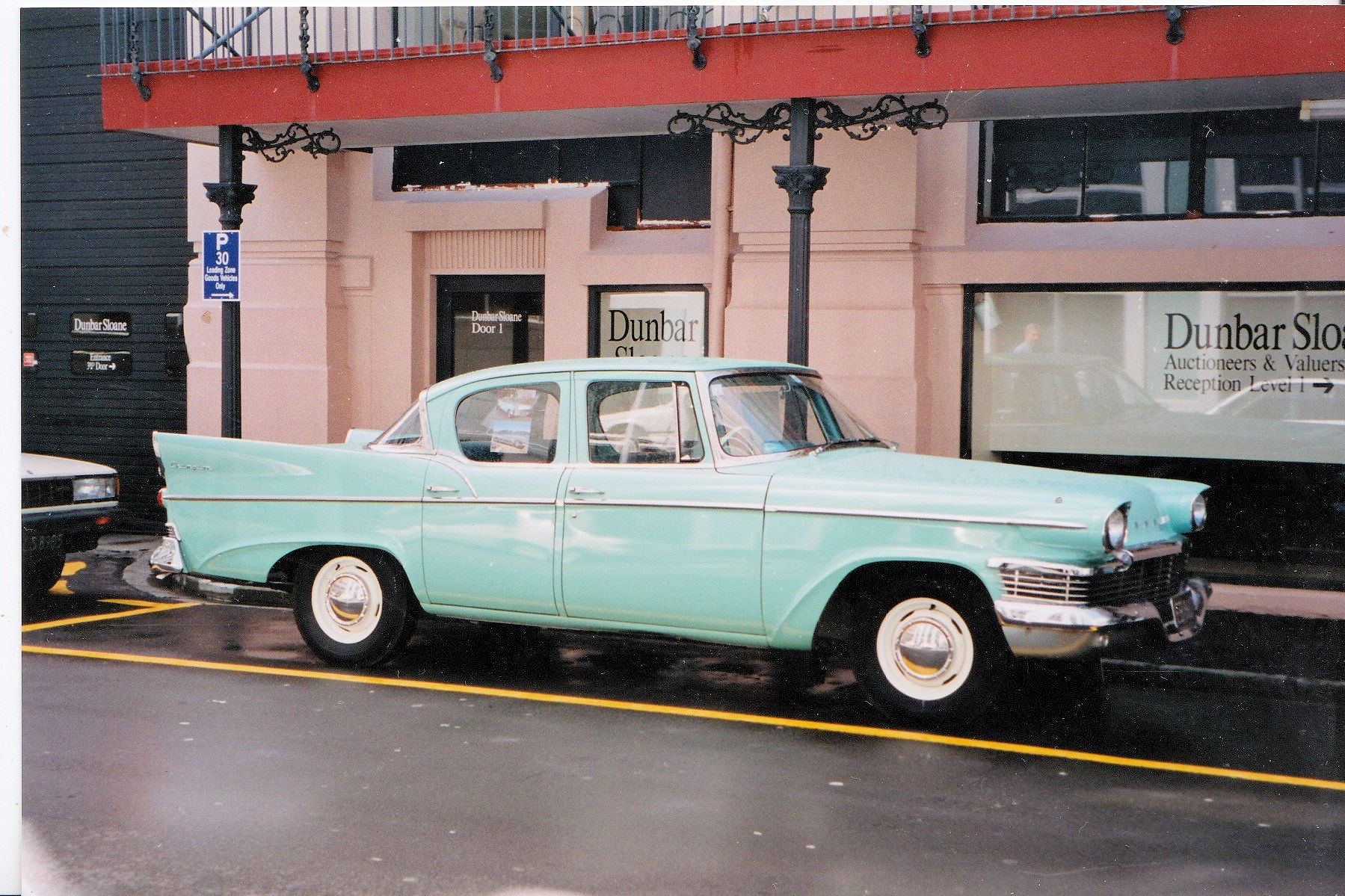
Photos: Christopher Moor, Alexander Turnbull Library, Dominion Post collection.