data-animation-override>
“Every month we ask the cover car owner for the concept they’d most like to build, or see built”
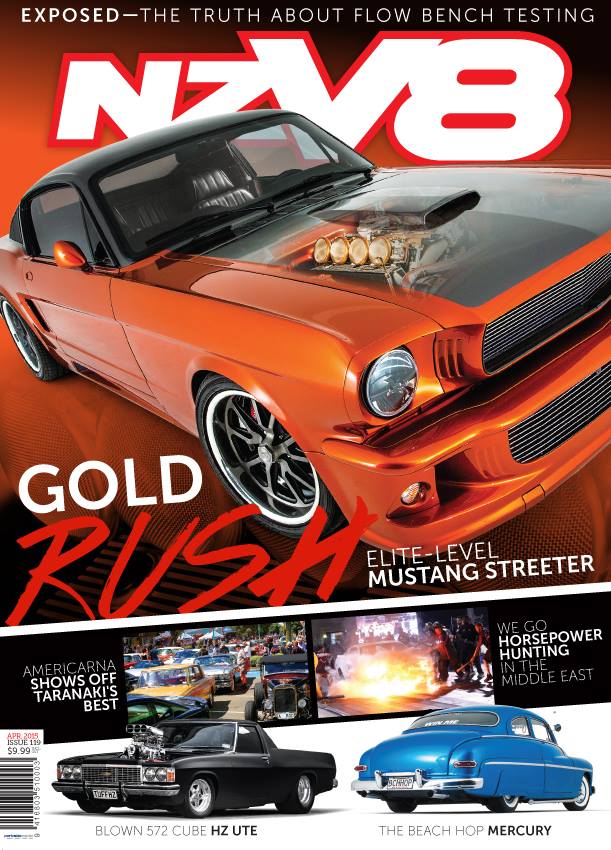
The gold ’65 Mustang envisioned by Nick Hall, and built by Matamata Panelworks, is quite possibly the finest custom-Mustang build the country has seen — but what would have come out had Nick really let loose?
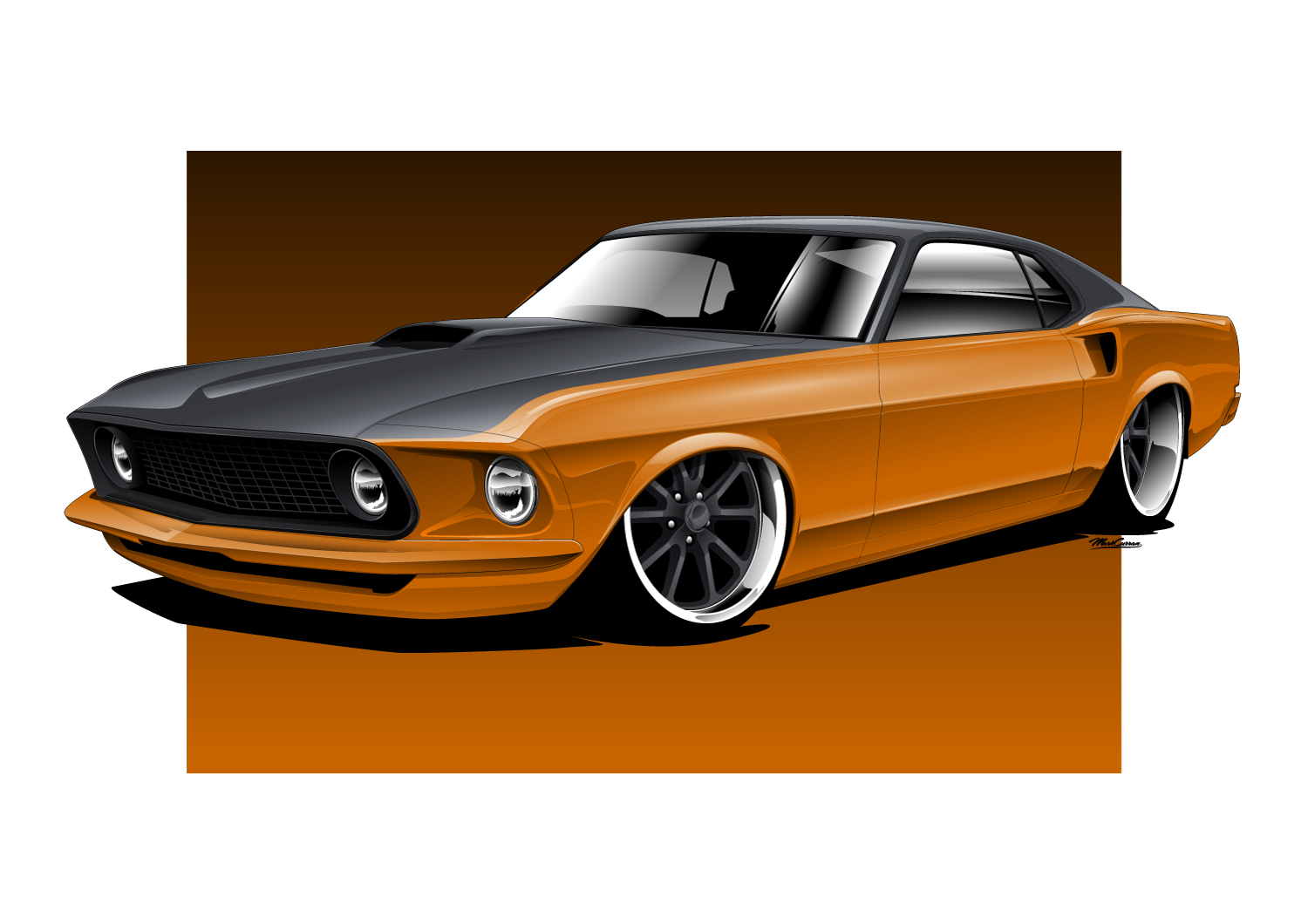
“If I had unlimited money, I would have gone totally overboard on my ’65 Mustang — I’d transfer the build across to a ’69 Mustang fastback, and go to town on it,” says Nick.
“First off, I would chop it a couple of inches or so, shave the door handles, and delete all the exterior trim. I’d sit it nice and low on chrome finish 20×10- and 20×12-inch Rambler rims made by US Mags, the same style as on my ’65, with tubs, if needed, to fit them.
“The suspension would comprise of coilovers all round, with an independent rear, and I’d include rack and pinion steering, and the biggest six-pot brakes that would fit inside the wheels.
“The engine would be a 351-stroked to 427ci, all alloy if possible. The fuel-injection system would be through individual throttle bodies, with a centrifugal supercharger sending its intercooled air charge to the intake trumpets via a Ferrari-style intake plenum — should be good for 750–800hp. The gearbox would definitely be a six-speed Tremec, with an aftermarket 3.50:1 diff.
“Paint wise, I’m very happy with how the Matamata team made the colour scheme on my Mustang work, so I’d use a similar formula here — I’m thinking ox-blood red (no, the illustration above isn’t exactly this colour) for the sides and a dark graphite grey on top, following similar lines to my ’65.
“The interior would include a fully custom dash and centre console, that flowed seamlessly into each other. All the controls for lights, wipers, etc., would be on the steering column — like a modern car — and she’d have all the mod cons, such as electric mirrors, DVD screen, and so on. The comfortable, but secure, seats would be swathed in leather like everything else on the inside, set off by some two-toning.
“Still, I’m more than happy with the Mustang I’ve got!” Nick says. We would be too if we owned it, but how rad is his concept of what could have been in that lotto-winning realm!
If you want to check Nick’s awesome ’65 Mustang fastback — the real-life version — pick your copy of NZV8 Issue No. 119 up from your local stockist, or grab one online here.