The dramatic Jensen Interceptor was the distillation three great motoring traditions but it’s diamond elegance and power was marred by inclusions
By Vaughan Wilson
Photography: Vaughan Wilson
The swinging sixties
The 1960s were a time of rebirth for post-war and post-empire UK. They unleashed a population that had been hamstrung in the late ’40s and the ’50s by rationing, rebuilding, and Cold War angst, powered by a new generation ready for some fun. The UK overcame its buttoned-up reputation, threw off its class constraints — for a while at least — dominated global fashion and the visual arts, and its music washed around the world.
At the time, sports cars could be had in various levels of size, power, price, and performance from a multitude of manufacturers, including the behemoths of Ford and Chevrolet right through to specialists. Many of the smaller makers, such as AC, Triumph, Austin Healey, and even larger companies like Jaguar were based in the UK and fuelled with the nation’s sense of optimism and dreams of success at home and overseas.
Jensen brothers
Jensen was another of these small fish in a big pond. The Jensen brothers, Alan and Richard, dabbled in a few car-manufacturing ventures in the late ’20s and early ’30s. They ended up working for WJ Smith and Sons, which specialised in building lorries. The Jensen brothers were set up as a subsidiary called Jensen Motors, building small sports cars. When Smith died in 1934, the Jensen brothers purchased a controlling shareholding and renamed the whole company Jensen Motors Limited.
Jensen Motors made various cars, often using other manufacturers’ running gear. Clark Gable commissioned the brothers to build him a new car based on a Ford V8 chassis. After World War II the Jensen factory produced a number of sporty models, including another car also called the Interceptor.
Many of these cars were made of glass-reinforced plastic, which was ideal for small production runs and a shortcut to obtaining performance from chassis and motors designed for heavier steel bodies. Cash flow was always challenging, and often the ownership changed every few years as the investors found the reality of sports car manufacture grittier than the dream. So, too, the Jensen brothers fell out with new owners in the mid ’60s just as the fabled new Interceptor was being shown for the first time.
However, for some time Jensen had been building sports cars for other firms that were set up mainly for large-scale production but wanted a limited production run of sportier models for their branding and sometimes racing initiatives.
Jensen won contracts to construct the first Volvo P1800 (1961 and 1962) before production moved to the home country of Sweden. Jensen also produced the Austin A40 Sports, the Austin Healey 100 — and the other large Healeys such as the 3000 — and eventually, in the ’70s, its own in-house small sports car: the Jensen Healey, Jensen’s second most popular sports car over the decades, with 3356 models built.
Jensen also won a contract to build the Sunbeam Tiger. The Tiger was based on the Sunbeam Alpine, with a V8 shoehorned under the bonnet. The new model was originally suggested by Jack Brabham and partly redesigned by Shelby, who was keen to manufacture it stateside. Shelby lost out to Jensen. Even Ken Miles got in on the show, building a model to prove the Ford engine would fit.
The Tiger frequented many households in the ’60s, as transport of choice for agent Maxwell Smart as he fought KAOS in TV’s Get Smart. The redesign of the little Sunbeam featured a Ford 260 and later a 289 V8, not unlike Shelby’s other UK effort — the AC morphing into the Cobra. The Tiger is also famous for a small trapdoor in the wheel well on one side of the engine, enabling access to the spark plugs.
Glass and class
The 1960s Jensen Interceptor was the right car for the right time. It was much larger than the Jensens before it. It was also much larger than the other cars Jensen was making on behalf of other manufacturers. It had little competition. The E-Type was the only other local GT tourer, with the exception of the rare Bristol and the bigger, dearer, and old-fashioned Bentleys.
The Interceptor’s breathtaking design and massive 6.2-litre American V8 put it in a class of its own in the UK. It promoted itself to wealthy footballers, rock stars, and others with large egos. Jack Nicklaus, Farrah Fawcett, Cliff Richard, and Roger Moore were just a few celebrities to own an Interceptor. John Bonham owned seven Interceptors, including two FF models.
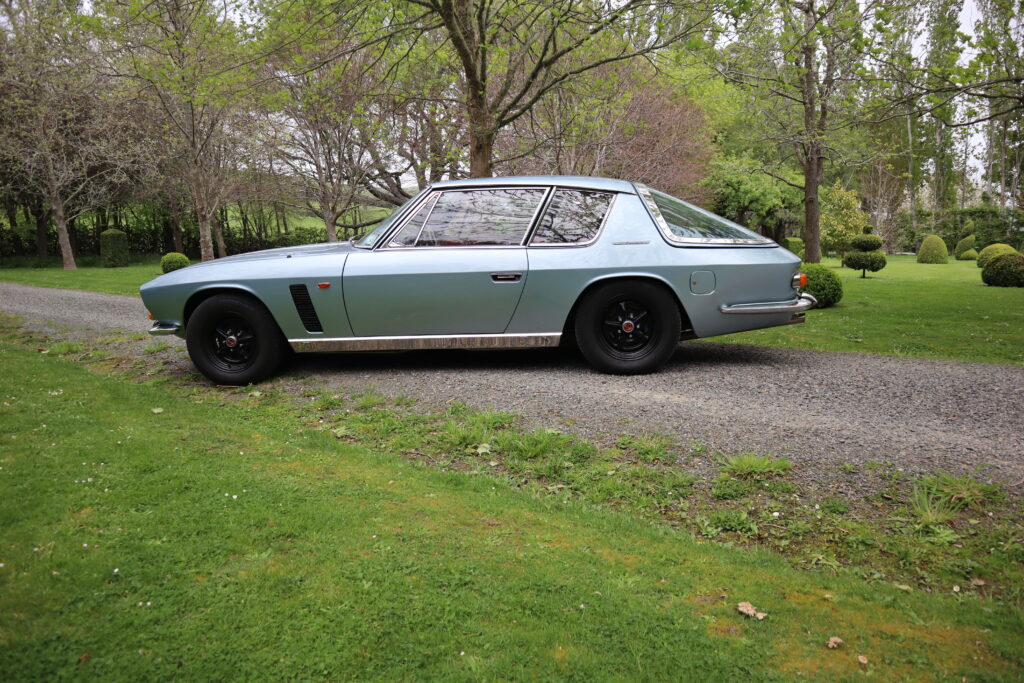
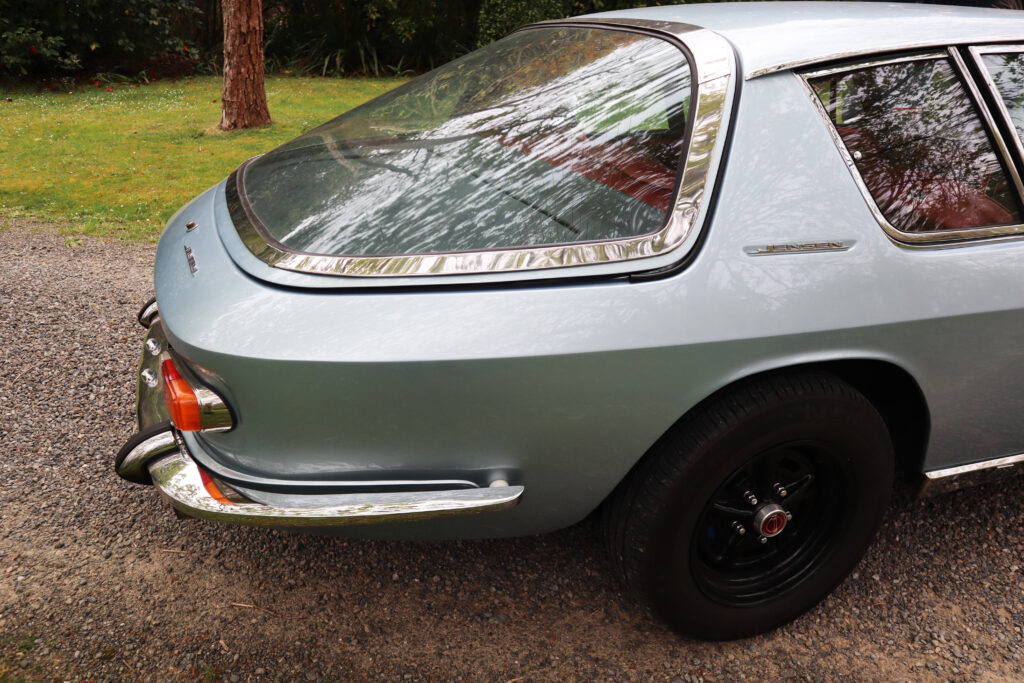
The car made its debut at the Earls Court Motor Show in October 1966, its long bonnet and massive bulbous back-window hatch making it an unlikely contender for the title of the world’s first sports hatchback. While hailed as a great British car, it in fact combined the best efforts of three great automotive nations.
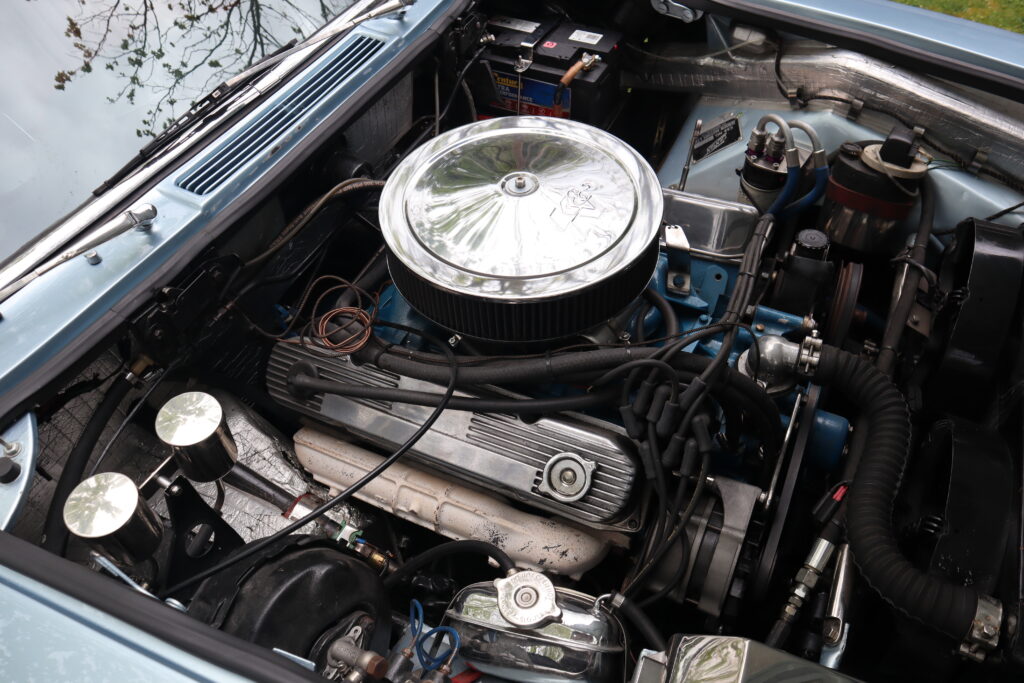
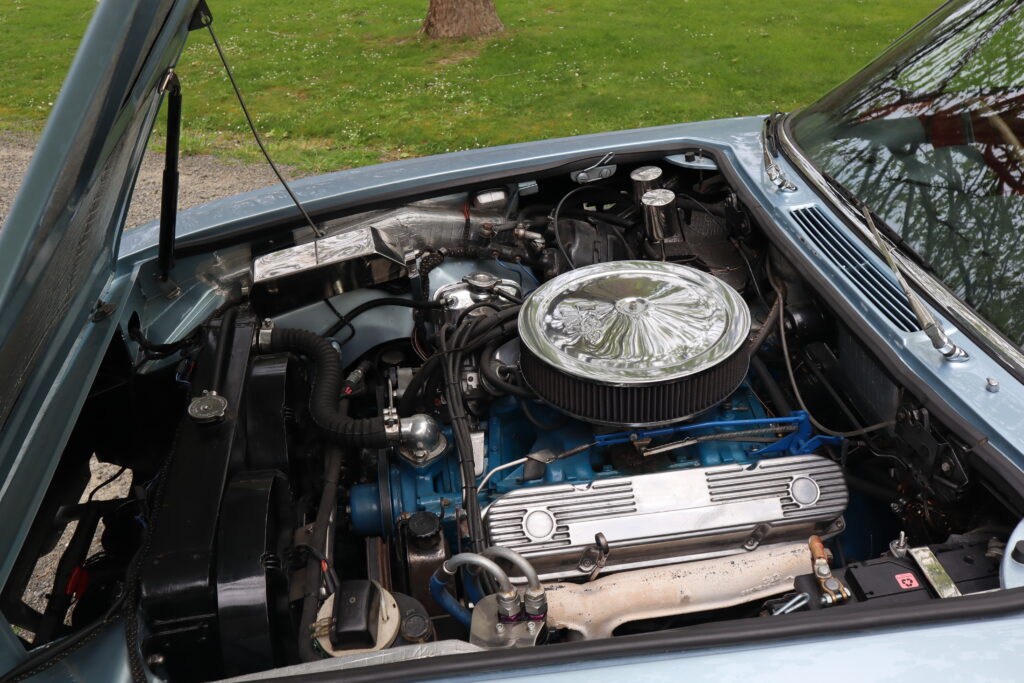
The engine for the Mark I Interceptor was Chrysler’s ubiquitous — over there— 383 cubic inch V8 with either a TorqueFlite three-speed auto or a four-speed manual. Most Mark Is were right-hand drive and most were auto. A total of 1024 were built.
The all-steel body-shell was designed by Carrozzeria Touring of Italy and the early bodies were built in Italy by Vignale, before Jensen took production in-house. They were rear-wheel drive, with a limited slip differential in a conventional Salisbury rear axle. Power steering became standard from 1968. In 1970, the 383ci produced 325hp SAE gross, or 270hp SAE net.
The cars were big, comfortable cruisers but initially suffered from reliability issues — a lack of development being the Achilles heel of many small producers. The engines and transmissions were bulletproof but other aspects of the car, many of which were cobbled together from various suppliers, were plagued with problems, including electrical and cooling issues. As such, Jensen chose initially not to sell them to far-flung markets, including the USA, due to the servicing challenges. This changed over the years as the reliability improved. One Mark I was sold new into New Zealand but sadly was written off around 10 years ago due to the level of rust that had consumed the bodywork.
In 1967 Jensen became the first manufacturer to equip a production car — called the FF (Ferguson Formula) — with four-wheel drive and mechanical anti-lock brakes (ABS). Based on the Interceptor, the car is five inches (127mm) longer than the Interceptor, with all the extra length forward of the windscreen. The Mark II was announced in October 1969, with small changes to the styling around the headlamps, front grille, and bumpers and revised rear lights. The interior, too, was changed, largely to meet US regulations, and air conditioning was an option. In total, 320 FFs were produced: 195 Mark Is, 110 Mark IIs, and 15 Mark IIIs.
Caught in the vortex
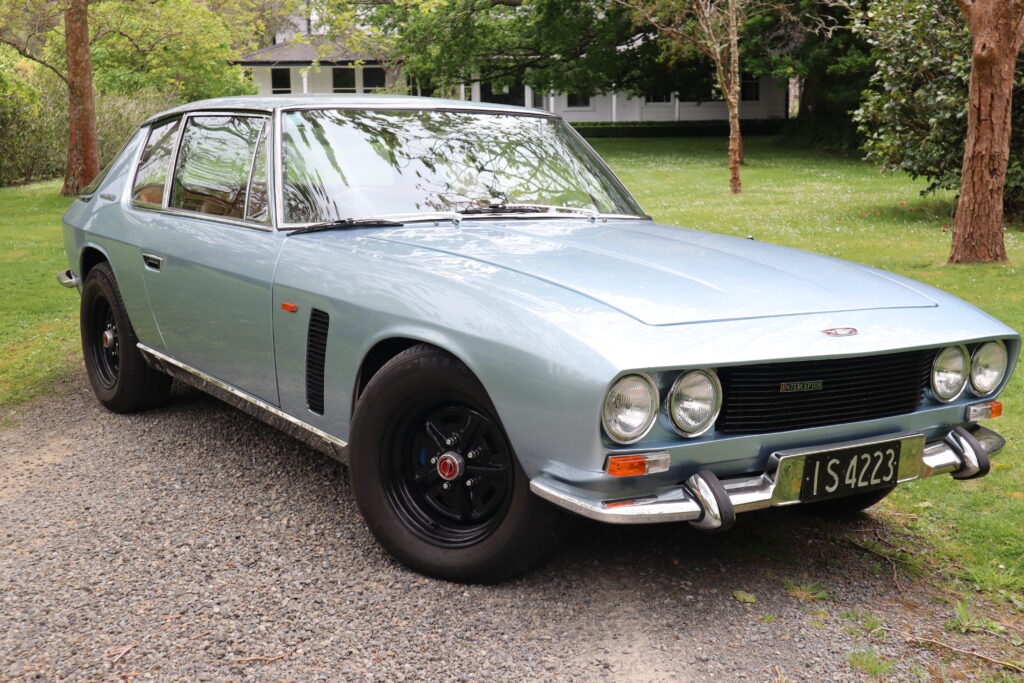
For the Mark III, introduced in 1971, the front was again revised with a new front grille and changes to the headlamps and bumpers. The wheels were changed to GKN alloys, and air conditioning was standard. The 6.3-litre 383ci engine was detuned by Chrysler so it could be used with regular petrol, and produced only 250hp net. Hence, Jensen swapped it for the 440ci (7.2-litre) in 1971.
Two versions of the big block were offered — one with a four-barrel carburettor, producing 305hp SAE net, and the second with three two-barrel carburettors, producing 330hp SAE net (only available in 1971). A mere 232 cars were built with the 440 ‘six pack’ that gave it the distinction of being the most powerful car Jensen ever made.
For 1972, the 440 ci engine with three two-barrel carburettors was no longer produced by Chrysler. The 440ci engine that remained was detuned to 280hp SAE net. Chrysler continued to offer a high-performance 440 ci engine through to 1976 with power at a humble 255hp SAE net.
Interceptors were also sold as convertibles from 1974, mainly into the USA; just 274 were built. They had an electric soft top, albeit they lost the famous rear glass hatch window. Possibly the rarest of Interceptor versions is the coupé introduced in 1975, with just 60 made before the company folded. The coupé was built using the convertible as a base, so it, too, did not have the distinctive rear window.
By 1975 the writing was on the wall. The oil shocks of 1973 and the recession that followed hit Jensen hard. At its peak the West Bromwich company had 1100 men working on the various models for other manufacturers, the Jensen Healey, and the Interceptor. By 1976 it was all gone, a victim of stricter emission and crash standards in the USA, the destructive unions of the day, and Chrysler buying Rootes Group and cancelling the Tiger as it did not have a suitable engine alternative to the Ford. In the 11 years of production, 1966 to 1976, more than 6000 Interceptors were built.
A Series IV Interceptor was launched in the late 1980s by a group of investors who bought rights to the name Jensen. Its production limped on with a 360ci (5.5-litre) Chrysler engine and was revised again for a Series V before being retired again in 1992. Resurrections have continued, with a GM Corvette LS 6.2-litre naturally aspirated or supercharged engine and six-speed automatic or manual transmission being installed in refurbished old Interceptors by a company in England.
The Blue Ghost of Wairarapa
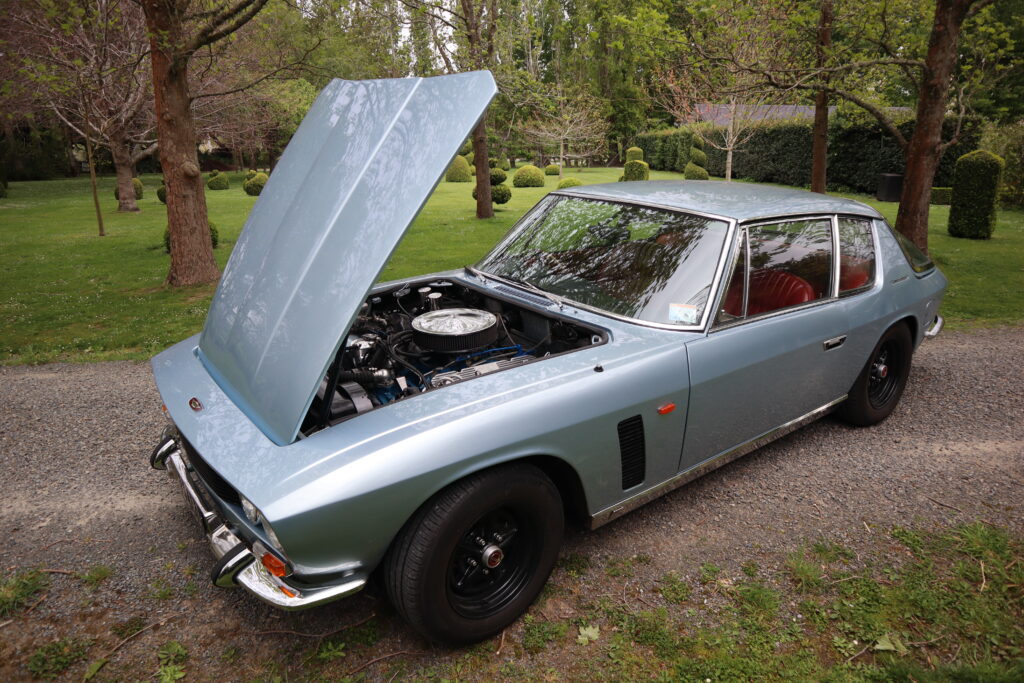
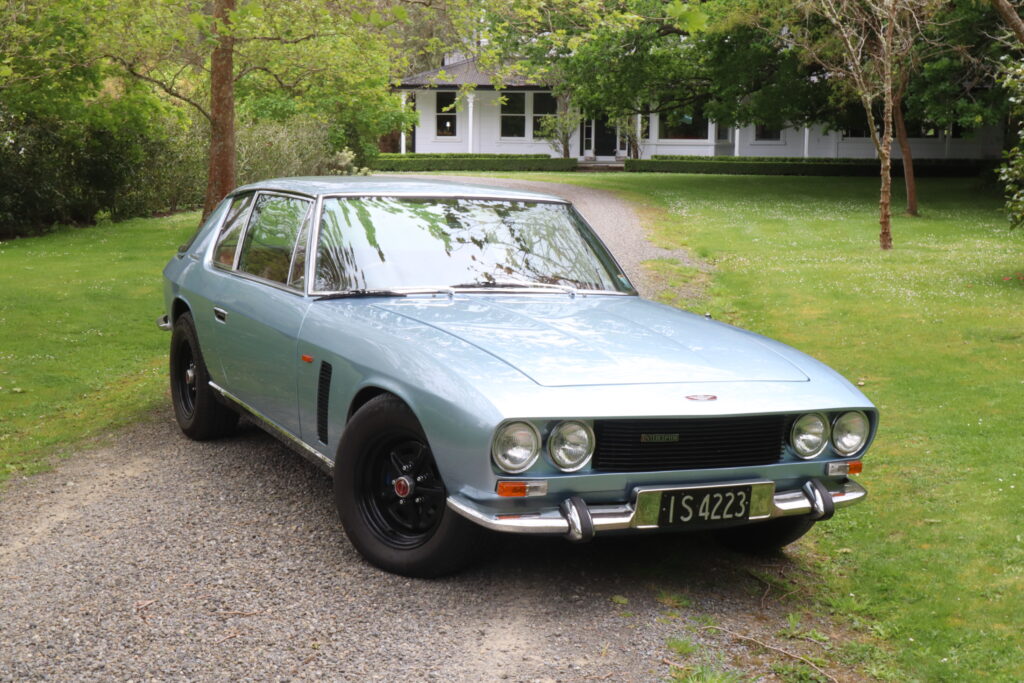
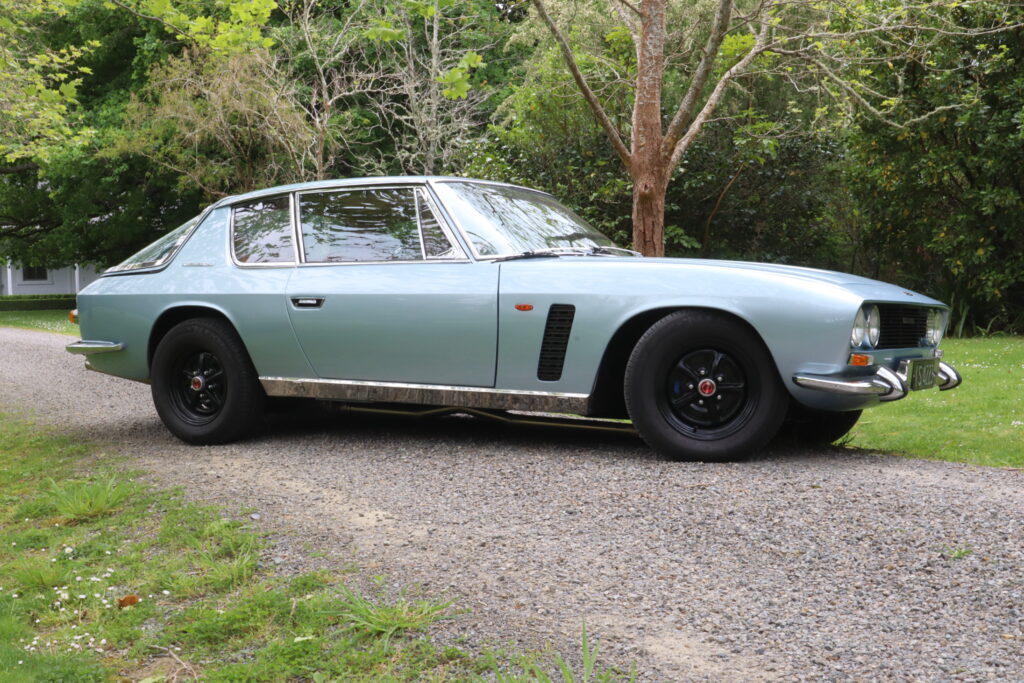
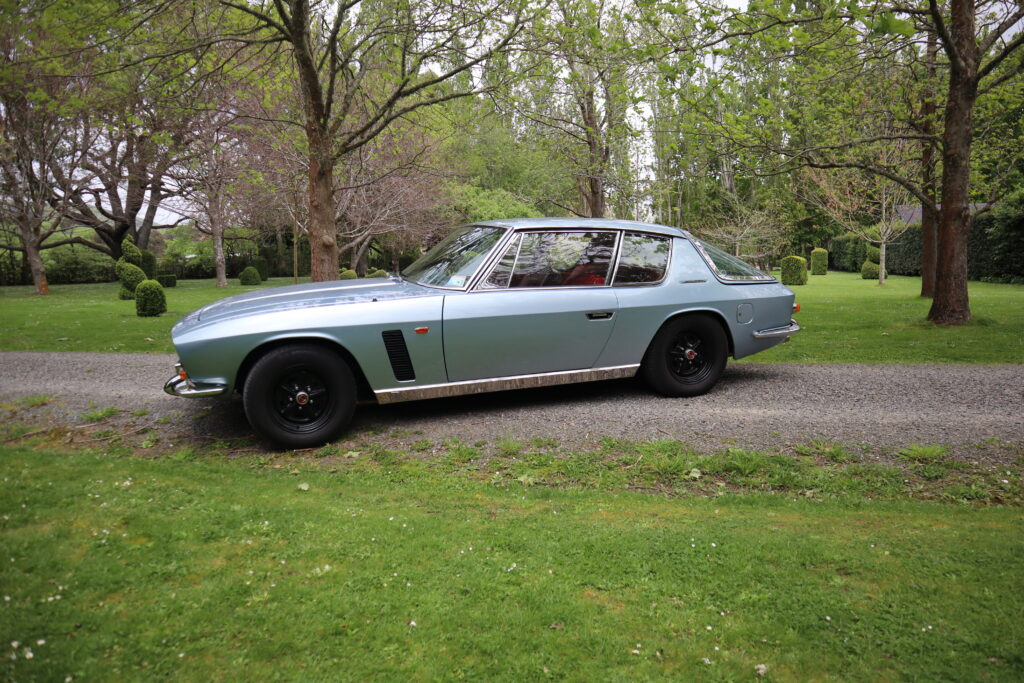
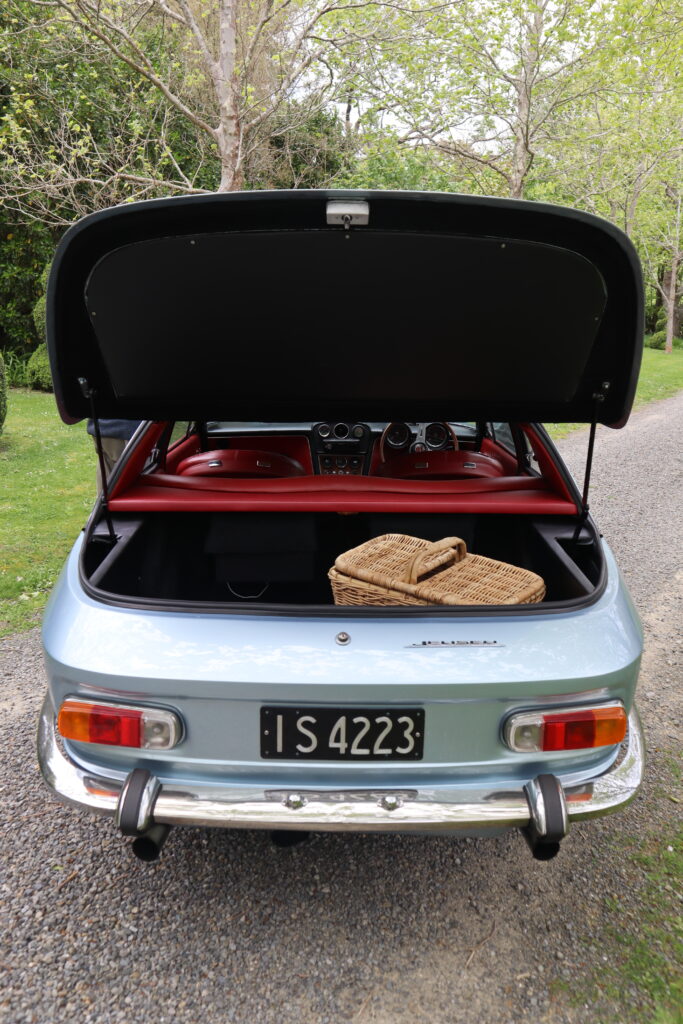
Our feature car is a 1968 Mark I owned by Phil Wilson, an enthusiast from Wellington who keeps the car in the Wairarapa. He had wanted an Interceptor ever since he first saw one as a young lad in 1968 in the UK. He purchased this car from Carl Jones of Hokitika, who had spent the better part of 20 years undertaking a ground-up restoration of it. The car had been imported to New Zealand in 1980 and had passed through a few hands without doing a lot of mileage. Phil bought the car fully restored two years ago and it now sits pampered but regularly driven on quiet country roads to ensure the cobwebs are kept at bay. It is a three-speed auto model with the factory 383ci Chrysler still faithfully in place.
These vehicles languished in popularity for most of the ’80s and ’90s but have risen in value significantly in recent times, partly due to their rarity and partly due to their unusual looks and drivability. Rust killed off a fair few when prices were low, so remaining models fetch well over $100,000 in New Zealand and have a fevered following in the UK, the USA, France, and Australia.
This is chassis number 2706 — the first one sold started with chassis number 2495; who knows why — so this is indeed an early example of the 1024 Mark Is manufactured.
It is a heavy car and sits nicely on the road. The large levels of torque have no problem moving it off the line. It is factory fitted with power steering, electric windows, and disc brakes. Whilst it is no Porsche, it is a fast-cruising luxury vehicle with seating for four — albeit snugly — in the rear.
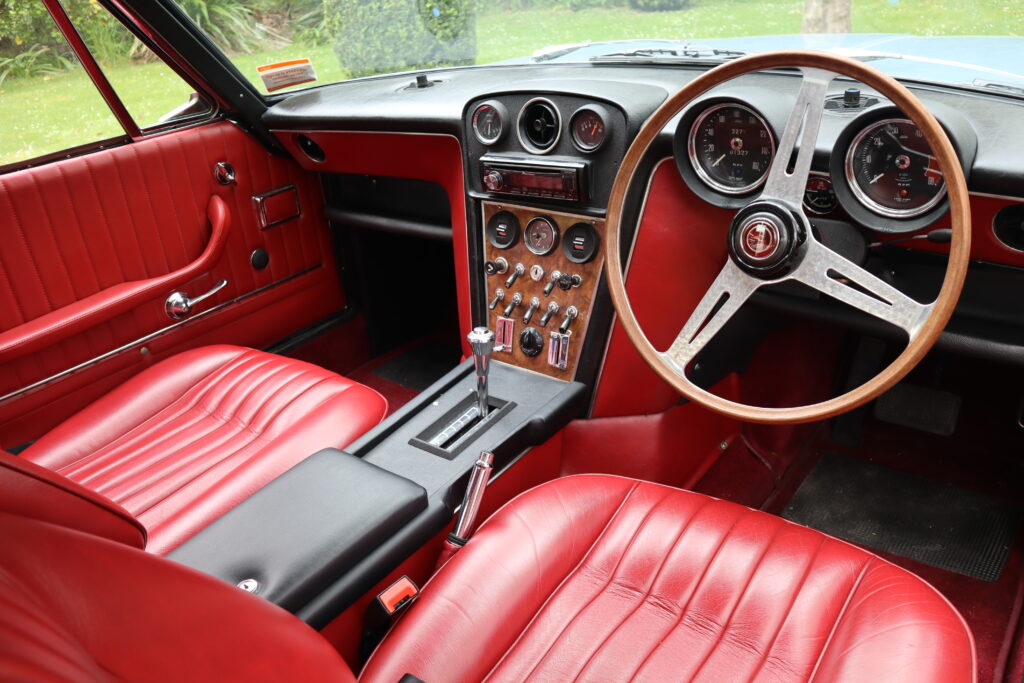
For a British car, it is huge; for those sitting inside, the bonnet seems to extend past the horizon. The front seats are very comfortable rather than body hugging. The dashboard and centre console cluster are beautifully laid out, reminiscent of a fighter plane cockpit, with acres of red leather all around. Its V8 burble is on show. It is not a car to sneak about in, and it gets attention wherever it goes.
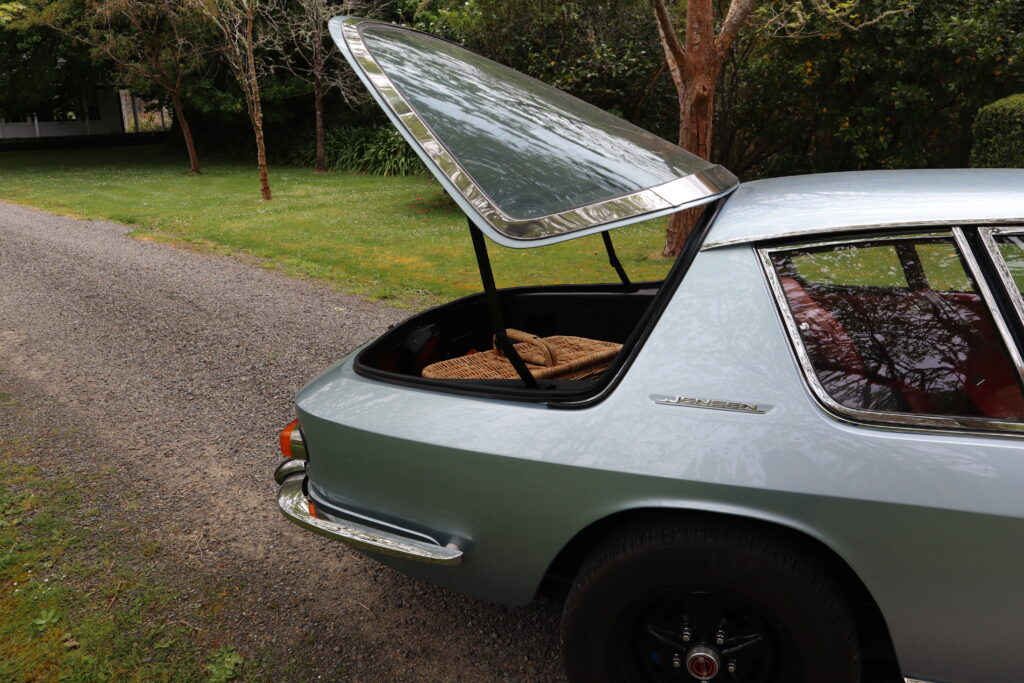
The large back window, possibly the best-known feature of the Interceptor and one that sets it apart, has very good functionality, allowing greater access to the boot. It would not be an easy job to replace it, so Interceptor owners are careful about reversing and not hitting anything.
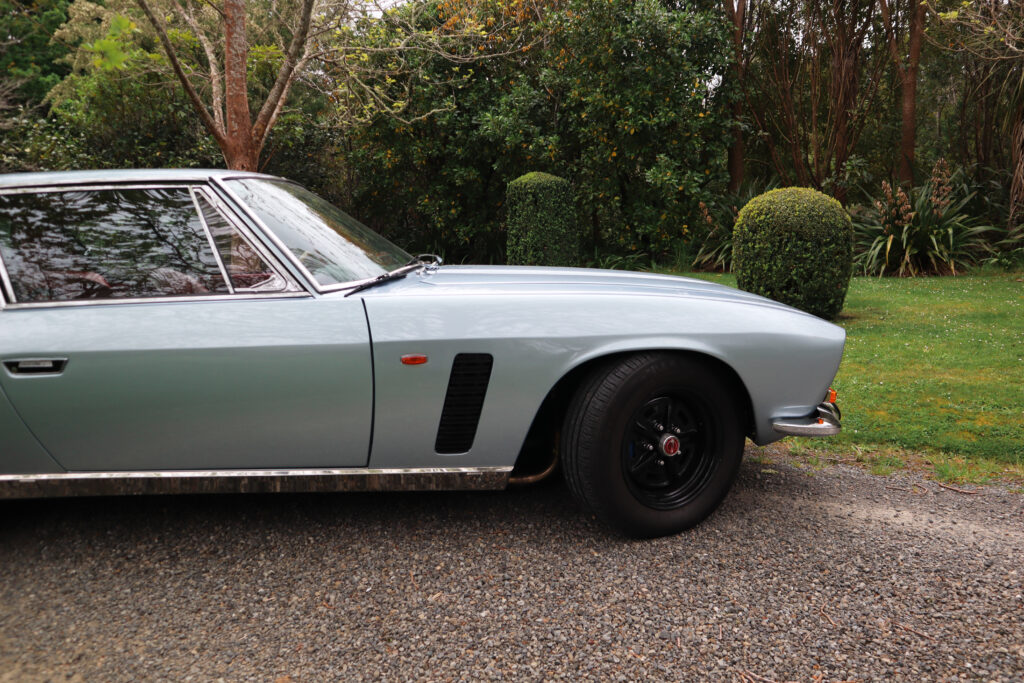
The colour is Crystal Blue, a standard Jensen colour used on 185 original Mark Is, which also feature copious chrome trim — a mark of luxury in most markets at the time, and a welcome sight today.
So, where can you buy one of these? It’s not easy as they don’t come up very often. Either make it your life’s work to scour the internet for Interceptors for sale in New Zealand, seek an overseas model — preferably from a salt-free environment, but that may mean a left-hand drive from the USA — or contact the Jensen Motors NZ Club via Facebook.
1968 Jensen Interceptor
Engine – 383ci (6276cc), 90-degree V8
Bore/stroke – 108mm/85.8mm
Valves – 16, overhead; two valves per cylinder
Comp. ratio – 10.32:1
Max power – 325bhp (242kW) at 4600rpm
Max torque – 425ft·lb (576Nm) at 2800rpm
Fuel system – Carter 4-barrel carburettor
Transmission – TorqueFlite 3-speed automatic
Suspension, F/R – double wishbones at the front and a live rear axle with semi-elliptic springs
Steering – rack and pinion
Brakes, F/R – four-wheel disc brakes
Dimensions:
Length – 4724mm
Wheelbase – 2769mm
Width – 1752mm
Track, FR – 1422mm/1448mm
Height – 1340mm
Weight – 1830kg
Performance:
0–100kph – 7.7 seconds
Top speed – 130mph (210kph)