Morris’ ground-breaking, world-beating, Minor
It was Britain’s biggest small car, and it got Britain mobile again. Morris Motors celebrated its millionth Minor in December 1960, a car that defined the British motor industry, and was in production for 10 years alongside the iconic Mini of 1959.
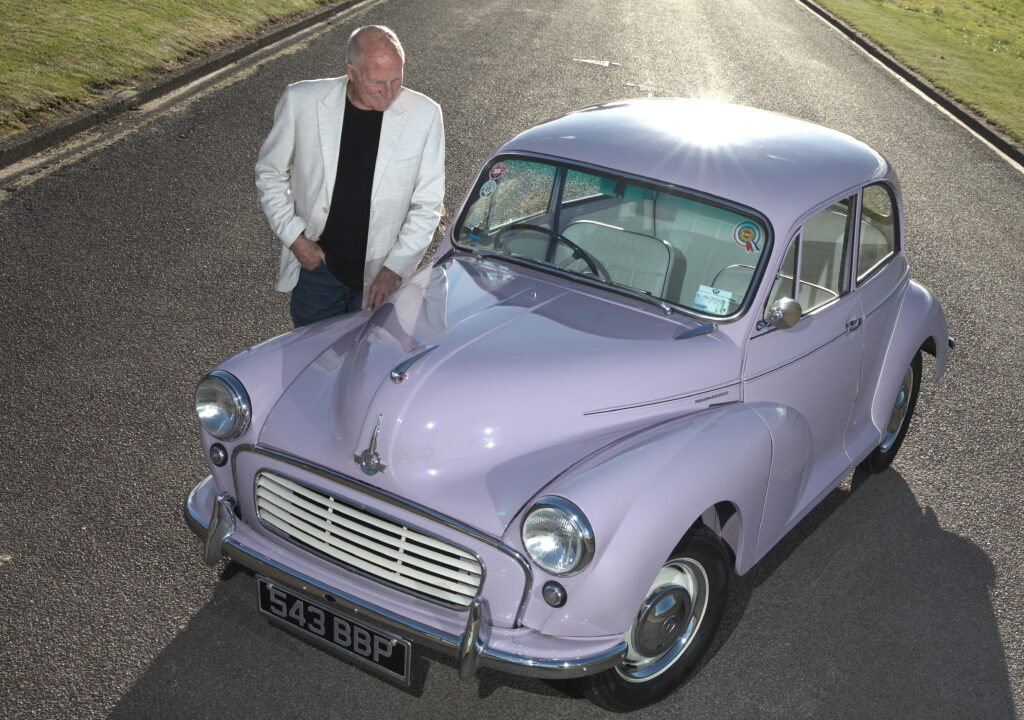
Whakatane dentist John Twaddle has a passion for Morris Minors going back to 1982, and he still has his first example. There are now three ‘Morries’ in his garage. One, however, is quite special, a rare ‘Minor-Million’.
One of just 350 made commemorating the millionth Morris Minor produced, the first British car to hit a million units, the well-rounded little Brit’ would end production in 1971with a tally of over 1.6 million units.
John finished his Minor Million six years ago, resplendent in lilac, its official factory colour. He calls it his ‘Minor Resurrection’, and it has won numerous awards.
This summer edition also comes with our annual FREE classic car calendar, a must for every garage wall.
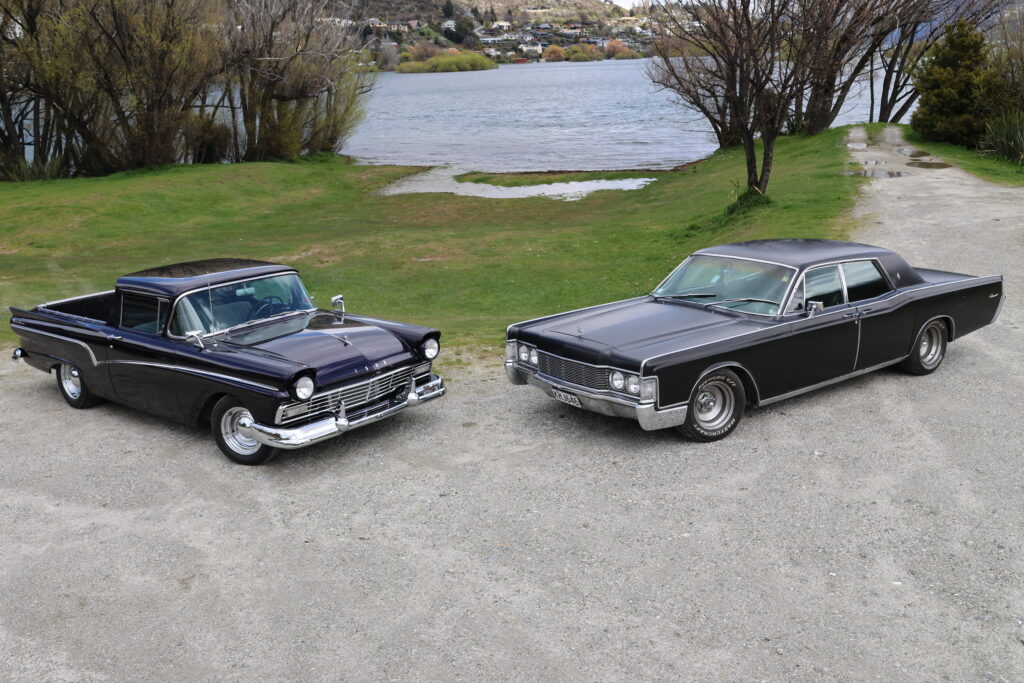
Every issue comes with our FREE huge wall poster; this issue, our poster is of a couple of garage mates,
a 1957 Ford Ranchero and a 1968 Lincoln Continental.
To purchase a copy of this magazine, head here to Classic Car’s online shop

A Southland morning with monza
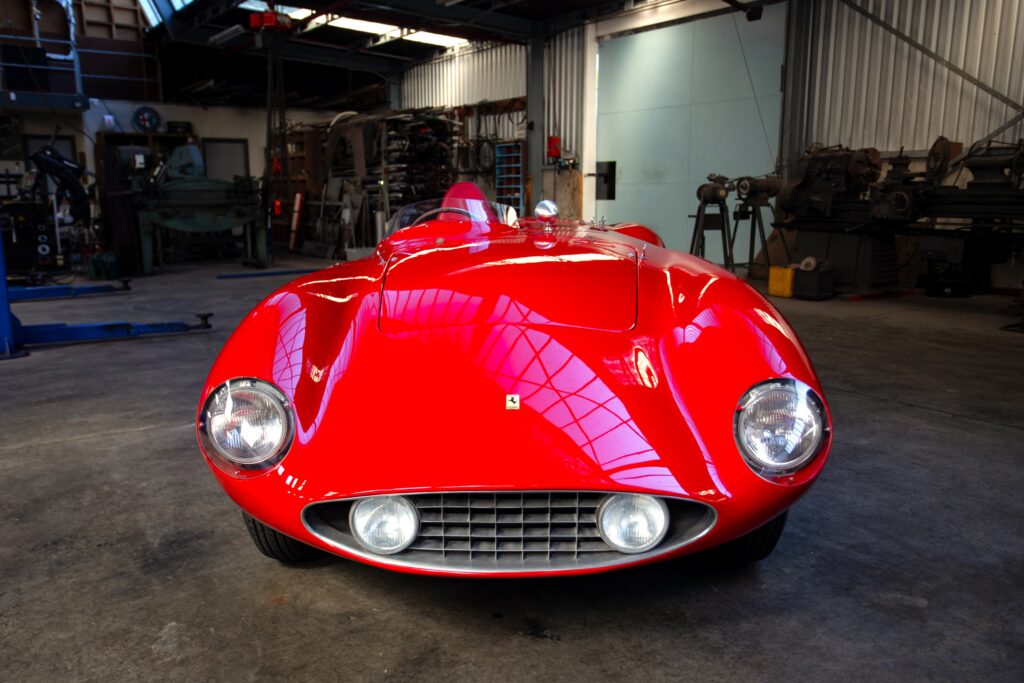
It’s the kind of story only New Zealand could produce – a rare Ferrari Monza 750, stored in the back shed of a country garage in Otautau.
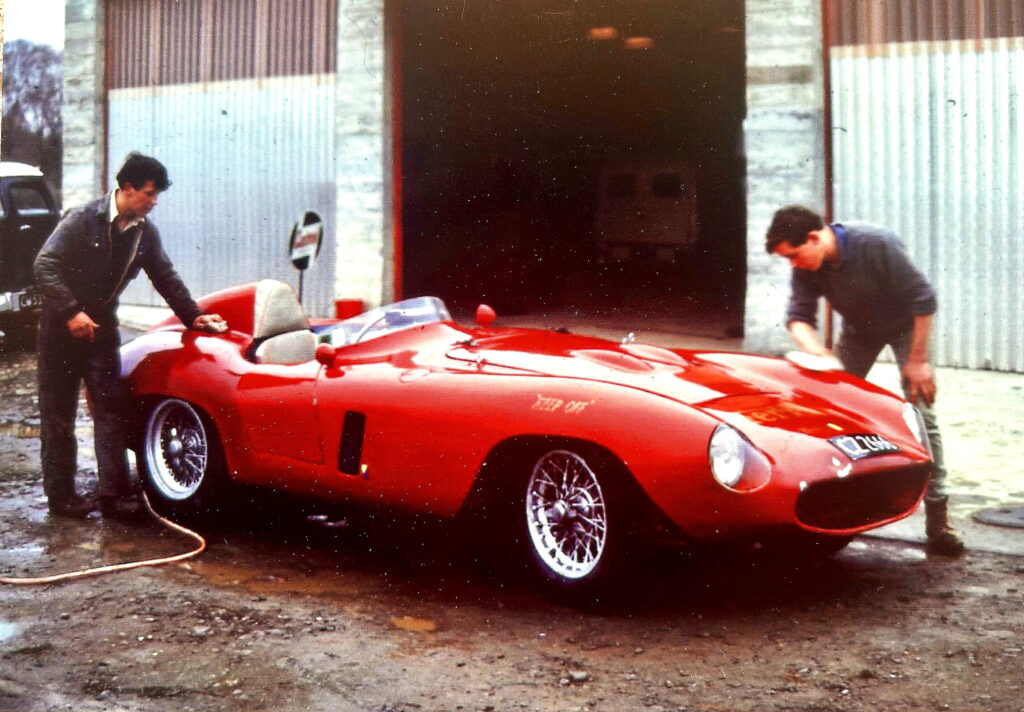
Its sleek red body sat for years, gathering a skin of dust and legend, a silent contrast to the rough-and-ready tractors and trucks surrounding it. In 1960s Southland, 17-year-old Alan Smellie knew precisely where it was. After working on his father’s farm, whenever he could, he’d steer the family’s 1954 Vanguard into town, to Winders Motors, just to peer through the doors. There, in the dim light and oily floors, rested the Ferrari — once a racing weapon, and now a curiosity in rural New Zealand.
Owned by Graham Henderson and his father, Russell, the manager of the National Bank had tucked it away after his son was spotted, scaring the rural population with the sound of a bellowing, V8 Corvette-powered racing Ferrari. Russell thought his son would either kill a member of the community or himself, so he acted. Local garage owner Bede Winders made sure it didn’t fade entirely into slumber; from time to time, he’d fire it up and let the engine clear its throat along the main street. It was as close to Italy as Southland locals ever got.
One day, Alan brought his Yashica SLR, loaded with slide film. The winter light was flat, the air cold and damp. Two apprentices – one of them Neil Laverty, the other now lost to memory – rolled the Monza into the open. Its body wore the grime of years in ‘impound’, so they washed it down, laughing, unaware they were part of a scene to one day be treasured.
1962 Jaguar Mark II, 3.4 Litre, Part 2
Jaguar was unaware of a peculiar XK engine modification.
Auckland music producer Larry Killip satisfied his passion for Jaguars in 1984, buying a 1962 Jaguar Mark II, 3.4 Litre, starting many enjoyable cruises and some head-scratching, while discovering Sir William Lyons’ brilliant XK engine revealed some still unexplained differences he discusses with Jason in Part 2.
Soon after purchasing his Jag, Larry discovered an unusual anomaly under the hood –an engineering mystery that has puzzled him ever since.
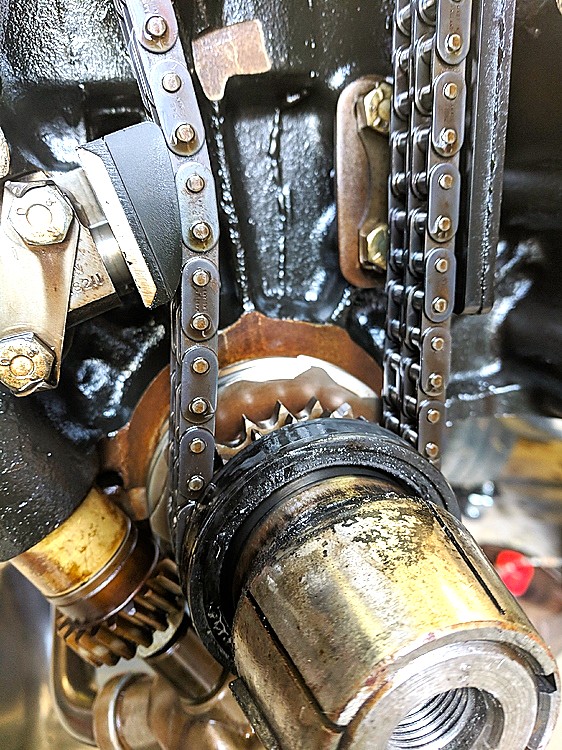
“My car is different as there is no central adjustment to the (top-Ed) timing chain, which is usually accessed in the front of the head, through a hole where the breather would normally be. Ordinarily, there is an eccentric gear (Parts 13-17 in the diagram) which is loosened to make adjustments to the chain with a special key. Instead, on my car, the top chain is adjusted by a hydraulic tensioner. This is situated to one side of the chain carrier (7), and it has an oil feed from the bottom of the block.”
He found that the chain carrier assembly also had a different casting making room for the tensioner.
“To loosen the chain, I have to relieve the tension slipper, which is a bit tricky given its location. Like all those slippers, one can push it back, then lock it with an Allen key, but one false move and something could drop into the engine, not a very satisfactory state of affairs.”
Larry could find no evidence of this system in any Jaguar manual, and there was no matching part number for his chain carrier casting either, so in 1985, he wrote to the Jaguar factory.
He says, “They denied all knowledge of that kind of modification, but did admit that the method was used on their racing cars so that the breather hole could be used for mechanical fuel injection.”
2021 Shelby GT500 KR1000, Mustang
The King of the Road is back!
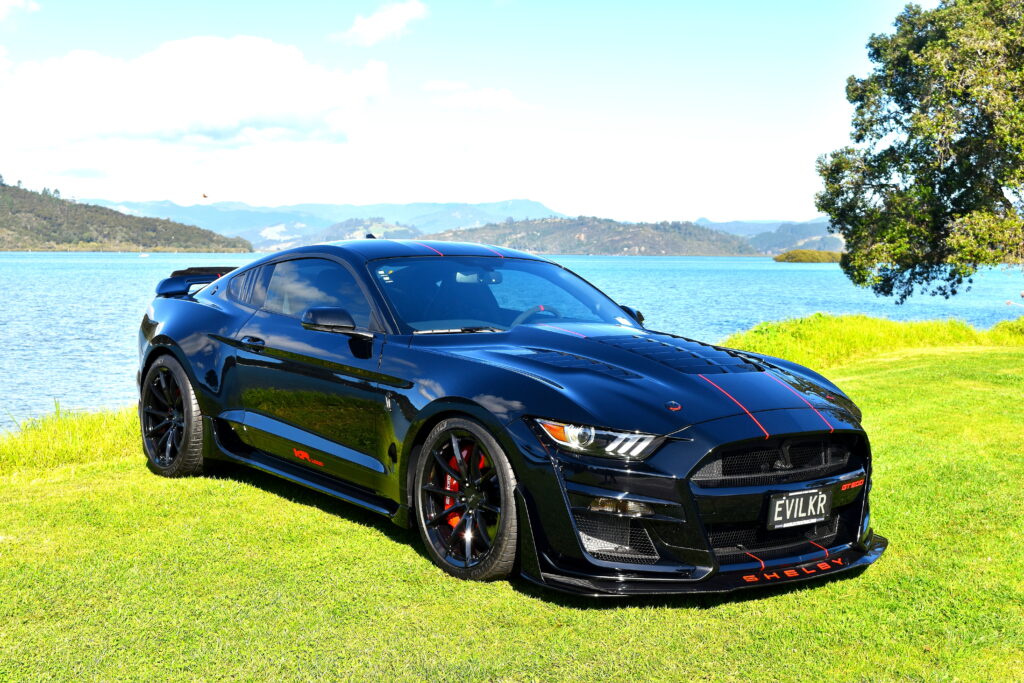
The spirit of Carroll Shelby lives on in a range of modern Mustangs. Our feature car was built by Matamata Panelworks, the Shelby New Zealand franchise and proudly carries the KR badge!
The KR designation has been assigned to three Shelby GT500 models. The first was introduced in 1968 with a 428 cubic inch Cobra Jet V8 engine, boasting a declared 335 horsepower, which many considered understated. This model is rare, with only 1053 Fastbacks and 517 convertibles made.
In 2008, the KR returned with a powerful 540 horsepower, special wheels, tyres, and unique badges. Only 1000 units were produced that year, followed by 712 in 2009. The latest version, based on the Ford Shelby GT500, was released from 2020 to 2022.
You would go a long way to find a more enthusiastic owner than Penny Murray, who picked her GT500KR from the team at Matamata-based Shelby New Zealand at a special unveiling in July 2024. The New Zealand Classic Car was there for the launch and captured the moment.
In Tune with Miranda!
1990 Ferrari Testarossa – spending a morning with a cultural icon
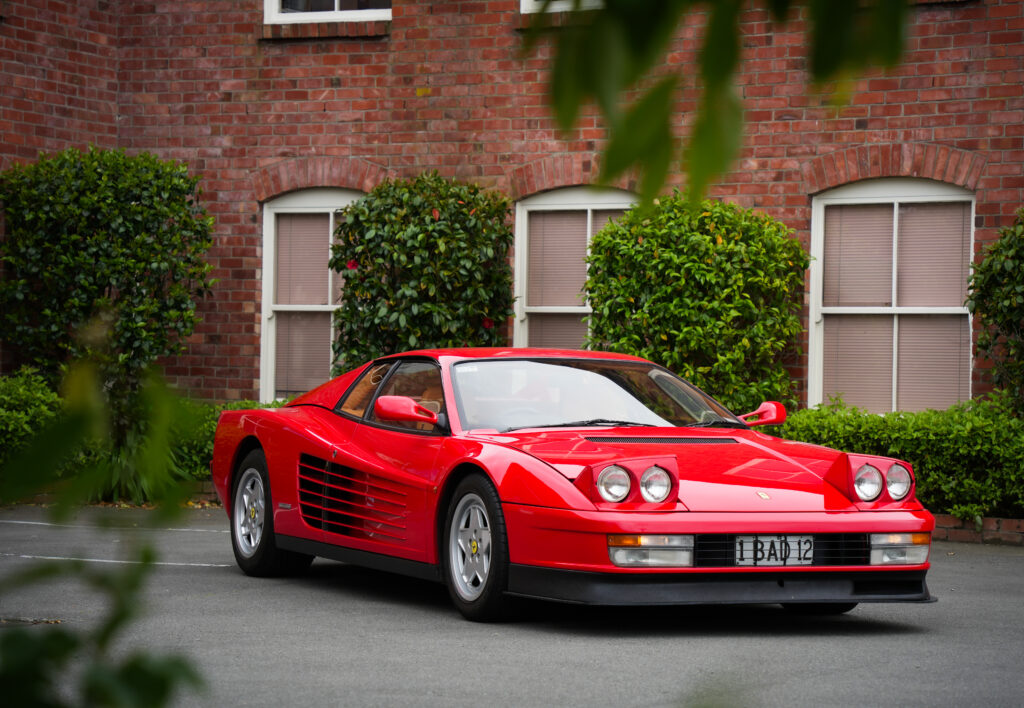
I spent a warm Saturday morning with this glorious 1990 Ferrari Testarossa, courtesy of the ever-generous team at Southern Specialist Cars, and let’s just say…There are worse ways to spend my mornings!
Under the rear deck lives Ferrari’s famous 4.9-litre flat-twelve, the Tipo F113 — 287kW, 490 m and a 6800rpm redline that tempts you like a siren call. The power goes to the back wheels through a five-speed gated manual that clicks into gear with the precision of a fine watch. And then there’s the Tubi stainless exhaust — good grief. It doesn’t so much sing as howl — a sound somewhere between an opera and a chainsaw, depending on how brave you’re feeling with your right foot.
1965 Austin Mini, PDL Replica
Stacy Lines’ stunning replica PDL Mini-Part 2
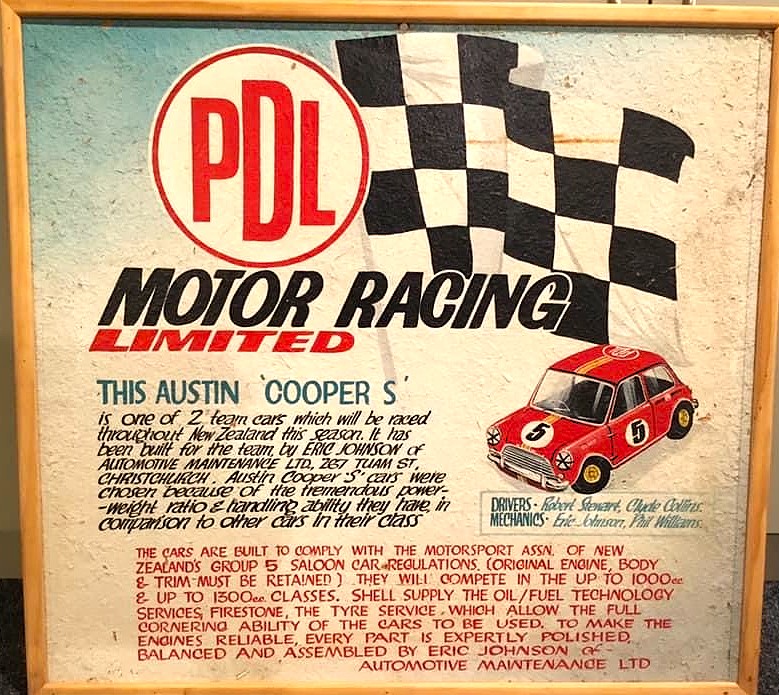
Just two successful PDL Minis were built, and the 1967-1968 season was Robert Stewart’s most successful, winning the New Zealand Saloon Car championship. Long-time Southland Mini fan, Stacy Lines’ mission to build an accurate replica of Mini #40 concludes.
In early December 2023, Stacy had the Mini ready to head to his good friend Howard Kingsford-Smith for paint. While trial-fitting the doors, Stacey and Howard hit a hurdle. It appeared that when the metalwork was done, the doors weren’t hung for a reference from the hinges, so neither door would fit into the openings! The bonnet and boot lid were not fitting well either. Dallas Ryan was brought in to sort the issues. He and Howard got the shell perfect before Howard set about the final body preparation and paint. The roll cage was painted black before being masked off, and the bright red paint was applied. Not an easy task! The underside received plenty of attention, too, with it being as good as the top of the shell!
1966 Oldsmobile Toronado
A Toronado’s Tale – In Tune With Miranda
An impressive and scarce piece of Americana has been entrusted to the care of a Rangiora enthusiast who is enjoying cruising in what is possibly the largest front-wheel drive coupe ever made. Miranda meets a dedicated owner with a few touching memories to share.
When I visited Dr Trans in Rangiora, Stan Tumu gave me a tour of his workshop – and it quickly became clear that this isn’t just a place where cars are restored, but where stories are honoured. I was struck by Stan’s depth of knowledge and his genuine care he has for the people behind each project. His passion for craftsmanship runs deep, but it’s the values and integrity that truly sets Dr Trans apart. Everyone who walks through those workshop doors is welcomed like part of the family.
Stan acquired the Toronado from Derek, a gentleman who had cherished the car for an incredible 49 years. Derek cared for it with meticulous devotion, and though he travelled the countryside often with his caravan, wife, and family in tow, word has it the car never once saw a single drop of rain.
When Stan first spotted it at an event, it was love at first sight. The car’s bold lines and unmistakable presence left him awestruck, but he wasn’t ready to make an offer just yet. Derek’s daughter, however, noticed something different about Stan — the way he asked thoughtful questions and admired the finer details. His interest wasn’t casual; it was heartfelt.

Kits and Pieces – Ultimate Ultima
The home-built car hobby is widely varied, encompassing collectors, drivers, modifiers, restorers, ‘ground-up’ designers and, of course, kit car builders.
Ultima Sports Ltd, based in Hinckley, Leicestershire, has a history of building some formidable performance-related cars beginning in 1983. The company has grown into a respected builder of British supercars and racing cars in the worldwide racing industry. The town is also the home base for Triumph motorcycles.
Lee Noble, the well-known name behind some very rapid sports cars, set up Noble Motorsport in 1983. The Ultima 1 was its first design, which rapidly morphed into a Mark 2 design before any Mark 1s were sold. Mid-engined with a 3-litre Ford V6 Essex, it later evolved into a twin-turbocharged V6 Ford Mondeo engine and a Renault 30, five-speed transmission, achieving remarkable performance statistics upon launch.
Unfortunately, the market wasn’t yet ready for a road-going Le Mans-style car. Ted Marlow placed an order for a car, becoming Noble’s first customer in 1984, and he developed a close association with the Noble family. Both he and Lee Noble raced their cars with great success.
In 1991, Ted Marlow purchased an Ultimate Mark 3 in component form for road use, using a fuel-injected small-block 350 cu in Chevrolet V8. Similarly powered for motor racing, they proved unbeatable.

Southern Classic Racing
Rare coupe racing
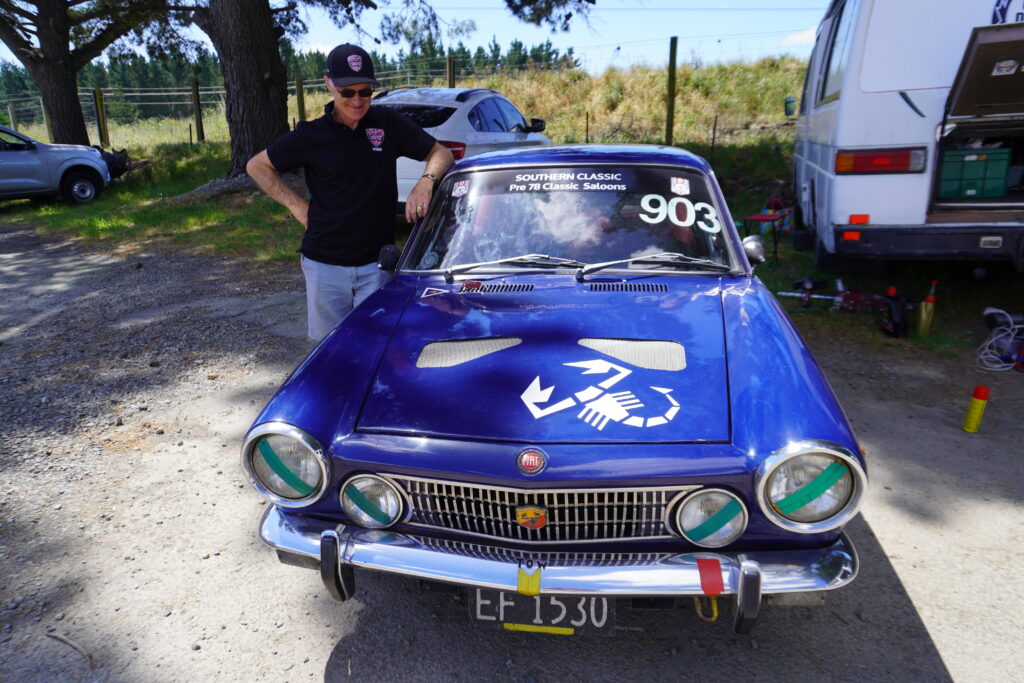
The Classic Motor Racing Club’s season-opening Brooklands Members’ meeting in September signalled the start of the 2025-’26 season. Sitting in the pits was a rare car on any local grid, a diminutive Ginetta G15 raced by Ian Perry from Christchurch.
Ian has a passion for Hillman Imp vehicles, and until a serious crash at Levels, Timaru, a couple of years ago, the immaculate little ex-Brian Bradshaw Sunbeam Stilletto was an eye-catching car in bright red, with its matching engine capacity and racing number, 998, the number Brian had raced with.
I spoke recently with Ian about his plans for the Ginetta.
“This car was imported by Chris Hey. It was first registered in the UK as a road car in December 1970, It was driven around as a road car, then it went through a couple of owners, and then the second owner did a lot of work on it to turn it into a hill climb vehicle and that’s when Chris Hey bought it about 15 years ago and imported it into New Zealand.”
Northern Classic Racing
KIWI’s rock at Bathurst
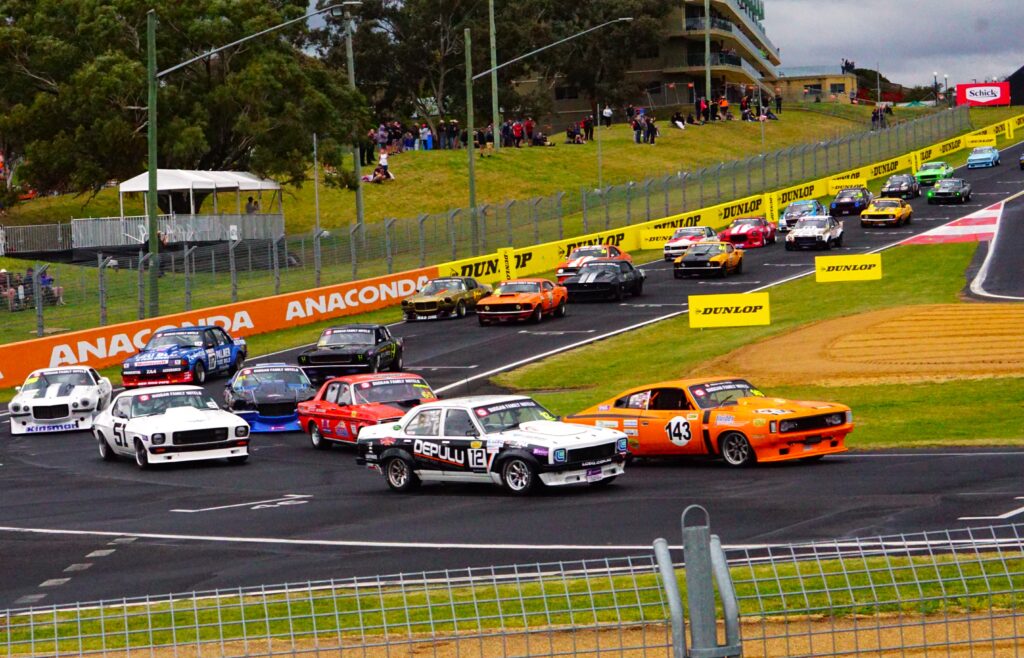
Repco Bathurst 2025 will be remembered for Kiwis on the podium; Matt Payne waving the Kiwi flag beside the experienced Aussie, Garth Tander for the Penrite racing team, and the Touring Car Masters dominated by Tristan Teki and Angus Fogg.
If ever there was a pilgrimage that resonated with older Kiwis, it would be Bathurst. The stories, images and legends that were created over the years still provide the foundation for the event today. Household names like Brock, Johnson, Richards, Murphy, and Skaife merge into the modern era of heroes like Lowndes, Van Gisbergen, Whincup and many more.
Having been to the Bathurst track before, but not to ‘Bathurst’, I had an idea of what to expect…and I was wrong! You can’t begin to imagine the sea of people, tents, campers, beer cans and friendly Aussie motorsport fans. The whole top of the mountain was covered, as were numerous fields all around the edges of the circuit, and then there was the enormous car park. Yet for such a big event, it was remarkably well organised and ran smoothly.
Industry Profile
Eyrewell Forest Motor Company 2025
A lifelong passion for cars and amassing a small car collection has transitioned into a business as a “Purveyor of fine vehicles” for a Christchurch enthusiast.
It’s wonderful when we can transform our hobby into a main source of income. For Christchurch’s Andrew Farrow of Eyrewell Forest Motor Company, that is exactly what he has been able to do.
“I’ve been going for about six years after starting in 2019. It came about really through a love and passion for cars. Prior to selling cars, I had my own small collection of cars, such as the McLaren M6 GT replica, which I have owned for about 12 years and still own, and a yellow Ferrari 355, which I’d had for 15 years. I’ve always loved cars, and I thought, why not have a career shift and have a go at selling them,” says Andrew.

From swap meets to the road
Protecting your classic car
Restoring any classic motor vehicle requires careful planning and research. Unfortunately, often, the last consideration is how you’ll protect yourself and your investment if something goes wrong during the process.
For any classic car enthusiast, a restoration project is a journey of passion, patience, and persistence. It’s a process that demands careful planning, countless hours of research, and a deep appreciation for automotive history. But amidst the excitement of sourcing parts and bringing a vintage vehicle back to life, one crucial element is often overlooked: protecting the investment while it’s still being restored.
This is a story about one such journey – a 1939 Chevrolet Master sedan resurrected from swap meet finds and transformed into a beloved road-tripping companion. It’s also the story of the man behind the wheel, Alan Walker, whose lifelong dedication to the hot-rodding community has given him a unique perspective, not just as a restorer, but as a classic car insurance specialist at Assurant. His experience underscores a vital lesson for every enthusiast: the right protection is as fundamental as the right parts.

Special Report-Ayrburn
A life lived loudly, lost quietly, saved brilliantly
New Zealand’s motor racing heritage-Ferrari 750 Monza
Seen today as the crown jewel of New Zealand’s competition Ferraris, chassis 0514M began far from our shores and very much in the thick of mid-1950s European motor racing.
Delivered new in 1955 with Scaglietti bodywork to Roman privateer Luigi Piotti, the car quickly earned its keep: outings at Montlhéry, Monza (multiple times), Bari and the Targa Florio punctuated a season that also delivered a headline result – overall victory at the Tunis Grand Prix on the Belvédère street circuit.
The Monza’s specification was typical of Ferrari’s four-cylinder sports racers of the era: a jewel-like inline-four of 3.0 litres, breathing through enormous 58 mm Weber carburettors delivering 240 bhp, mounted ahead of a rear transaxle in a light 850 kg spaceframe and clothed in figure-hugging hand-formed aluminium. On fast roads, it would touch 250 km/h; on tight ones, it danced.
In 1956, the car passed to the much-travelled and prodigiously talented Ken Wharton, who repainted it, British Racing Green with an orange noseband. Wharton ran 0514M at Silverstone, Bari and Albert Park before bringing both his Grand Prix Maserati and the Monza to Australasia for the 1957 summer. History records what happened next at Ardmore: during the preliminary sports-car event on New Zealand Grand Prix Day, the Monza somersaulted after striking hay bales; Wharton succumbed to his injuries soon after. The Grand Prix ran on, but the country never forgot.
1972 Toyota Corona
Nana’s Corona survivor
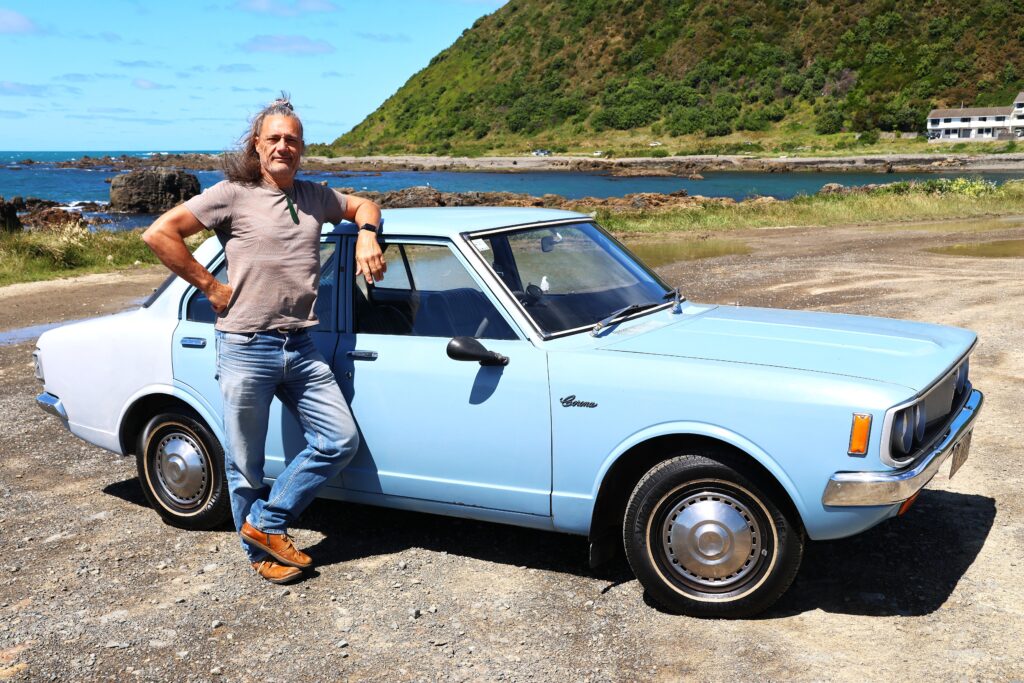
Fresh off the Steel Brothers’ Toyota assembly line in Christchurch in 1972, Nana Olga’s Corona defies the odds by still transporting her family
Our featured vehicle is a 1972 Toyota Corona, assembled by Steel Brothers. It is a four-owner car in very original condition, having avoided the rust that often affects vehicles from this era, as well as the typical modifications favoured by boy racers in the 1980s and 1990s. The fourth generation of Corona was released in 1970, with model codes T80 and T90, and offered varying trim levels and engine sizes depending on the market. This one is a 1700cc and four-speed manual. Alternate coding in this part of the world is RT84, with a 6R engine. A facelift in 1971 helped to keep the design fresh with a new grille and hubcaps. The four-door was the most common body style, plus two-door and station wagons. Chrome bumpers, reliable Japanese engineering, and a utilitarian interior layout with good legroom made these competitive vehicles of the time, challenging the Ford Escort, Hillman Hunter, and other Japanese models.
A few years ago, I did an article on a 1989 Volkswagen LT35 van, owned by a real character, Greg Crayford, a well-known entity in the Wellington music scene, who plays drums, leads a jazz band, teaches music to high school students and has more than a few cars in his collection.
Market Report
BMW M3 E36 Cabriolet
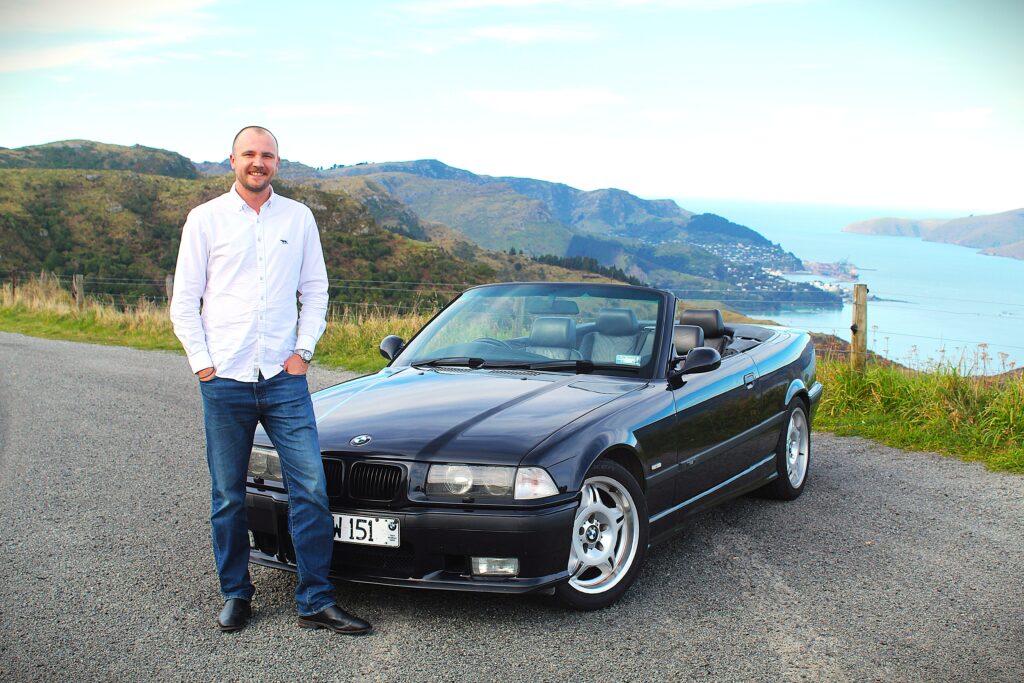
What is the first performance BMW you can think of? An M3 perchance? One cannot ignore the impact of this letter and number, not only in terms of BMW’s performance back catalogue, but also for performance cars in general.
BMW fans hold their favourite generation M3 in immensely high regard, but this one has flown somewhat under the radar.
BMW launched the E36 3-series in 1990, replacing its immensely capable E30 3-series for a new decade. The new M3 was on the cards to follow in the wake of the cult M3 E30, proving itself an absolute weapon in the world of World Touring Cars, not to mention a brisk way for any wannabe Will Hoy or Johnny Cecotto to get their exuberant driving fix.
The E36 M3 launched in 1992, two years after regular E36 production began, taking a while for the faithful to embrace it as a proper M-car. The E36 introduced several changes to the recipe. Rather than being built squarely with competition in mind, the E36 M3 was not conceived as a homologation racing special, but more as a mainstream performance 3-Series flagship in coupe, sedan, and convertible forms, featuring subtle styling compared to the E30. It added an aggressive front lip, side skirts, and M3 badges on the boot lid and front panels.
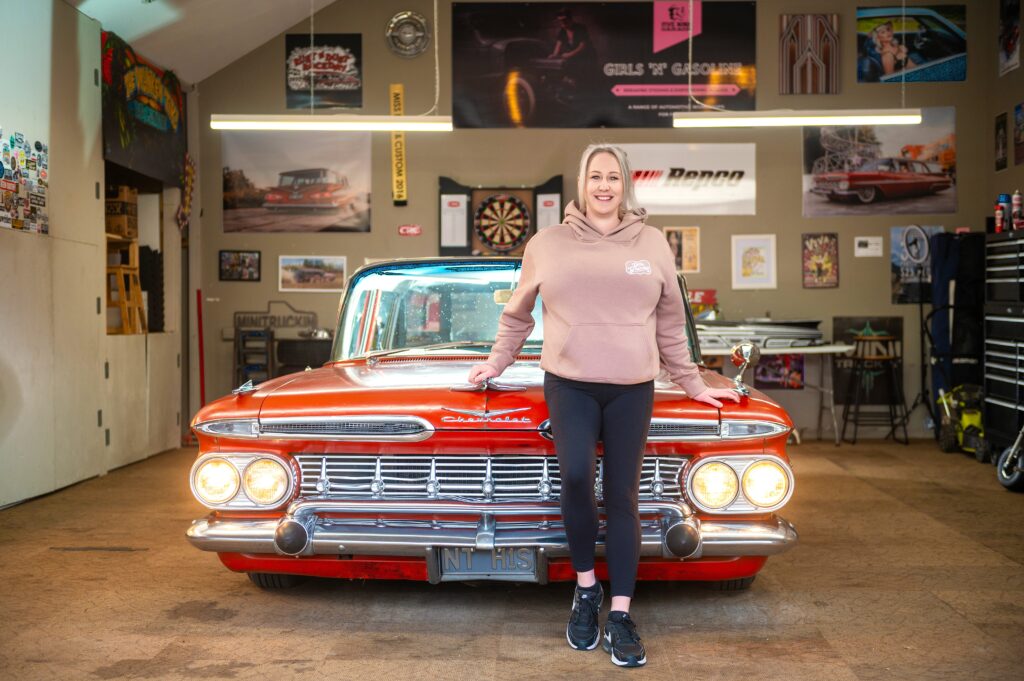
1959 Chevrolet Parkwood Station Wagon
Wagon dreams-life in a ‘59
As a young schoolgirl, Melissa dreamed of owning an old-school wagon. Schoolbooks were covered not in pop-idol pics, but in magazine cutouts, and her walls were plastered with posters of lowriders and hot rods. When the right wagon turned up, it was her ticket into a community that felt almost like family!
I even had old, blurry photos I’d taken at car shows tucked between the pages – proof of a dream I never thought would come true. I’d walk around those shows imagining what it would be like to own one of those classics, never really believing it would happen. But somehow, that dream found its way off the page and into my driveway.
In July 2015, after years of searching, I finally purchased my dream car – a 1959 Chevrolet Parkwood station wagon. My hunt originally stretched across models from 1959 through 1964, but after looking at a handful of early ’60s wagons, I became fixated on owning a ’59. And I’m so glad I held out!
This particular wagon came out of New Mexico. It was rough around the edges, but that only added to the thrill.
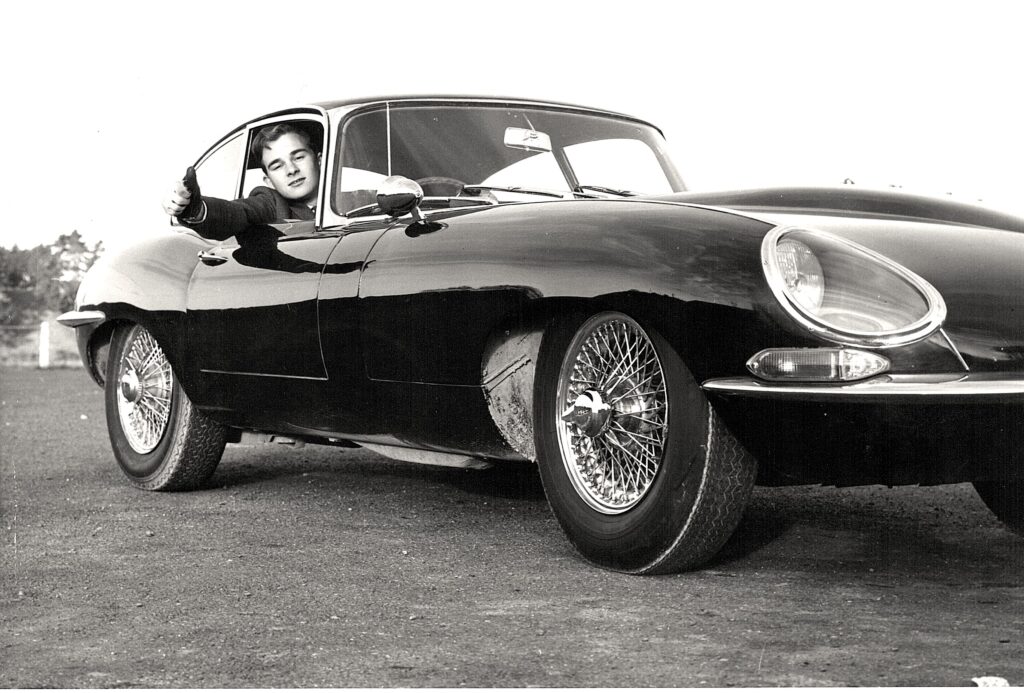
Motorman – The E-Type revelation
After 64 years, the E-Type Jaguar is still an astonishing car. Donn Anderson recalls the first time he rode in one. Acclaimed motorcycle champion Mike Hailwood was among the first famous owners and acquired several other high-performance cars.
There are certain privileges to being the editor of a car magazine, I discovered at an early stage more than six decades ago. Motoring up Auckland’s Parnell Road on a sunny Sunday afternoon in a spectacular new British sports car was a special and privileged occasion not to be missed.
It was October 1961, and I was riding in one of the first, if not the first, 3.8-litre Jaguar E-Type open roadster to arrive in New Zealand. The fact I was a passenger rather than the driver was not surprising given my status as a 16-year-old fifth former school lad still in short trousers.
Shorters were the life and soul of the classic Jaguar brand in Auckland, dating back to 1938 when William Lyons awarded the S.S. franchise to Albert Shorter. Soon after, of course, the SS badge became highly unfavourable in World War II, and Jaguar became the revised and much more acceptable brand name.
Outstanding value for money was a hallmark of Jaguar well before the arrival of the E-Type. Gregor Grant, editor of Britain’s Autosport weekly, in 1961, described the Mark II 3.8 Jaguar sedan as the best value in the world.
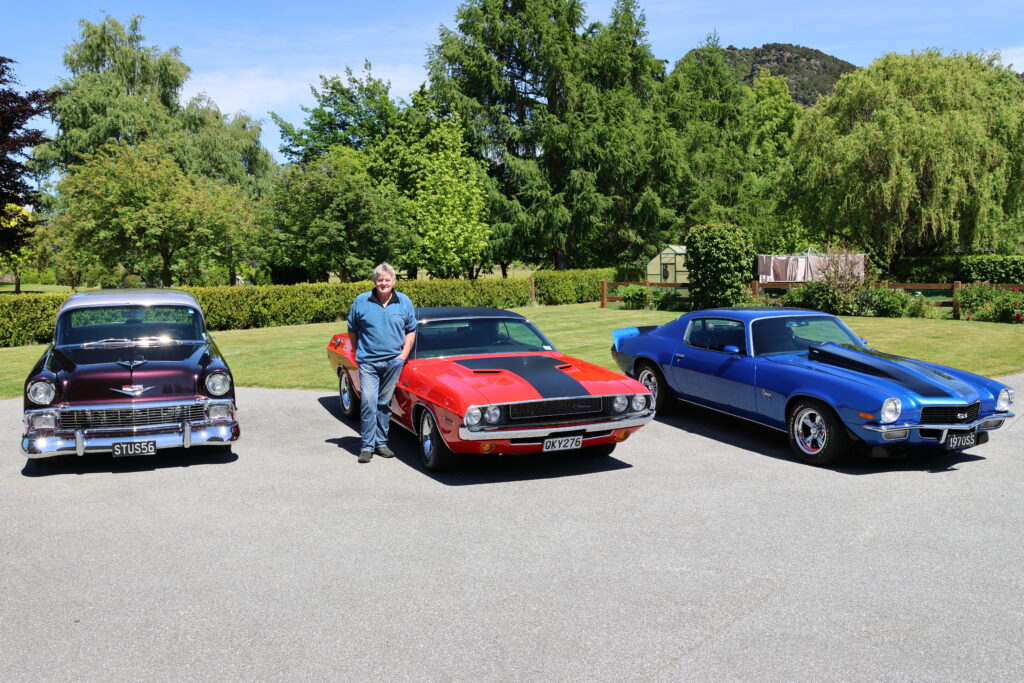
American Muscle Collection – Stu’s jewellery box
For men, middle age presents new challenges beyond family and work life. While careers, partners, and children remain important, there is often a desire for something more. Some refer to this as a midlife crisis, but I prefer to call it a midlife challenge.
It can take many forms depending on the individual. Some seek the pleasures of a Harley-Davidson, or model trains, completing an Iron Man, or biking over the French Alps. Others are content with computer games, playing squash or entertaining childhood fantasies of a car of their dreams. This magazine is full of these dreams.
Many are modified, refurbished and in better condition than when they left the factory. It’s a testament to the midlife challenge, to their inherent skills and ability to learn or their wallet supplanting these skills.
Some men develop a taste for new challenges and actively seek out more. They might sell their first fantasy and enter the ring for another match, or, like Stu McIvor, they might add new dreams to their lives, one after another. Stu is the kind of excellent Kiwi bloke you instantly warm to; he exudes happiness, like Santa Claus, and is very welcoming. If you don’t have a beer in your hand within a minute of meeting him, you might as well be a serial killer.
Looking Back
Memories – a JAFFA’s journeys on The Mainland – part 2
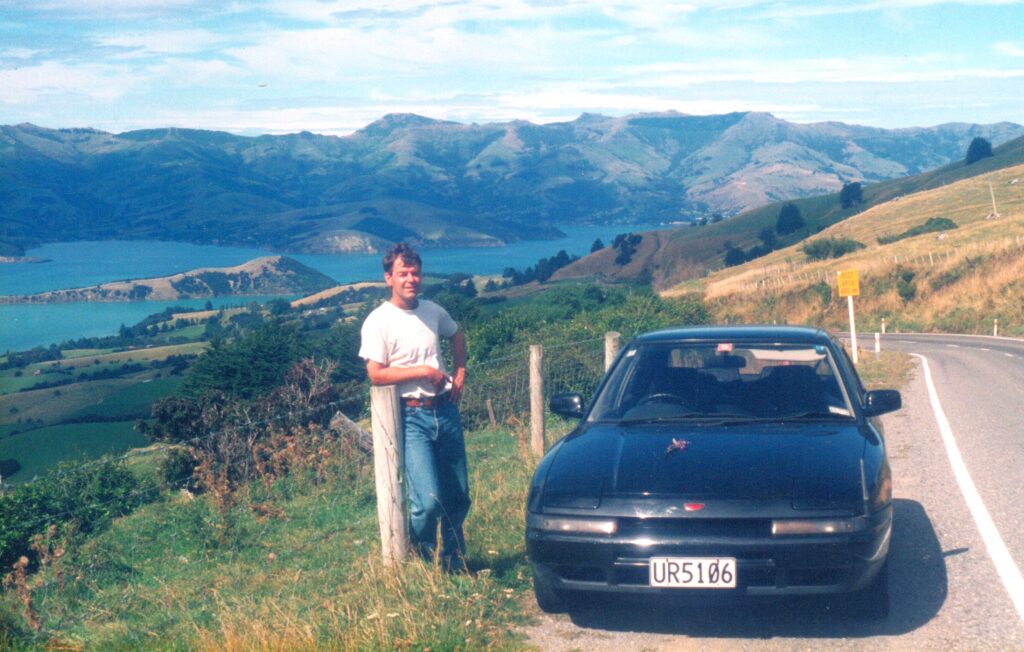
Growing up in Auckland in the 1960s and ’70s, the ‘Mainland’ South Island took on a mystical image of a separate country. Gerard continues with his memories of his adventures facing the challenging topography of the South, as well as the mechanical prowess —or lack thereof —of his available transport back in the day.
We returned to the South in the winter of 1987. Our wheels on this occasion were a 1982 Datsun Sunny 1200. Again, not a titan in the power stakes, but a favourite of mine, as it always seemed to punch above its weight. Being August, I recall we were carrying extra gear, but it seemed to cope with hills better than the Victor and Escort.
Our trail followed much the same script, overland and by water, to Picton, through Marlborough and Nelson, and down through the Buller to the West Coast. While it was cold at times, particularly in Otago and Southland, the weather was reasonably kind to us.
Along with my interest in historic locations and old bookshops, I developed a passion for old buildings. But wait; there’s more. On this trip, I wanted to make several pilgrimages to old N.Z. street motor racing circuits and track down an old All Comer saloon racer in the back of Motueka.
Price On
We are only custodians of our classic cars until another minder comes along!
Sadly, and on almost a daily basis, we learn of yet another classic vehicle owner who has (as we used to say) gone to that highway in the sky, or as they say in the Vintage Car Club, gone into the ‘passing lane’!
Many of them leave behind a collection of classic vehicles, which other (often younger) enthusiasts then snap up. It’s not something we give a lot of thought to, especially when we are pursuing the vehicle of our dreams. We want to get our hands on one!
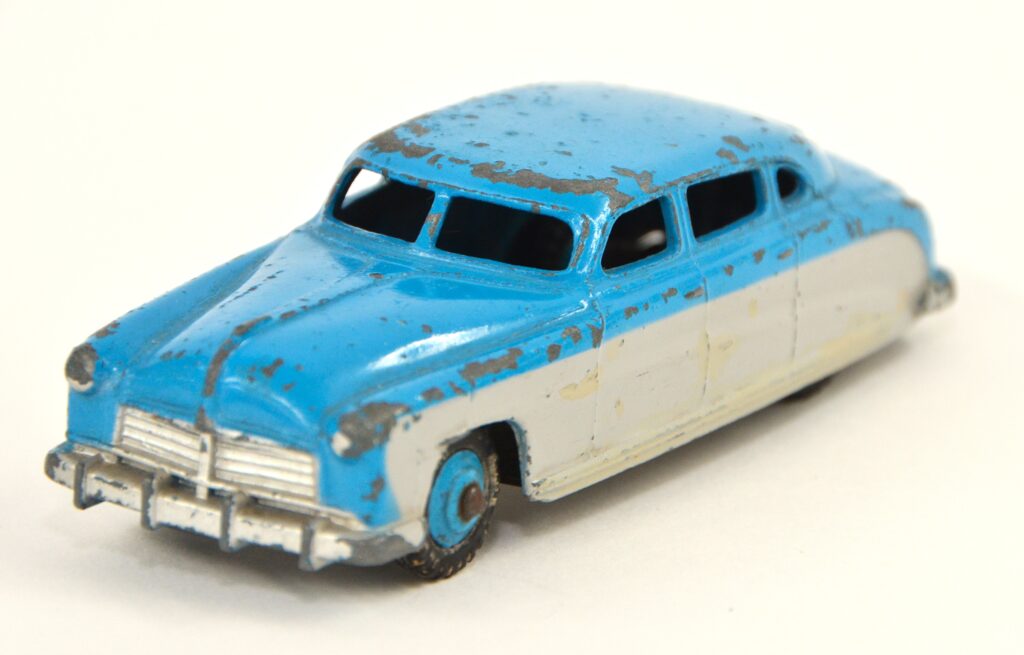
Shelf Classics
The McCulloch diecast collection – A lifetime hobby
Chris takes a look at an amazing collection of Matchbox and Dinky Toys that shines at Cars Inc Museum, in Upper Hutt, near Wellington.
The models were collected by the late John McCulloch (1944-2021). Chris, John’s widow, asked Paul Boden, the museum’s owner, if Cars Inc. would like to display them.
“We said yes, straight away as they’re so good,” he told me. Chris and John’s family arranged these eye-catching die-cast models for the museum in their attractive groupings.
As a schoolboy, John had saved up and spent his pocket money on his first Matchbox Toy, the Horse-drawn Milk Float (No. 7), the model that started his collection. He seldom played with the toy, as its immaculate condition shows.
Book Review – Ion Man
The Life and Adventures of Bill Buckley By Robert Tighe
Award-winning journalist Robert Tighe has skillfully captured the exploits of an incredibly talented yet very modest New Zealander, Bill Buckley, who came from a Waikato farming background.
Book Review – JAGUAR MARK VI-IX
Celebrating the 1950s Flagship Saloons
By Richard Waugh, Photography by Cameron Leggett
Published by The Kynaston Charitable Trust
Paul Skilleter, Jaguar historian, writes in his foreword for Richard Waugh’s latest book, “I thoroughly commend this book to everyone keen to know more about this magnificent Jaguar.” Skilleter also assisted with the preparation of the book for publication and has written many books on Jaguar.
Book Review – The Jaguar XK140 in the Southern Hemisphere
Limited edition, by John Elmgreen and Terry McGrath
While attending the Rev Dr Richard Waugh’s “Jaguar Mark VII to Mark IX” book launch at the recent Jaguar 75th Anniversary Rally in Christchurch, celebrating these amazing big saloons, I caught up with noted Jaguar author, collector and all-out Jaguar enthusiast John Elmgreen, over from Australia for the weekend.


Auction Report
Sunday Drive kicks off at Highbrook
Sunday Drive classic and performance car site opened its new purpose-built venue at Highbrook in South Auckland on October 19, with a classic car auction attracting a wide variety of vehicles.
Sunday Drive has moved from its previous premises in the Auckland suburb of Onehunga. Around 250 bidders online and fewer hopefuls on site for the October auction began slowly, but soon gathered pace.
While many heavy metal lots failed to sell, Sunday Drive director Taylor Campbell said over 50% of the lots were successful. Of the 327 vehicles on site, almost 150 are regarded as classics and performance models valued at $4 million, and an anticipated 45 of these were up for the October auction.
Auctioneer Robert Tulp kept the action in place with his Aussie humour, and he will also be controlling the action when Sunday Drive holds its classic car auction at the Ayrburn Classic 2026 in Central Otago on February 21, and the Repco Beach Hop at Whangamata on March 28.

Classic car news
MOPARS in Oamaru, Jaguar rally, Manfeild Classic racing report, Wigram Revival, a Torana transformed and more…