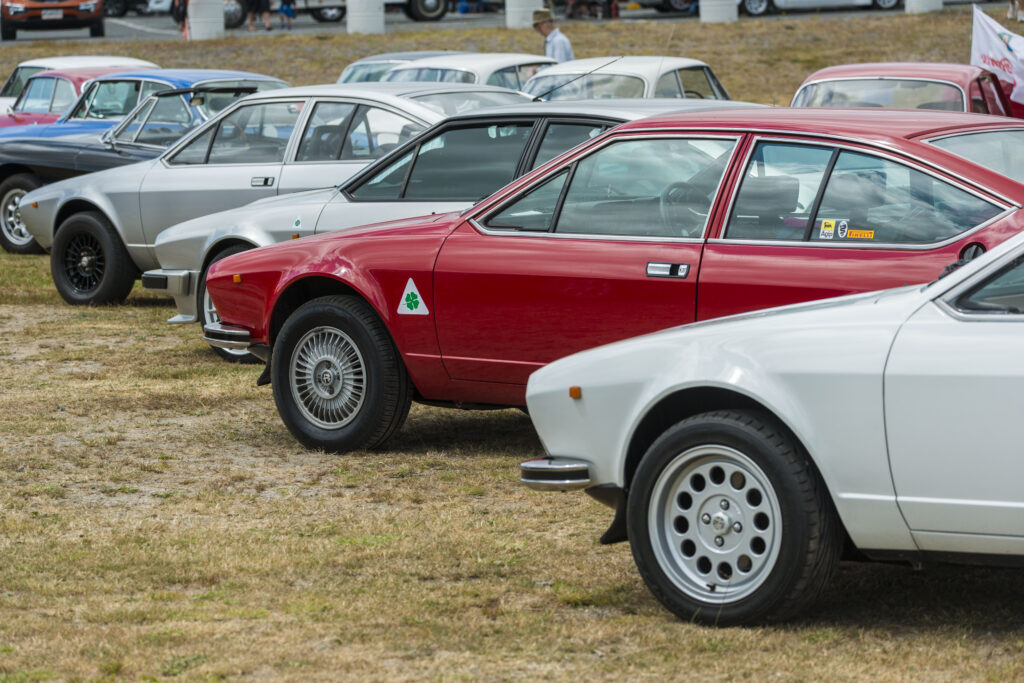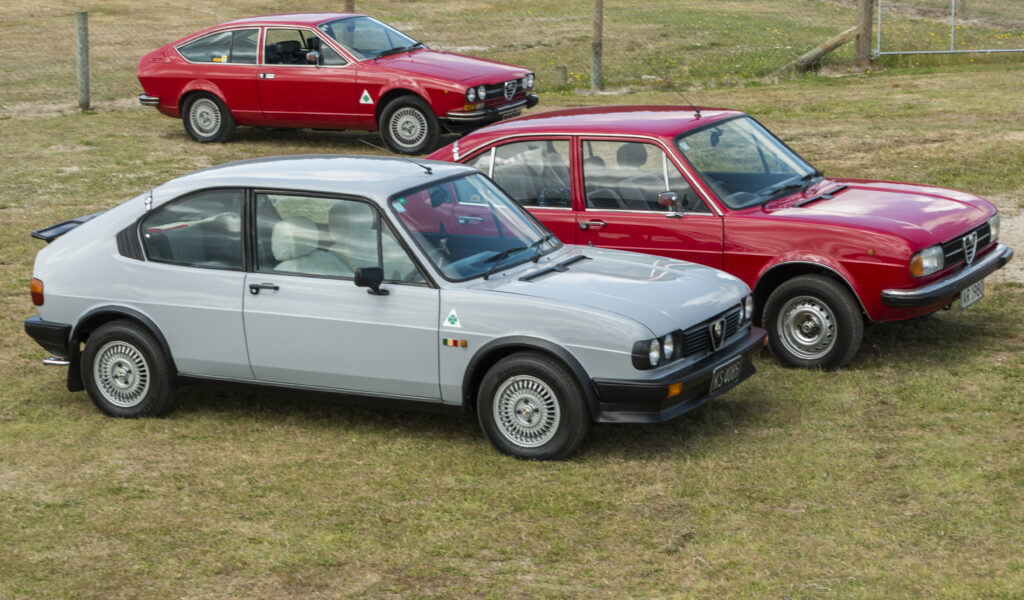
The Alfetta GTV lives in the shadow of its gorgeous 105 series older brother, but offers its own rewards to Alfa enthusiasts
By Ian Parkes
Photography: Stephen Perry
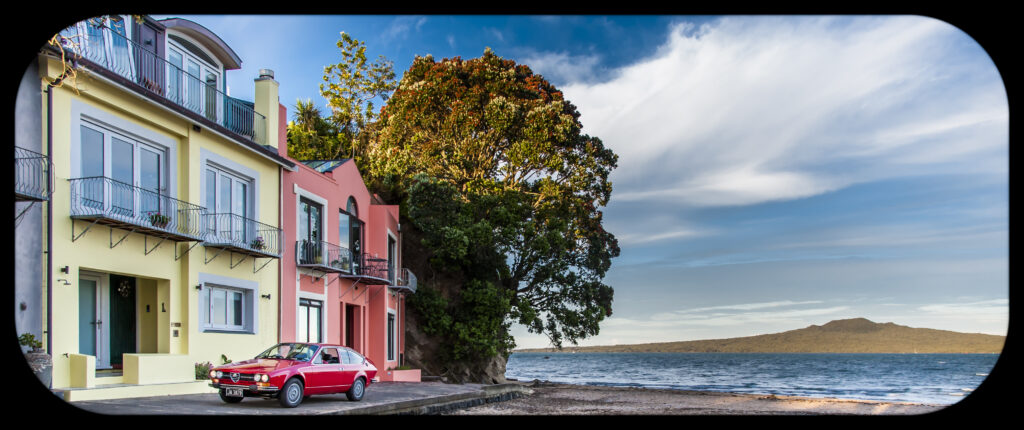
The latest generation of Giulia saloon cars are clothed in some of the world’s most gorgeous motoring curves, as befits a car made by a company hailing from one of the world’s great capitals of fashion and style.
That wasn’t always the case, though. Many of Alfa’s earlier saloons were boxy affairs designed in-house, such as the ’50s Giulias, the ’70s Alfetta Berlinas, and the love-it-or-hate-it Alfa 75.
However, responsibility for the design of the marque’s coupés was handed to Italy’s deservedly more famous design houses, and these remain the cars that get most of the attention. Bertone’s Franco Scaglione created the 101 series Giulietta Sprint and Spider, and Giorgetto Giugiaro the iconic 105 series cars for Bertone, as well as the Alfetta GT and GTV car we have here, but by then he had founded his own design house, Italdesign.
The taut, organic lines of the 105 series coupés remain the high point for many Alfa fans, and apart from Alfas of this era’s even more enthusiastic than usual reversion to rust, they will cope perfectly well in modern traffic and offer lots of fun while doing so. Values are heading north fast for any and all variants of these great cars, which means enthusiasts looking for a bargain must look elsewhere in the line-up.
Pocket supercar
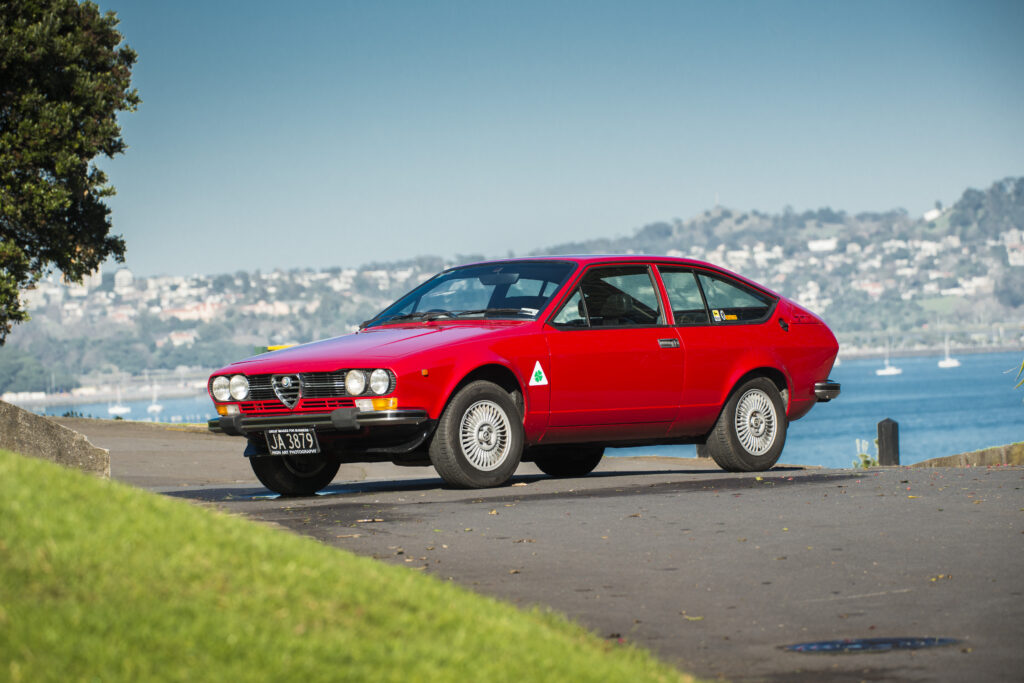
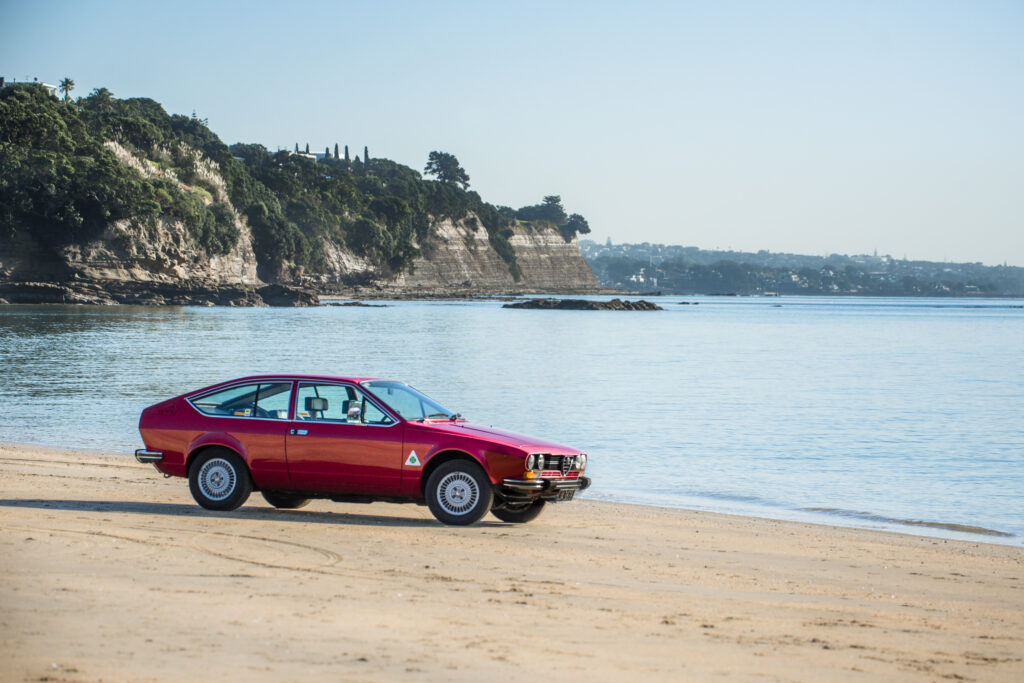
Enter the 116 GT and GTV models. At first glance, these look like pocket supercars — a normal-width version of much more exotic machinery. The owner of this 1978 GTV, Stephen Perry, with only a skerrick of wishful thinking, says through half-closed eyes, “It is not dissimilar to the Maserati Khamsin”.
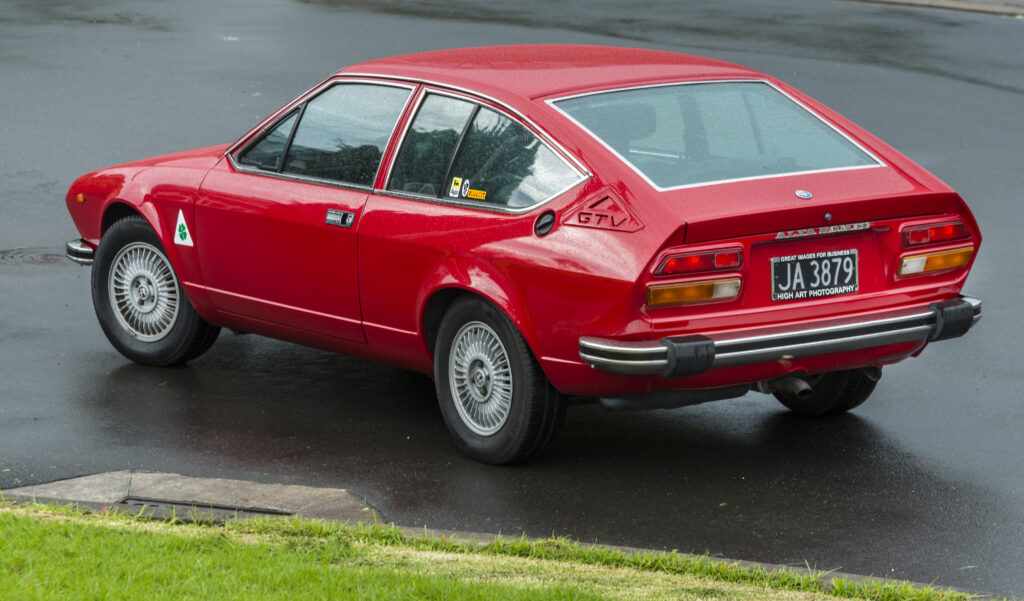
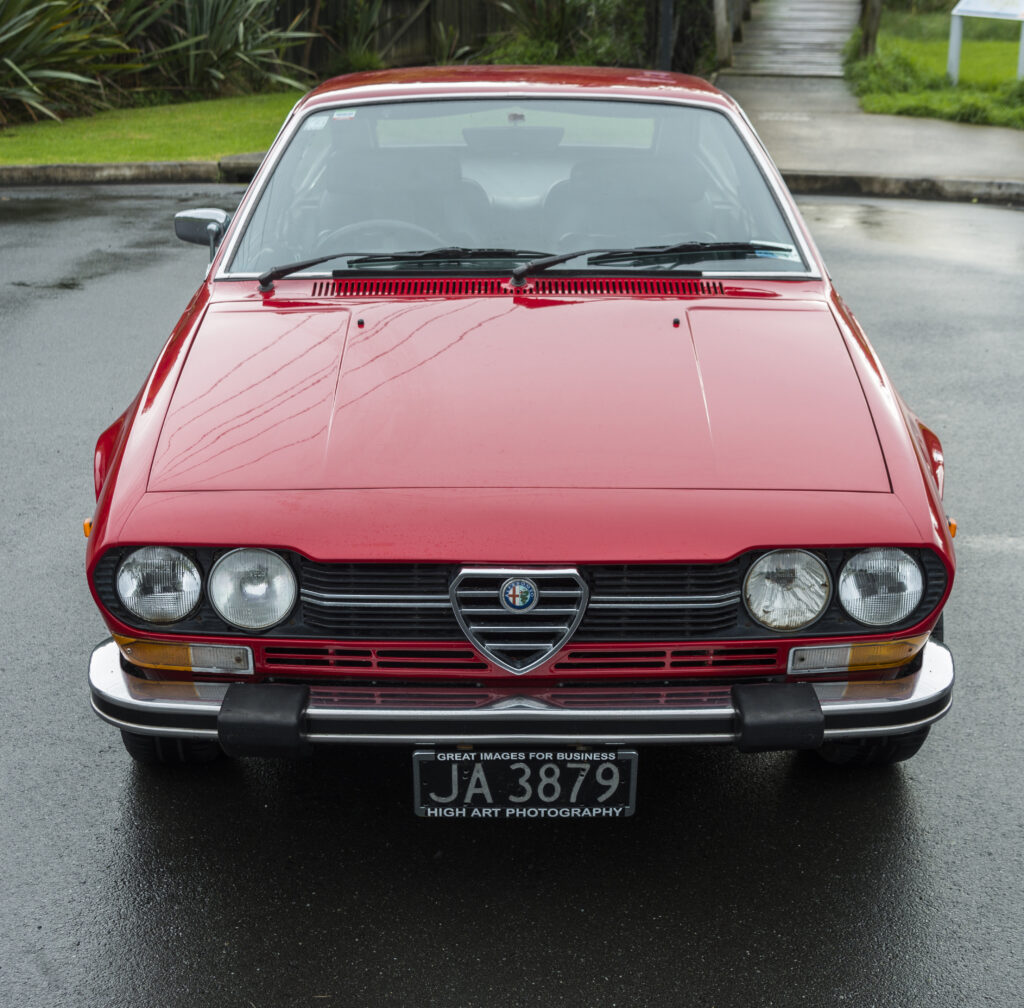
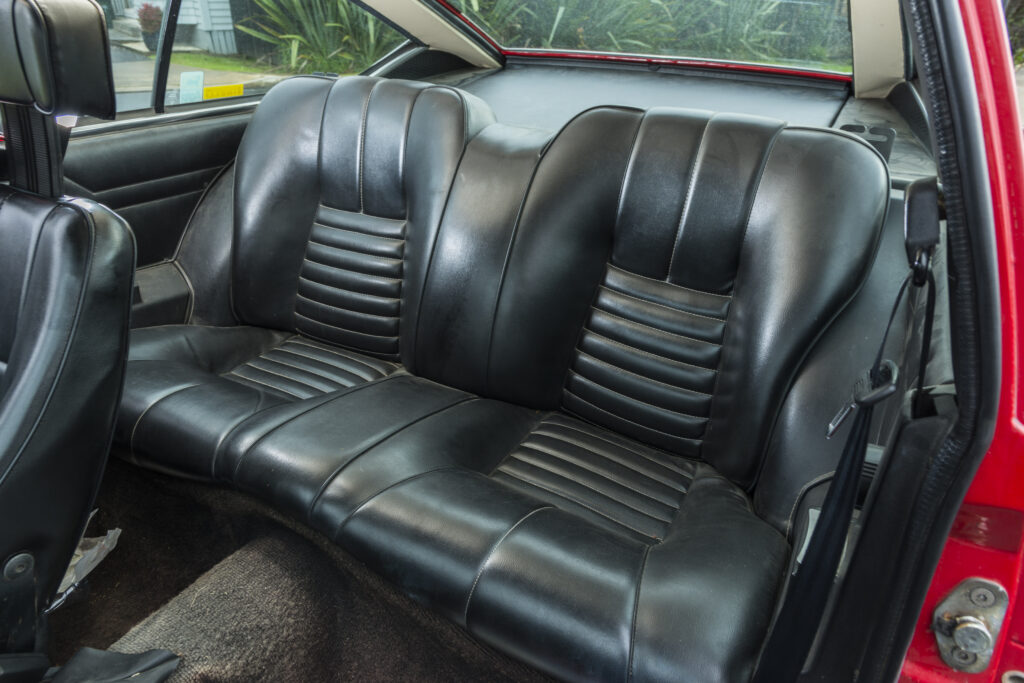
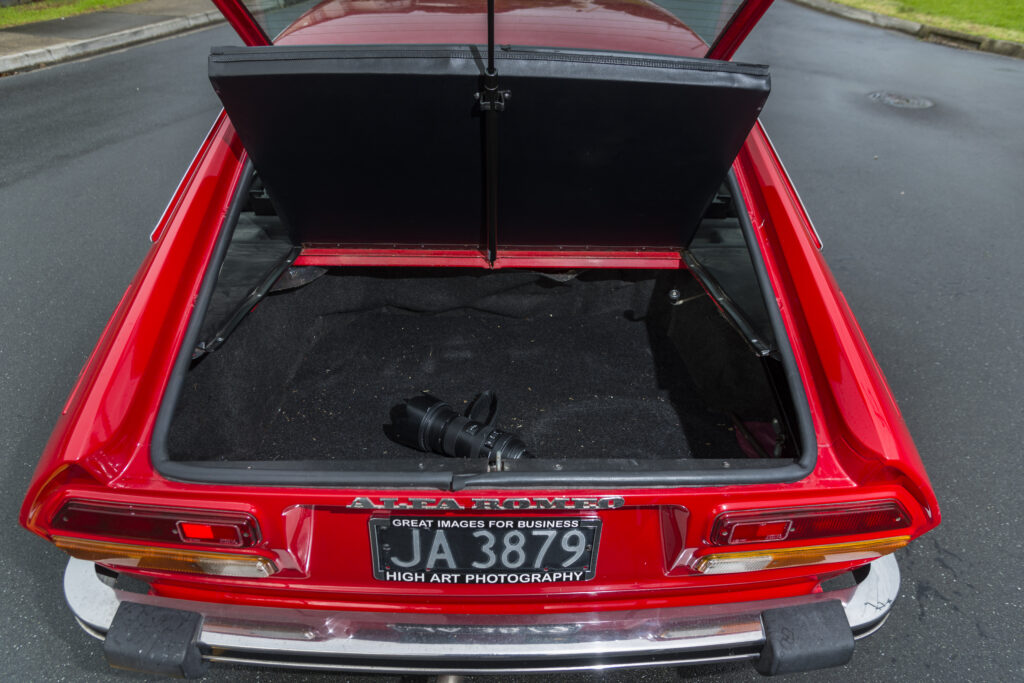
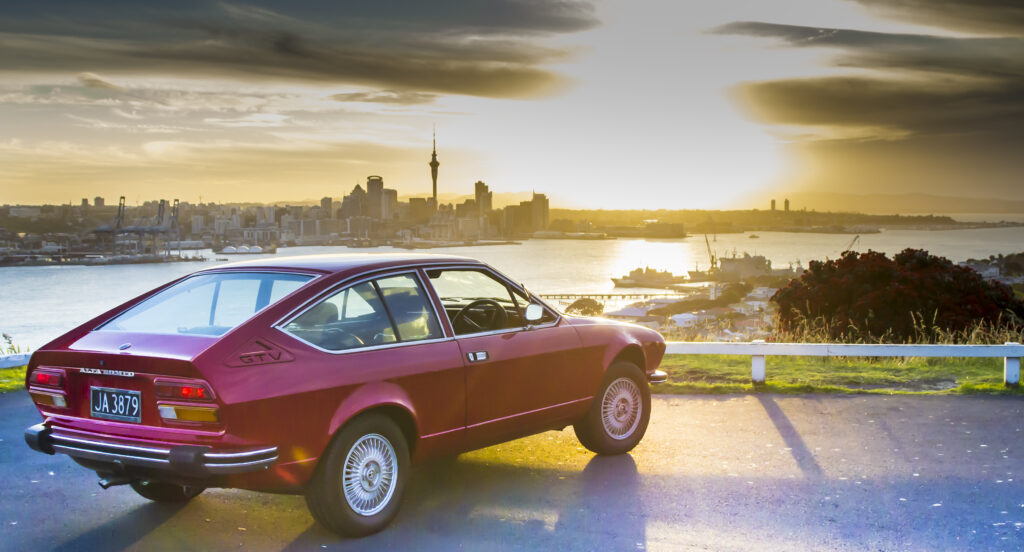
The nose is particularly trim and elegant from all angles, featuring cut-outs for the headlights echoing Alfa’s own exotic Montreal. The body is unfussy, lean with lots of glass, and the roofline shows a faint family resemblance — although on a much more angular car — to the curved waistline of the earlier 105s. The slightly hunched rear means there’s much more space in the rear seats than in the cramped rear of 105s — very much a 2+2 — and a generous boot. These more severe lines are not quite as endearing as the 105’s, but they are still classy and clearly European.
Curiously, while Stephen often attends the Caffeine and Classics car shows looking for snap-worthy cars, he says people rarely show much interest in his car; there are many more gaudy and spectacular sights to see there — but I, too, feel a little miffed that there isn’t more love for this practical classic, which has a uniquely stylish body, some quality engineering, and, like nearly all Alfas, a rewarding drive. However, I then have to agree, while it has appealing qualities, it just doesn’t add up to being lovable like the 105.
That’s a good thing, though. It would be bad news indeed if all interesting classic cars drifted beyond the pocket of ordinary enthusiasts.
One person broke Stephen’s cogitations along these lines at a recent Caffeine and Classics when he was spotted studying the car intently. This was unusual enough to prompt Stephen to enquire. Turns out that as a child, decades earlier, he had spent many hours and thousands of kilometers in the back of one, as his parents charged across Europe on holiday, several times a year.
Alfa imprinted
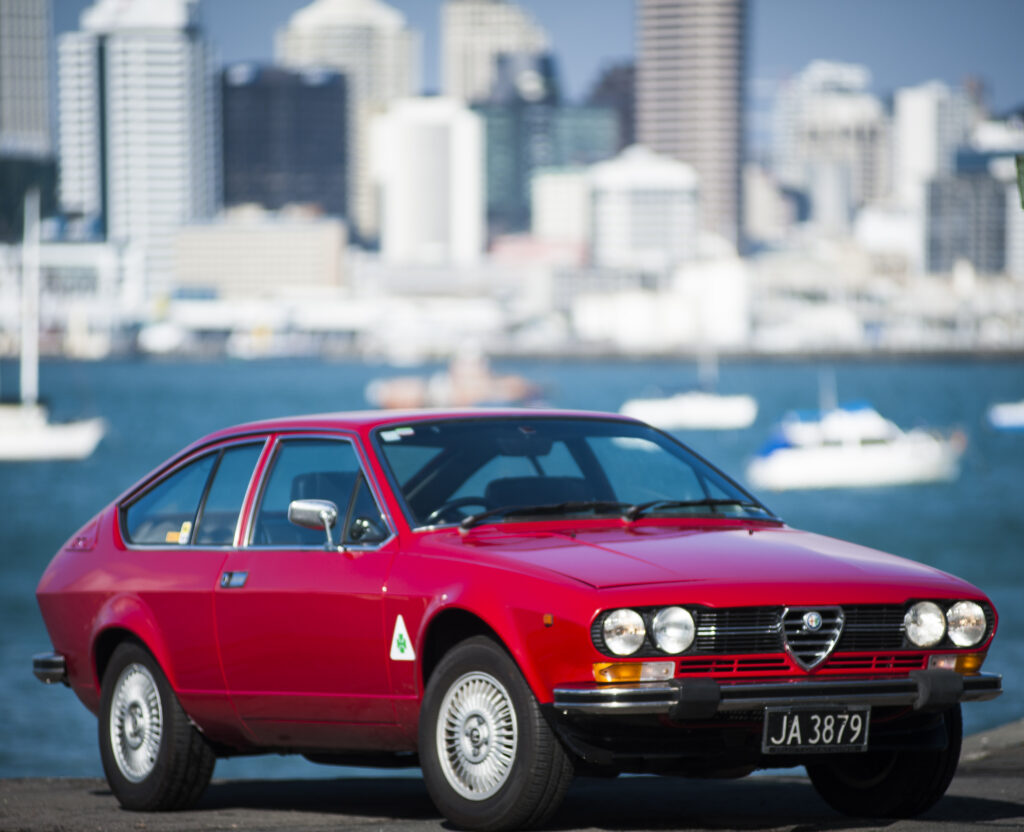
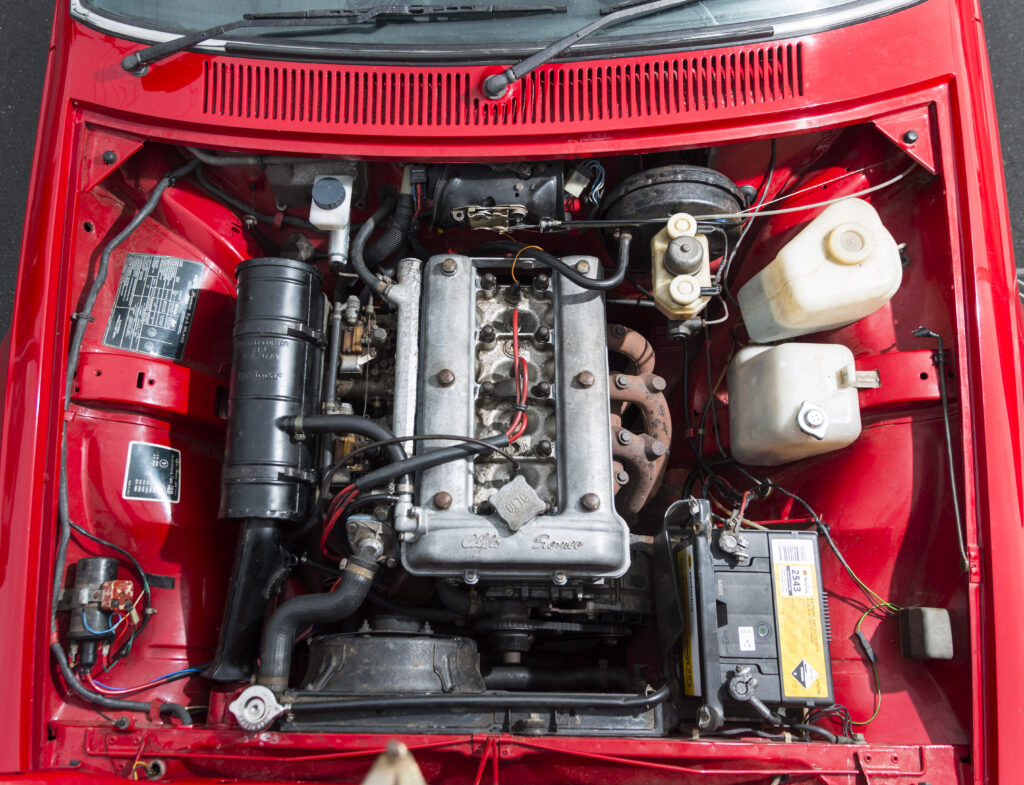
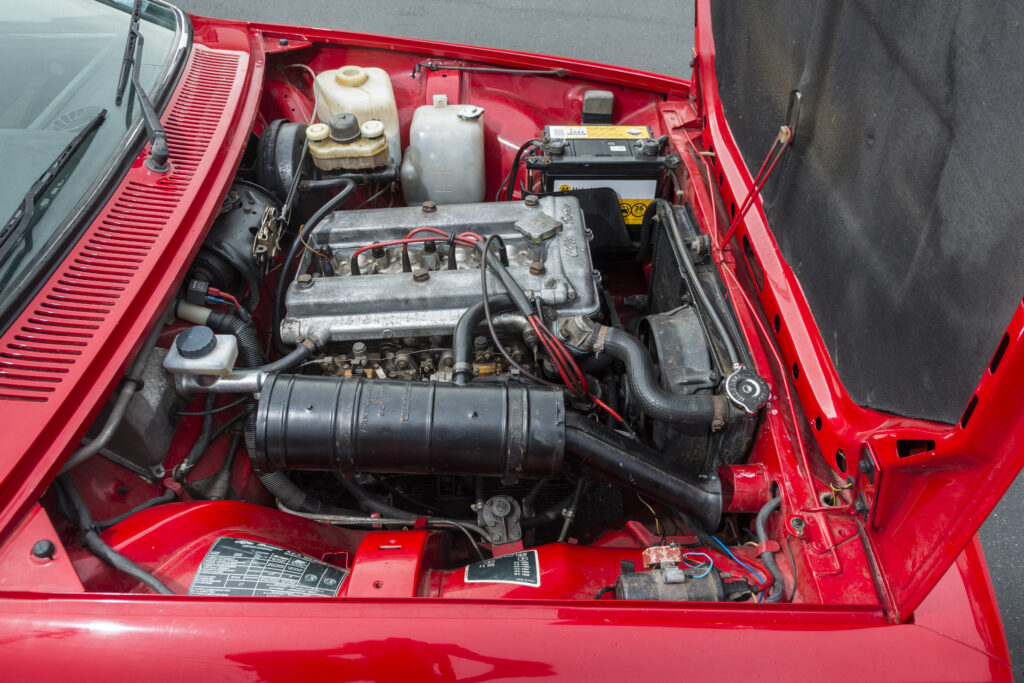
Steve’s car was made a third of the way through the Alfetta GT to GTV 6 12-year lifespan, and, on balance, it makes a good choice. It has Alfa’s robust aluminium two-litre twin cam four, which had been the backbone of Alfa Romeo’s reputation for sporting cars, making it more rewarding than its stablemate 1.6, or the 1.8 that preceded it. More importantly, while rubber overriders had been added to the chrome bumper, it had escaped the black plastic overload of the later models.
Despite that, Stephen confesses he’d still like to get a GTV 6. That 60-degree, 160hp, and highly tunable ‘Busso’ engine, named for its designer, is beautiful to look at and to listen to. It gave the GTV 6 the power worthy of its superb chassis, winning the European Touring Car Championship for Alfa from 1982 to 1985, and the Tour de Corse rally four years in a row from 1983 to 1986.
The chassis is a sophisticated package. It has a transaxle gearbox, shifting weight to the rear and improving the car’s overall balance, and a de Dion rear suspension with inboard rear discs and a Watts linkage. The front featured wishbone suspension with torsion bars and ventilated discs.
The best of the rest
Stephen can console himself with the fact that the two-litre is even better balanced than the V6, having the lighter four-pot engine. It’s not a terrible compromise. The V6 has an awkward wedge-shaped hump in the bonnet to clear the engine and more of that horrible plastic stuck all over the car with matching dull black trimmings. Without the distraction of the famous V6 in Stephen’s car, the focus is more on the design purity of the rest of the car, and its great handling.
It’s certainly characterful. Stephen says it rolled worse than the Foveaux Strait ferry, and some passengers enjoyed it about as much as a rough crossing, but Stephen, in the driver’s seat, was having a whale of a time.
There’s no need to court speeding tickets. That raspy engine note provides the perfect soundtrack as the car whips around roundabouts and sweeping bends without the hint of tyre squeak from the perfectly composed undercarriage, offering little moments of everyday joy.
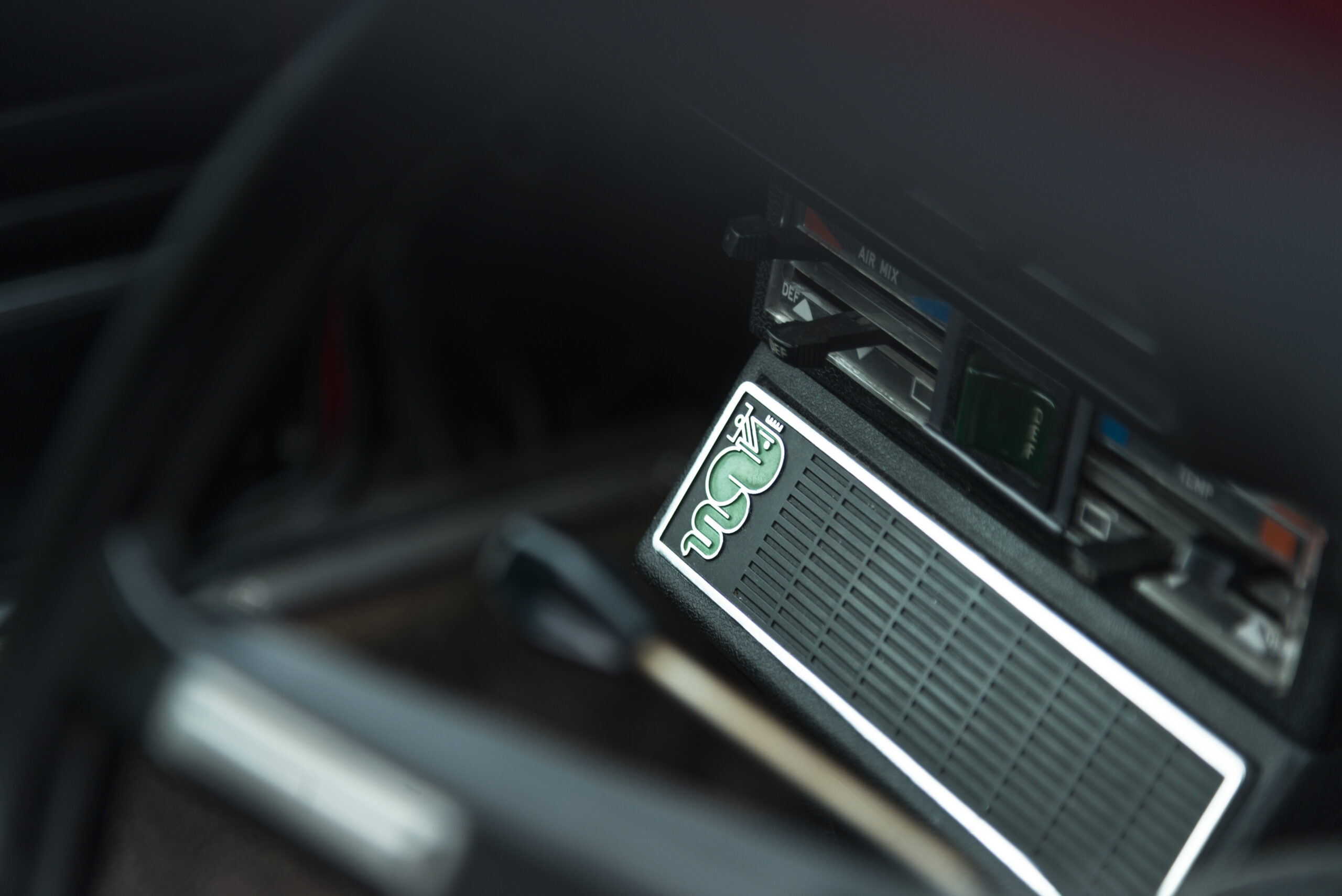
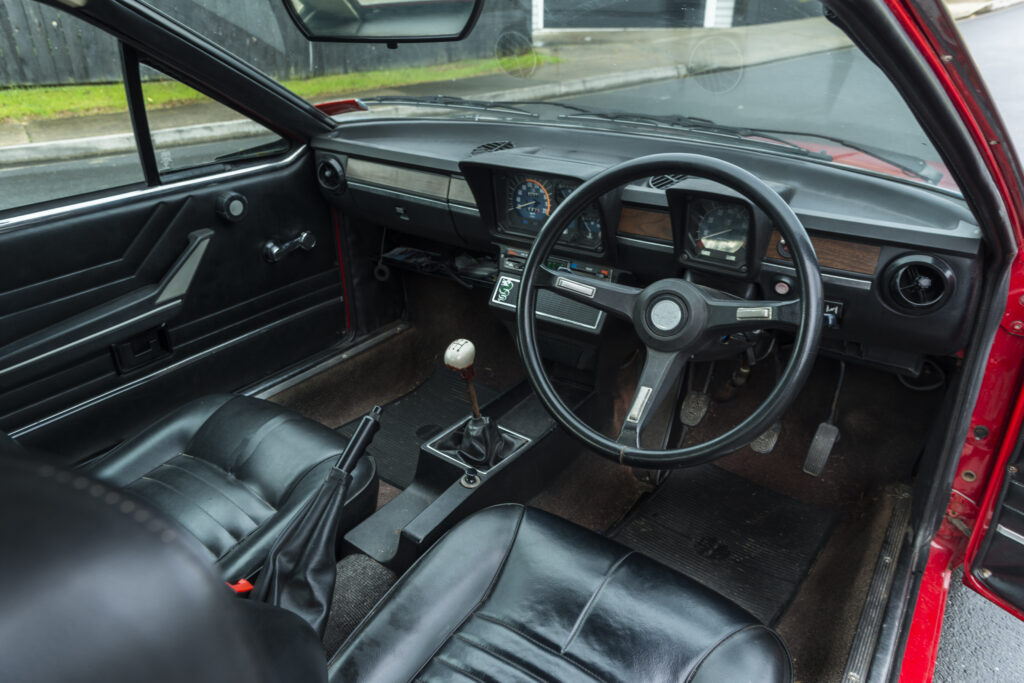
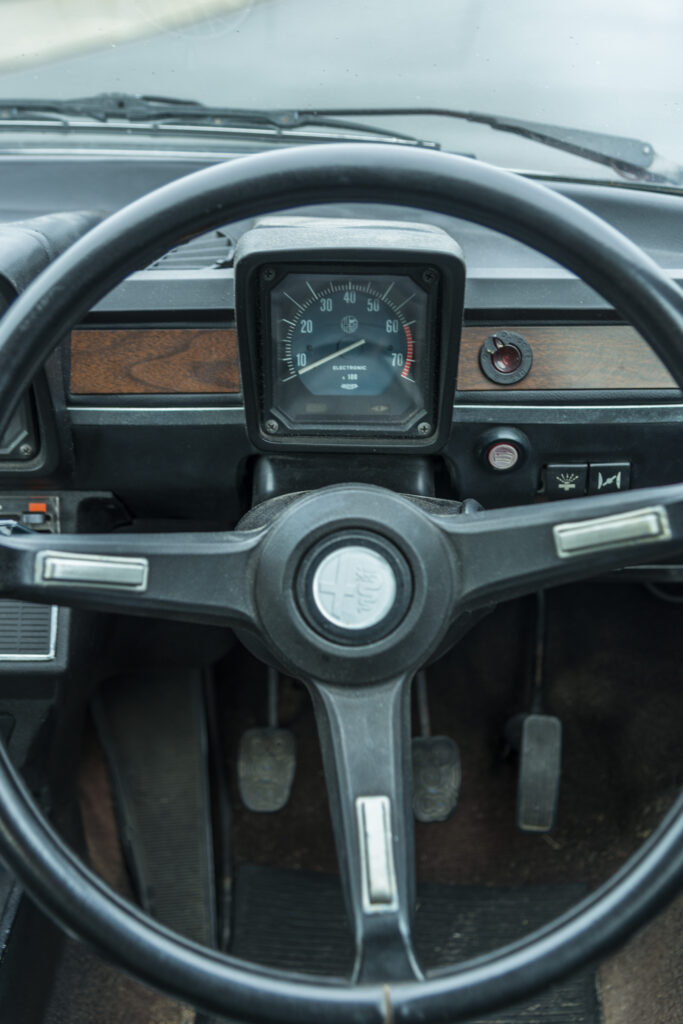
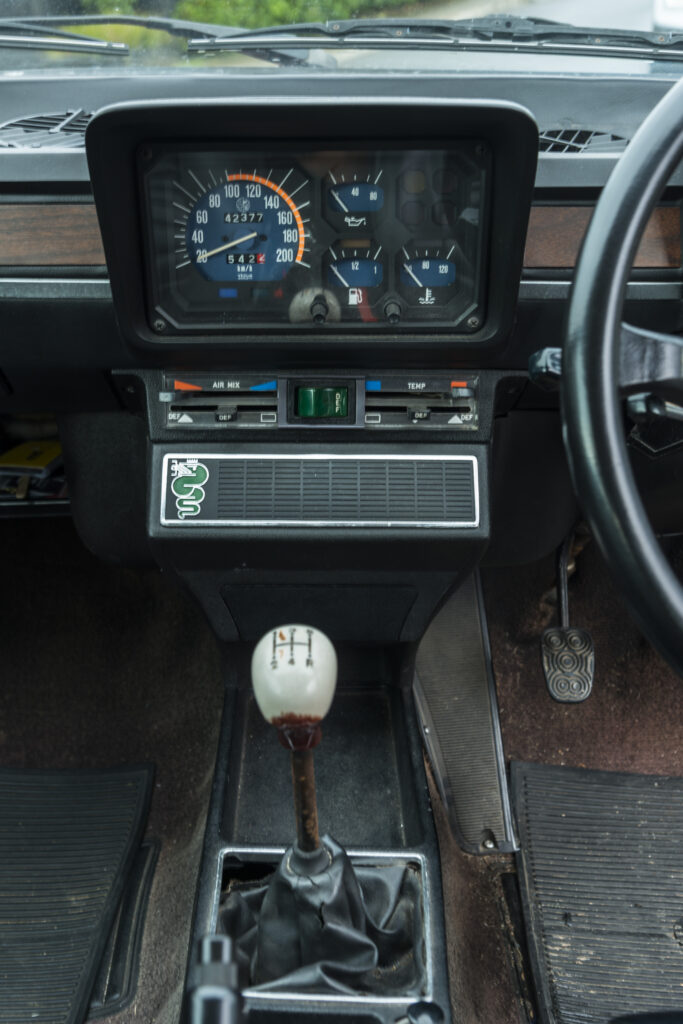
In reality, Stephen says a well-driven modern courier van would give him a run for his money, but he’s having more fun. Other characterful impressions abound. I’d forgotten about the famous ‘Italianate’ driving position, which offers a long reach to the steering wheel and a short reach to the pedals. These cars are also famous for their split instrument binnacle. The rev counter sits alone in a square pod in front of the driver, while the speedo and other gauges and lights, which are of lesser concern to a sporting driver, are in another larger square pod in the centre of the dash. We believe in some markets this was not allowed, meaning the speedo had to swapped to sit in front of the driver.
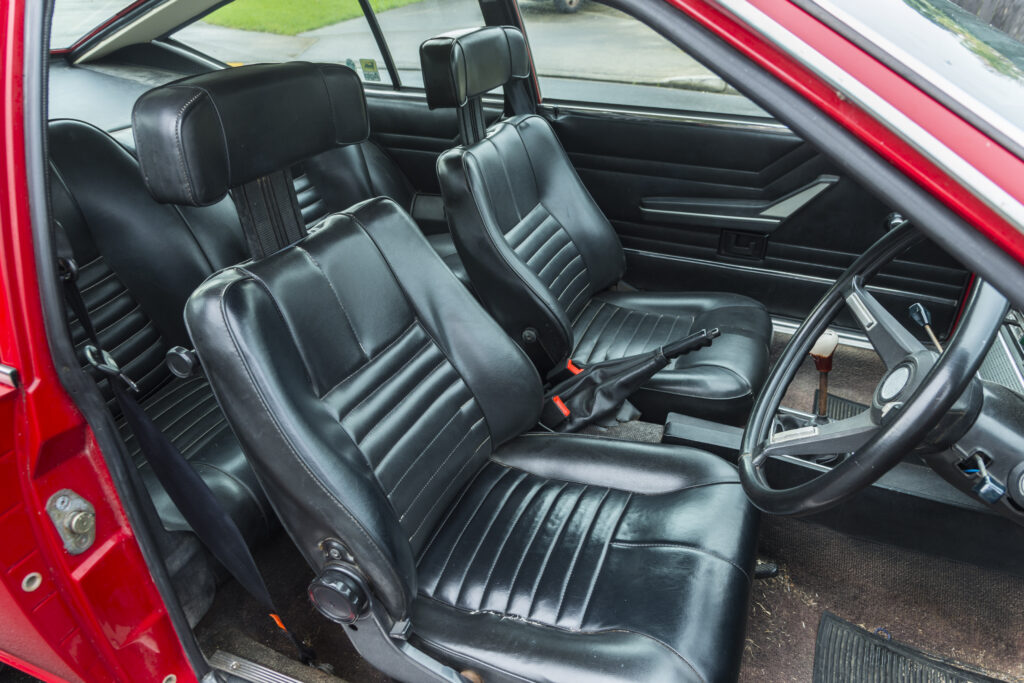
The car has good old wind-up windows and little dials under the quarter-light that you rotate to open them. There’s the same arrangement for the rear windows, which are not fixed as you might expect — a nice bonus. Something you don’t get with all coupés is a large tailgate over a large square boot with the full-size spare under the floor. The interior of Steve’s car is showing its age, but then this is an affordable Alfa and Stephen, being a photographer, like most others with a career in the media, has to space out his spend. Ask me how I know.
Near-perfect body
Stephen has made a sound choice in finding this one with a near-perfect body. It used to have a sunroof, but that was removed in an extensive $25,000 bare-metal restoration carried out by the previous owner.
Stephen says this car might be one of the most viewed Alfa GTVs of all time. Not long after its restoration, another professional photographer spotted it in a street in Christchurch and uploaded his image, copyright free, onto the net. It’s often the first image that comes up in searches and features on Wikipedia’s Alfetta page.
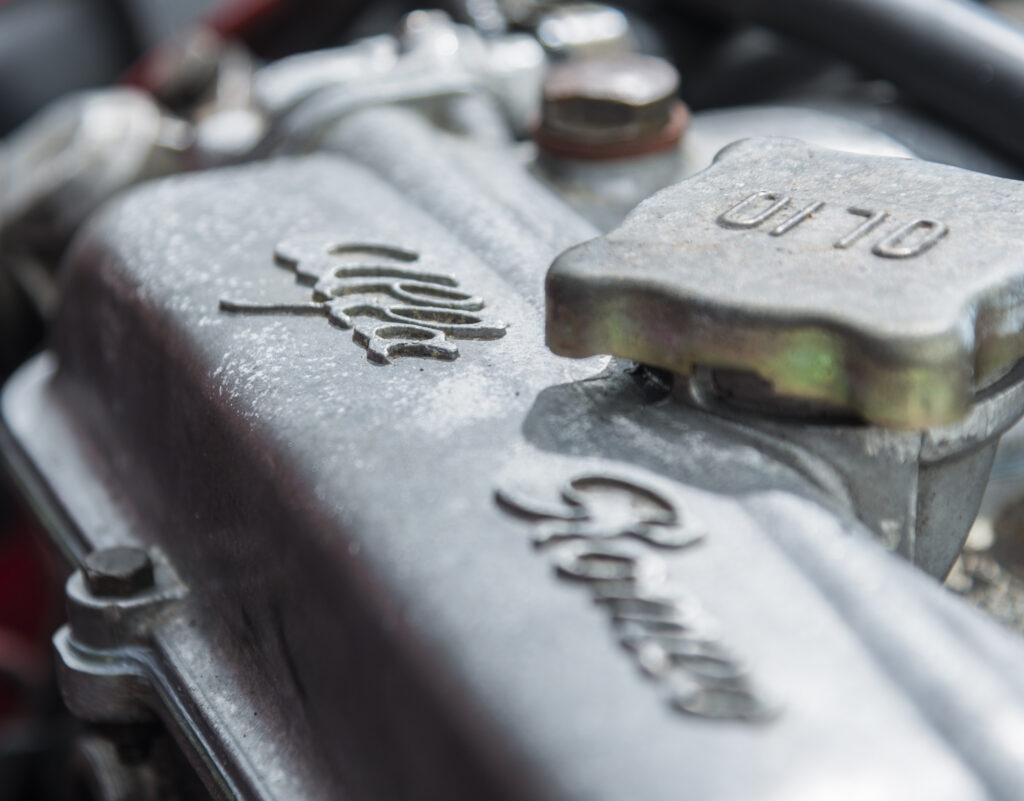
After I gave up on moving the driver’s seat further back, Stephen cautioned me to take my time with second gear. The synchro is not what it was. The engine starts readily enough, and you soon get just a hint of the hot engine smell you get from a lot of old Alfas — just another sensory feedback loop engaged, reminding you of the reasons, such as using a manual gearbox, why you like older cars. Stephen reseated the cam cover, which he hoped would solve an oil leak, but a rebuild for the engine, which has apparently done 146,000km, is also on the to-do list, along with the gearbox overhaul.
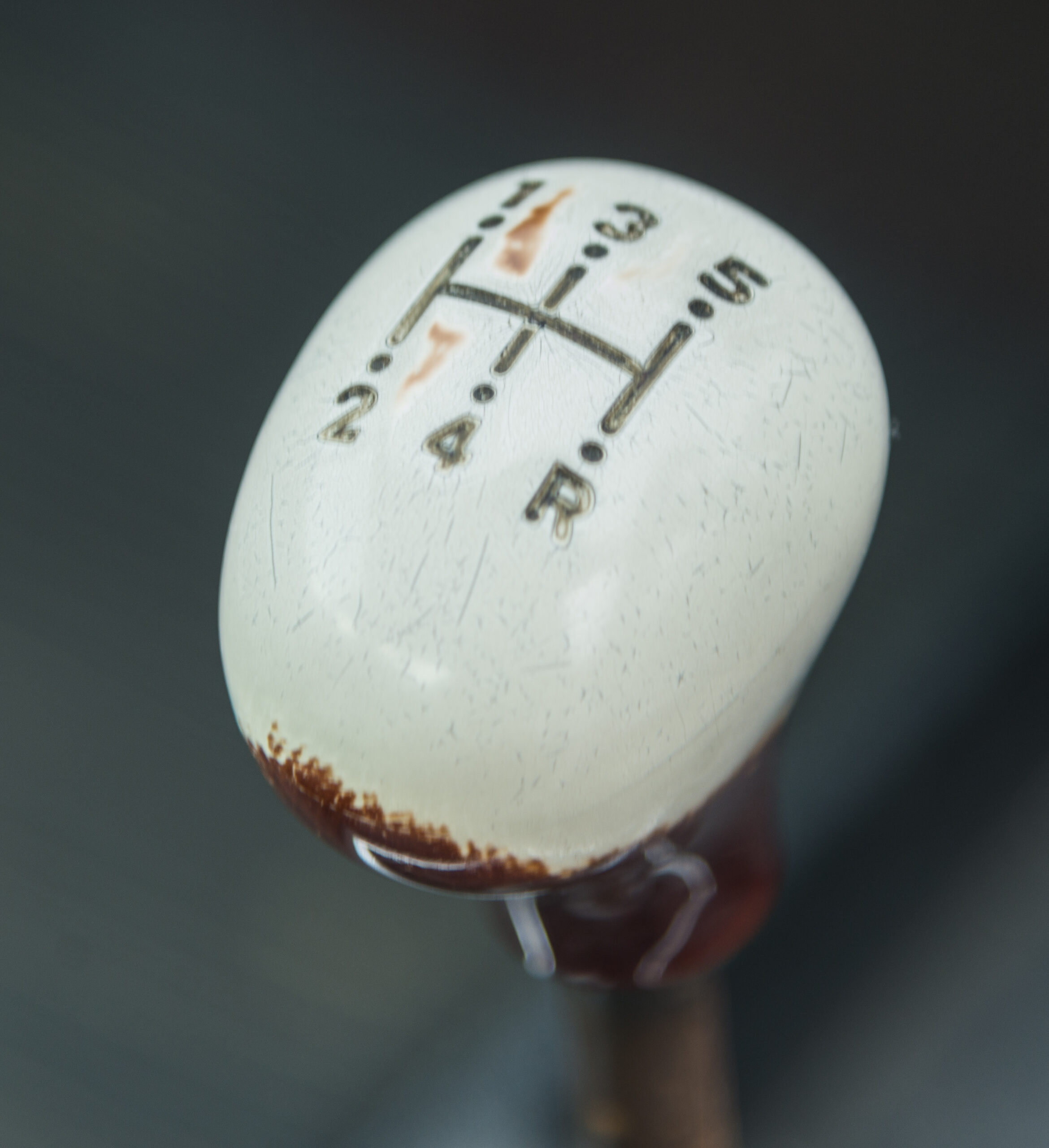
One of the trade-offs on this car is that in moving to a transaxle layout Alfa Romeo had to give up the sweet, albeit longish-throw gearbox of the 105s and Spiders. The arrangement of rods from the lever takes a little bit longer to complete the change for all gears. The gate is wide, and decent centring to the third and fourth gear plane also conspires to make gear changes deliberate. After a crunch selecting second, I give that a longer pause and double-declutch with care. It would quickly become second nature. Ahem.
Second seems quite low, so if you are grabbing it, this sudden wakefulness tempts you to hold onto it as the revs climb and the engine hits its sweet spot. I can see why Stephen had to remind himself to be more considerate of his passengers. It does prompt you to really drive the car. Stephen took a passenger on a jaunt down country a few months ago to see a rare Alfa Romeo. After a few kilometres of sweeping bends he felt compelled to apologize for all the unseemly leaning. Happily his passenger was enjoying the spirited ride and the Alfa’s tenacious cornering as much as Stephen was.
High roller
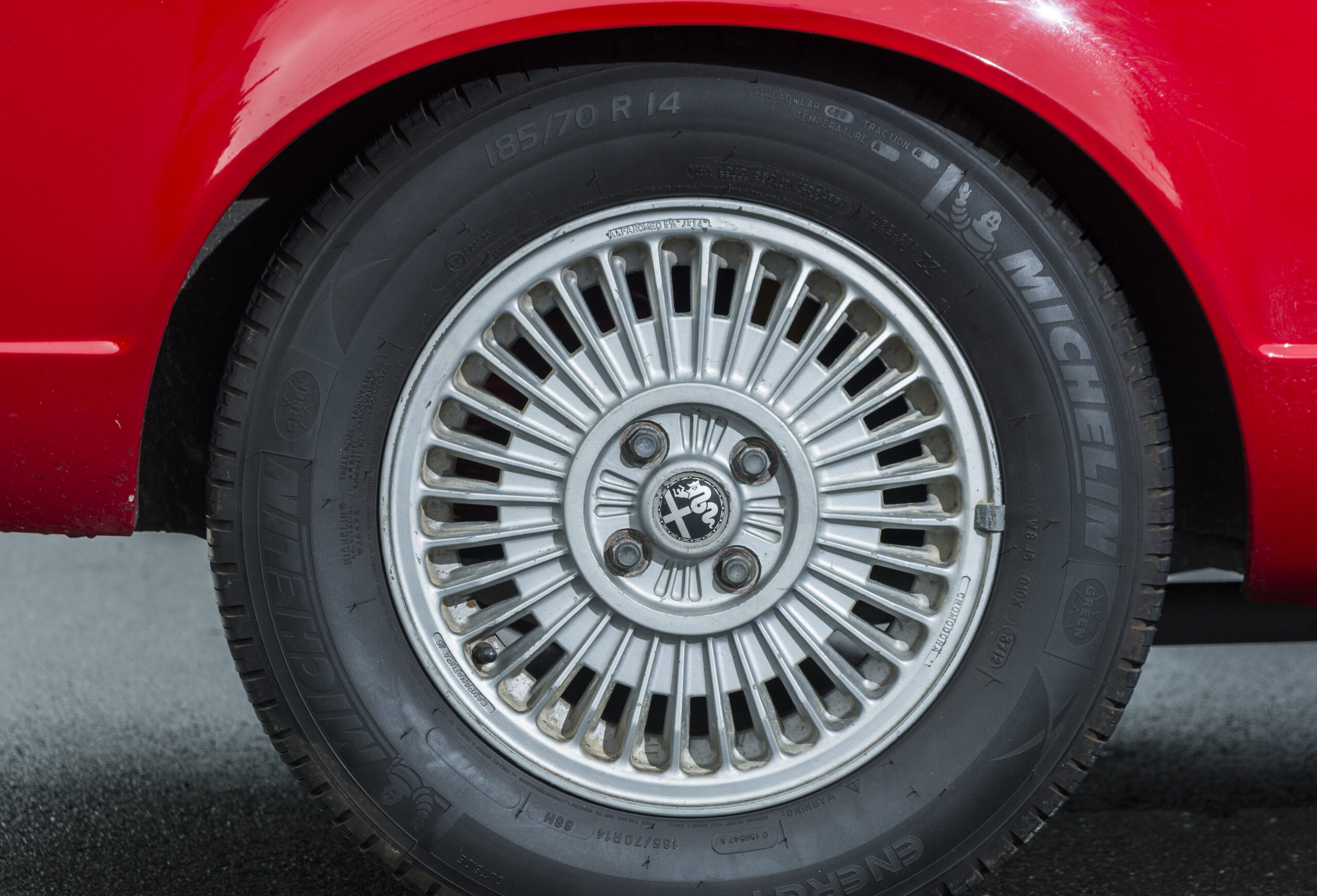
In fact, the car now rolls much less than it did. Stephen has carried out some suspension mods. The front sits a bit lower. As standard, they do look to be sitting absurdly high, offering generous clearance between the wheel arch and the 70-series tyres on their modest but stylish 14-inch diameter turbine-style wheels. It now has Bilstein shocks, the stiffer anti-roll bar from the GTV 6, and stiffer torsion bars, increasing in girth from something like 19 to 24mm. However, Stephen has noticed a slight trade-off in that the ride is a tad less cosseting. As we manoeuvre out of a car park I notice the steering also feels a bit heavy, and wonder if that’s another consequence of the changes until I remember that this is how it was in most cars of this vintage, before power steering became standard on everything.
Once past parking lot speeds, the bumps and thumps disappear, and I find the ride to be nicely supple, not at all harsh. As the revs rise and the engine rasp bounces off the walls and climbs into the cabin for company, we wind around a couple of Stephen’s favourite corners, and the uncanny handling becomes apparent. It feels like the tyres ought to be protesting, but it’s obvious they are massively unconcerned, just tracking where you point them.
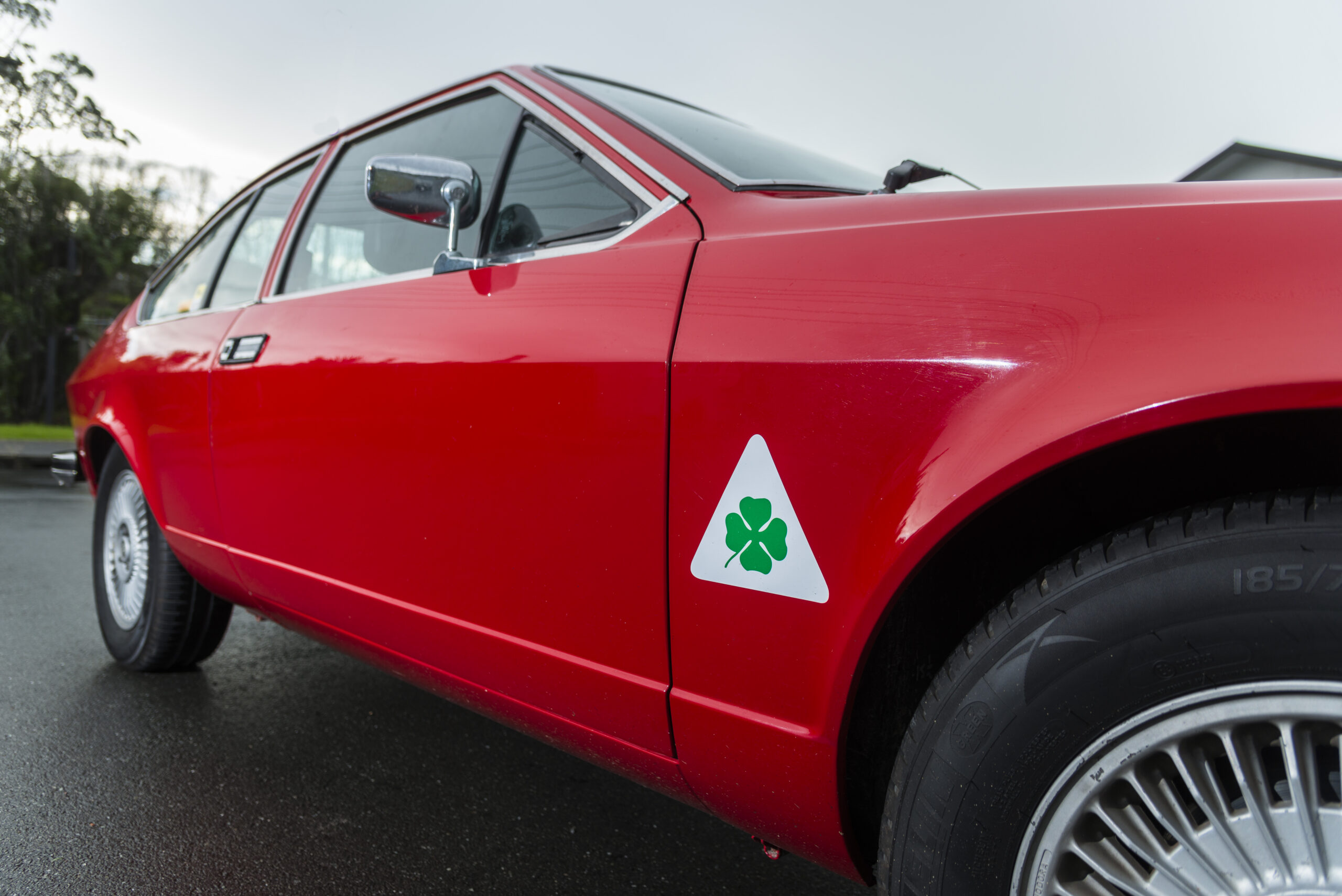
As soon as he bought it, Stephen realised this car would not be burning rubber out of corners. It just sticks too well. It’s a satisfying feeling and, like Stephen, I’d find it impossible to resist on a series of bends such as he described in Martinborough. It’s a proper Alfa.
We stop briefly at one of Stephen’s favourite car photo locations and a runner jogs over. He lives down country now but was back in town on a visit. He also owns an Alfetta GTV. The pair agree to catch up later. These GTVs are thin on the ground now, given Alfa’s affinity with rust, but, curiously enough, Stephen says there are four of them in his small Auckland suburb.
That’s another great benefit of Alfa ownership in New Zealand. The Alfa Romeo Owners Club is one of the more vigorous car clubs and has actually enjoyed a resurgence as younger owners with younger Alfas have joined. Jeremy Clarkson of top gear fame says you can’t really call yourself a car enthusiast if you haven’t owned an Alfa, so almost by definition, a sufficient number of Alfa owners are the right type to be enthusiastic about car club events.
Stephen lived in Canada for 20 years and was a member of the Alfa Romeo Club in Toronto, through a friend with a GT Junior, although he had a Golf GTi at the time. His first car in Canada was a Fiat 124 Spider.
He has owned this car for a couple of years, having previously owned a 105 1750 Berlina on which he carried out a full engine and body restoration. He plans to bring the GTV up to scratch, too, but he has other projects on the go and isn’t in any particular rush. Sometimes good things take time.
Specifications – 1978 Alfa Romeo Alfetta GTV
Length: 4205mm
Wheelbase: 2400mm
Width: 1660mm
Height: 1334mm
Kerb weight: 1080kg
Gearbox 5-speed manual
Engine: DOHC 4-cylinder 1962cc
Power: 91kW (122bhp) at 5300rpm
Torque: 175Nm at 4000rpm
Top speed: 194kph
0–100kph 9.5 secs
Know your GTVs
Alfa Romeo’s naming conventions are famously convoluted and seem to be applied on the fly, if any marketing advantage can be wrung from them.
The Tipo 116 Alfetta berlina, which took over from the 105 series Giulia, was named after the 1951 Formula 1 Tipo 159 Alfetta, which also had a transaxle layout and a de Dion rear end. It was launched with a 1.8-litre engine in 1972.
The Centro Stile Alfa Romeo was joined by the Giugiaro-designed Alfetta GT in 1978, also with a 1.8 engine.
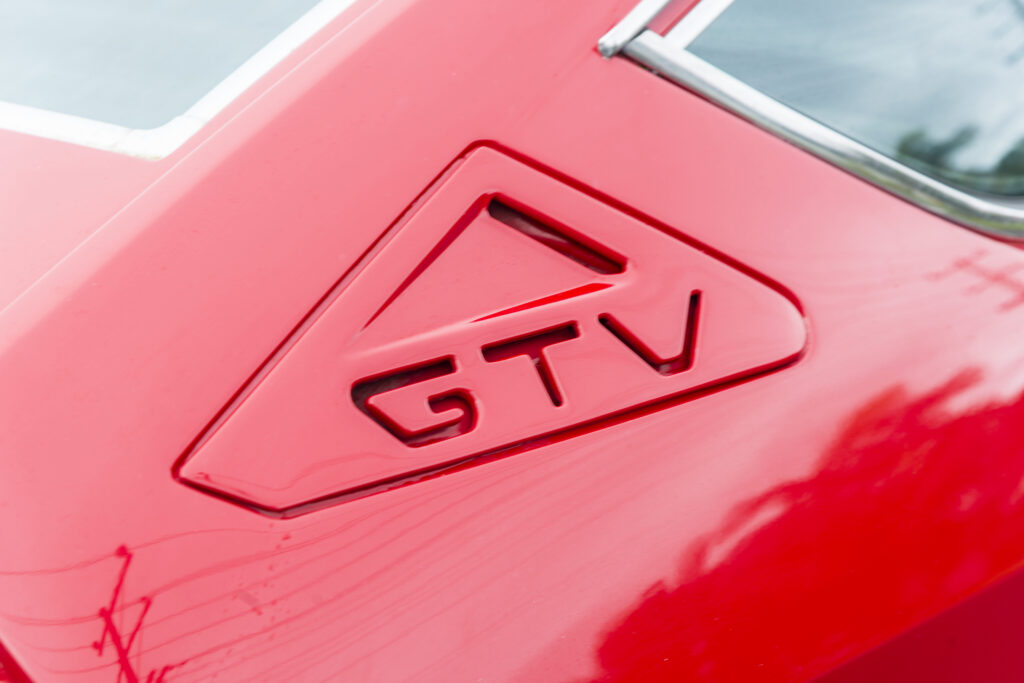
In 1976, it became a range as the 105 coupés, some of which also had the GTV moniker, were being phased out, the 1.8 replaced with the 1.6 Alfetta GT and the two-litre Alfetta GTV, distinguished by the badge in the C-pillar and two chrome lines in the grille. They also lost the chrome surround of the 1.6s tail lights.
In 1980, the GT got new one-piece tail lights, grey plastic bumpers, C-pillar vents, and side skirts and all the brightwork was changed to matte black. The 1.6 and the Alfetta name were also dropped. Wheels increased in size to 15 inches.
The same year also saw the introduction of the GTV 6, importing the V6 engine from the Alfa 6 executive saloon. The bonnet got a power bulge, and the fuel-injected engine got rave reviews. It won the European Touring Car Championship an unprecedented four years in succession (1982–85), the Group A Tour de Corse from 1983 to 86, also placing third overall among Group B cars in 1986, and the British Touring Car Championship in 1983.
The South African market also received a turbocharged GTV 6 and a three-litre version homologation special to take on BMW’s 535i. It won its debut race at Kyalami as well as victories in the Castrol three-hour race and the 1000km World Endurance Championship at Kyalami in 1983.
In the US, the four-cylinder was known as the Sprint Veloce but was discontinued in 1979.
Callaway Cars produced around 30 twin-turbo GTV 6s, lifting power to 172kW (230hp) at 5500rpm.