An unbelievable 60 Porsches will go under the hammer at the world’s most exclusive Porsche auction on September 6, held by international auctioneers Coys during the famous Porsche Classics meeting at the grounds of the Hedingham Castle in Essex, United Kingdom.
With 2015 marking the 60th anniversary of the debut of Porsche’s 356 Carrera, auctioneers have lined up 60 of the finest and most rare examples of the Stuttgart manufacturer to go up for sale to form a suitable tribute. The vehicles range from well-loved tractors, through to the state-of-the-art Carrera GT supercar, with everything in-between — including a comprehensive list of pure pre-1974 cars.
Indeed, the 2006 Porsche Carrera GT present at the auction is predicted to be the most expensive car on sale. As a European Specification example, it stands as a truly exceptional variant of one of greatest supercars of all time. With only 6300 miles under its belt from new, it is estimated to sell for between £500,000–£550,000, or NZ$1.2–1.3 million.
The auction will feature a 1966 FIA Porsche 911 SWB, formerly campaigned by the late Roy Lane, which is estimated at £95,000–120,000, or NZ$230,000–290,000. Another highlight is set to be an original right-hand drive 1960 Porsche 356 B T5 1600 Super cabriolet, estimated to sell for between £140,000–160,000, or NZ$338,000–386,000. It’s not the only 356 convertible for sale either, with a 1959 Porsche 356 A Convertible D also available to the highest bidder, estimated to sell for between £130,000 to £160,000, or NZ$314,000–386,000.
Amongst the pre-1974 cars, Porsche connoisseurs will find a very special 1970 Porsche 911S factory car. It’s known as the The Vic Elford ‘Quick Vics’ 911S, having been owned and driven by Porsche-legend Vic Elford. Born in London, Vic was one of the fastest drivers of the sixties and seventies, eventually given the immortal nickname; Quick Vic. This car was assigned to him by Porsche KG Stuttgard as his daily company car. With remarkable documented history, it is one of the most exciting and interesting examples of its kind available on the market today.
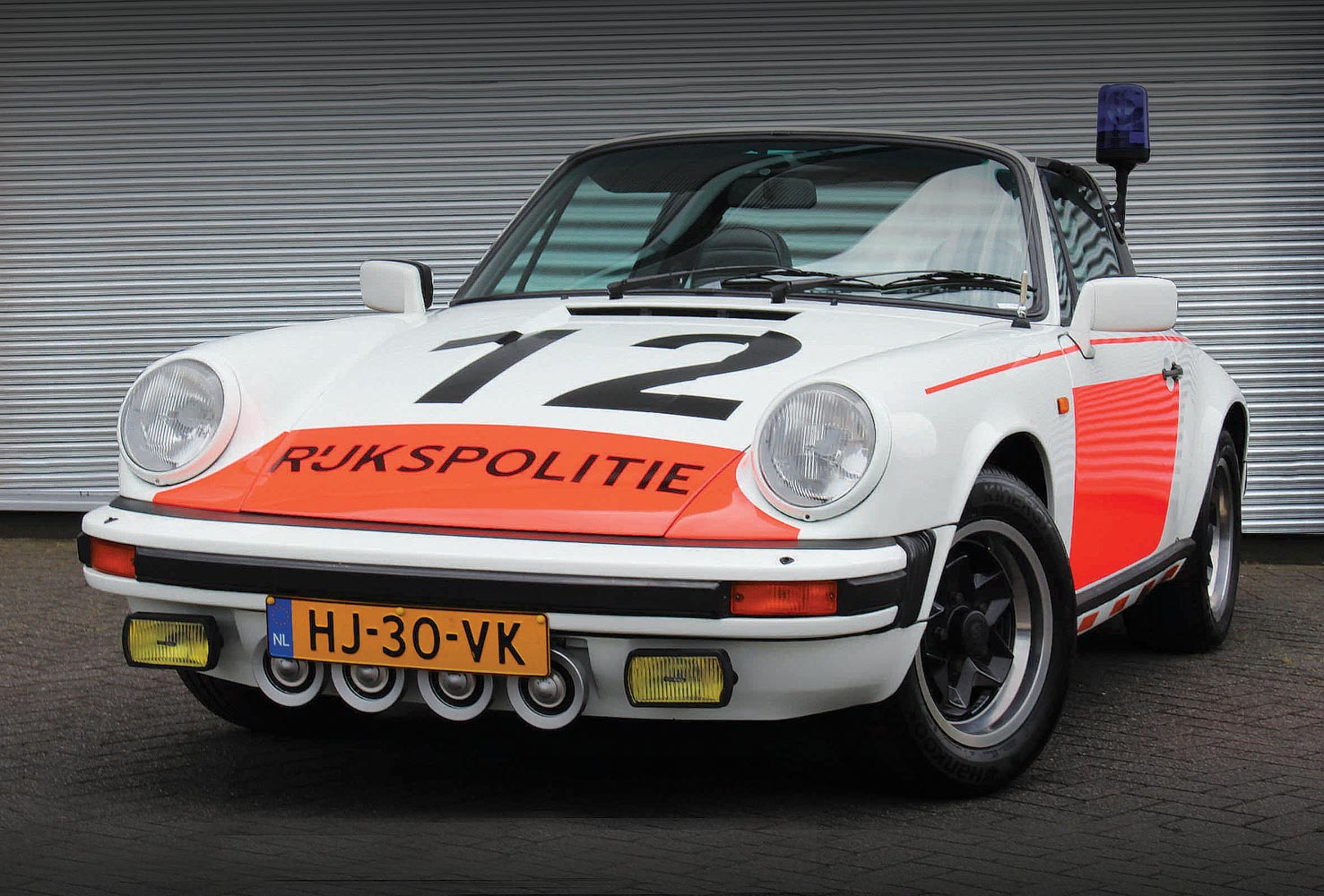
Other important cars going under the hammer include a 1982 Porsche 911 3.0 SC ‘Rijkspolitie’ Dutch Police, a high-speed pursuit vehicle estimated at £80,000–100,000, or NZ$193,000–240,000. There’s also a 1994 Porsche 964 Speedster, one of only 14 right-hand drive cars produced, which is estimated to sell for between £160,000–180,000, or NZ$386,000–434,000. And there’s a curious 1956 Porsche 356 Carrera Coupe Grand Sport, which has spent 20 years of its life in the well-known Rene Mauries car collection.