

Weekly Motor Fix: the ultimate ’60s getaway car

16 March, 2015


In the late ’50s, early ’60s the S-Type Jaguar quickly established itself as the ultimate ‘Q’ car — no ’60s bank job was complete without a 3.8 getaway car. With a larger rear compartment than the popular Mk2,  the S-type could more readily accommodate all members of the robbery team, and the smooth ride, afforded by Jaguar’s newly developed independent rear suspension, meant that the team could easily sort out items, such as the gelignite, en route to the job without fear of a broken road surface setting off a detonator.
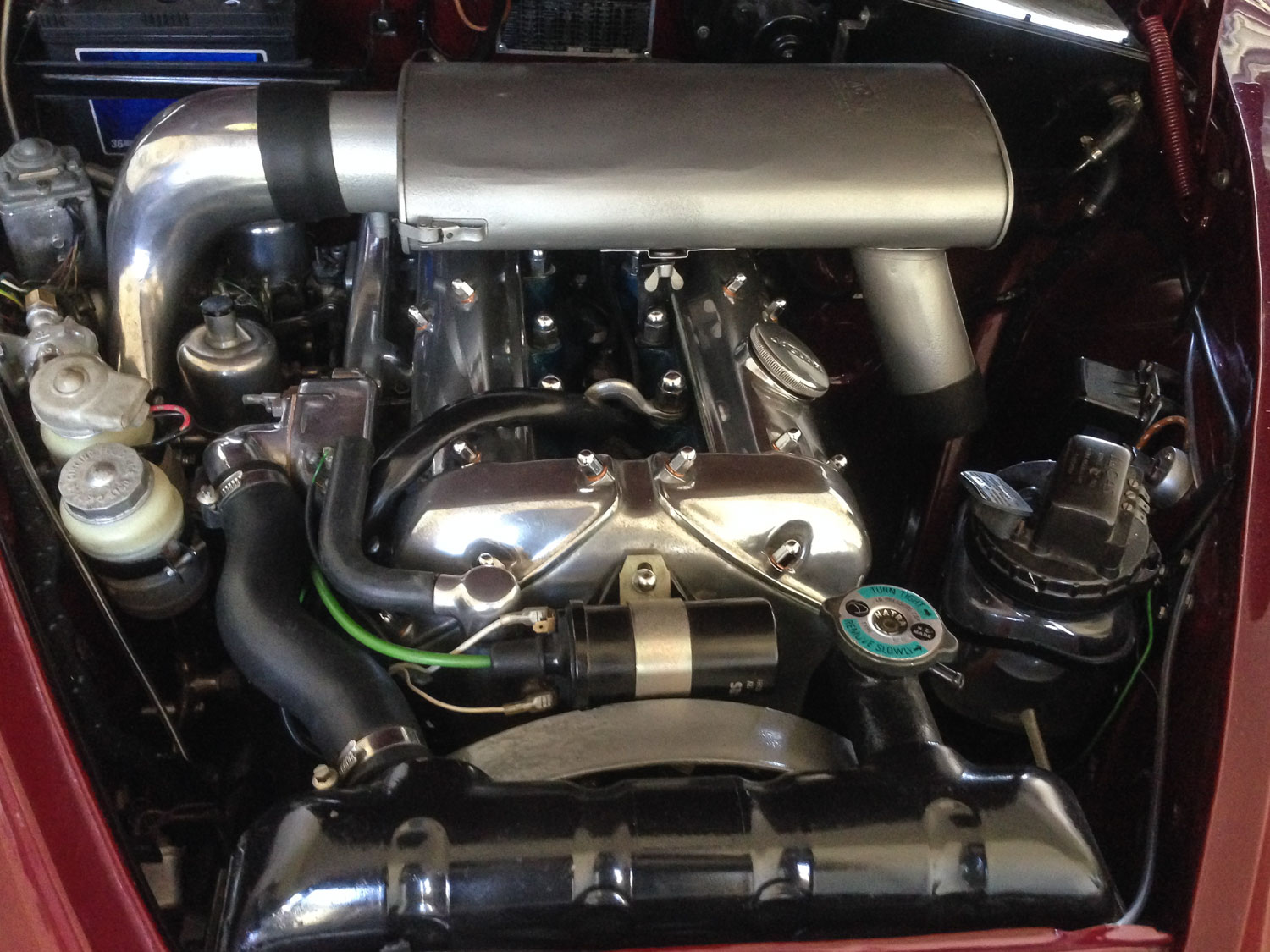
Once the blag had been completed successfully, the S-Type provided a capacious boot more than capable of carrying a few dozen mailbags stuffed with cash.
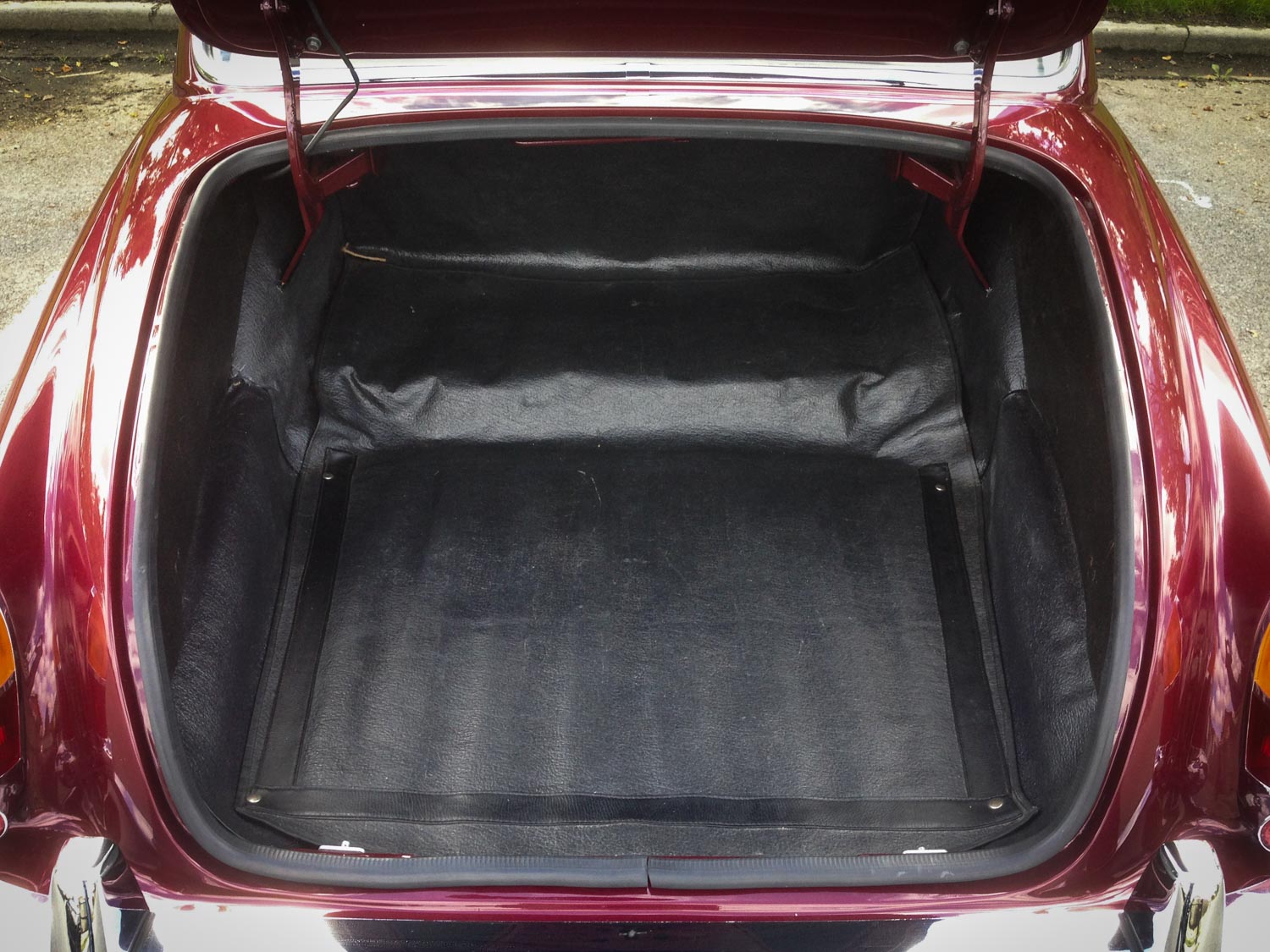
Of course, prior to the bank job, that large boot would’ve easily accommodated essential items such as sawn-off shotguns, heavy-duty electric drills, bolt cutters, and acetylene cutting equipment.
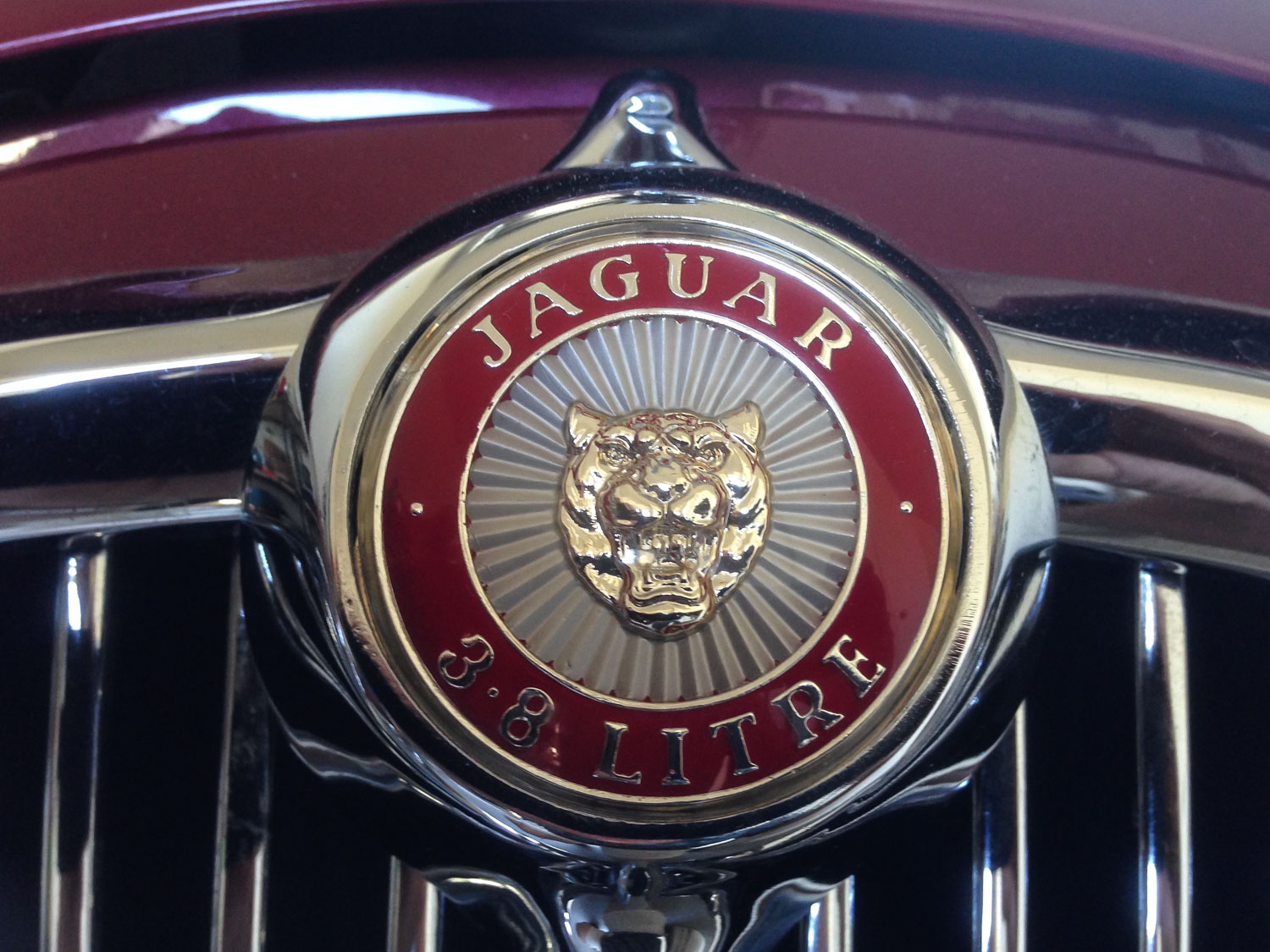
Jaguar’s 3.8 Mk2 was quicker but, bearing in mind all of the above advantages, there is no doubt that the reduced top speed of the S-Type was only a minor handicap when the Sweeney could only afford to run Fords.

With all of that in mind, not surprisingly, the 3.8 S-Type’s most important claim to cinematic fame was as the lead vehicle in the rubber-burning police car chase, that opened British crime film Robbery in 1967. In that dramatization of the 1963 ‘Great Train Robbery’, the S-type is driven by villains during a wages snatch in Bracknell, sealing the car’s image for an entire generation.
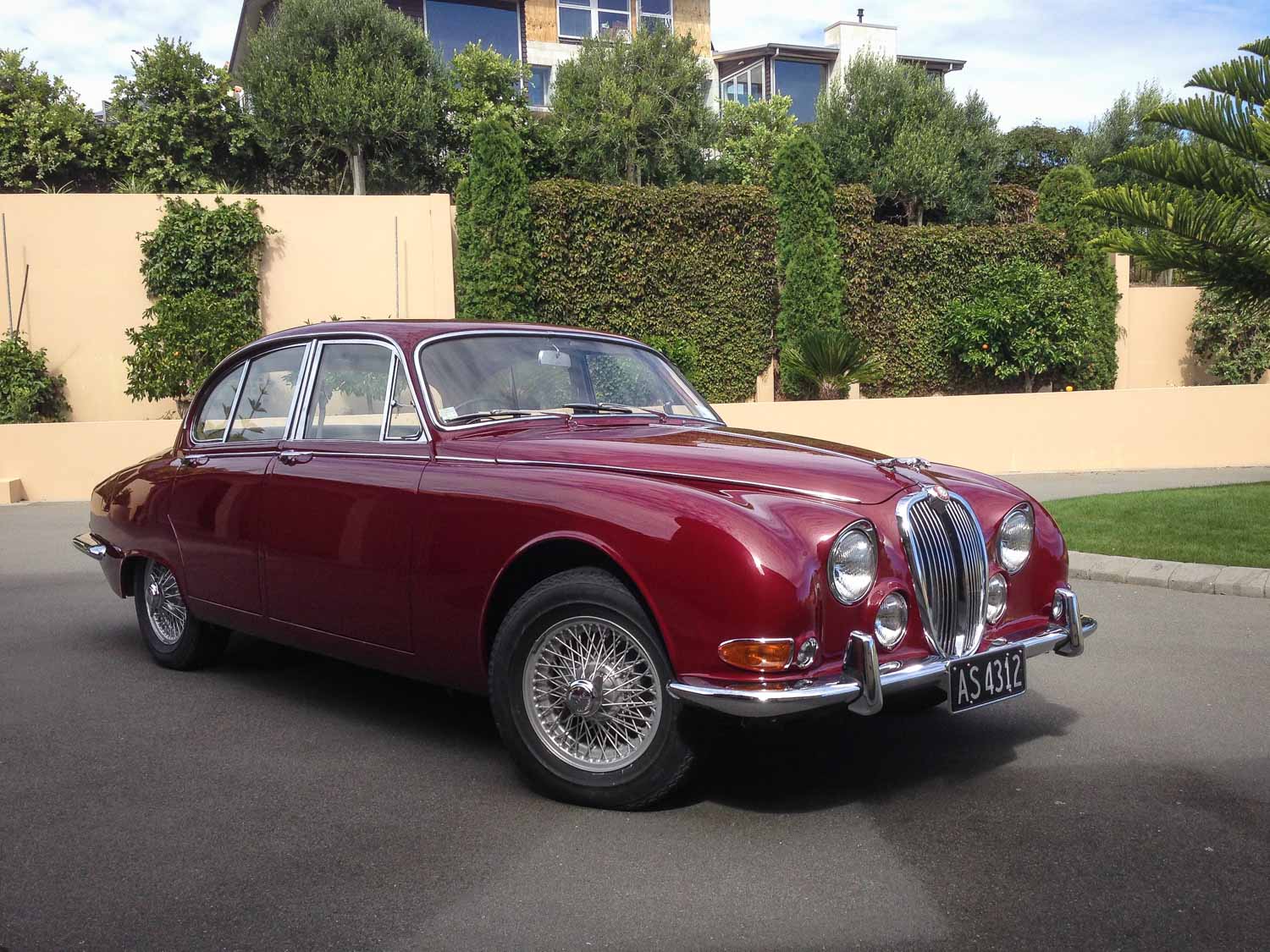
However, we doubt that the beautiful example featured here has been involved in any unlawful activities during its life. This fully restored 1965  3.8 MOD S-Type Jaguar has been the subject of a full nut-and-bolt restoration by the current owner, who purchased the Jaguar from the third owner in November 2007. It was a matching-numbers car, complete even if shabby, and the current owner felt it was worth restoring.
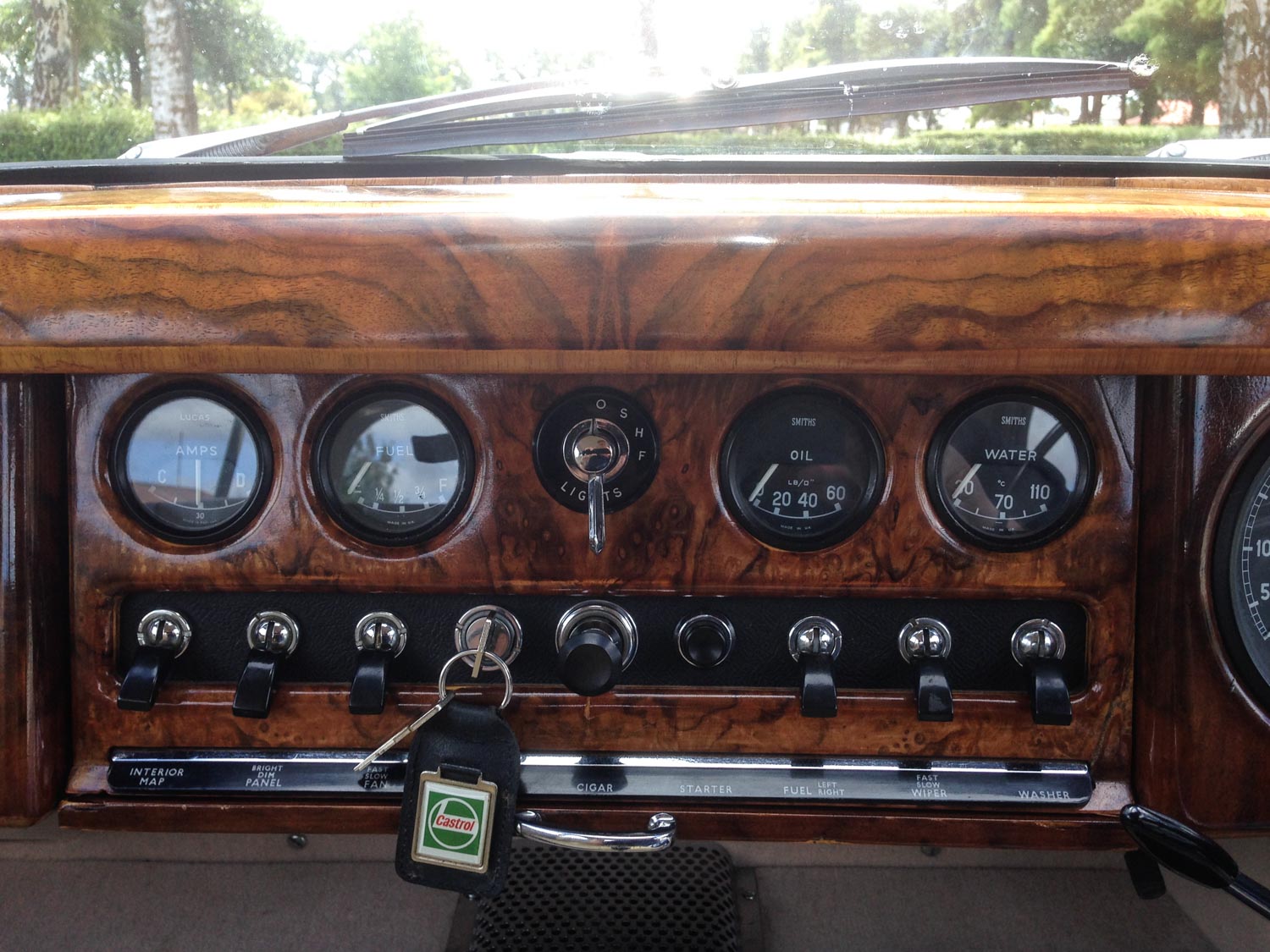
Finished in  ‘Opalescent Maroon’ — the original colour — this S-Type boasts a completely reconditioned engine and drivetrain. The interior wood was original, all numbered to this car and matched.  It was stripped, carefully repaired where needed, and finished with Danish oil — eight coats.  The interior trim and leather seat repairs were redone and recoloured in ‘Sand’, and included new wool headlining, trim rails, and sun visors, new underfelts, and Wilton carpets, fit for any criminal gang.  

Last Tango in the Fast Lane

In the mid ’80s, I locked into a serious Nissan/Datsun performance obsession. It could have kicked off with my ’82 Datsun Sunny, though this would have been a bit of a stretch of the imagination, given its normally aspirated 1.2-litre motor — not the sort of thing to unleash radical road warrior dreams. But it did plant a seed, and it was a sweet little machine and surprisingly quick, in contrast to all the diabolical English offerings I had endured.
I was living in South Auckland at the time and was an unrepentant petrolhead. Motor racing was my drug of choice, and I followed the scene slavishly. Saloon car racing, with the arrival of the international Group A formula, was having a serious renaissance here and in Australia and Europe. There was suddenly an exotic air in local racing that had been absent for 15 years.
I was transfixed by this new frontier of motor racing that had hit our tracks in 1985–87 and the new array of machinery on display. In 1986, the Nissan Skyline RS DR30 made a blinding impression on me. The Australian Fred Gibson-run, Peter Jackson-sponsored team of George Fury and Glenn Seton were the fastest crew of the 1986 Australian Touring Car Championship. But Kiwi legend Robbie Francevic snuck through to win the Aussie Championship in his Volvo 240T after a strong start and consistent finishes.

NZ Classic Car magazine, May/June 2026 issue 405, on sale now

Reincarnation of the snake
We are captivated by a top-quality sports car
The Shelby NZ build team at Matamata Panelworks has endured a long and challenging journey, culminating with the highly anticipated public unveiling of the 427SC and firing up of its sonorous V8 at the 2026 Ayrburn Classic Festival of Motoring in Queenstown on February 20. This is a New Zealand-built car with loads of character and potential.
The car is now back in Matamata, and I finally have an opportunity to get up close and personal with it. But before then, the question that must be asked is, “Why would ya?”
The first answer is easy, as mentioned in the last issue of New Zealand Classic Car (#404). It was a great way to use up all the surplus Mustang parts acquired while converting brand-new Mustangs into Shelbys. The unused new Mustang parts would be great in any kit car, but the 427SC in front of me cannot be classified as one.
This is not a kit car. The reality is that it is a high-quality, factory-made production car.
Possibly the second answer is because the CEO of Matamata Panelworks, Malcolm Sankey, wanted to build a replica of the car that is a distant relation to the Shelby Mustangs scattered around his showroom floor, a car created long before the first Mustang was even thought of, and the brainchild of Carroll Shelby back in the early ‘60s.