
Jensen’s new GT packs a supercharged 6.4-litre V8

21 March, 2015

Jensen Motors were perhaps best known for their Interceptor and FF models, British GT coupes powered by big Chrysler V8s, before the Jensen marque was relegated to the dusty ranks of history in 1976. Though a revival was made near the close of the 20th century, it was short-lived, and the company collapsed in 2002.

The company began automotive manufacture in 1934, and now, nearly 80 years later, their name is making a reappearance, attached to the new Jensen GT. The revival of the Jensen name is the doing of industry stalwart Tim Hearley, saying, “This represents the next chapter of Jensen and, as we look to the future, we want Jensen enthusiasts to help us celebrate as we unveil a completely new car and outline our plans for the future.”
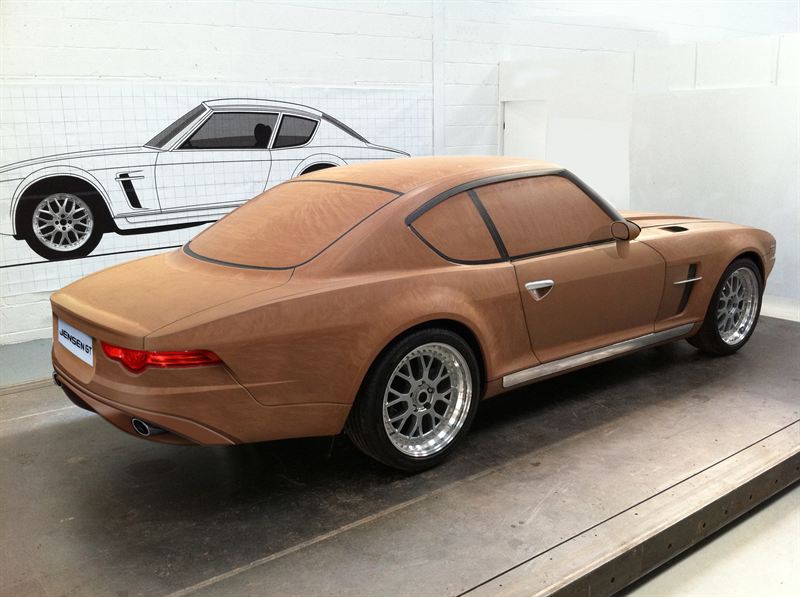
The Jensen Group is currently working to launch the Interceptor 2 in 2016, but until the all-new car is revealed, the Jensen GT will fill that gap quite nicely. Clay-model images for the Jensen GT reveal a modern take on the Interceptor’s lines, though the engine is no longer a Chrysler offering — instead, a GM (presumably LS-based) 6.4-litre supercharged, alloy V8, featuring fuel injection, VVT (variable valve timing), and dry-sump lubrication, through either a six-speed manual or automatic transmission. The substantial powerplant’s output is stated to be 665hp, and 630lb·ft.

The suspension and brakes are said to be derived from the short-lived Jensen SV-8, comprising double wishbone suspension and multi-piston brakes. A spaceframe chassis with composite and aluminium body panels bring Jensen’s structural touches into the modern era, and promise a truly refreshing, modern GT. We look forward to seeing further progress on this modern British icon.
Polishing to perfection

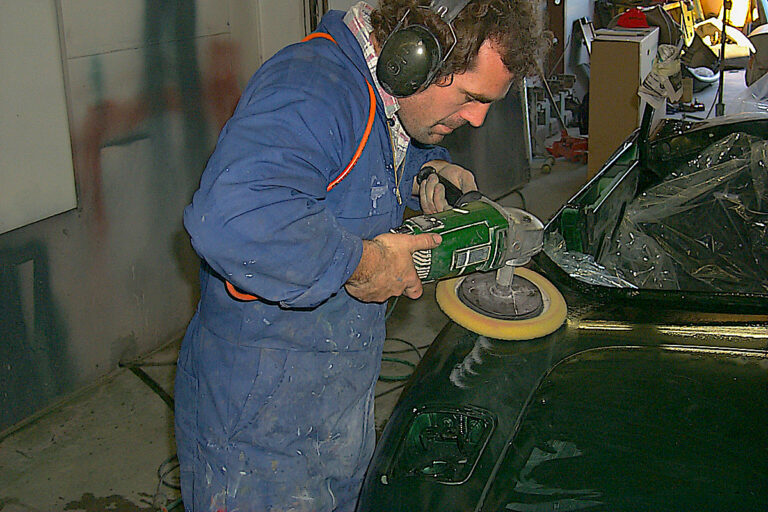
The secret to a show-stopping finish is colour sanding, no matter which paint system you use. Even a good painter, no matter how experienced or talented — like my mate Bruce Haye, CEO at Ace Panel and Paint in Whitianga — can’t shoot to a perfect mirror finish. To get that level of perfection, you need to colour sand.
It used to be called ‘rubbing out’ or ‘cutting’, and it was done with pastes that came in cans. They worked — sort of — but the compounds really just rounded off imperfections instead of eliminating them, and they removed a lot of paint in the process. But now your new finish can be made flawless, thanks to microfine sandpapers that come in 1000, 1500, 2000, and even 2500 grit ranges, and Farecla G3 polish — available from automotive paint suppliers.

NZ Classic Car magazine, March/April 2026 issue 404, on sale now

BMW’s flagship techno showcase
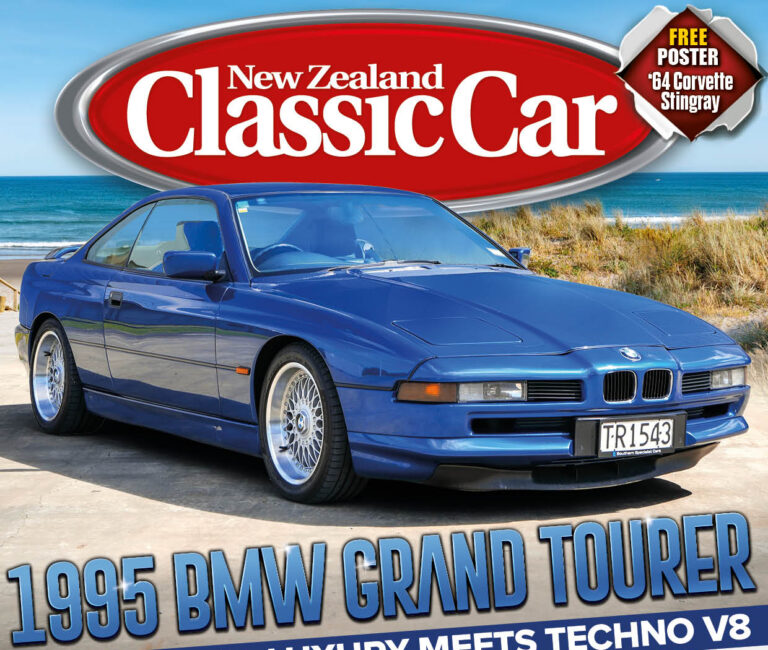
The supermodel 1995 BMW 840Ci is simply elegant and perfectly engineered.
BMW’s 840 Ci flagship Coupe provides superb comfort and equipment packaged in a stylish body, with grand-touring performance and surprisingly competent handling for its size.
It’s the kind of machine that stands apart from the start. When BMW first unveiled its flagship Grand Tourer at the 1989 Frankfurt Motor Show, the automotive world blinked twice. Sleek, low, and impossibly modern for its era, it combined drama with a sort of purposeful understatement. This silhouette still looks striking today, long after its peers have faded into obscurity.
Initially offered with a range of engines, the model you’re reading about is the V8 iteration, featuring a 4.0-litre eight-cylinder heart under its long bonnet and a smooth five-speed automatic at the back. It wasn’t about blistering sprint times so much as effortless velocity. There was power on tap, sure, but the way it delivered thrust felt unhurried and measured – the automotive equivalent of a deep exhale on a long drive.
Poster 1964 Chevrolet Corvette Stingray, C2