Saving the planet one beer at a time

14 June, 2015

Us Kiwis love a cold one, and we could soon be saving the planet every time we pop the top off a beer. DB Export have announced plans of an attempt at producing a commercially viable biofuel, based on the by-products of beer brewing.

By using ethanol — derived from beer production — and mixing it with regular petroleum, they hope to have their ‘Brewtroleum’ ready by July 2015. These biofuels emit less carbon than petrol when burnt, so it may not be long before we have a legitimate excuse to buy a box.

The brewing process leaves dregs of yeast slurry, which tests by DB Export and independent specialists have found can be stripped of ethanol. This can then be distilled and blended in a 10:90 ratio with 98 octane petrol to create an E10 (10-per-cent ethanol) biofuel.
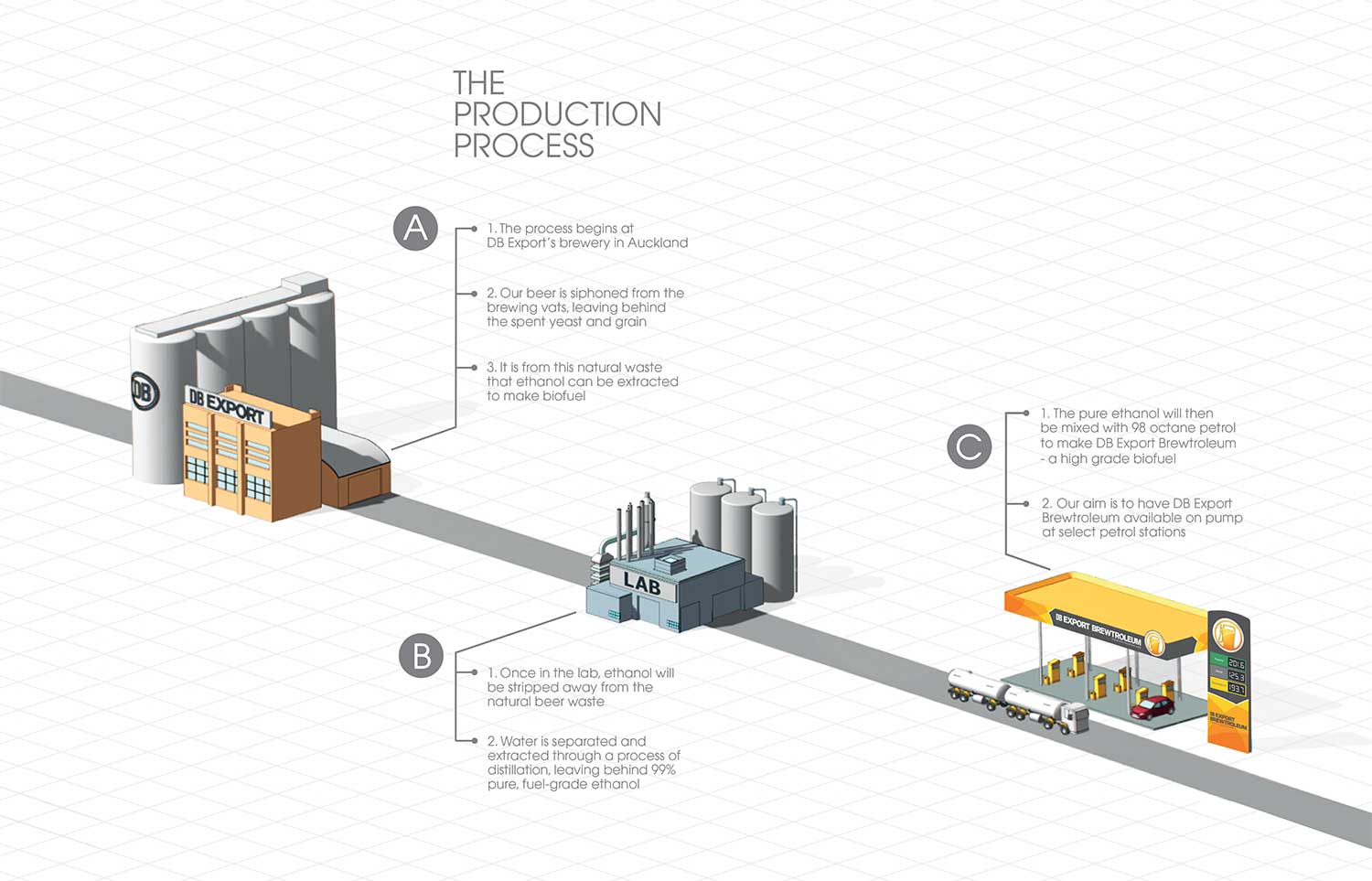
“Brewtroleum presented the opportunity to take the natural by-product of the brewing process and turn it into something that can genuinely help the environment,” said Sean O’Donnell, DB Export’s Head of Domestic Marketing. “What’s more, men can help to save the world just by doing what they already love — drinking DB Export.”

The first sample of DB Export bioethanol will be ready for testing in a few weeks, and, if it is successful, Brewtroleum will be made available through one of the country’s major fuel retailers. We’ll be keeping an eye out for further news — we’re all for more reasons to feel good about drinking beer!
Racing Mazdas

Both Rod Millen and Ron Kendall were rotary racing kings, emanating from the North Shore of Auckland, where I grew up. And the ultimate rotary techno guru was Bill Shiells, who developed the engine into a rocket ship while working out of Gulf Mazda in Takapuna from 1969, and later in his own business, Rotorsport. He began to extract some phenomenal horsepower from the enigmatic rotary engine. Bill was one of the first to race the Mazda RX-2 Coupe in 1971 and achieved immediate success, causing others to sit up and take notice, particularly the North Shore’s racing elite. They included Robbie Francevic, Rod Millen, Ron Kendall, John Woolf, John Le Feuvre, and Rex Findlay.

Range Rover CSK — the original SUV

The Range Rover, thanks to Charles Spencer King, went into production in 1970 boasting an iconic shape that would last until 1996. The vehicle that would create the SUV moniker came about because Rover decided it was time to add a bigger four-wheel-drive vehicle, one with a 100-inch wheelbase, to the model range. Land Rover made a 109-inch wheelbase model but the standard vehicle had a 88-inch wheelbase.
The new model would be more suitable for road use than the existing Land Rover, which was considered to be predominantly for rural use. To make sure it could cope on any road it came standard with the Rover 3.5-litre V8 engine. The body design was originally sketched by King and went into production with only a few minor touch-ups by the Rover styling team.
According to King, “The idea was to combine the comfort and on-road ability of a Rover saloon with the off-road ability of a Land Rover. Nobody was doing it.”