Breakfast of champions – Brink

17 March, 2026

Some older readers may recall the amusing late ’60s advertisement for a breakfast drink using World Champion racing driver Graham Hill, which was made while he was out here competing in the Tasman Series
By Quinton Taylor
Photography: Quinton Taylor and Euan Cameron

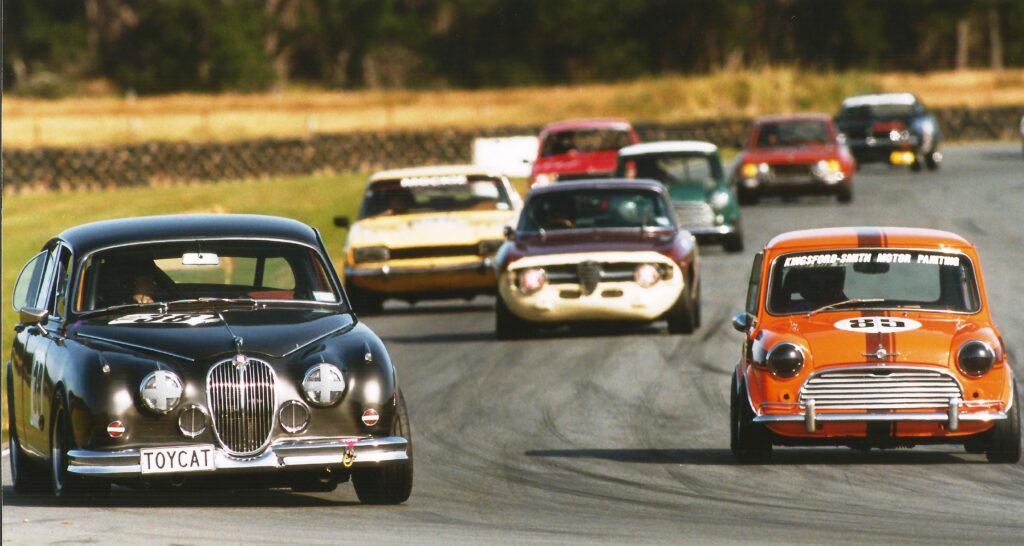
Holding off a challenge at Teretonga Raceway from a much bigger car – Euan Cameron Photo
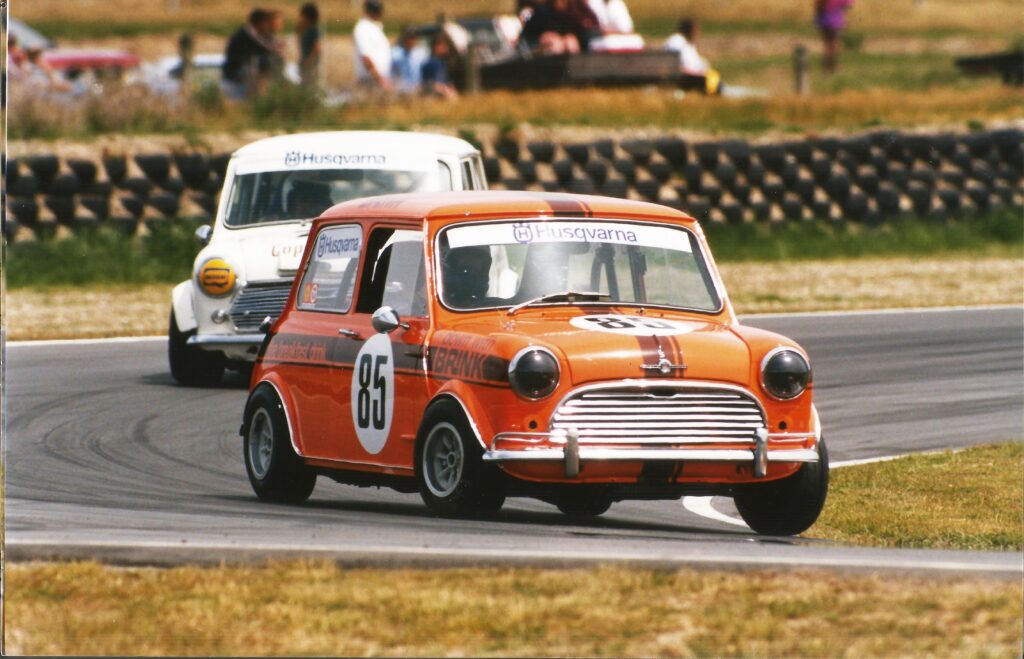
Close battles each time these two race with the Brink Mini chased hard by the Coppertone Mini – Euan Cameron Photo

Drink Brink was the phrase, subtly altered by Graham’s characteristic lisp into “Dwink Bwinkl”, which drew a grin or two.
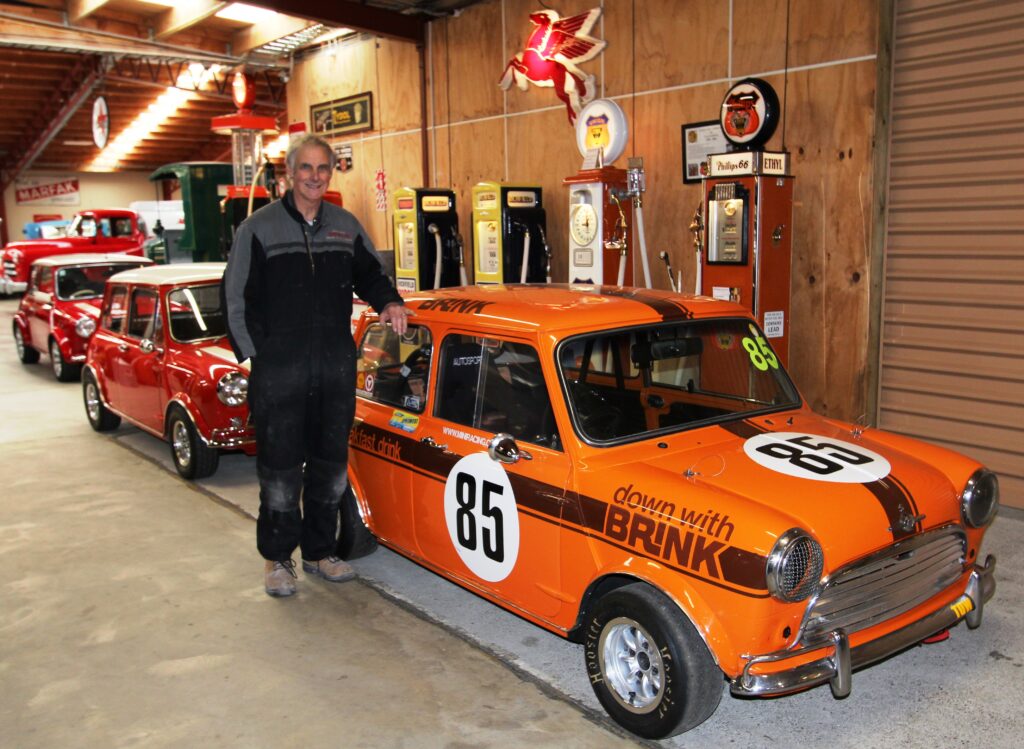
Southland Mini racing enthusiast Howard Kingsford-Smith has preserved a little bit of Mini racing history when he re-created the ‘Brink Mini’ some 25 years ago.
“I bought what remained of the original car and made a replica, I suppose, or look-a-like of the original Brink Mini from Cathy Henderson about 25 years ago,” Howard explained.    
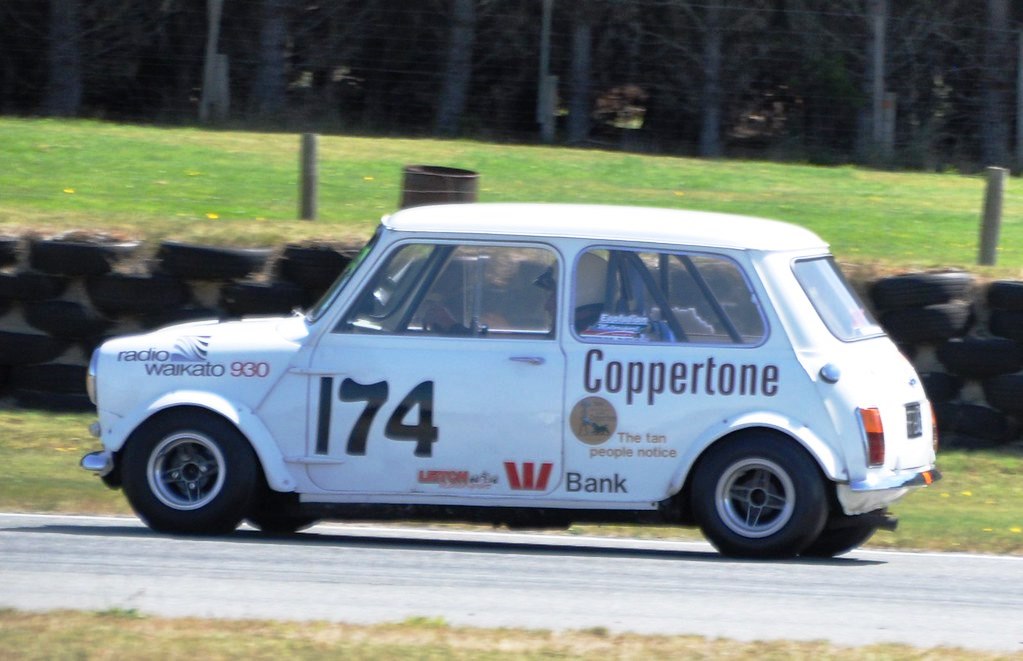
Howard’s skills as a car painter meant the little car is still looking as good as the day it was built, sitting on display in the Bill Richardson Transport World museum in Invercargill. The burnt orange car, along with Doug Erskine’s white Coppertone Mini, from Tuatapere in Southland, are regulars in classic race meetings around the South Island.  
“I’ve raced the Mini at six Queenstown Street races too. Doug and I have also joined in Mini 7 races as fill-ins.”
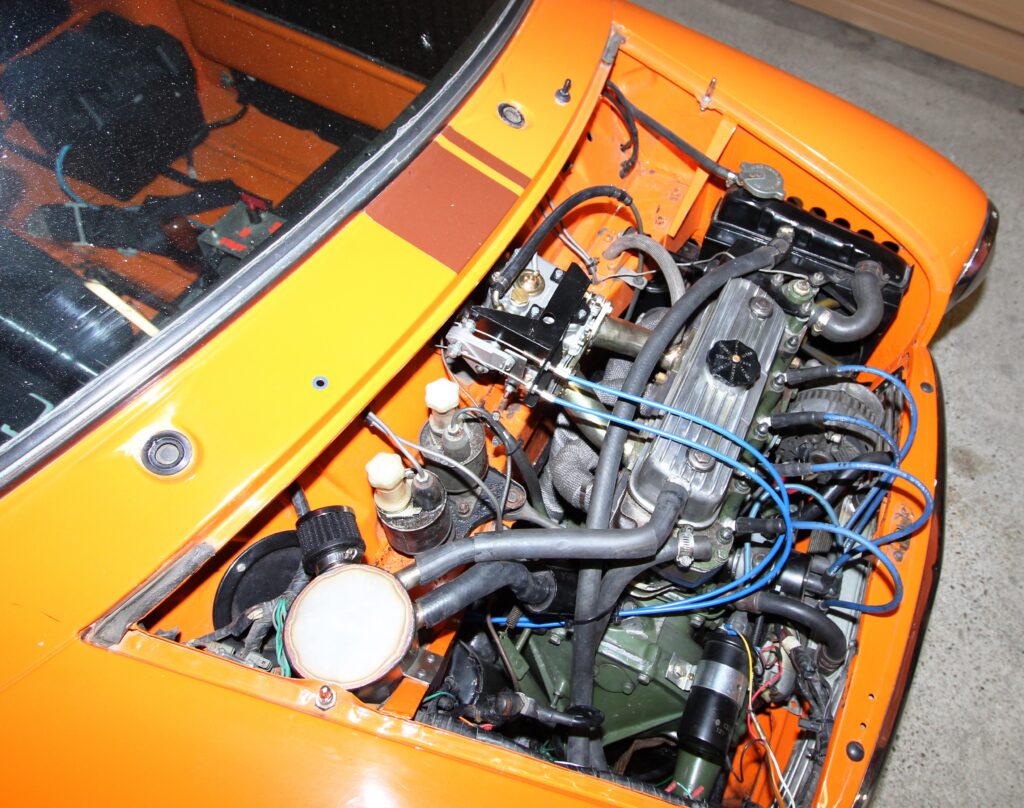
Howard’s car also has something special under the bonnet with an engine built by Angus Fogg, who made a name for himself tuning and racing the little cars.
“It’s an Austin Metro block bored out to 1380cc, with quite a few special internal bits which Angus has added,” Howards explains with a grin.

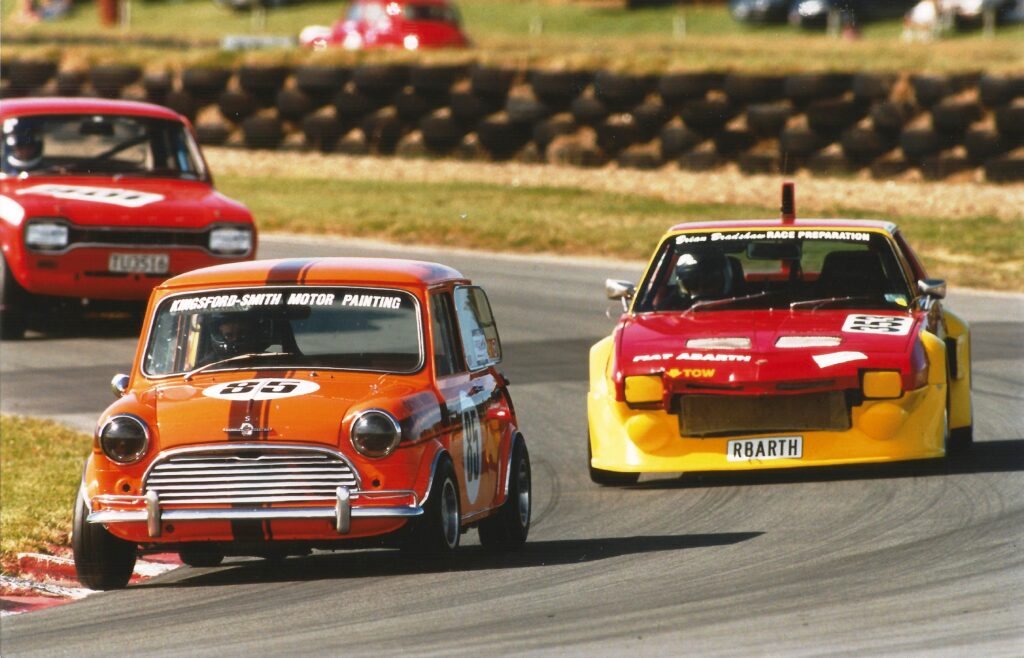
Dennis Chapman in his Fiat Abarth hard on the heels of the Brink Mini through Castrol at Teretonga Raceway – Euan Cameron Photo
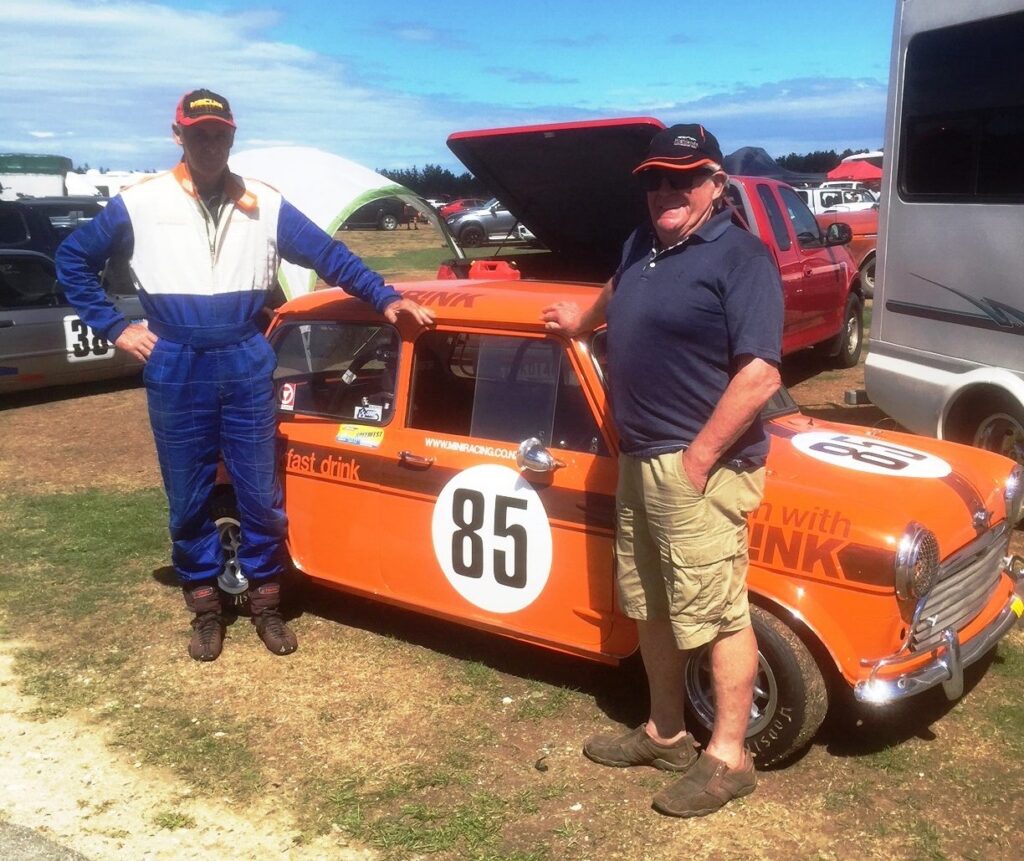
Original builder of the Brink Mini Murray Cockburn (right) with Howard Kingsford-Smith at the Teretonga Evolution Motorsport Classic meeting

Impressive performer
He’s also raced the little car at Highland Park Raceway, Cromwell, where it performed quite well against more modern machinery.
“That’s a great circuit. It doesn’t have too many long straights, and it’s pretty quick through those tight corners. It went well up there.”
At the Evolution Motorsport classic meeting at Teretonga in February this year, Howard caught up with Murray Cockburn, one of the original builders and drivers of the Brink Mini.
“In late 1969, Bill Henderson and I formed a company called the Extraordinary Automobile Racers [EAR]. After some research, we bought the 1299cc works Mini from Doc Langley and Angus Hyslop,” Murray explained.
This was the car which had won the New Zealand Saloon Car Championship the previous year, competing in the 1000cc – 1300cc class.
The car was collected from Bill Hanna in Havelock North and trailer to Bill’s farm at Centre Bush, but the pair detoured on the way to try the car out at Levels Raceway near Timaru. Both were impressed with the performance of the little car on the track.

The Brink Mini looking good on display at the Bill Richardson Transport World at Invercargill
The Angus Fogg touch with a tuned 1380cc engine

A sponsor comes aboard
With the 1970 season looming, they chased some sponsorship, resulting in the TJ Edmonds company agreeing to sponsor the car in the colours of a new breakfast drink it was marketing, Brink and in a distinctive burnt orange colour. 
“I recall when we raced at Bay Park, when Doc and Angus came to the meeting to see how the car would go, they were absolutely horrified with the new colour scheme,” Murray said.
Unfortunately for the pair, the championship rules changed the next season, and they suddenly found themselves in a new class of 1000cc – 2000cc, going from the fastest car in their old class to now being the slowest.
“However, we had a great season competing at Pukekohe, Bay Park, the last meeting held at Levin, Lady Wigram – where we broke Bryan Foley’s lap record from the previous year, Ruapuna, Levels and Teretonga. ‘Never won a race but usually came 7th or 8th in the dry or 4th or 5th if it was wet.”
Handicap races were the most exciting, and amazingly, the pair broke even over the season.
“At the end of the season, Bill then set about selling the various parts of the car. The engine was sold separately to the chassis and body, so that over the years, many have claimed that they bought the original Langley / Hyslop ‘Brink’ car, but that could not have been correct.” 
From the golden years of New Zealand saloon car racing, a little bit of history has been created and preserved.

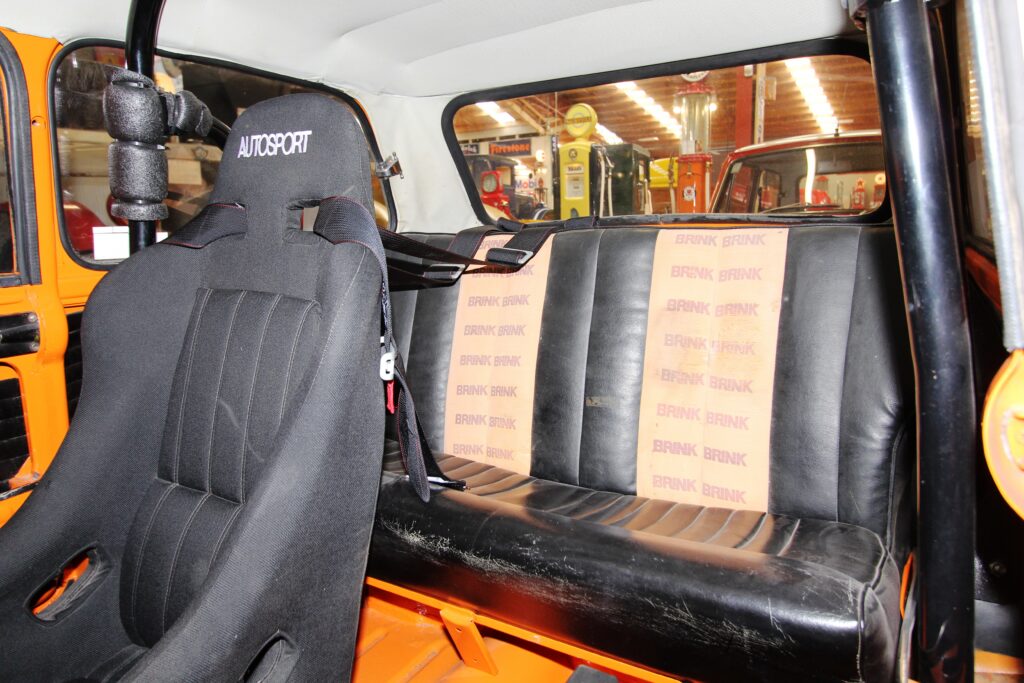
Original back seat has “Brink” logos
Doug Erskine negotiating Castrol corner at Teretonga Raceway in the Coppertone Mini

Last Tango in the Fast Lane

In the mid ’80s, I locked into a serious Nissan/Datsun performance obsession. It could have kicked off with my ’82 Datsun Sunny, though this would have been a bit of a stretch of the imagination, given its normally aspirated 1.2-litre motor — not the sort of thing to unleash radical road warrior dreams. But it did plant a seed, and it was a sweet little machine and surprisingly quick, in contrast to all the diabolical English offerings I had endured.
I was living in South Auckland at the time and was an unrepentant petrolhead. Motor racing was my drug of choice, and I followed the scene slavishly. Saloon car racing, with the arrival of the international Group A formula, was having a serious renaissance here and in Australia and Europe. There was suddenly an exotic air in local racing that had been absent for 15 years.
I was transfixed by this new frontier of motor racing that had hit our tracks in 1985–87 and the new array of machinery on display. In 1986, the Nissan Skyline RS DR30 made a blinding impression on me. The Australian Fred Gibson-run, Peter Jackson-sponsored team of George Fury and Glenn Seton were the fastest crew of the 1986 Australian Touring Car Championship. But Kiwi legend Robbie Francevic snuck through to win the Aussie Championship in his Volvo 240T after a strong start and consistent finishes.
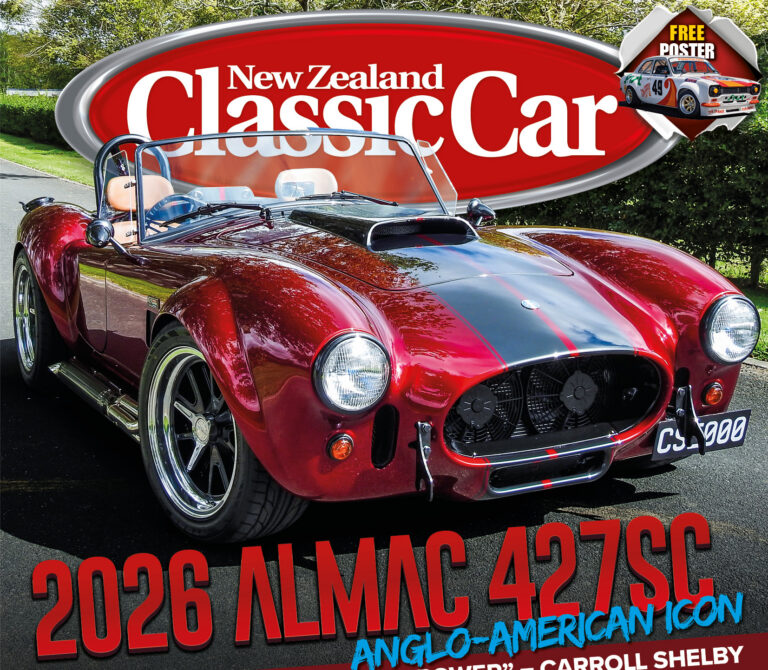
NZ Classic Car magazine, May/June 2026 issue 405, on sale now

Reincarnation of the snake
We are captivated by a top-quality sports car
The Shelby NZ build team at Matamata Panelworks has endured a long and challenging journey, culminating with the highly anticipated public unveiling of the 427SC and firing up of its sonorous V8 at the 2026 Ayrburn Classic Festival of Motoring in Queenstown on February 20. This is a New Zealand-built car with loads of character and potential.
The car is now back in Matamata, and I finally have an opportunity to get up close and personal with it. But before then, the question that must be asked is, “Why would ya?”
The first answer is easy, as mentioned in the last issue of New Zealand Classic Car (#404). It was a great way to use up all the surplus Mustang parts acquired while converting brand-new Mustangs into Shelbys. The unused new Mustang parts would be great in any kit car, but the 427SC in front of me cannot be classified as one.
This is not a kit car. The reality is that it is a high-quality, factory-made production car.
Possibly the second answer is because the CEO of Matamata Panelworks, Malcolm Sankey, wanted to build a replica of the car that is a distant relation to the Shelby Mustangs scattered around his showroom floor, a car created long before the first Mustang was even thought of, and the brainchild of Carroll Shelby back in the early ‘60s.