One of the country’s must-see automotive attractions, the Southward Car Museum, held its annual Auto Jumble on November 16. Back in 1956 the late Sir Len Southward started his vehicle collection and went on to open the large museum in 1979. It now has literally hundreds of cars on display.
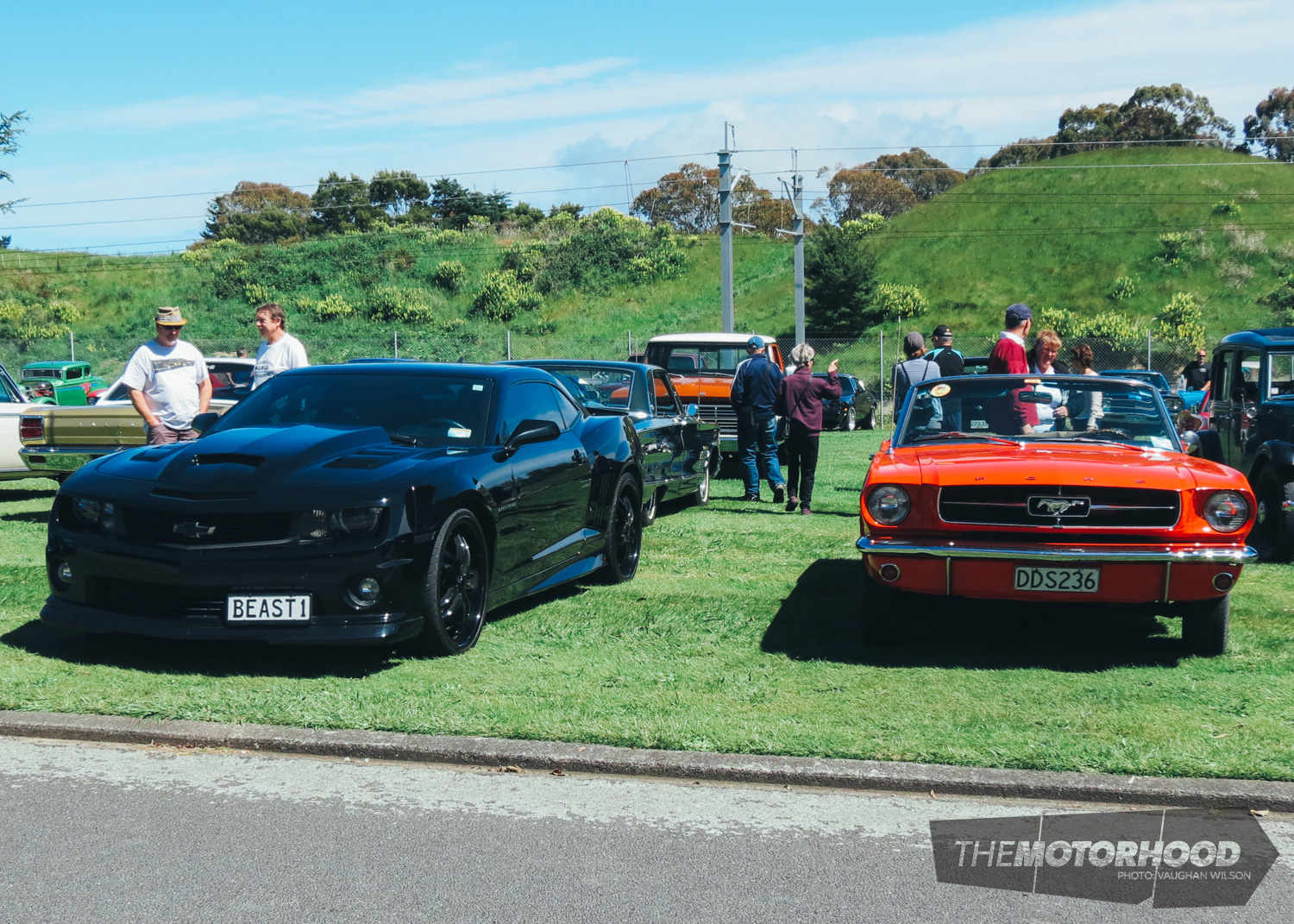
Vehicles were parked up on the grassy verges and admired by visitors
For a fee of just $5 per car, visitors to the Auto Jumble were able to park on the massive grassed area at the front of the museum and wander around various stalls selling car-related items. For the public, an additional $5 got you a ticket into the museum. A very good deal as the typical entry price is $17 per person.
Around 300 cars showed up on the day, mostly classics of assorted origins, parked at the museum with over 200 more parked outside, although this secondary lot was largely populated by those of a non-classic status. Wellington turned on a stunner of a day and that probably helped with the turnout. The sun was shining and the numerous food stalls were doing well.
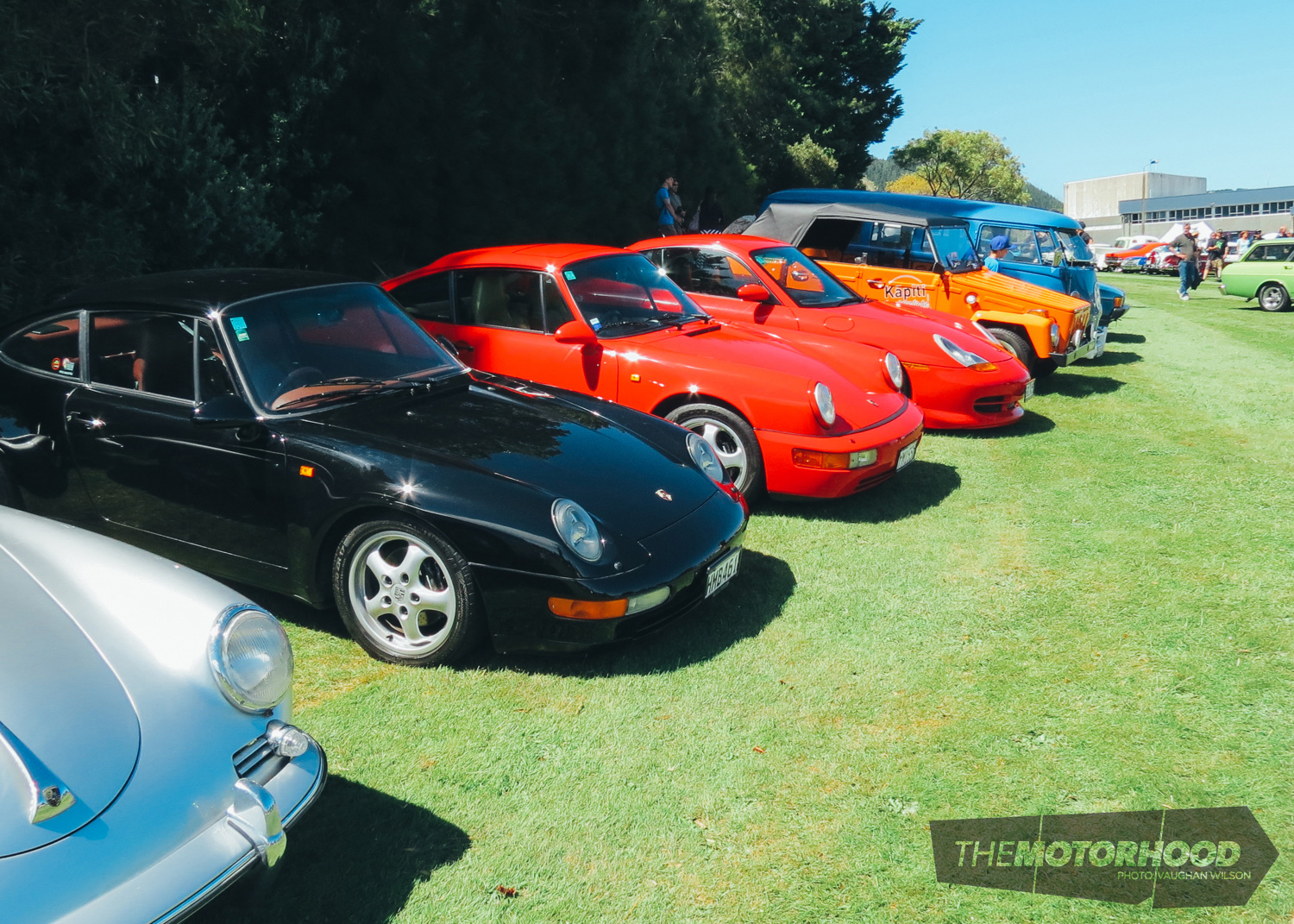
Plenty of classics of assorted origins were on display
Cars on display catered for all types of tastes and interests. They clustered models together like gangs of youths, perhaps so there wouldn’t be any trouble or perhaps just to keep the various marques in neat pockets. A good selection of Porches, Minis, and Volkswagens were spotted, along with a Lotus-powered Escort, a V8 Esprit, and a number of well turned out Aussie muscle cars.
The largest contingent was the American cars including at least four Lincolns, a flotilla of tri-five Chevs, Mustangs, Mopars, Cadillacs, and others. One that stood out in particular was a superb 1958 Chev Impala with immaculate bodywork and an interior that the original designers could only dream of.
Other cars that had the crowd’s attention were a 1970 Charger in amazing condition and a 1956 Ford Fairlane Victoria, which appeared to be in better-than-new condition and obviously very well loved.
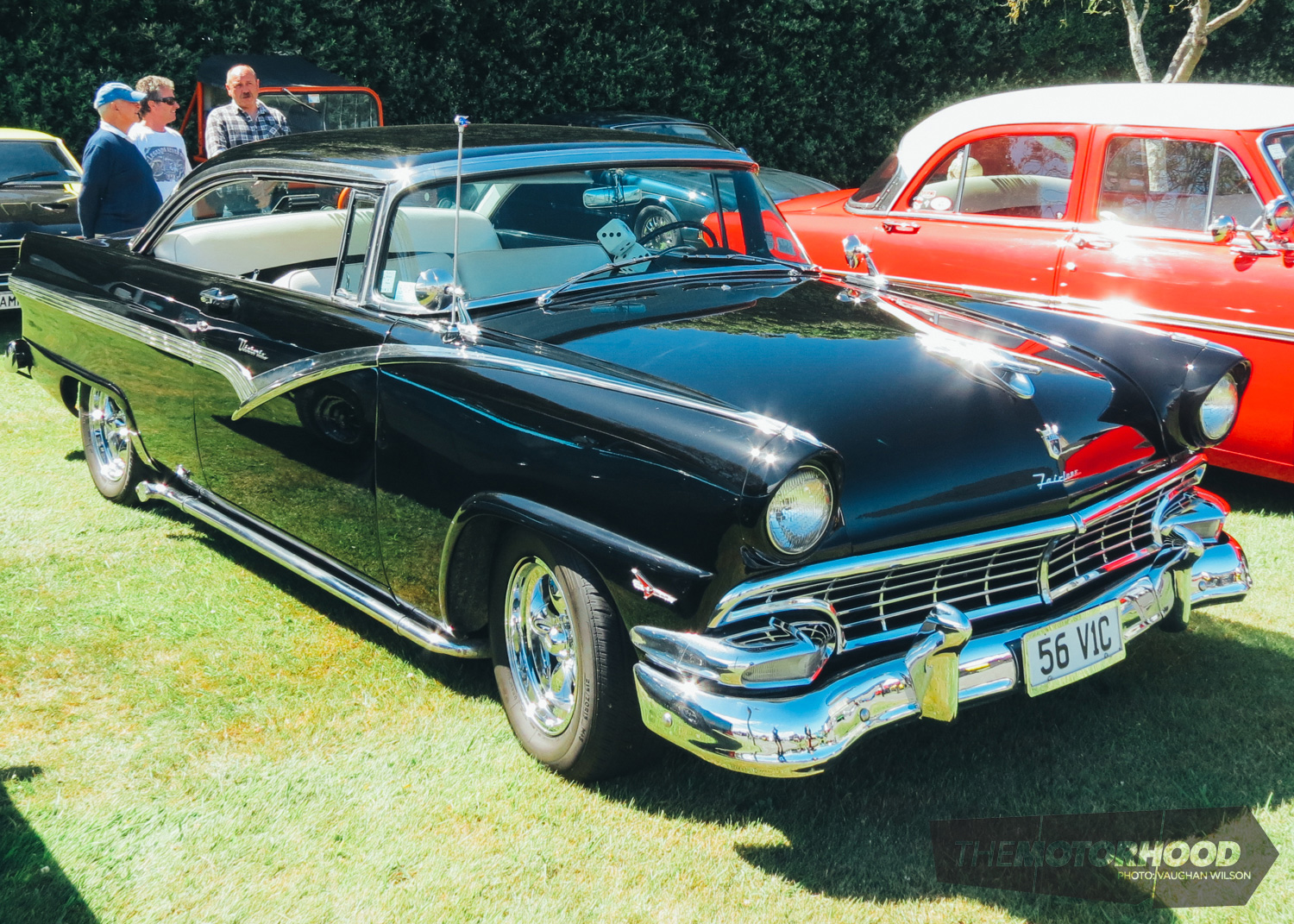
The better-than-new condition 1956 Ford Fairlane Victoria
The Auto Jumble of course was not just a chance for owners to show off their prized possessions but to offer a theatre by which people could sell their cars and other car-related items.
Cars for sale included a 1963 Lincoln convertible, reminiscent of John F Kennedy’s final fling in Dallas, and a 1956 Lincoln Premier. Given that the 60-year celebration is just around the corner for one of Chevrolet’s biggest-selling models, there were several 1955 Bel Airs. These included a very clean red and white example and an incredibly original six-cylinder from Arizona purchased off the second owner earlier this year.
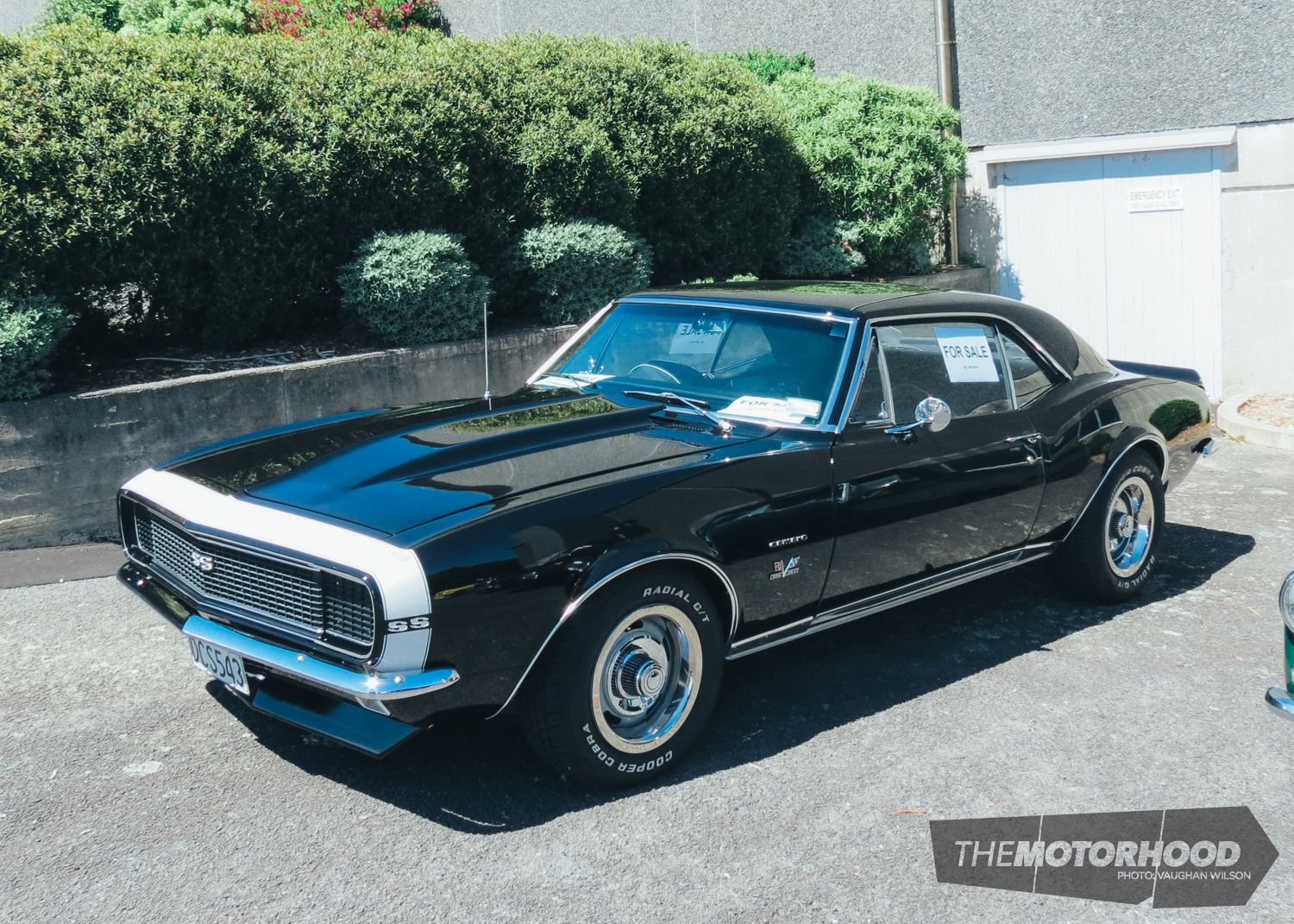
Other cars for sale were a 1967 396 Camaro, a four-door 1959 Cadillac with fins larger than Jaws, and a 1977 XJS V12.

Sculptures created from old car parts were for sale
Cars weren’t the only thing for sale. There were over 30 stalls selling second-hand items such as toys, model cars and Tonka toys, manuals, magazines, books, and even past issues of NZV8. One clever chap had a large array of sculptures in the shapes of oversized insects made from old car parts. It wouldn’t be an Auto Jumble without the ubiquitous V8 block on a trailer for sale, and there were several, along with a number of stalls selling various sized tyres and miscellaneous parts.
All in all it was a great day, everyone had a smile on their dial, some had bought their next project — or something to help their next project — and the weather was tanning all those in convertibles who had forgotten their sunscreen. I think Sir Len would have been impressed with the large turnout and how his museum brings like-minded people together.